Course Resource · MUSA 266 / MUSA 220
Music Map · Vector Rivers
239 genres across 24 families, connected by 560 influence rivers and 37 backlash arrows. Time flows top → bottom. Tap any node to follow its lineage — or switch to Trace by Groove to follow a single mother groove across the whole map.
239 genres · 24 families · 560 influences · 37 backlashes
Tap a genre to see its lineage. Tap a connected pill to follow the line.
Jamaican Diaspora
11Blues
12Jazz
16Pop
12Ambient and IDM
14Country
11Gospel
5Rhythm and Blues
13Rock and Roll
5Classic Rock
7Experimental
11Indie Rock
11Metal
13Punk and Post-Punk
8Hip-Hop
11Hardcore Punk
6Alternative
12UK Electronic
11House
12Techno
8Hardcore Electronic
9Trance
8Drum and Bass
10Chronology
- Era of Innovation
- 1890–1920
- Peak Saturation
- 1927–1938
- Status
- Niche / Legacy
| Milestone | Range | Event |
|---|---|---|
| Innovation | 1890–1920 | Emergence from field hollers and work songs. |
| Peak Saturation | 1927–1938 | Commercial recordings by Patton, House, and Johnson. |
| Status | Niche / Legacy | Preserved by museums and specialists; foundational to Rock. |
Sonic Architecture
Technical innovations are centered on the physical manipulation of the guitar. The most prominent is the use of the "slide" — initially fashioned from glass bottlenecks or metal pipes — to emulate the microtonal "worried notes" of the human voice. Another critical innovation is the "dead thumb" or "walking bass" technique, where the performer maintains a steady, percussive pulse on the lower strings while playing syncopated melodic lines on the upper strings. This allows a single performer to sound like a multi-instrumental ensemble.
Harmonic Vibe
Color tones: The "shimmering b3rd" (often played with a slight microtonal bend toward the major 3rd) and the "stark b7th." Leans into the "blue notes" — b3rd, b5th, b7th — for melancholy and defiance.
Groove Taxonomy
- Drummer lingo
- "Pounding" or "steady-state" rhythm
- Rhythmic cell
- Four-beats-per-measure structure, often theorized to have origins in Native American pow wow drumming or West African rhythmic foundations.
- Feel
- "Heavy" and "improvisational" — the 12-bar form is frequently compressed or expanded to accommodate the vocal narrative.
Groove (visualized)
Voice Slide Pluck Thumb
The Telegraph (the signal)
A "falling bottleneck slide" from the 12th fret down the low E string, ending in an open E "thump." This immediately establishes the acoustic, percussive authority of the style.
Listen
- Gold Standard Robert Johnson — "Cross Road Blues" · 1936
The definitive synthesis of slide technique and vocal intensity.
- Modern / Niche Cedric Burnside — "Step In"
A contemporary exploration of North Mississippi Hill Country blues, which shares the Delta's rhythmic DNA.
- Crossover Eric Clapton — "Layla" · 1992 · Unplugged
A rock anthem reimagined through the prism of Delta acoustic fingerpicking.
Key Figures
Robert Johnson · Charley Patton · Son House · Skip James
Genetic Mapping
Chronology
- Era of Innovation
- 1865–1900
- Peak Saturation
- 1920–1935
- Status
- Legacy
| Milestone | Range | Event |
|---|---|---|
| Innovation | 1865–1900 | Post-Civil War mobility and the development of solo guitar styles. |
| Peak Saturation | 1920–1935 | The first "race record" boom and the rise of the traveling bluesman. |
| Status | Legacy | Foundational to American roots and singer-songwriter traditions. |
Sonic Architecture
Technical innovations include the "Piedmont style" of fingerpicking, which uses a ragtime-influenced alternating bass pattern that mimics the stride piano style. Unlike the heavy, percussive thumb of the Delta, Country Blues often features a lighter, more syncopated touch that allows for intricate melodic interplay.
Harmonic Vibe
Color tones: Frequently incorporates "sweet" color tones like the major 6th and major 9th, reflecting its close relationship with ragtime and Appalachian folk traditions.
Groove Taxonomy
- Drummer lingo
- "Lazy" or "skipping" feel
- Rhythmic cell
- Syncopated 8th-note melody played against a steady 2/4 or 4/4 bass line.
- Feel
- "Loose" and "non-quantized" — the performer follows the natural cadence of the lyrics rather than the metronome.
The Telegraph (the signal)
A ragtime-style chromatic walk-up to the V chord (e.g. G → G♯ → A), followed by a rapid fingerpicked turnaround in the open position. Tells the ensemble the performance will be acoustic, melodic, and rooted in the pre-war folk tradition.
Listen
- Gold Standard Mississippi John Hurt — "Candy Man"
A pristine example of the melodic, fingerpicked Piedmont style.
- Modern / Niche Jerron "Blind Boy" Paxton — "Takin' My Time"
A modern virtuoso who recreates the multi-instrumental (guitar, banjo, fiddle) rural tradition.
- Crossover Led Zeppelin — "Going to California"
A folk-rock composition that uses the open tunings and fingerstyle textures of traditional Country Blues.
Key Figures
Mississippi John Hurt · Blind Blake · Blind Lemon Jefferson · Lightnin' Hopkins
Genetic Mapping
Chronology
- Era of Innovation
- 1940–1948
- Peak Saturation
- 1950–1965
- Status
- Revival / Legacy
| Milestone | Range | Event |
|---|---|---|
| Innovation | 1940–1948 | Electrification of the Delta sound in urban clubs. |
| Peak Saturation | 1950–1965 | The heyday of Chess Records and the "Electric Revolution". |
| Status | Revival / Legacy | Central to modern electric guitar pedagogy and urban festivals. |
Sonic Architecture
Technical innovations include the "power trio" (guitar, bass, drums) foundation and the "cupped harmonica" technique, where the player creates an airtight seal around the microphone to produce a thick, sax-like distorted tone. The guitar technique shifts from acoustic fingerpicking to a more aggressive, flat-picked style with an emphasis on "stinging" single-note vibrato.
Harmonic Vibe
Color tones: The flat-5 ("devil's interval") and the dominant 9th, which provide more complex, jazzy tension over the basic 12-bar structure.
Groove Taxonomy
- Drummer lingo
- "Driving shuffle" with heavy backbeat on 2 and 4
- Rhythmic cell
- The "Chicago Shuffle" — snare and kick work in tandem against a triplet-based ride pattern to create a forward-moving, relentless pulse.
- Feel
- "Pushed" and "urgent" — mimics the frantic energy of the industrial North.
The Telegraph (the signal)
A "stop-time" figure — a sudden, heavy unison hit on the downbeat of the first bar, followed by silence as the singer delivers a shouted vocal line. This "shout-and-stop" immediately identifies the Chicago ensemble style.
Listen
- Gold Standard Muddy Waters — "I'm Your Hoochie Coochie Man" · 1954
The quintessential example of the stop-time urban electric sound.
- Modern / Niche The Cash Box Kings — "I'm Going to Get My Baby"
A contemporary act that meticulously recreates the 1950s Chess Records sonic palette.
- Crossover The Rolling Stones — "Midnight Rambler"
A rock epic that uses the brooding harmonica and dark rhythmic tension of classic Chicago Blues.
Key Figures
Muddy Waters · Howlin' Wolf · Little Walter · Willie Dixon · Buddy Guy
Genetic Mapping
Chronology
- Era of Innovation
- 1938–1945
- Peak Saturation
- 1960–1975
- Status
- Legacy / Academic
| Milestone | Range | Event |
|---|---|---|
| Innovation | 1938–1945 | T-Bone Walker's early electric recordings. |
| Peak Saturation | 1960–1975 | The rise of the "Three Kings" — B.B., Albert, and Freddie — and mainstream crossover. |
| Status | Legacy / Academic | The standard for lead guitar pedagogy globally. |
Sonic Architecture
Technical innovations include "string bending" and "butterfly vibrato" — techniques developed to allow the guitar to mimic the sustain and microtonal flexibility of the human voice or a brass instrument. The use of the "cutaway" electric guitar allowed players to reach the highest registers of the fretboard, further expanding the instrument's melodic range.
Harmonic Vibe
Color tones: The "shimmering 9th" and the "dominant 13th" — reflecting a deeper integration of jazz harmonies into the blues framework.
Groove Taxonomy
- Drummer lingo
- "Walking ride" pattern; often a slow blues 12/8 feel
- Rhythmic cell
- The "triplet shuffle" — a "lazy" or "behind the beat" pulse that allows the soloist to play with relaxed, conversational phrasing.
- Feel
- Laid-back. The soloist leans behind the beat so each line can breathe.
The Telegraph (the signal)
A rapid, ascending pentatonic run ending on a high-register root note with wide, expressive vibrato. This "shout" from the lead guitar signals the band to drop their dynamic level to accommodate an extended solo.
Listen
- Gold Standard B.B. King — "The Thrill Is Gone" · 1969
A masterclass in phrasing, string bending, and the use of minor harmony in electric blues.
- Modern / Niche Joe Bonamassa — "Sloe Gin"
A modern interpretation that emphasizes high-gain sustain and technical precision.
- Crossover Jimi Hendrix — "Red House"
Hendrix takes the traditional electric blues form and pushes it into psychedelic territory with heavy volume and experimental tones.
Key Figures
T-Bone Walker · B.B. King · Albert King · Freddie King · Otis Rush
Genetic Mapping
Chronology
- Era of Innovation
- 1938–1942
- Peak Saturation
- 1945–1953
- Status
- Niche / Revival
| Milestone | Range | Event |
|---|---|---|
| Innovation | 1938–1942 | Downsizing of big bands into high-energy combos (5–7 pieces). |
| Peak Saturation | 1945–1953 | Louis Jordan's chart dominance and the "Soundies" era. |
| Status | Niche / Revival | Popular in swing dance and retro-music circles. |
Sonic Architecture
Technical innovations include the "honking" saxophone solo — where the player repeats a single, low-register note with extreme force — and the boogie-woogie piano bass line. The drums play a more prominent role than in earlier blues, with a consistent four-on-the-floor bass drum pulse.
Harmonic Vibe
Color tones: The "added 6th" and the dominant 7th, which provide a bouncy feel to the harmony.
Groove Taxonomy
- Drummer lingo
- "Uptempo swing" with four-on-the-floor and a snare shuffle
- Rhythmic cell
- The "jump-shuffle" — engineered to keep dancers moving at a high tempo.
- Feel
- "On top of the beat" or "pushed" — leans forward; never drags.
The Telegraph (the signal)
A unison horn riff (or a piano block-chord rhythm) playing a "double-time" triplet figure. Creates an immediate surge in perceived energy, signaling the band to shift into a high-speed "rave-up" section.
Listen
- Gold Standard Louis Jordan — "Caldonia" · 1945
The perfect marriage of humor, swing, and high-energy saxophone work.
- Modern / Niche Big Bad Voodoo Daddy — "Go Daddy-O"
A 1990s neo-swing track that captures the jump blues essence for a modern audience.
- Crossover Ray Charles — "Mess Around"
Charles takes the jump blues structure and infuses it with the gospel-inflected piano style that would become soul music.
Key Figures
Louis Jordan · Wynonie Harris · Big Joe Turner · Roy Brown
Genetic Mapping
Chronology
- Era of Innovation
- 1958–1962
- Peak Saturation
- 1964–1967
- Status
- Legacy
| Milestone | Range | Event |
|---|---|---|
| Innovation | 1958–1962 | Skiffle craze and the Ealing Blues Club sessions. |
| Peak Saturation | 1964–1967 | The "Blues Boom" and the British Invasion. |
| Status | Legacy | The foundational language for "Classic Rock" guitar. |
Sonic Architecture
Technical innovations include the "Marshall sound" — a specific type of high-gain distortion — and the development of "long-form" improvisation, where guitarists would expand 12-bar solos into extended melodic explorations. Another key innovation was the "vibrato-heavy" lead style, a more aggressive version of the American "King" style.
Harmonic Vibe
Color tones: The minor 7th and the suspended 4th, which provide a darker, more brooding quality than the "swinging" American blues.
Groove Taxonomy
- Drummer lingo
- "Heavy-handed" shuffle or straight 8th-note rock beat
- Rhythmic cell
- The "straight-8th shuffle" — locked-in, centered, less "lazy" swing than Chicago styles.
- Feel
- "Powerful" and "centered" — the rhythm section anchors; the guitar flies.
The Telegraph (the signal)
A "long-scale" pentatonic run that starts in the low register and climaxes on a high, sustained note with wide vibrato, often accompanied by the drummer shifting from the hi-hat to the ride cymbal to create a larger "wash" of sound.
Listen
- Gold Standard John Mayall & the Bluesbreakers (feat. Eric Clapton) — "All Your Love" · 1966
The album that defined the British blues-rock guitar sound.
- Modern / Niche Joanne Shaw Taylor — "Dyin' to Know"
A modern British artist carrying the torch of the high-gain, soulful tradition.
- Crossover Fleetwood Mac (Peter Green era) — "Albatross"
A blues-derived instrumental that uses the space and texture of the genre to create an ambient, almost psychedelic atmosphere.
Key Figures
Eric Clapton · Peter Green · Jimmy Page · Jeff Beck · Alexis Korner · Cyril Davies
Genetic Mapping
Chronology
- Era of Innovation
- 1920s
- Peak Saturation
- 1950s
- Status
- Legacy
| Milestone | Range | Event |
|---|---|---|
| Innovation | 1920s | Beale Street era; the "Race Record" boom. |
| Peak Saturation | 1950s | Sun Records / Stax transition; early Billboard R&B charts (late 1940s). |
| Status | Legacy | Foundational to Memphis Soul and Rockabilly; preserved as the city's musical identity. |
Sonic Architecture
The "Jug-Band Stomp" — integrating found-object percussion (washboard, kazoos, jugs) with formal jazz instrumentation. The result is sophisticated urban music played with deliberately rough-hewn materials.
Harmonic Vibe
Color tones: The Major 6th and the Dominant 7th, creating a "bouncy" urban tension that points forward to Memphis Soul.
Groove Taxonomy
- Drummer lingo
- The "Beale Street Bounce"
- Rhythmic cell
- 4/4 shuffle with heavy "ghost notes" on the snare.
- Feel
- Pushed — leans on top of the beat.
The Telegraph (the signal)
A chromatic horn stab or guitar rake moving from the bV to the V chord in rapid 16th notes.
Listen
- Gold Standard YouTube reference · title pending Watch on YouTube ↗
- Modern / Niche YouTube reference · title pending Watch on YouTube ↗
- Crossover YouTube reference · title pending Watch on YouTube ↗
Genetic Mapping
Chronology
- Era of Innovation
- 1920s
- Peak Saturation
- 1980s
- Status
- Legacy / Foundational
| Milestone | Range | Event |
|---|---|---|
| Innovation | 1920s | Blind Lemon Jefferson's recordings establish the Texas guitar vocabulary. |
| Peak Saturation | 1980s | Stevie Ray Vaughan and the "Texas blues guitar" renaissance. |
| Status | Legacy / Foundational | Standard reference for aggressive electric guitar phrasing. |
Sonic Architecture
The "double-stop" rake — striking two adjacent strings simultaneously and dragging the pick across them — and aggressive string snapping. Guitar is treated as both a horn-like melodic instrument and a percussive one.
Harmonic Vibe
Color tones: The Major 6th and the deliberate tension between the Minor and Major 3rd — the guitarist often bends through the middle.
Groove Taxonomy
- Drummer lingo
- The "Flat-Tire Shuffle"
- Rhythmic cell
- A heavy triplet feel emphasizing the 1 and 3, with the snare sitting deliberately heavy on the bounce.
- Feel
- Driving — never lets the energy drop.
The Telegraph (the signal)
The "Double-Time Turnaround" — rapid-fire triplets leading into the downbeat, signaling the band to lift the dynamic.
Listen
- Gold Standard YouTube reference · title pending Watch on YouTube ↗
- Modern / Niche YouTube reference · title pending Watch on YouTube ↗
- Crossover YouTube reference · title pending Watch on YouTube ↗
Key Figures
Blind Lemon Jefferson · T-Bone Walker · Lightnin' Hopkins · Stevie Ray Vaughan · Albert Collins
Genetic Mapping
Chronology
- Era of Innovation
- 1950s
- Peak Saturation
- 1960s
- Status
- Niche
| Milestone | Range | Event |
|---|---|---|
| Innovation | 1950s | Excello Records / Louisiana scene. |
| Peak Saturation | 1960s | British obsession — the Rolling Stones, Pretty Things, and Yardbirds cover Slim Harpo and Lazy Lester. |
| Status | Niche | Cult listening; persistent influence on psychedelic and desert genres. |
Sonic Architecture
Heavy tremolo pedal effects — creating a "shivering" sound that mimics the humidity of the bayou. Guitars are deliberately under-articulated; the sound feels close to a half-remembered radio broadcast.
Harmonic Vibe
Color tones: The stark b5 and the microtonal b3 (the "worried" note) — held longer than feels comfortable.
Groove Taxonomy
- Drummer lingo
- The "Bayou Crawl"
- Rhythmic cell
- A sluggish 4/4 where the "one" is often felt but not played — the kick implies the downbeat without striking it.
- Feel
- Sluggish / trance-like.
The Telegraph (the signal)
A slow, deep "vibrato-chord" rake across the strings, letting the tremolo effect oscillate for two full beats before the band enters.
Listen
- Gold Standard YouTube reference · title pending Watch on YouTube ↗
- Modern / Niche YouTube reference · title pending Watch on YouTube ↗
- Crossover YouTube reference · title pending Watch on YouTube ↗
Key Figures
Slim Harpo · Lightnin' Slim · Lazy Lester · Lonesome Sundown
Genetic Mapping
Chronology
- Era of Innovation
- Late 1960s
- Peak Saturation
- 1970s
- Status
- Niche / Legacy
| Milestone | Range | Event |
|---|---|---|
| Innovation | Late 1960s | Stax / Malaco-records influence; gospel-trained voices on blues structures. |
| Peak Saturation | 1970s | Bobby Bland, Z.Z. Hill, Little Milton dominate the Black AM-radio circuit. |
| Status | Niche / Legacy | Sustained by the "Southern Soul" circuit and contemporary inheritors. |
Sonic Architecture
Vocal "melisma" — shifting multiple notes over a single syllable to increase emotional payload. The voice is the lead instrument; everything else exists to make the singer's line possible.
Harmonic Vibe
Color tones: The Major 6th and the Major 9th — the "sweet" side of the blues, borrowed straight from gospel.
Groove Taxonomy
- Drummer lingo
- The "Backbeat Stroll"
- Rhythmic cell
- A lazy 12/8 feel with the snare intentionally hitting slightly behind the "and" of 2 and 4.
- Feel
- Behind-the-beat / lazy.
The Telegraph (the signal)
A "churchy" piano/organ 16th-note triplet run cascading down to a V-chord tremolo.
Listen
- Gold Standard YouTube reference · title pending Watch on YouTube ↗
- Modern / Niche YouTube reference · title pending Watch on YouTube ↗
- Crossover YouTube reference · title pending Watch on YouTube ↗
Key Figures
Bobby Bland · Z.Z. Hill · Little Milton · Johnnie Taylor · Latimore
Genetic Mapping
Chronology
- Era of Innovation
- 1980s
- Peak Saturation
- 1990s – Present
- Status
- Revival / Active
| Milestone | Range | Event |
|---|---|---|
| Innovation | 1980s | The "Cray / Vaughan" era ushers in studio-precise blues guitar. |
| Peak Saturation | 1990s – Present | A continuous Modern Band scene driven by festivals and high-end signature instruments. |
| Status | Revival / Active | The blues language as it sounds in 2026 — studio-polished, technically virtuosic, broadly accessible. |
Sonic Architecture
Digital delay saturation and "Liquid" legato phrasing — using rack effects and high-headroom amps to extend the sustain of any single note into a long, vocal-like phrase.
Harmonic Vibe
Color tones: Shimmering 9ths and Minor 11ths — moving away from raw blue notes into pop-inflected territory.
Groove Taxonomy
- Drummer lingo
- The "Quantized Shuffle"
- Rhythmic cell
- Standard 4/4 with a very deliberate, heavy kick on 1 and 3.
- Feel
- Precise / mechanical — close to or fully on the click.
The Telegraph (the signal)
A high-register, "crystal-clean" pentatonic scale run ending on a long, sustained Root note with zero vibrato, followed by a sudden dive-bomb.
Listen
- Gold Standard YouTube reference · title pending Watch on YouTube ↗
- Modern / Niche YouTube reference · title pending Watch on YouTube ↗
- Crossover YouTube reference · title pending Watch on YouTube ↗
Key Figures
Robert Cray · Stevie Ray Vaughan · Joe Bonamassa · Eric Gales · Christone 'Kingfish' Ingram
Genetic Mapping
Chronology
- Era of Innovation
- 1963–1966
- Peak Saturation
- 1968–1975
- Status
- Revival
| Milestone | Range | Event |
|---|---|---|
| Innovation | 1963–1966 | Transition from club blues to high-volume "rave-ups". |
| Peak Saturation | 1968–1975 | Stadium rock and extended improvisational jams. |
| Status | Revival | High commercial viability and global festival presence. |
Sonic Architecture
Technical innovations include the "unison bend" — where the player bends one string to match the pitch of a static string, creating a beating effect — and the use of the wah-wah pedal as a rhythmic and tonal filter. The "extended pentatonic" scale incorporates more chromatic passing tones than traditional blues.
Harmonic Vibe
Color tones: The flat 2nd (often used in riffs) and the diminished chord used for high-tension turnarounds.
Groove Taxonomy
- Drummer lingo
- "Pounding" rock beat with heavy-kick pattern
- Rhythmic cell
- The "syncopated-kick" pattern, with straight 8th notes on the cymbals.
- Feel
- "Aggressive" and "stadium-sized" — designed to fill large venues with sound.
The Telegraph (the signal)
A heavily distorted, sustained unison bend on the G and B strings, followed by a rapid-fire descending pentatonic riff. Tells the band to shift from a bluesy groove into a high-energy rock tempo.
Listen
- Gold Standard Cream — "Crossroads" · 1968 · Live at Winterland
A high-octane reimagining of Robert Johnson that defines the blues-rock power-trio sound.
- Modern / Niche Gary Clark Jr. — "Bright Lights"
A modern synthesis of blues-rock, soul, and hip-hop.
- Crossover ZZ Top — "La Grange"
A track that uses a "boogie" groove and electronic-inflected production to create a crossover hit.
Key Figures
Cream · Led Zeppelin · Jimi Hendrix · Stevie Ray Vaughan · Gary Clark Jr.
Genetic Mapping
Listen for: A backbeat on 2 & 4, walking-bass-like piano or upright, electric guitar with single-note licks and double-stops, and a vocal that's leaning forward — teenage, urgent, NOT crooning.
What was new: Fused jump blues, country boogie, and gospel vocals into a teenage commercial form. First time the SAME record sold to white and Black audiences across the color line. Made the electric guitar the lead instrument of pop music for the next 70 years.
Chronology
- Era of Innovation
- 1954–1957
- Peak Saturation
- 1955–1962
- Status
- Legacy / Foundational
| Milestone | Range | Event |
|---|---|---|
| Innovation | 1954–1957 | Bill Haley's "Rock Around the Clock" (1954), Elvis Presley's "That's All Right" (1954), Chuck Berry's "Maybellene" (1955), and Little Richard's "Tutti Frutti" (1955) all hit within 18 months — the synthesis of jump blues, country boogie, gospel vocal, and Western Swing into a commercial teenage form. |
| Peak Saturation | 1955–1962 | Elvis, Chuck Berry, Little Richard, Buddy Holly, Jerry Lee Lewis, Fats Domino, Bo Diddley dominate the charts. The form proves that a single record can sell to white and Black audiences simultaneously — the first major crack in the segregated American record industry. |
| Status | Legacy / Foundational | Direct parent of every Western rock idiom since. The Beatles, Stones, Hendrix, Springsteen, the entire 70s arena-rock canon all worked from Chuck Berry's vocabulary. Modern carriers: JD McPherson, the Black Keys, Greta Van Fleet. |
Sonic Architecture
The "unison bend" — fretting a note on the second string and bending it up a whole step to match the pitch of a higher adjacent string. Rapid-fire double-stop lead patterns. The deliberate move from triplet-swing rhythm (jump blues, swing) to straight-8th driving 4/4 — the rhythmic revolution that defined the rest of the rock century. The Bo Diddley beat — a syncopated Afro-Cuban son-clave-derived rhythm that became one of the genre's most-imitated patterns.
Harmonic Vibe
Color tones: Simple diatonic verse-chorus-bridge structures over a blues-derived harmonic vocabulary. Often the V chord appears in the 9th measure before the IV chord in the 10th — Chuck Berry's reversal of the standard blues form. The chromatic slide from #4 to 5 and the dominant-9 supply the harmonic friction.
Groove Taxonomy
- Drummer lingo
- "Straight-Eight Drive" / "Bo Diddley Clave"
- Rhythmic cell
- Straight 8th-note subdivision in 4/4 time replacing swing-era triplets, with a heavy driving percussive backbeat on 2 and 4. The Bo Diddley beat ("BOMP-ba-bomp-ba-BOMP, ba-BOMP-BOMP") layered a 3-2 son-clave-derived pattern on top of the kit, creating a syncopated alternative to the straight backbeat.
- Feel
- "Pushed and Driving" — built for teenage dancing.
Groove (visualized)
Ride Snare Kick Bass
The Telegraph (the signal)
The "Sliding Double-Stop Intro" — a high-register sliding double-stop figure on the lead guitar, or a clean unison bend played with bouncy light hand touch, opening directly into the first verse.
Listen
- Gold Standard Chuck Berry — "Johnny B. Goode" · 1958
The autobiographical anthem with the iconic 12-second guitar intro that every guitar player since has had to learn. Chuck Berry as the form's defining figure.
- Modern / Niche JD McPherson — "North Side Gal" · 2010
Modern Oklahoma rockabilly/rock-and-roll revivalist working consciously inside the 1955 production aesthetic.
- Crossover Elvis Presley — "I Got a Woman (Ray Charles cover)" · 1956
Elvis taking Ray Charles's 1954 gospel-R&B hit and reimagining it as electric rock and roll — the canonical example of the form's cross-racial appropriation/celebration dynamic.
Key Figures
Chuck Berry · Little Richard · Elvis Presley · Buddy Holly · Bo Diddley · Jerry Lee Lewis · Fats Domino
Genetic Mapping
Listen for: Triplet 8th/16th hi-hat patterns that occasionally double or triple up, deep 808 bass that slides, sparse kick, vocal melodies pitched and tuned (Auto-Tune). Tempo often feels half-time because the snare is far apart.
What was new: Made the 808 sub-bass the lead instrument, and the rolled hi-hat the rhythmic engine. Production-led genre — the beat IS the song. Atlanta-born, became the dominant pop-music production aesthetic of the late 2010s and 2020s.
Chronology
- Era of Innovation
- 2003–2010
- Peak Saturation
- 2012–present
- Status
- Mainstream / Dominant
| Milestone | Range | Event |
|---|---|---|
| Innovation | 2003–2010 | T.I.'s Trap Muzik (2003) names the genre; Gucci Mane and producer Zaytoven build the Atlanta template; Jeezy's Thug Motivation 101 (2005) gives it scale. Lex Luger's 2010 run (Waka Flocka Flame's 'Hard in da Paint,' Rick Ross's 'B.M.F.') codifies the production blueprint — orchestral menace, rolled hats, 808 as lead. |
| Peak Saturation | 2012–present | Future, Migos, Young Thug, and Metro Boomin make Atlanta the capital of popular music. The Migos triplet flow and the Metro 808 grammar become global pop defaults — by the late 2010s, chart pop, Latin trap, K-pop B-sections, and EDM drops all speak trap. |
| Status | Mainstream / Dominant | The longest-reigning production aesthetic since disco — still the default grammar of hip-hop and pop a decade past its peak's start. Its dialects (rage, drill, Latin trap) now innovate at its edges. |
Sonic Architecture
The 808 promoted from drum to bassline — tuned to the key, sliding between pitches (the glide is the genre's signature ornament). Hi-hat programming as virtuosity: rolls, stutters, and triplet subdivisions as the main rhythmic activity over a half-time frame. The half-time illusion — 140 BPM grids that feel like 70 — leaving vast space for the voice. Beat-making fully democratized via FL Studio and the type-beat economy.
Harmonic Vibe
Color tones: Static minor loops — natural minor and harmonic-minor cells, two or four bars, never resolving. Tritone and b2 colors borrowed from horror scoring. The 808 line frequently outlines 3+3+2 — the tresillo cell, four centuries on, now played in sub frequencies.
Groove Taxonomy
- Drummer lingo
- "The Half-Time Roll" — snare on 3, hats doing all the talking
- Rhythmic cell
- Half-time 4/4: kick and 808 sparse and syncopated (often tresillo-spaced), one snare per bar on beat 3, hi-hats subdividing in shifting bursts. The groove's drama is in the hat-roll subdivisions against the static frame.
- Feel
- "Float Over the Grid" — quantized machine frame, lazy vocal phrasing on top.
Groove (visualized)
Hi-Hat Open Snare Kick 808
The Telegraph (the signal)
The "Hat-Roll 808 Drop" — a stuttering hi-hat roll accelerates into a tuned 808 glide landing on the downbeat, snare waiting until beat 3.
Listen
- Gold Standard Migos — "Bad and Boujee" · 2016
The triplet flow and the Metro Boomin 808 grammar at their #1 peak — the record that made trap's cadence the default flow of global pop.
- Modern / Niche Future & Metro Boomin — "Like That" · 2024
The genre's defining artist-producer pair still setting the agenda a decade on — proof trap remains a living dialect, not a legacy sound.
- Crossover Lil Nas X — "Old Town Road" · 2019
Trap production under country iconography — the longest-running #1 in Hot 100 history, and the clearest demonstration that the 808 grammar now underwrites every genre it touches.
Key Figures
T.I. · Gucci Mane & Zaytoven · Lex Luger · Metro Boomin · Future · Migos · Young Thug
Genetic Mapping
Chronology
- Era of Innovation
- 1985–1990
- Peak Saturation
- 1994–1998
- Status
- Legacy / Niche
| Milestone | Range | Event |
|---|---|---|
| Innovation | 1985–1990 | London's rare-groove DJs (Gilles Peterson, Eddie Piller) spin 60s/70s jazz-funk and soul-jazz in clubs; live bands form to replicate the crate-digger sound on stage. The name is a playful jab at acid house — but the music explicitly rejects house's electronic minimalism in favor of organic live instrumentation. |
| Peak Saturation | 1994–1998 | Global crossover via Jamiroquai, The Brand New Heavies, Incognito. Travelling Without Moving (1996) and "Virtual Insanity" marry complex jazz-piano harmony with pop-accessible vocals. |
| Status | Legacy / Niche | Largely absorbed into Neo-Soul and broader Jazz-Funk; remains a foundational influence on modern producers and jam bands. |
Sonic Architecture
Technical innovations include the "Jazz-Funk Slap" — a more rhythmic, less aggressive variant of the funk slap-bass technique — and "Rare Groove Sampling," where the live ensemble emulates the feel of a looped drum break from a vintage vinyl record. Across all parts the production target is the tape-saturated, hi-fi sound of classic 1970s jazz-funk records. Brass sections deliver punchy, syncopated stabs and melodic flourishes that mirror 70s soul-jazz phrasing.
Harmonic Vibe
Color tones: Stays on a vibe or two-chord vamp for extended stretches to keep the floor moving, but the chords are dense. Minor 9th ("cool and mellow"). Major 7th ("shimmering" — high-end Rhodes voicings). Dominant 13th ("sassy and full" — the funk-tension chord). The flat-5 blue note grounds the sophistication in the blues.
Groove Taxonomy
- Drummer lingo
- "Head-Nodding Pocket"
- Rhythmic cell
- 16th-note funk feel with a displaced snare on the "and" of 2 or the "a" of 4. Frequently invokes the "Samba-Funk" crossover — Brazilian-influenced kick patterns under a hard-backbeat snare.
- Feel
- "Quantized but Human" — the metronomic consistency of a sampler with the micro-adjustments and breath of live playing.
The Telegraph (the signal)
The "Rhodes 13th Stab" — a keyboardist plays a syncopated, staccato Dominant 13th chord on the upbeat of 4, locking the band into a mid-tempo jazz-funk vamp.
Listen
- Gold Standard Jamiroquai — "Virtual Insanity" · 1996
The genre's pop-crossover moment — jazz-piano harmony in a top-40 frame.
- Modern / Niche Bonobo — "Days to Come"
Downtempo electronic producer who carries the acid-jazz harmonic palette into modern production.
- Crossover The Cat Empire — "Two Shoes"
Ska and samba folded into acid-jazz brass.
Key Figures
Jamiroquai · The Brand New Heavies · Incognito · Gilles Peterson · Eddie Piller
Genetic Mapping
Chronology
- Era of Innovation
- 1940–1945
- Peak Saturation
- 1945–1950
- Status
- Foundational
| Milestone | Range | Event |
|---|---|---|
| Innovation | 1940–1945 | Harlem jam sessions at Minton's Playhouse and Monroe's Uptown House. Parker, Gillespie, Monk, Bud Powell, Max Roach deliberately build a "musician's music" too difficult for commercial dance bands to copy. |
| Peak Saturation | 1945–1950 | Bebop becomes the dominant language of modern jazz. "Ko-Ko" (Parker) and "Salt Peanuts" (Gillespie) become the iconic charts. |
| Status | Foundational | The core language of jazz pedagogy worldwide — the technical benchmark in every conservatory. |
Sonic Architecture
Revolutionary per instrument. Drums: primary pulse migrates from bass drum to ride cymbal, freeing the feet to "drop bombs" — unpredictable explosive accents. Piano: stride is abandoned for "comping" — sparse, rhythmic shell voicings (often rootless) that support the soloist. Bass: the walking line matures into a sophisticated harmonic map of quarter notes. Horns: rapid 16th-note runs and chromatic enclosures navigate dense chord substitutions. The Bebop Scale — an 8-note Mixolydian with an added chromatic Major-7th passing tone — keeps chord tones landing on strong beats.
Harmonic Vibe
Color tones: Vertical motion through chords, not horizontal melody. The flat-5/#11 ("modern dissonance"). Altered-dominant flat-9 and sharp-9 ("aggressive and dark"). The passing Major-7 of the Bebop Scale ("chromatic snap"). The flat-13 ("unresolved tension") on V7 chords.
Groove Taxonomy
- Drummer lingo
- "Fast-Twitch Swing"
- Rhythmic cell
- Triplet-based ride pattern ("ding-ding-da-ding") at extreme tempos — frequently exceeding 280 BPM — under a "Snare-Kick Dialogue" of unpredictable chatter.
- Feel
- "Aggressive and Pushed" — interaction with the soloist, not metronomic time-keeping.
The Telegraph (the signal)
The "Two-Five Flare" — a horn player rips a rapid, chromatically enclosed ii–V–I arpeggio, often starting on the off-beat, to launch the solo section.
Listen
- Gold Standard Charlie Parker & Dizzy Gillespie — "Ko-Ko" · 1945
The definitive statement of the new language.
- Modern / Niche Seatbelts (Yoko Kanno) — "Tank!"
Modern bebop big-band — the Cowboy Bebop OST kept the form alive for a generation.
- Crossover Charlie Parker — "Just Friends (Bird with Strings)"
Bebop's vocabulary laid over a full string section.
Key Figures
Charlie Parker · Dizzy Gillespie · Thelonious Monk · Bud Powell · Max Roach
Genetic Mapping
Chronology
- Era of Innovation
- 1920–1925
- Peak Saturation
- 1925–1930
- Status
- Legacy
| Milestone | Range | Event |
|---|---|---|
| Innovation | 1920–1925 | Southern musicians migrate north; New Orleans polyphony reshapes itself around the urban intensity and burgeoning recording industry of Chicago. |
| Peak Saturation | 1925–1930 | Chicago is the undisputed epicenter of jazz. Louis Armstrong's Hot Five and Hot Seven recordings (1925–28) change the direction of Western music by elevating the individual soloist over the collective. |
| Status | Legacy | Preserved through the Dixieland revival and collegiate traditional-jazz ensembles. |
Sonic Architecture
Earl Hines pioneers "trumpet-style piano" — forceful octave-heavy right-hand lines that treat the piano as a lead horn cutting through the band. Compositions are restructured into "Solo-Centric Arrangements" — entire pieces built around a single virtuoso's improvisational moment. Brass players introduce mutes, "growls," and "squeals" to vocalize their instruments. The shift from banjo to guitar and tuba to upright bass softens the rhythm section into a more flexible foundation.
Harmonic Vibe
Color tones: Largely diatonic but with "Blue Notes" — flat-3, flat-5, flat-7 — fully integrated into the melodic vocabulary. The Major 6th anchors the famous "Chicago Ending" (root–6–5–1). The sharp-4/flat-5 used in passing supplies the urban tension.
Groove Taxonomy
- Drummer lingo
- "Four-on-the-Floor Drive"
- Rhythmic cell
- Transitions from the New Orleans "relaxed 4" into a more dramatic 2/4 lift in arrangement peaks. The "Shuffle-Backbeat" emphasizes 2 and 4 with a heavy snare pop while woodblocks or cowbells keep a driving shuffle.
- Feel
- "Hot and Pushed" — urgency and abandonment, reflecting the industrial city.
The Telegraph (the signal)
The "Stop-Time Flare" — the band stops cold for two bars while the soloist plays a rapid unaccompanied break, ending on a high note that signals everyone to crash back in at full energy.
Listen
- Gold Standard Louis Armstrong — "West End Blues" · 1928
The opening cadenza alone rewrote what a jazz solo could be.
- Modern / Niche Chicago Ensemble — "All That Jazz" · 1997
Modern revival group keeping the Hot Five idiom in active rotation.
- Crossover The Blues Brothers — "Sweet Home Chicago"
Chicago's Hot-Five lineage running through R&B and the movies.
Key Figures
Louis Armstrong · Earl Hines · King Oliver · Jelly Roll Morton · Bix Beiderbecke
Genetic Mapping
Chronology
- Era of Innovation
- 1949–1950
- Peak Saturation
- 1954–1960
- Status
- Legacy
| Milestone | Range | Event |
|---|---|---|
| Innovation | 1949–1950 | The Birth of the Cool sessions — Miles Davis and Gil Evans reject Bebop's heat in favor of modal frameworks and complex orchestrations. |
| Peak Saturation | 1954–1960 | West Coast Jazz, the Dave Brubeck Quartet's commercial success, and the milestone of "So What" (1959) — the peak of modal cool. |
| Status | Legacy | Referenced constantly in film and television to evoke mid-century urban sophistication; foundational to ambient jazz and Third Stream. |
Sonic Architecture
The "sub-tone technique" — saxophonists like Stan Getz play with an airy, breathy tone that emphasizes the lower harmonics. Modal improvisation replaces chord-by-chord soloing — the player lingers on a single tonal center for many measures. Polytonality (playing in two keys at once) generates a glassy, unresolved tension. The orchestrations borrow textures from European classical composition: voicings spread across atypical instruments to produce a pastel sonic palette.
Harmonic Vibe
Color tones: Open harmony that hangs in space. Major 9th ("glassy and clear"). Sharp-11 ("airy Lydian" — the defining cool sound). Minor 11th ("hollow Dorian" — the So What vamp). Natural 13th ("sweet and pastoral").
Groove Taxonomy
- Drummer lingo
- "Lazy Swing"
- Rhythmic cell
- Whispering ride cymbal, frequently played with brushes. The "Intermittent Bass Drum" — light "feathered" hits on the kick, barely audible, with no heavy backbeat.
- Feel
- "Laid-Back or Behind-the-Beat" — soloists deliberately play slightly later than the pulse to create effortless ease.
The Telegraph (the signal)
The "Unison Whisper" — the horn section plays a quiet, harmonized melody at a slow walking tempo, pulling the band's dynamics down into a textural arranged section.
Listen
- Gold Standard Miles Davis — "So What" · 1959
The Dorian-vamp template that defined modal cool.
- Modern / Niche Dominic Dawes — "20 Ultra Cool Jazz Licks"
Pedagogical study collection — the cool idiom under a microscope.
- Crossover Goo Goo Dolls — "Iris (Lofi Jazzhop Remix)"
Borrowing the Cool-jazz 6/8 lilt for a different century.
Key Figures
Miles Davis · Gil Evans · Gerry Mulligan · Stan Getz · Dave Brubeck · Chet Baker
Genetic Mapping
Chronology
- Era of Innovation
- 2004–2010
- Peak Saturation
- 2014–2020
- Status
- Active / Global
| Milestone | Range | Event |
|---|---|---|
| Innovation | 2004–2010 | Parov Stelar and Caravan Palace pioneer the fusion: 1930s big-band samples spliced onto modern EDM beats. |
| Peak Saturation | 2014–2020 | Digital streaming and global festival culture push it mainstream. "We No Speak Americano" (2010) had already gone multi-platinum and seeded the audience. |
| Status | Active / Global | Massive presence in European clubs and as the default soundtrack for retro-themed media. |
Sonic Architecture
Production-led: side-chain compression ducks the swing samples against every kick hit, generating a pumping drive. "Glitch sampling" cuts 1930s recordings into small syncopated fragments and reassembles them as new rhythms. Variable-tempo intros start a track with an authentic vintage recording before "dropping" into a 120–130 BPM dance beat. Live horns play on top of the digital grid to keep the swing-era energy alive.
Harmonic Vibe
Color tones: Major 6/9 ("playful and vintage" — the quintessential swing chord). Minor/Major 7th ("mystery and drama" — James Bond–style brass stabs). Augmented 5th ("the carnival twist" — wonky tension in the quirky tracks). Phrygian flat-2 ("dark dance energy" in Balkan Swing crossovers).
Groove Taxonomy
- Drummer lingo
- "Four-on-the-Floor Swing"
- Rhythmic cell
- House kick on every beat under heavily swung 8th-note hi-hats. The "Charleston Drop" — the rhythm section pauses briefly before hitting a heavily syncopated Charleston-style snare-and-kick figure.
- Feel
- "Quantized and Aggressive" — perfect digital grid plus the bounce of swing.
The Telegraph (the signal)
The "Filter-Sweep Build" — the producer gradually strips the low frequencies from a swing sample over four bars; a sudden snare roll lands the heavy electronic kick.
Listen
- Gold Standard Caravan Palace — "Lone Digger"
The genre's most-streamed defining track.
- Modern / Niche Alice Francis — "Beautiful Pain"
A rare 3/4 waltz Electro Swing — the form stretched outside 4/4.
- Crossover AronChupa — "I'm an Albatraoz"
Swing-era brass fused with Big-Room House drops.
Key Figures
Parov Stelar · Caravan Palace · Yolanda Be Cool · Alice Francis · Tape Five
Genetic Mapping
Chronology
- Era of Innovation
- 1959–1963
- Peak Saturation
- 1964–1969
- Status
- Niche / Avant-Garde
| Milestone | Range | Event |
|---|---|---|
| Innovation | 1959–1963 | Ornette Coleman's The Shape of Jazz to Come (1959) and Cecil Taylor's early piano works systematically reject tonal centers and metric time. |
| Peak Saturation | 1964–1969 | Deeply intertwined with the Civil Rights and Black Power movements. Coltrane's Ascension (1965) features a 40-minute collective improvisation. |
| Status | Niche / Avant-Garde | Highly respected in academic and experimental circles as the ultimate test of musical creativity; never commercially mainstream. |
Sonic Architecture
"Overblowing" — forcing air through a horn to create shrieks, multiphonics (two notes at once), and microtones. "Tone Clusters" — large groups of adjacent piano notes played with palms or forearms to produce sound masses rather than chords. "Harmolodics" — Ornette Coleman's philosophy that any musician can shift tempo, key, or rhythm at any moment based on a melodic impulse, all simultaneously legitimate.
Harmonic Vibe
Color tones: Rejects the idea of a "home" key entirely. Tone Clusters ("massive and chaotic" — blocks of density replace functional chords). Microtones ("primal" — notes between the standard 12). Polytonality ("colliding universes" — band members in different keys). Atonal chromaticism — all 12 notes treated as equal passing tones.
Groove Taxonomy
- Drummer lingo
- "Aperiodic Energy"
- Rhythmic cell
- Polytempic / ametric — no steady foot-tap pulse. The drummer creates a "wash" of cymbals and varied percussion. "Motivic Rhythms" — the kit mimics the rhythm of the soloist's melody rather than keeping time.
- Feel
- "Emotional and Convicted" — every note played with absolute certainty despite the absence of formal structure.
The Telegraph (the signal)
The "Total Outburst" — a high-register multiphonic shriek followed by a rapid descending atonal run, signaling the band to abandon all remaining constraints and enter collective improvisation.
Listen
- Gold Standard Ornette Coleman — "Free Jazz" · 1960
The album that named the movement — two simultaneous quartets in collective improvisation.
- Modern / Niche Cecil Taylor — "Conquistador!"
Pianistic tone-cluster vocabulary at full intensity.
- Crossover John Coltrane & Rashied Ali — "Interstellar Space"
Drums-and-sax duo — the concept of 'band' itself reimagined.
Key Figures
Ornette Coleman · Cecil Taylor · Albert Ayler · Pharoah Sanders · Late-period John Coltrane
Genetic Mapping
Chronology
- Era of Innovation
- 1930–1934
- Peak Saturation
- 1937–1943
- Status
- Revival / Foundational
| Milestone | Range | Event |
|---|---|---|
| Innovation | 1930–1934 | Quintette du Hot Club de France forms in Paris — the first major jazz style of European origin, built around an all-string ensemble rather than the horn-heavy American model. |
| Peak Saturation | 1937–1943 | Django Reinhardt's recordings reach international audiences. "Minor Swing" (1937) and "Nuages" (1940) become the Bible of the style. |
| Status | Revival / Foundational | Djangofest festivals worldwide; mandatory study for elite acoustic guitarists. |
Sonic Architecture
"La Pompe" — a relentless, percussive rhythm-guitar technique that emulates the sound of a drummer's hi-hat. The "Two-Finger Lead" — Django, after his hand injury, plays most of his solos using only index and middle fingers, producing an arpeggio-heavy vocabulary that became the genre's signature. "Rest-Stroke Picking" — the pick rests on the string below after each stroke, ensuring maximum acoustic volume and a snappy attack.
Harmonic Vibe
Color tones: Favors dark minor keys with frequent diminished-to-dominant motion. Minor 6th chord ("the Manouche fingerprint" — replaces the standard minor 7 for a diminished folk flavor). Flat-9 ("tense and exotic" — the E7→Am6 turnaround). Sharp-11 ("the Django flare" — adds bright French musette quality to major 6/9 voicings). Chromatic passing tones connect arpeggios with a slippery feel.
Groove Taxonomy
- Drummer lingo
- "The Pump" (guitarist lingo — there is no drum kit)
- Rhythmic cell
- 4/4 "boom-chick" with a heavily accented backbeat on 2 and 4. The "Up-Down-Down" strum — a fast, light up-down flick followed by a heavy downstroke.
- Feel
- "Driving and Unyielding" — a percussive intensity that replaces the absent drum kit.
The Telegraph (the signal)
The "Chromatic Glissando" — a rapid chromatically descending diminished arpeggio at high speed, ending with a "chuck" on a minor 6th chord, signaling the start of la pompe.
Listen
- Gold Standard Django Reinhardt — "Minor Swing" · 1937
The Bible track — the harmonic and rhythmic template of the entire genre.
- Modern / Niche Stephane Wrembel — "Bistro Fada"
Modern Manouche guitarist; the track is best-known from Midnight in Paris.
- Crossover Vic Mizzy — "The Addams Family Theme"
Manouche finger-snap syncopation and minor-scale harmonies in TV form.
Key Figures
Django Reinhardt · Stéphane Grappelli · Birèli Lagrène · Stochelo Rosenberg · Stephane Wrembel
Genetic Mapping
Chronology
- Era of Innovation
- 1895–1910
- Peak Saturation
- 1910–1925
- Status
- Legacy / Revival
| Milestone | Range | Event |
|---|---|---|
| Innovation | 1895–1910 | Born in the Storyville district of New Orleans where Afro-Caribbean rhythm met European brass-band repertoire, French quadrilles, ragtime, and the blues. |
| Peak Saturation | 1910–1925 | The Original Dixieland Jass Band cuts the first jazz recording in 1917 ("Livery Stable Blues"); Joe "King" Oliver's Creole Jazz Band crystallizes the polyphonic ensemble style. |
| Status | Legacy / Revival | Preserved by the Preservation Hall Jazz Band and the modern Dixieland revival; the lineage Louis Armstrong carried with him to Chicago. |
Sonic Architecture
"Collective polyphonic improvisation" — multiple wind instruments playing independent melodic lines simultaneously, all coherent in the same harmonic frame. The "front line" (trumpet–clarinet–trombone) operates like three independent voices, not a unison section. This is the defining feature that separates jazz from every form of European ensemble music that preceded it.
Harmonic Vibe
Color tones: Blue notes (flat-3, flat-5, flat-7) woven through diatonic ragtime harmony. The "Spanish Tinge" — Afro-Cuban rhythmic cells (tresillo, habanera) inside the harmonic frame — gives the style its forward lean.
Groove Taxonomy
- Drummer lingo
- "The Second Line Beat"
- Rhythmic cell
- A swinging, propulsive march-like cadence with emphasis on beat 4 of every other measure — derived directly from New Orleans parade-drumming traditions.
- Feel
- "Loose and Spontaneous" — the polyphony is the point.
The Telegraph (the signal)
The "Drum Roll-Off" — a propulsive snare roll that announces the start of a tune or the transition between sections, carried over directly from brass-band parade practice.
Listen
- Gold Standard King Oliver's Creole Jazz Band — "Dipper Mouth Blues" · 1923
The collective-polyphony idiom captured at its peak, with a young Louis Armstrong on second cornet.
- Modern / Niche Preservation Hall Jazz Band — "St. James Infirmary"
The institutional keeper of the New Orleans idiom — same songs, same instrumentation, still nightly.
- Crossover Hot 8 Brass Band — "Sexual Healing"
Marvin Gaye reupholstered through second-line brass — proof the form is still load-bearing.
Key Figures
Buddy Bolden · King Oliver · Jelly Roll Morton · Sidney Bechet · Kid Ory
Genetic Mapping
Chronology
- Era of Innovation
- 1925–1932
- Peak Saturation
- 1935–1945
- Status
- Foundational / Legacy
| Milestone | Range | Event |
|---|---|---|
| Innovation | 1925–1932 | Fletcher Henderson's arrangements scale the New Orleans idiom up to large ensembles; Duke Ellington and Don Redman refine sectional writing. |
| Peak Saturation | 1935–1945 | Benny Goodman's 1935 Palomar Ballroom dates spark the Swing Era proper. "Sing, Sing, Sing," "Take the A Train," and "In the Mood" become the soundtrack of a decade. |
| Status | Foundational / Legacy | Foundational to the American songbook and ballroom-dance idiom; still taught in every jazz education program as the literacy floor. |
Sonic Architecture
Sectional writing — a call-and-response format between the brass and reed sections, where each section functions as a single voice in a giant conversation. The arranged chart became the central artifact of the music. Soloists emerge from inside the section, take 16 or 32 bars, and disappear back into it.
Harmonic Vibe
Color tones: Added 6ths, Major 7ths, and simple natural tensions resolve cleanly inside the 32-bar AABA song form. The harmony stays inside diatonic logic — what makes Swing complex is the orchestration, not the chord substitutions (those came later, with Bebop).
Groove Taxonomy
- Drummer lingo
- "The Big Beat"
- Rhythmic cell
- Triplet-based ride-cymbal pattern at a 2:1 ratio ("ding-da-ding"), with a firm backbeat on 2 and 4. The hi-hat opens and closes on 2 and 4, giving the ensemble its chuff.
- Feel
- "Bouncy and Propulsive" — built to be danced to.
The Telegraph (the signal)
The "Sectional Shout Riff" — a loud unison brass melody, often in the bridge or the final chorus, signaling the climactic "shout chorus" where the whole band hits together.
Listen
- Gold Standard Duke Ellington & His Orchestra — "Take the A Train" · 1941
Billy Strayhorn's chart — the most-played jazz composition of all time.
- Modern / Niche Brian Setzer Orchestra — "Jump, Jive an' Wail"
1990s revival big band — the Swing idiom proved it could survive into the rock-and-roll era and the digital one.
- Crossover Postmodern Jukebox — "Bad Romance (Vintage 1920s Gatsby Style)"
Lady Gaga rewritten as a Swing chart — proof the form is still load-bearing for contemporary pop.
Key Figures
Duke Ellington · Count Basie · Benny Goodman · Fletcher Henderson · Ella Fitzgerald · Billie Holiday
Genetic Mapping
Chronology
- Era of Innovation
- 1951–1955
- Peak Saturation
- 1955–1965
- Status
- Foundational / Legacy
| Milestone | Range | Event |
|---|---|---|
| Innovation | 1951–1955 | Art Blakey and Horace Silver build the Jazz Messengers as an explicit Afro-centric reaction to Cool Jazz's "classical" restraint — bebop's vocabulary brought back to the church and the blues. |
| Peak Saturation | 1955–1965 | Blue Note Records becomes the genre's home label. "Moanin'" (1958), "Song for My Father" (1964), "The Sidewinder" (1964) are the iconic charts. |
| Status | Foundational / Legacy | The dominant small-group jazz idiom from the late 50s through the 60s; the harmonic and rhythmic vocabulary every modern jazz musician still works inside. |
Sonic Architecture
"Harmonized heads" — unlike Bebop's unison melodies, Hard Bop heads are typically voiced in harmony between the horns, giving the front line a richer, blues-tinged texture. Pianists develop "soulful" left-hand voicings drawn from gospel. Drummers (Blakey foremost) push the time forward aggressively, with cross-stick patterns and explicit gospel rhythms.
Harmonic Vibe
Color tones: Minor modes and the blues scale carry more weight than Bebop's chromatic enclosures. The vocabulary favors emotional impact over technical demonstration — though the technique is still extreme.
Groove Taxonomy
- Drummer lingo
- "The Funky Shuffle"
- Rhythmic cell
- A strong backbeat on 2 and 4 with explicitly stated gospel rhythms in the snare and hi-hat. The kick drum drops the bombs of Bebop drumming but with a heavier hand.
- Feel
- "Driving and Danceable" — the music is meant to make the room move.
The Telegraph (the signal)
The "Stop-Time Hit" — a sudden unison hit on the downbeat of bar 1 followed by silence for a vocal or horn shout, then the band crashes back in.
Listen
- Gold Standard Art Blakey & the Jazz Messengers — "Moanin'" · 1958
Bobby Timmons's gospel-blues piano figure — the most-quoted opening in modern jazz.
- Modern / Niche Roy Hargrove Quintet — "Strasbourg / St. Denis"
Late-generation hard-bop carrier — the Messengers vocabulary, alive in the 2000s.
- Crossover Lee Morgan — "The Sidewinder" · 1964
Blue Note's biggest crossover hit — hard bop with an explicit boogaloo beat that cracked pop radio.
Key Figures
Art Blakey · Horace Silver · Clifford Brown · Lee Morgan · Cannonball Adderley · Jackie McLean
Genetic Mapping
Chronology
- Era of Innovation
- 1953–1958
- Peak Saturation
- 1958–1965
- Status
- Foundational
| Milestone | Range | Event |
|---|---|---|
| Innovation | 1953–1958 | George Russell publishes Lydian Chromatic Concept of Tonal Organization (1953), the theoretical groundwork. Miles Davis's "Milestones" (1958) is the first major statement in practice. |
| Peak Saturation | 1958–1965 | Kind of Blue (1959) becomes the best-selling jazz record of all time. Coltrane's modal experiments on Impressions (1963) and the McCoy Tyner / Elvin Jones quartet push the idiom further. |
| Status | Foundational | The default harmonic frame for the second half of jazz history — modal logic underlies fusion, post-bop, contemporary mainstream, and most jazz pedagogy. |
Sonic Architecture
"Horizontal improvisation" — constructing lines within a single mode for 8–16 bars at a time rather than chasing chord changes vertically. Pianists develop "quartal voicings" (chords stacked in fourths instead of thirds) to avoid the directional pull of functional harmony. The "So What" voicing — three stacked fourths with a major third on top — becomes the genre's harmonic fingerprint.
Harmonic Vibe
Color tones: Dorian natural-6 (the "So What" mode). Lydian sharp-4 (the "Maiden Voyage" mode). The harmony breathes — single modes hold for 8 or 16 bars instead of a chord per measure.
Groove Taxonomy
- Drummer lingo
- "The Atmospheric Pulse"
- Rhythmic cell
- A steady, sparse ride-cymbal pattern over static bass pedal points. The drummer is a colorist, not a timekeeper in the swing sense — texture is the priority.
- Feel
- "Searching and Fluid" — the time floats; the soloist explores.
The Telegraph (the signal)
The "So What Voicing" — three quartal stacks plus a third on top, played on the piano. Two of them, a whole step apart, are the entire harmonic content of "So What." The voicing itself is the signal.
Listen
- Gold Standard Miles Davis — "So What" · 1959
Kind of Blue — the album that codified modal jazz and remains the best-selling jazz record in history.
- Modern / Niche Kamasi Washington — "Truth"
Contemporary modal expansion at full orchestral scale — the McCoy Tyner / Coltrane lineage carried into the 2010s.
- Crossover Floating Points, Pharoah Sanders & the London Symphony — "Promises" · 2021
Modal jazz as ambient electronic composition — proof the idiom is still generative.
Key Figures
Miles Davis · John Coltrane · Bill Evans · McCoy Tyner · Herbie Hancock · George Russell
Genetic Mapping
Chronology
- Era of Innovation
- 1957–1962
- Peak Saturation
- 1962–1969
- Status
- Legacy
| Milestone | Range | Event |
|---|---|---|
| Innovation | 1957–1962 | Emerges as a catchier, more grooving counter to Bebop's intellectualism. Jimmy Smith establishes the Hammond B3 organ trio template; Horace Silver fuses gospel into hard-bop combos. |
| Peak Saturation | 1962–1969 | Lou Donaldson, Jimmy McGriff, Brother Jack McDuff, and the Blue Note organ-trio catalogue dominate Black radio and dance floors. "Mercy Mercy Mercy" (Cannonball, 1966) becomes a top-40 crossover. |
| Status | Legacy | Foundational source for Jazz Funk, Acid Jazz sampling, and the entire "rare groove" canon. |
Sonic Architecture
The "organ trio" template — the organist plays bass lines with their feet on the pedals while comping with the left hand and soloing with the right, making a full bass player optional. Heavy Leslie-speaker rotation supplies the wobbling, gospel-church atmosphere. Guitar comping leans into single-line, blues-inflected fills rather than full chord voicings.
Harmonic Vibe
Color tones: Plagal IV–I cadences (the church amen). Simple repetitive triads with added 6ths and dominant 9ths. The vocabulary is deliberately the opposite of Bebop chromaticism — fewer notes, more feeling.
Groove Taxonomy
- Drummer lingo
- "The Backbeat Stroll"
- Rhythmic cell
- A heavy shuffle accenting beats 2 and 4, often slowed to a swaggering boogaloo tempo, designed explicitly for social dancing.
- Feel
- "Hot and Soulful" — preacher-meets-dance-floor.
The Telegraph (the signal)
The "Plagal Organ Tremolo" — a church-style IV–I chord shift played with the Leslie speaker on fast tremolo, signaling the band to drop into a gospel-grounded vamp.
Listen
- Gold Standard Jimmy Smith — "The Sermon" · 1958
The organ-trio template at full sermon-length intensity.
- Modern / Niche Cory Henry — "Naa Naa Naa"
Contemporary B3 master — the Jimmy Smith lineage running through gospel and modern R&B production.
- Crossover Booker T. & the M.G.'s — "Green Onions" · 1962
Soul-jazz organ trio dropped onto the Stax R&B chassis — instrumental top-40 hit.
Key Figures
Jimmy Smith · Lou Donaldson · Brother Jack McDuff · Cannonball Adderley · Stanley Turrentine
Genetic Mapping
Chronology
- Era of Innovation
- 1968–1973
- Peak Saturation
- 1973–1980
- Status
- Legacy / Revival
| Milestone | Range | Event |
|---|---|---|
| Innovation | 1968–1973 | Miles Davis's electric pivot (In a Silent Way, Bitches Brew) and Herbie Hancock's Mwandishi sextet open the door to funk-rhythm jazz. |
| Peak Saturation | 1973–1980 | Herbie Hancock's Head Hunters (1973) crosses over commercially; "Chameleon" becomes the canonical jazz-funk track. Donald Byrd, Grover Washington Jr., and Roy Ayers carry the idiom through the decade. |
| Status | Legacy / Revival | Rediscovered by London's late-80s rare-groove scene; the source material for Acid Jazz and one of the most-sampled bodies of work in hip-hop. |
Sonic Architecture
The "Jazz-Funk Slap" — a more rhythmic, percussive bass technique, less aggressive than the Larry Graham funk slap. The Fender Rhodes becomes the genre's defining sonic signature, replacing the acoustic piano almost entirely. Early proto-funk Cuban-influenced records use maracas to simulate polyrhythms; the mature style hardwires those polyrhythms into the rhythm-section parts.
Harmonic Vibe
Color tones: Dominant 13th and Minor 9th chords held over long, danceable two-chord vamps. The harmonic motion is minimal; the rhythmic and timbral detail is everything.
Groove Taxonomy
- Drummer lingo
- "The Head-Nodding Pocket"
- Rhythmic cell
- A 16th-note funk feel with a displaced snare on the "and" of 2. The kick interlocks with the bass guitar so tightly the two parts feel like a single instrument.
- Feel
- "Quantized but Human" — sampler-tight, but breathing.
The Telegraph (the signal)
The "Rhodes 13th Stab" — a staccato Dominant 13th chord on the upbeat of 4, locking the band into a jazz-funk vamp. (The same telegraph Acid Jazz inherited 15 years later.)
Listen
- Gold Standard Herbie Hancock — "Chameleon" · 1973
The genre-defining track — Paul Jackson's bass line and Harvey Mason's drums are the textbook.
- Modern / Niche Cory Wong — "Lunchtime"
Modern jazz-funk torch carrier — clean Strat, tight pocket, the Head Hunters lineage alive in 2020s production.
- Crossover Stevie Wonder — "Higher Ground" · 1973
Jazz-funk vocabulary fully fused with pop songcraft — clavinet, Moog bass, locked groove.
Key Figures
Herbie Hancock · Donald Byrd · Roy Ayers · Grover Washington Jr. · George Duke
Genetic Mapping
Chronology
- Era of Innovation
- 1968–1970
- Peak Saturation
- 1970–1985
- Status
- Legacy / Experimental
| Milestone | Range | Event |
|---|---|---|
| Innovation | 1968–1970 | Miles Davis's Bitches Brew (1970) breaks the door open — modal jazz electrified and routed through rock-band amplification and studio editing. |
| Peak Saturation | 1970–1985 | Weather Report, Mahavishnu Orchestra, Return to Forever, Pat Metheny Group define "album-oriented" fusion. Jaco Pastorius reinvents the bass. |
| Status | Legacy / Experimental | Foundational to progressive rock, technical death metal, and modern instrumental virtuoso culture; rediscovered by every generation of conservatory-trained players. |
Sonic Architecture
Fretless bass virtuosity, pioneered by Jaco Pastorius — the bass becomes a lead melodic instrument capable of horn-style phrasing. Wah-wah pedals on horns and guitars mimic the human voice. Multi-keyboard rigs stack acoustic piano, Rhodes, clavinet, and Moog under a single player. Studio editing (tape splicing on Bitches Brew, MIDI sequencing later) becomes part of the compositional toolkit.
Harmonic Vibe
Color tones: Polytonality (two keys layered at once). The augmented scale and altered dominants supply the dissonant edge. Non-functional pedal-point harmony — extended drones under shifting overtones — replaces the old chord-tone logic.
Groove Taxonomy
- Drummer lingo
- "Polyrhythmic Intensity"
- Rhythmic cell
- Straight-8th rock beats combined with complex, interlocking polyrhythms (groups of 5, 7, or 11 against the underlying 4). Tony Williams, Billy Cobham, and Lenny White set the technical bar.
- Feel
- "Engaging and High-Energy" — the audience is meant to lean in, not relax.
The Telegraph (the signal)
The "Half-Step Outside Lick" — a rapid triplet sequence played exactly one semitone above or below the tonic chord, signaling that the soloist is leaving inside-the-changes territory and going "outside."
Listen
- Gold Standard Weather Report — "Birdland" · 1977
The fusion idiom at its most accessible — Joe Zawinul's hook, Jaco Pastorius's bass, the genre's pop-radio breakthrough.
- Modern / Niche Snarky Puppy — "Lingus"
The 2010s-2020s fusion standard-bearer — Cory Henry's keyboard solo here is required listening for modern fusion players.
- Crossover Steely Dan — "Aja" · 1977
Fusion's harmonic vocabulary smuggled into mainstream rock radio — Wayne Shorter's tenor solo on the title track is the bridge.
Key Figures
Miles Davis (electric period) · Joe Zawinul · Wayne Shorter · John McLaughlin · Chick Corea · Jaco Pastorius
Genetic Mapping
Chronology
- Era of Innovation
- 1975–1980
- Peak Saturation
- 1986–1999
- Status
- Legacy / Commercial
| Milestone | Range | Event |
|---|---|---|
| Innovation | 1975–1980 | Grover Washington Jr., Bob James, and George Benson develop a radio-friendly fusion variant that prioritizes melody and polish over virtuosity. "Mister Magic" (1975) and "Breezin'" (1976) define the early sound. |
| Peak Saturation | 1986–1999 | Kenny G's "Songbird" (1986) and Duotones (1986) sell ten million copies; "Smooth Jazz" radio format spreads to every major US market. |
| Status | Legacy / Commercial | The radio format has largely faded, but the sound permeates instrumental adult-contemporary, hotel lobbies, and the entire vaporwave/lofi sample canon. |
Sonic Architecture
Studio-centric production — polished gentle compression, high-fidelity layering, prominent digital reverb tails. The arrangement is the artifact; live performance is secondary. Guitarists develop a fingerstyle clean-tone vocabulary (George Benson's octave technique especially) that defines the soloistic vocabulary.
Harmonic Vibe
Color tones: Major 9ths and shimmering tensions resolve cleanly. The vocabulary deliberately avoids blue notes, dissonance, and the chromatic enclosures of Bebop. Sus chords replace dominant tensions to soften any pull.
Groove Taxonomy
- Drummer lingo
- "The Relaxation Flow"
- Rhythmic cell
- Simple 4/4 backbeat with a very consistent, often programmed drum pulse. The fills are minimal and predictable; the focus is on undisturbed motion.
- Feel
- "Effortless and Chill" — nothing pokes.
The Telegraph (the signal)
The "Breathy Pentatonic Flare" — a soprano-sax lead voice ending a phrase on a high root note with zero vibrato, followed by a slow, wide fade into ambient pad.
Listen
- Gold Standard Grover Washington Jr. — "Just the Two of Us" · 1980
Featuring Bill Withers — the smooth-jazz crossover template that birthed an entire radio format.
- Modern / Niche Boney James — "Stone Groove"
Long-running standard-bearer of the smooth-jazz radio idiom.
- Crossover George Benson — "On Broadway" · 1978
Bebop-trained guitarist scoring top-10 pop hits by polishing his attack and singing his solos in unison.
Key Figures
Grover Washington Jr. · George Benson · Bob James · Kenny G · David Sanborn · Boney James
Genetic Mapping
Chronology
- Era of Innovation
- 1998–2002
- Peak Saturation
- 2002–2010
- Status
- Active
| Milestone | Range | Event |
|---|---|---|
| Innovation | 1998–2002 | European DJ-producers (St. Germain, Jaga Jazzist, Bugge Wesseltoft) extend Acid Jazz with contemporary electronics. St. Germain's Tourist (2000) and "Rose Rouge" become the defining statements. |
| Peak Saturation | 2002–2010 | Compost Records, Jazzanova, and the Norwegian scene around Jaga Jazzist build out the studio-centric idiom; the music spreads through European clubs and chillout-room culture. |
| Status | Active | Continues to evolve through artists like Hiatus Kaiyote and BadBadNotGood; the harmonic and textural vocabulary directly feeds modern "lofi" and "modern band" curricula. |
Sonic Architecture
Onstage laptop integration — real-time improvisation woven through programmed filter sweeps, sample triggering, and delay throws. The studio is treated as a primary instrument; live shows reproduce that level of detail rather than the small-combo conversational style.
Harmonic Vibe
Color tones: Minor 11ths and quartal voicings that outline extensions rather than simple root movement. The harmony often hovers — the bass might sit on a pedal for 16 bars while the upper voices rotate through modal colors.
Groove Taxonomy
- Drummer lingo
- "The Broken Beat"
- Rhythmic cell
- Either 4/4 House rhythms at 115–125 BPM or downtempo hip-hop pulses, both with a subtle jazz swing layered on top of the digital grid. The genre's signature is the friction between programmed regularity and human micro-timing.
- Feel
- "Steady but Human" — quantized at the macro, breathing at the micro.
The Telegraph (the signal)
The "Filter-Sweep Build" — gradually removing low-end frequencies from a sample over four bars, followed by a sudden electronic snare roll that drops the full beat back in.
Listen
- Gold Standard St. Germain — "Rose Rouge" · 2000
From Tourist — the album that defined Nu Jazz commercially and aesthetically.
- Modern / Niche BadBadNotGood — "Time Moves Slow"
Modern Toronto quartet — improvisational jazz fused with hip-hop production aesthetics for a new generation.
- Crossover Thundercat — "Them Changes" · 2017
Nu Jazz harmonic vocabulary in a major-label R&B context — extended chords, broken beats, the genre's full bag.
Key Figures
St. Germain · Jaga Jazzist · Bugge Wesseltoft · Jazzanova · BadBadNotGood · Hiatus Kaiyote
Genetic Mapping
Chronology
- Era of Innovation
- 1929–1940
- Peak Saturation
- 1945–1960
- Status
- Legacy / Revival
| Milestone | Range | Event |
|---|---|---|
| Innovation | 1929–1940 | Thomas A. Dorsey leaves the blues bandstand for the pulpit and codifies the gospel-song form. Sallie Martin organizes the first national gospel-choir circuit; the music moves from jubilee quartets to massed-choir worship in urban Chicago and Detroit. |
| Peak Saturation | 1945–1960 | The "Golden Age" — Mahalia Jackson's "Move On Up a Little Higher" (1947) sells a million copies. The Clara Ward Singers, the Soul Stirrers, and the Dixie Hummingbirds take the style from regional church broadcasts to national tours and "race-record" sales. |
| Status | Legacy / Revival | The unshakable foundation of every Black-church Sunday morning. James Cleveland's GMWA (founded 1968) preserves the institutional tradition; the style remains the literacy floor every gospel pianist still works from. |
Sonic Architecture
"Lining out" — the leader sings a line and the congregation responds with improvised harmony, the foundational pedagogical mechanism of the tradition. Piano "walk-ups" — chromatic or diatonic left-hand connectors between chords that supply the rolling rhythmic engine. Syncopated hand-clapping on 2 and 4 with foot-stomp quarter notes. "Tritone voicings" — specialized left-hand intervals every gospel pianist uses but few are formally taught, supplying the thick "church flavor" on slow songs.
Harmonic Vibe
Color tones: The Plagal "Amen" cadence (IV→I) resolves the tradition — Western dominant-tonic tension is deliberately avoided. Diminished-7 turnarounds (7→3→6→2→5→I) circle back to the start of a verse. The "Church Chord" — a dominant-7 alteration "everyone uses but nobody teaches" — supplies the crunchy soulful pull on slow worship.
Groove Taxonomy
- Drummer lingo
- "12/8 Triplet Time" — bounce, lilt, lived-in
- Rhythmic cell
- Counted "1-trip-let 2-trip-let" or "1-and-a 2-and-a." The 12/8 signature lets the music sit in 3, 4, and 6 simultaneously — every clap, foot, and snare hit lives in its own subdivision while still locking together.
- Feel
- "Bouncing and Lived" — the groove is the underlying repetitive pulse that drives an entire service.
The Telegraph (the signal)
The "1-4-1 Turnaround" — pianist strikes the tonic, quickly to IVsus, back to the tonic; the choir director's hand-signal cues the choir entry. The whole room knows the next song just started.
Listen
- Gold Standard Mahalia Jackson — "Move On Up a Little Higher" · 1947
The first gospel record to sell a million copies — it put the melismatic vocal run in front of mainstream ears for the first time.
- Modern / Niche The Clark Sisters — "Is My Living in Vain" · 1980
Detroit gospel royalty bridging Traditional Gospel into the contemporary era — the harmonic vocabulary every modern gospel singer studies.
- Crossover Edwin Hawkins Singers — "Oh Happy Day" · 1969
The traditional gospel chorus that reached #4 on the Billboard Hot 100 — proof the form could carry to a global pop audience without dilution.
Key Figures
Thomas A. Dorsey · Mahalia Jackson · Sallie Martin · Clara Ward · James Cleveland · The Dixie Hummingbirds
Genetic Mapping
Chronology
- Era of Innovation
- 1926–1939
- Peak Saturation
- 1945–1960
- Status
- Legacy / Niche
| Milestone | Range | Event |
|---|---|---|
| Innovation | 1926–1939 | Thomas A. Dorsey — a successful blues pianist for Ma Rainey — converts and starts writing "gospel songs" that use the blues' rhythmic and harmonic vocabulary. Blind Willie Johnson cuts "God Moves on the Water" (1929), bottleneck slide carrying Pentecostal text. Clerical resistance is intense; the synthesis goes through anyway. |
| Peak Saturation | 1945–1960 | Sister Rosetta Tharpe brings distorted electric guitar into church — and then into the Apollo and Carnegie Hall. The "joyful noise" reaches secular mainstream audiences for the first time. |
| Status | Legacy / Niche | Preserved through the Sacred Steel tradition (steel guitar-led Pentecostal music from the House of God Keith Dominion) and rural gospel-blues festivals. |
Sonic Architecture
Bottleneck slide guitar carrying biblical text — the slide makes microtonal pitch shadings that "sing" alongside the vocal. "Integrated thumb-lead" fingerstyle: the thumb plays a constant syncopated bass while the fingers pluck melody, making one player sound like a small band. "Vocal shadowing" — the guitar plays the exact melody of the vocal line in unison, an old folk-pedagogical technique perfected here. The diddley-bow heritage (one-string wire-on-house instruments) keeps the riffs minimal and driving.
Harmonic Vibe
Color tones: Gospel-blues blends the secular blues scale with a Major 6th for a "sweeter," more hopeful resolution than juke-joint blues. "Smudged thirds" — bending between the minor and major third — express the tension between earthly pain and spiritual joy. Sliding from the 5th up to the flat-7 accents the blue notes in a liturgical context.
Groove Taxonomy
- Drummer lingo
- "Foot-Stomping Shuffle"
- Rhythmic cell
- A 12/8 triple-pulse, frequently simplified into a shuffle by dropping the middle triplet note for a driving tempo. The backbeat on 2 and 4 either pushes ahead ("urgent") or drags ("lazy") to control the swagger.
- Feel
- "Pushed for urgency, lazy for swagger" — the player decides in real time which way the room needs to go.
The Telegraph (the signal)
The "Rise" — a subtle melodic turnaround lick on the guitar, accompanied by the leader physically turning to face the band, often dancing the new figure into the room.
Listen
- Gold Standard Blind Willie Johnson — "God Moves on the Water" · 1929
The Titanic retold as Pentecostal blues — bottleneck slide as gospel pulpit.
- Modern / Niche Rev. John Wilkins — "Trouble" · 2020
Late-career masterpiece from the son of Robert Wilkins (himself a pre-war gospel-blues figure) — the lineage running unbroken from 1928 to 2020.
- Crossover The Rolling Stones — "I Just Want to See His Face" · 1972
From Exile on Main St. — gospel-blues idiom dropped into a rock-and-roll record. Mick Jagger doing call-and-response with himself; the Pentecostal pull is unmistakable.
Key Figures
Thomas A. Dorsey · Blind Willie Johnson · Sister Rosetta Tharpe · Reverend Gary Davis · Pops Staples · Rev. John Wilkins
Genetic Mapping
Chronology
- Era of Innovation
- 1954–1965
- Peak Saturation
- 1967–1975
- Status
- Legacy / Revival
| Milestone | Range | Event |
|---|---|---|
| Innovation | 1954–1965 | Ray Charles, Sam Cooke, and the Soul Stirrers transpose the "preacher" vocal style and "shout" rhythms of the church into radio-friendly secular records — the move that effectively created soul music. |
| Peak Saturation | 1967–1975 | Aretha Franklin's Amazing Grace (1972), recorded live in a Watts church, becomes the biggest-selling live gospel album in history (2× Platinum). The Staple Singers ("I'll Take You There," 1972) and Curtis Mayfield merge gospel sound with Civil Rights consciousness. |
| Status | Legacy / Revival | The sonic DNA is everywhere in Neo-Soul and modern garage house — pre-chorus lifts, big refrains, the "shout chorus" arranging move. |
Sonic Architecture
The Hammond B3 is treated as a breathing instrument — the Leslie speaker's spinning rotors literally inhale and exhale air. "Leslie speed ramp" — switching from Slow (Chorale) to Fast (Tremolo) to swirl energy into the shout chorus. "Drawbar sculpting" — pulling the upper harmonic drawbars and pushing in the lower fundamentals during the climax. "Palm glissando" — two-octave palm slides across the keys to mimic a vocal scream. The "shout chorus" is borrowed from big-band arranging — four-note voicings stacked across the ensemble for the song's peak.
Harmonic Vibe
Color tones: Multi-voice "plagal shuttles" — moving between I and IV with added flat-7s — are practically mandatory for the fast-gospel sound. Quartal harmony (chords stacked in fourths, like C-F-B♭) signals the modernist edge. The flat-9 dominant supplies high-tension "church flavor." Purposeful dissonant extensions ("sick chords") build the gospel-sophisticate vocabulary every modern singer studies.
Groove Taxonomy
- Drummer lingo
- "Boogaloo Shout" — swing-based with intense forward motion
- Rhythmic cell
- Paradiddle-diddles moved across the kit to support choir stabs, paired with foot-stomping kick patterns. The drummer locks with the organist's bass-pedal lines, which have almost no decay — so the kick has to hit exactly when the pedal does, or the pocket collapses.
- Feel
- "Intense / Shout / Ecstatic" — the rhythm is designed to synchronize a roomful of worshippers into a single body.
The Telegraph (the signal)
The "Hammond B3 Swell" — the organist depresses the swell pedal to maximum volume as the Leslie hits peak rotor speed, immediately followed by punchy horn stabs on the upbeats. The shout chorus is on.
Listen
- Gold Standard Aretha Franklin — "Amazing Grace (Live)" · 1972
The definitive document of soul-gospel singing and B3-organ interplay — recorded at New Temple Missionary Baptist over two nights.
- Modern / Niche Brian Courtney Wilson — "All I Need"
Modern soul-stirring worship ballad — the Donny Hathaway / Andraé Crouch vocabulary alive in 21st-century gospel.
- Crossover The Staple Singers — "I'll Take You There" · 1972
Mavis Staples singing a Pops-Staples gospel chassis on top of the Muscle Shoals rhythm section — gospel-soul as Civil Rights anthem and #1 pop hit.
Key Figures
Ray Charles · Sam Cooke · Aretha Franklin · Mavis Staples · Donny Hathaway · Andraé Crouch
Genetic Mapping
Chronology
- Era of Innovation
- 1969–1985
- Peak Saturation
- 1986–2010
- Status
- Mainstream Integration
| Milestone | Range | Event |
|---|---|---|
| Innovation | 1969–1985 | Larry Norman's Upon This Rock (1969) — generally cited as the first CCM album — emerges from the West Coast "Jesus Movement," rejecting hymnals for folk-rock arrangements. Maranatha! Music and Integrity Music institutionalize the format. |
| Peak Saturation | 1986–2010 | Amy Grant's Age to Age (1982) holds #1 on Top Christian Albums for 85 weeks. dc Talk's Jesus Freak (1995) debuts at #16 on the Billboard 200. MercyMe's "Word of God Speak" runs 23 weeks at #1 (2003). Hillsong UNITED's "Oceans (Where Feet May Fail)" charts for 191 weeks. |
| Status | Mainstream Integration | CCM has crossed fully into the streaming-pop mainstream. Lauren Daigle's "You Say" reached #29 on the Hot 100 (2018). In 2025 Forrest Frank and Brandon Lake placed two CCM tracks concurrently on the Hot 100 — an achievement not seen in over a decade. |
Sonic Architecture
"The Diamond" — a single chord struck and allowed to ring out for one bar or longer, creating the sustained harmonic bed a worship leader can speak over. "Eights" — driving downward eighth-note strums on guitar and bass to build momentum into the chorus. "Ride swells" — drummers use soft mallets or the shoulder of the stick to brush washy swells onto the ride cymbal, building tension over a 16-bar bridge before the final explosion.
Harmonic Vibe
Color tones: CCM deliberately avoids the perfect V→I authentic cadence — closure is theological, not melodic. The IV chord carries most of the emotional weight. Shimmering add9s and add2s soften the triads. Slash chords (I/3, V/7) keep the bass moving melodically rather than functionally. The sus4 lift — sus4 resolving to the major triad — supplies the "triumphant" release at the top of every praise chorus.
Groove Taxonomy
- Drummer lingo
- "Washy Cymbals + Big Tom Hits"
- Rhythmic cell
- "Four on the Floor" kick with backbeat snare on 2 and 4 for uptempo praise. Hi-hat plays a steady 8ths. The "energy curve" is the central organizing principle — the drummer is building tension across the 16-bar bridge, not just timekeeping.
- Feel
- "Quantized and Pushed" — modern worship locks precisely to a click track and pre-recorded backing tracks; the drummer is leading the congregation through dynamics, not through fills.
The Telegraph (the signal)
The "Rhythmic Diamond" — a single powerful downstroke on beat 1, the band drops to a wash, the sound engineer pushes the reverb send. The band knows: atmospheric bridge incoming.
Listen
- Gold Standard Hillsong UNITED — "Oceans (Where Feet May Fail)" · 2013
The 191-week chart-topper that defined the atmospheric-worship sub-genre and the ambient-guitar / sustained-pad aesthetic.
- Modern / Niche Forrest Frank — "Your Way's Better" · 2025
The 2025 social-media-driven faith-pop fusion — CCM crossing into the Hot 100 alongside Brandon Lake on Spotify-native production.
- Crossover Carrie Underwood — "Something in the Water" · 2014
Mainstream country star folding explicit baptismal imagery into a pop-rock production, closing with an "Amazing Grace" tag — Grammy for Best Contemporary Christian Music Performance.
Key Figures
Larry Norman · Amy Grant · Michael W. Smith · dc Talk · Chris Tomlin · Hillsong UNITED · Lauren Daigle
Genetic Mapping
Chronology
- Era of Innovation
- 1980–1989
- Peak Saturation
- 1990–2010
- Status
- Revival / Mainstream
| Milestone | Range | Event |
|---|---|---|
| Innovation | 1980–1989 | The Winans and Commissioned pair gospel choirs and melismatic leads with digital synths and drum machines, establishing the "urban contemporary gospel" blueprint. The Winans' "You Brought the Sunshine" (1981) is the first urban-gospel hit. |
| Peak Saturation | 1990–2010 | Kirk Franklin's "Stomp" (1997 remix with Cheryl "Salt" James) hits #1 on R&B Singles Airplay — gospel finally on MTV. Mary Mary's "Shackles (Praise You)" (2000) goes Platinum and spends 64 weeks on the Hot R&B chart, a gospel-group record. |
| Status | Revival / Mainstream | Koryn Hawthorne and PJ Morton integrate Trap-Soul textures with live church musicianship; established stars like Tamela Mann continue to set Billboard records into the 2020s. |
Sonic Architecture
Vocal melisma — "riffs and runs," the hallmark of the style. A single syllable becomes a cascade of pitches requiring extreme pitch delineation and rhythmic evenness. "Sine urban synths" — simple sine-wave leads with portamento create the warm singing synth melody that sits inside the vocal's register without competing. "808 sub-programming" — tuned 808 kicks and sparse snares supply the contemporary R&B floor while the choir voicing carries the gospel content above.
Harmonic Vibe
Color tones: Extended jazz chords — 7ths, 9ths, 11ths, 13ths — across the whole vocabulary. The borrowed iv chord in a major key supplies the nostalgic emotional tug. Secondary dominants (any chord approached by its own ii-V) supply the harmonic forward motion. Ambiguous voicings — a major triad over the 2 or the 5 in the bass — keep things floating without resolving.
Groove Taxonomy
- Drummer lingo
- "Half-Time Pocket" — 70–110 BPM, deep, sometimes "stanky"
- Rhythmic cell
- 16th-note hi-hat grooves with subtle swing or light shuffle — never robotic. Tuned kicks; sparse snares (often dropped entirely on beat 2 for a "silent beat" effect).
- Feel
- "Deep in the pocket" / "Stanky" — the groove sets the mood without overwhelming the singer.
The Telegraph (the signal)
The "Unison Sine Lead" — a single-note sine wave with heavy portamento; the drummer simultaneously drops the snare on beat 2 to establish the "silent-beat" rock effect that defines the verse texture.
Listen
- Gold Standard Kirk Franklin & God's Property — "Stomp" · 1997
The definitive fusion — gospel choir, hip-hop beat, R&B harmonic vocabulary. The MTV moment that re-defined what gospel could be on commercial radio.
- Modern / Niche Koryn Hawthorne — "Speak to Me"
Modern Trap-Soul gospel — the Atlanta production aesthetic carrying the gospel tradition into the 2020s.
- Crossover Mary Mary — "Shackles (Praise You)" · 2000
Platinum-certified pop-R&B crossover smash, 64 weeks on the R&B/Hip-Hop chart — gospel content fully inside the mainstream urban-radio format.
Key Figures
The Winans · Commissioned · Kirk Franklin · Mary Mary · Tamela Mann · Koryn Hawthorne · PJ Morton
Genetic Mapping
Chronology
- Era of Innovation
- 1923–1930
- Peak Saturation
- 1925–1935
- Status
- Niche / Revival
| Milestone | Range | Event |
|---|---|---|
| Innovation | 1923–1930 | Fiddlin' John Carson's "The Little Old Log Cabin in the Lane" (1923) is the first commercial country recording — pre-industrial Appalachian fiddle and clawhammer banjo captured on shellac for the first time. |
| Peak Saturation | 1925–1935 | The Bristol Sessions (1927), the Carter Family, and the early Grand Ole Opry codify the repertoire and bring it onto national radio. |
| Status | Niche / Revival | Thriving acoustic festival community (Clifftop, Mt. Airy) keeping the oral tradition alive. Non-improvisational, social, dance-focused. |
Sonic Architecture
"Clawhammer banjo" — a rhythmic down-picking style with the back of the fingernail striking the string, the opposite of bluegrass's upward Scruggs roll. "Crooked rhythms" — phrases with irregular bar lengths inherited from British Isles fiddle traditions, where the dancer's feet, not the meter, are the metronome. The "drone" — two strings played simultaneously to give the fiddle its bagpipe-like sustain. Unlike bluegrass, old-time is non-improvisational: the melody belongs to the fiddle, and everyone else maintains the rhythmic bed.
Harmonic Vibe
Color tones: Often modal (Mixolydian, Dorian) reflecting the British and Celtic folk songs from which it emerged. Open drones supply ancient permanence. Unresolved minor-2nd intervals add the haunted quality every Appalachian listener recognizes immediately.
Groove Taxonomy
- Drummer lingo
- "Loose Boom-Chick" — no drum kit, the dancers are the drums
- Rhythmic cell
- Repetitive 2/4 dance pulse — bass note on 1, chord-strum on 2 — but with the looser, "crooked" feel that lets phrases breathe into 9 bars or 7 bars when the tune demands it.
- Feel
- "Driving and Organic" — the music exists to make the room dance.
The Telegraph (the signal)
The "Fiddle Saw" — a rapid, rhythmic bowing on two strings simultaneously to kick off a tune and establish the tempo for the dancers.
Listen
- Gold Standard William Hamilton Stepp / John Lomax — "Bonaparte's Retreat" · 1937
Field recording from eastern Kentucky — the fiddle tune Aaron Copland later quoted in Rodeo, captured at the source.
- Modern / Niche Rhiannon Giddens — "At the Purchaser's Option"
Contemporary virtuoso restoring the Black banjo and ring-shout roots of the tradition that minstrelsy and segregation tried to erase.
- Crossover Aaron Copland — "Hoedown (from Rodeo)" · 1942
American classical music quoting old-time fiddle directly — the moment the tradition entered the concert hall.
Key Figures
Fiddlin' John Carson · The Carter Family · Uncle Dave Macon · Tommy Jarrell · Rhiannon Giddens
Genetic Mapping
Chronology
- Era of Innovation
- 1945–1948
- Peak Saturation
- 1955–1970
- Status
- Legacy / Active
| Milestone | Range | Event |
|---|---|---|
| Innovation | 1945–1948 | Bill Monroe solidifies the classic Blue Grass Boys five-piece lineup (mandolin, banjo, fiddle, guitar, bass). Earl Scruggs's three-finger roll on banjo transforms what had been a rhythm instrument into a virtuoso lead. |
| Peak Saturation | 1955–1970 | Flatt & Scruggs reach national TV via The Beverly Hillbillies; the 1960s folk revival brings bluegrass to urban audiences. "Foggy Mountain Breakdown" wins a Grammy after Bonnie and Clyde (1967) puts it in front of a generation. |
| Status | Legacy / Active | Thriving international festival circuit; constant pipeline of young virtuosos (Billy Strings, Molly Tuttle). Crossover hits still happen — Florida Georgia Line's "Cruise" used bluegrass elements to cross the country charts. |
Sonic Architecture
"Scruggs-style" three-finger banjo roll — a rapid-fire syncopated pattern (typically thumb-index-middle) that turned the banjo from a rhythm instrument into a lead voice. "Mandolin chop" — Bill Monroe's percussive damped strum on the off-beats, supplying the snare-drum function of an absent drum kit. "Breaks" — virtuosic improvised instrumental solos rotating around the circle, the move that separated bluegrass from non-improvisational old-time.
Harmonic Vibe
Color tones: Three-part vocal harmonies (baritone, lead, tenor) sweetened into the "high lonesome" stack; gospel repertoire adds a fourth bass part. The flat-7 supplies the bluesy drive. Major 9ths and suspended 2nds in guitar voicings open the otherwise diatonic harmony into shimmering, modern colors.
Groove Taxonomy
- Drummer lingo
- "Standardized Hierarchy" — every instrument has a fixed rhythmic job
- Rhythmic cell
- Bass plays half-notes (the boom). Guitar plays quarter-note boom-chucks. Mandolin chops the off-beats. Banjo runs constant 8th-note rolls. The instruments stack into a continuous rhythmic field.
- Feel
- "On top of the beat" — refined, precise, the opposite of old-time's loose dance feel.
The Telegraph (the signal)
The "G-Run" — a specific descending-then-ascending bass-string guitar lick used to conclude a phrase and signal a transition or hand off the lead.
Listen
- Gold Standard Flatt & Scruggs — "Foggy Mountain Breakdown" · 1949
The Earl Scruggs banjo masterpiece — the most-recognized bluegrass instrumental in history.
- Modern / Niche Billy Strings — "Dust in a Baggie"
Modern bluegrass guitar virtuoso bringing the tradition to jam-band audiences and selling out arenas.
- Crossover Béla Fleck & The Flecktones — "Sinister Minister"
Banjo into jazz fusion — Fleck taking Scruggs technique into territory Monroe never imagined.
Key Figures
Bill Monroe · Earl Scruggs · Lester Flatt · Ralph Stanley · Tony Rice · Alison Krauss
Genetic Mapping
Chronology
- Era of Innovation
- 1949–1955
- Peak Saturation
- 1963–1972
- Status
- Legacy / Neotraditional Revival
| Milestone | Range | Event |
|---|---|---|
| Innovation | 1949–1955 | Dust Bowl refugees in California's Central Valley build a hard-country sound in Kern County honky-tonks. Bud Hobbs's "Louisiana Swing" (1954), featuring a young Buck Owens on lead guitar, captures the edge. |
| Peak Saturation | 1963–1972 | Buck Owens and the Buckaroos rack up 18 #1 country hits; Merle Haggard and the Strangers run a parallel chart streak. I've Got a Tiger by the Tail (1965) crosses to #43 on the pop chart. The Nashville Sound's commercial dominance is genuinely threatened from the West Coast for the first time. |
| Status | Legacy / Neotraditional Revival | The Buck Owens Crystal Palace keeps the institutional flame; Dwight Yoakam carried the idiom directly into the 80s/90s; modern neotraditionalists (Margo Price, Colter Wall, Jesse Daniel) still reference the Telecaster-and-pedal-steel template. |
Sonic Architecture
"Chicken pickin'" — a percussive Telecaster technique with snapped and muted strings, mimicking the cluck of the pedal steel and providing the high-treble bite Nashville studios deliberately avoided. Solid-body electric guitars at high volume — a radical departure from the warm hollow-body sound Chet Atkins was producing in Nashville. A heavy rock-influenced backbeat (inherited from rockabilly) drives the drums harder than Nashville would tolerate.
Harmonic Vibe
Color tones: Sweet major-3rd targeted through precision string bends to mimic the pedal-steel cry. Blue notes (flat-3, flat-5) and minor-to-major third transitions supply the grit that reflects the Okie experience of social struggle. The harmony stays simple — I-IV-V — but the instrumental fill behind the vocal is busy and improvised, with every player crowding the space.
Groove Taxonomy
- Drummer lingo
- "Freight Train" — steady 2/4 with prominent snare-driven backbeat
- Rhythmic cell
- Driving 2/4 dance tempo with the backbeat on 2 and 4 hit hard — directly inherited from rockabilly. The rhythm section never pulls back; the whole groove pushes forward.
- Feel
- "Pushed and Aggressive" — built for dancing in a barroom.
The Telegraph (the signal)
The "Telecaster Snap" — a sharp treble-heavy double-stop lick with a whole-step bend on the third string paired against a stationary note on the second string. Pure Buck Owens vocabulary.
Listen
- Gold Standard Buck Owens & The Buckaroos — "I've Got a Tiger by the Tail" · 1965
The crossover moment — #1 country, #43 pop, the West Coast officially on the map.
- Modern / Niche Dwight Yoakam — "Dim Lights, Thick Smoke"
1980s neotraditionalist carrying the Bakersfield template forward in a hat and pressed jeans.
- Crossover The Grateful Dead — "Mama Tried"
Bakersfield songbook (Merle Haggard) sung through the Grateful Dead's psychedelic-country lens.
Key Figures
Buck Owens · Merle Haggard · Don Rich · Bill Woods · Tommy Collins · Wynn Stewart
Genetic Mapping
Chronology
- Era of Innovation
- 1958–1965
- Peak Saturation
- 1968–1979
- Status
- Legacy
| Milestone | Range | Event |
|---|---|---|
| Innovation | 1958–1965 | Producers Chet Atkins (RCA), Owen Bradley (Decca), and Billy Sherrill (Epic) replace fiddles and steel with strings and choirs, building Nashville studios — most famously RCA Studio B and Bradley's "Quonset Hut" — for the new sound. Patsy Cline's "Crazy" (1961) is the early masterpiece. |
| Peak Saturation | 1968–1979 | Tammy Wynette, Glen Campbell, Charley Pride, Kenny Rogers dominate the Billboard country charts and cross into the pop top 40. The string-bed-and-choir production becomes the default sound of mainstream country. |
| Status | Legacy | Modern artists occasionally revive the lush aesthetic to evoke nostalgia (Sturgill Simpson's Cuttin' Grass; Ashley Monroe's Sparrow album); the production vocabulary lives on in contemporary country-pop crossover. |
Sonic Architecture
Studio Sound as compositional element — Nashville's Studio A and Studio B were architected specifically for large string sections, with cavernous reverbs and intimate vocal booths. Large chorus sections layered behind the lead vocal. The deliberate removal of overtly rural instruments (fiddle, steel, banjo) to broaden commercial appeal — the move that gave the style both its commercial success and its later target on its back from the Outlaw movement.
Harmonic Vibe
Color tones: Shimmering Major-7ths and Major-9ths supply the cinematic pop-adjacent palette. Diminished chords and secondary dominants bridge between country and Tin Pan Alley standards. The harmony often moves through more chord changes per bar than honky-tonk would tolerate.
Groove Taxonomy
- Drummer lingo
- "Brushed Backbeat" — soft, supportive, never competing with the vocal
- Rhythmic cell
- Walking bass under brushed snare, often with a tic-tac electric bass doubling the upright at half-tempo for extra warmth. The drum kit is decorated, not driven.
- Feel
- "Lazy and Fluid" — the rhythm section is a soft bed for the orchestra and the voice.
The Telegraph (the signal)
The "String Swell" — a gradual orchestral crescendo on the strings leading into the chorus, lifting the listener over the bar line.
Listen
- Gold Standard Tammy Wynette — "Stand By Your Man" · 1968
Billy Sherrill's production masterpiece — the genre's most iconic single, written and recorded in 20 minutes.
- Modern / Niche Ashley Monroe — "Sparrow (album)"
Modern country songwriter consciously rebuilding the Countrypolitan string-bed aesthetic in 2018.
- Crossover Patsy Cline — "Crazy" · 1961
Willie Nelson's song through Owen Bradley's production — the bridge from honky-tonk balladry into orchestral country-pop.
Key Figures
Chet Atkins · Owen Bradley · Billy Sherrill · Patsy Cline · Tammy Wynette · Charley Pride · Glen Campbell
Genetic Mapping
Chronology
- Era of Innovation
- 1968–1971
- Peak Saturation
- 1972–1979
- Status
- Legacy
| Milestone | Range | Event |
|---|---|---|
| Innovation | 1968–1971 | The Byrds' Sweetheart of the Rodeo (1968, with Gram Parsons) and Bob Dylan's Nashville Skyline (1969) crash rock instrumentation into country songcraft. Parsons's short tenure with The Flying Burrito Brothers codifies the "Cosmic American Music" vocabulary. |
| Peak Saturation | 1972–1979 | The Eagles, Linda Ronstadt, Poco, and Pure Prairie League dominate FM radio. Country rock becomes one of the defining sounds of 1970s American mainstream radio. |
| Status | Legacy | Foundational influence on Americana, alt-country, and modern heartland rock. The Eagles' Greatest Hits (1971-1975) remains the best-selling album in U.S. history. |
Sonic Architecture
The adaptation of pedal steel and banjo into a full rock backline — instruments that had lived inside Nashville sessions for two decades suddenly playing alongside an electric bass and a full rock drum kit. Psychedelic-rock soundscape production (long reverb tails, panned harmonies, layered guitars) applied to concise, twangy country-songwriter material.
Harmonic Vibe
Color tones: Stacked thirds and sixths in vocal harmonies — the Eagles stack — supply the genre's most recognizable sonic fingerprint. Suspended 4ths resolving to major triads provide the lift in the chorus. The harmonic move is folk storytelling married to a rock-band chord vocabulary.
Groove Taxonomy
- Drummer lingo
- "Loose Rock Backbeat" — lighter than rock, swung more than country
- Rhythmic cell
- Mid-tempo straight 4/4 with a lighter touch than pure rock but more swing than traditional country. The drummer plays a rock kit but pulls back the volume so the pedal steel and the harmonies can sit on top.
- Feel
- "Laid-back and Organic" — relaxed, sun-warmed, never aggressive.
The Telegraph (the signal)
The "Guit-Steel Lick" — a double-stop electric-guitar lick incorporating a pedal-steel-style bend, signaling the country flavor inside what is otherwise a rock arrangement.
Listen
- Gold Standard Eagles — "Take It Easy" · 1972
Jackson Browne / Glenn Frey co-write — the canonical opening statement of 1970s country rock.
- Modern / Niche Band of Heathens — "Hurricane"
Modern Austin band carrying the Cosmic American Music torch into the 21st century.
- Crossover Bob Dylan — "Lay Lady Lay" · 1969
From Nashville Skyline — Dylan with a Nashville session band and a crooner's voice, opening the door for the entire movement.
Key Figures
Gram Parsons · Roger McGuinn (The Byrds) · Glenn Frey · Don Henley · Linda Ronstadt · Emmylou Harris
Genetic Mapping
Chronology
- Era of Innovation
- 1971–1975
- Peak Saturation
- 1976–1980
- Status
- Legacy / Active Revival
| Milestone | Range | Event |
|---|---|---|
| Innovation | 1971–1975 | Willie Nelson leaves Nashville for Austin in 1971; Waylon Jennings releases Ladies Love Outlaws (1972) and forces RCA to grant him creative control. Outlaw is fundamentally an artist's-rights movement — the music sounds different because the contracts are different. |
| Peak Saturation | 1976–1980 | Wanted! The Outlaws (1976) — the compilation featuring Waylon, Willie, Jessi Colter, and Tompall Glaser — becomes country's first platinum album, validating the movement commercially. |
| Status | Legacy / Active Revival | Massive contemporary revival via Sturgill Simpson, Tyler Childers, Colter Wall, Cody Jinks, Margo Price, and the Texas/Red-Dirt scene. Outlaw vocabulary is now the dominant alternative to mainstream Nashville production. |
Sonic Architecture
The deliberate rejection of Nashville's polished production aesthetic. Rock-style rhythm sections (real drums, real electric bass, real distorted guitar) replace the brushed-and-strings Countrypolitan bed. Willie Nelson's thumb-picked nylon-string playing style — singular, instantly identifiable, lifted from gypsy jazz and Western swing rather than Chet Atkins's fingerpicking. Songs about anti-hero protagonists in first person.
Harmonic Vibe
Color tones: Flat-5 supplies the tension. Low-tuned guitar voicings supply the darker harmonic weight. The harmony folds folk's introspective melodic language into honky-tonk's I-IV-V chassis, with no orchestral interference.
Groove Taxonomy
- Drummer lingo
- "Texas Two-Step with a Rock Backbeat" — heavy, impactful
- Rhythmic cell
- The Texas two-step shuffle reinterpreted with the kick and snare hit harder, often slightly behind the beat for a rugged unhurried power.
- Feel
- "Disobedient and Behind-the-Beat" — confident, never rushed.
The Telegraph (the signal)
The "Low E Drawl" — a slow chromatic bend from the flat-5 up to the root on the low E string of an electric guitar. Slower than a Bakersfield lick, darker than a country-rock lift.
Listen
- Gold Standard Waylon Jennings & Willie Nelson — "Good Hearted Woman" · 1976
From Wanted! The Outlaws — country's first platinum album.
- Modern / Niche Sturgill Simpson — "Turtles All the Way Down" · 2014
Modern Outlaw masterwork — Waylon vocabulary plus DMT-fueled cosmic country lyric.
- Crossover Johnny Cash — "Hurt" · 2002
Rick Rubin's American Recordings project — the Outlaw idiom carrying the late-career Cash voice into a Nine Inch Nails cover and onto MTV.
Key Figures
Willie Nelson · Waylon Jennings · Johnny Cash · Kris Kristofferson · Jessi Colter · Tompall Glaser
Genetic Mapping
Chronology
- Era of Innovation
- 1969–1973
- Peak Saturation
- 1973–1977
- Status
- Legacy / Active
| Milestone | Range | Event |
|---|---|---|
| Innovation | 1969–1973 | The Allman Brothers Band's self-titled debut (1969) and At Fillmore East (1971) codify the twin-lead-guitar idiom; Lynyrd Skynyrd's (Pronounced 'Lěh-'nérd 'Skin-'nérd) (1973) adds three guitars and "Free Bird." |
| Peak Saturation | 1973–1977 | Allman Brothers, Lynyrd Skynyrd, The Marshall Tucker Band, Charlie Daniels Band, and 38 Special dominate FM rock radio. The October 1977 plane crash that killed Ronnie Van Zant and Steve Gaines closes the era's first wave. |
| Status | Legacy / Active | Foundational influence on country metal, modern country (every stadium country act since 2000 carries Southern rock DNA), and the entire Southern jam-band tradition (Widespread Panic, Gov't Mule). |
Sonic Architecture
"Twin-lead harmonized guitar" — the Allman Brothers move where Duane Allman and Dickey Betts played the same line a third or sixth apart, lifting the harmonic ceiling of rock soloing. "Hybrid picking" — using both a pick and the fingers for rapid double-stop work, country-style. The double-drummer kit (Butch Trucks + Jaimoe) gave Southern rock its uniquely propulsive low end.
Harmonic Vibe
Color tones: The flat-3 blue note throughout. Dominant-7 chords with sharp-9 extensions for stadium-scale tension. The harmony pulls from Chicago blues (Allman's slide vocabulary is Robert Johnson and Elmore James through a Marshall stack) and gospel (the Hammond B3 doing the IV-I plagal lift).
Groove Taxonomy
- Drummer lingo
- "Heavy Blues Shuffle" — snare-heavy backbeat with cymbal rises
- Rhythmic cell
- Driving 4/4 or heavy blues shuffle. Snare on 2 and 4 hit hard. The double-kit Allman Brothers approach lets one drummer ride the cymbal while the other works the floor tom — a sonic density no single drummer can match.
- Feel
- "Swaggering and Powerful" — built for arenas, written for whiskey.
The Telegraph (the signal)
The "Unison Bend" — striking two strings while bending the lower one up to match the higher's pitch, creating a thick chorused effect that signals high-energy lead playing is coming.
Listen
- Gold Standard Allman Brothers Band — "Ramblin' Man" · 1973
Dickey Betts's defining country-tinged Southern-rock anthem.
- Modern / Niche Drive-By Truckers — "Let There Be Rock"
Modern Southern-rock band reflecting on the genre's own history — Athens, Georgia carrying the Macon tradition.
- Crossover Lynyrd Skynyrd — "Sweet Home Alabama" · 1974
Southern rock's most-played stadium anthem — a direct lyrical response to Neil Young and the bridge from rock radio into modern country.
Key Figures
Duane Allman · Gregg Allman · Dickey Betts · Ronnie Van Zant · Charlie Daniels · Billy Gibbons (ZZ Top)
Genetic Mapping
Chronology
- Era of Innovation
- 1985–1992
- Peak Saturation
- 1995–2005
- Status
- Active / Foundational to Americana
| Milestone | Range | Event |
|---|---|---|
| Innovation | 1985–1992 | Uncle Tupelo's No Depression (1990) — the album that named the magazine that named the movement. Cowpunk bands (X, Lone Justice, Jason and the Scorchers) had already opened the door in the early 80s; Uncle Tupelo's split (1994) into Wilco and Son Volt institutionalizes the form. |
| Peak Saturation | 1995–2005 | Wilco, Son Volt, Whiskeytown / Ryan Adams, Lucinda Williams, Steve Earle, Drive-By Truckers dominate the form. No Depression magazine becomes the institutional voice; the term "Americana" emerges as the marketing umbrella. |
| Status | Active / Foundational to Americana | Primary driver of the contemporary Americana genre. Stable critical reputation; modest commercial reach; the credibility-currency standard against which mainstream Nashville is measured. |
Sonic Architecture
"Travis-pick retrofit" — omitting the alternating bass note so the fingerpick doesn't clash with the bass guitar, an Uncle Tupelo move that recontextualized 1950s country fingerstyle for a punk-trained band. Out-of-phase guitar tones lifted from indie rock. The deliberate embrace of lo-fi production (room mics, tape compression, audible breath) as anti-Nashville aesthetic statement.
Harmonic Vibe
Color tones: Bluesy leading tones over open-chord guitar voicings. Ear-twisting minor-2nd intervals supply the indie-rock dissonance against the country chassis. Modal mixture — borrowing chords from the parallel minor — is more common than in mainstream country.
Groove Taxonomy
- Drummer lingo
- "Human Train Beat" — driving 8ths but loose
- Rhythmic cell
- Driving eighth-notes on the hi-hat or snare with a looser feel than mainstream country. The drummer is allowed to drag, push, and breathe with the singer — the opposite of contemporary country's quantized grid.
- Feel
- "Lazy but Driving" — relaxed grip, forward motion.
The Telegraph (the signal)
The "Double-Stop Hammer-On" — a Telecaster figure where two notes are struck and one is hammered-on, creating the twangy ornament every indie-roots band uses to signal "country flavor without the rhinestones."
Listen
- Gold Standard Uncle Tupelo — "Whiskey Bottle" · 1990
From No Depression — the foundational document of the entire alt-country movement.
- Modern / Niche Tyler Childers — "Long Violent History"
Contemporary Appalachian alt-country songwriter operating squarely inside the Uncle Tupelo lineage.
- Crossover Wilco — "California Stars" · 1998
From the Mermaid Avenue project — Wilco setting unrecorded Woody Guthrie lyrics to alt-country arrangements, a textbook crossover moment.
Key Figures
Jeff Tweedy · Jay Farrar · Ryan Adams · Lucinda Williams · Steve Earle · Patterson Hood
Genetic Mapping
Chronology
- Era of Innovation
- 1990–1995
- Peak Saturation
- 2015–2025
- Status
- Niche / Active
| Milestone | Range | Event |
|---|---|---|
| Innovation | 1990–1995 | Pantera's Cowboys from Hell (1990) and Vulgar Display of Power (1992) graft Texas blues-rock and country-style guitar bends onto thrash-metal aggression. The template for everything that follows. |
| Peak Saturation | 2015–2025 | Modern country metal as a niche but visible idiom — bands like Hellbound Glory, Bridge City Sinners, and the heavier wing of the Texas alt-metal scene. Plus a small but real overlap with metalcore and Southern sludge (Lamb of God, Down). |
| Status | Niche / Active | Active touring circuit; not commercially dominant but stable. The vocabulary continues to inform mainstream metal — country-style string bends remain a standard part of the modern metal guitarist's toolbox. |
Sonic Architecture
The deliberate preservation of country-style string bends and slides inside high-gain metal phrasing — Dimebag Darrell's lead vocabulary is the case study. Stacked rhythm-guitar tracks tuned to drop-C or drop-B for the low chug. Chromatic riffs that use country-style slides as ornaments inside otherwise atonal phrases.
Harmonic Vibe
Color tones: Flat-2 supplies the dark edge characteristic of all post-thrash metal. Low-tuned twang on strings dropped to C or B retains the bend-and-slide vocabulary of country guitar inside the metal frame. Tension is built by bending lead-in notes (a country move) before resolving with metal aggression.
Groove Taxonomy
- Drummer lingo
- "Half-Time Southern Shuffle" — heavy kick and snare, groove-soaked
- Rhythmic cell
- Half-time feel against the guitar riff's straight-8s. The kick drum carries the Texas two-step inside the metal-drumming framework. Heavy snare on 3 instead of 2-and-4.
- Feel
- "Aggressive and Impactful" — every hit lands.
The Telegraph (the signal)
The "Pinch Harmonic Squeal" — a high-pitched guitar squeal achieved with the side of the thumb, executed with a wide country-style vibrato, often after a slow chromatic bend. Pure Dimebag vocabulary.
Listen
- Gold Standard Pantera — "Walk" · 1992
From Vulgar Display of Power — the template track, with Dimebag's country-style bends inside the heaviest groove metal of its era.
- Modern / Niche Hellbound Glory — "Hellbound Glory"
Modern Reno-based outfit explicitly fusing outlaw-country lyric to metal aggression.
- Crossover Down — "Stone the Crow" · 1995
Phil Anselmo's NOLA side project — Southern sludge metal with explicit country guitar accents.
Key Figures
Dimebag Darrell · Phil Anselmo · Vinnie Paul · Hank Williams III · Zakk Wylde
Genetic Mapping
Chronology
- Era of Innovation
- 1995–2005
- Peak Saturation
- 2010–present
- Status
- Active / Mainstream-Dominant
| Milestone | Range | Event |
|---|---|---|
| Innovation | 1995–2005 | Garth Brooks brings arena-rock production values to mainstream country in the early 90s. By the early 2000s, Brad Paisley, Keith Urban, and Rascal Flatts are running country with explicit rock-guitar tones and pop-radio production polish. |
| Peak Saturation | 2010–present | Florida Georgia Line's "Cruise" (2012) — the "bro-country" moment. Sam Hunt's "Body Like a Back Road" runs 34 weeks at #1 on Hot Country Songs. Morgan Wallen, Luke Combs, and Zach Bryan now dominate the streaming era. |
| Status | Active / Mainstream-Dominant | The default sound of mainstream country radio. Modern stadium-country is the country-music equivalent of contemporary pop — high-budget, click-track-precise, structurally engineered for global streaming. |
Sonic Architecture
Quantized drums to a click track ensure every hit lands in the streaming-platform-friendly grid. Pre-chorus tension builders — a deliberate sparse 2-bar setup before the chorus opens — are now a structural convention. Plate reverb on vocals supplies the sheen without losing presence. Low-end production borrows directly from contemporary hip-hop and pop, with 808-style sub-kicks under traditional drum kits for stadium-floor impact.
Harmonic Vibe
Color tones: Shimmering add-9s and Major-9ths over the I and IV chords supply the contemporary lift. Flat-7 used in a rock context (not blues) builds the chorus. The pre-chorus typically sits on a single sustained chord to let the lead vocal breathe before the chorus opens up.
Groove Taxonomy
- Drummer lingo
- "Quantized 8s" — straight 4/4 with driving 8th-notes, click-locked
- Rhythmic cell
- Straight 4/4 with driving 8th-note hi-hat. Cymbal rises and tom fills transition between sections. Bro-country variants use trap-style snare rolls into the chorus.
- Feel
- "Cruising and High-Energy" — track-led, never dragged.
The Telegraph (the signal)
The "Pedal Steel Swell" — a volume-pedal swell on a steel guitar (or its synth emulation) leading into the chorus, signaling "country" inside what is otherwise pop-rock production.
Listen
- Gold Standard Florida Georgia Line — "Cruise" · 2012
The bro-country moment — country pulling hip-hop production tropes into the chart formula.
- Modern / Niche Zach Bryan — "Something in the Orange" · 2022
Acoustic streaming-era country that bypassed the Nashville machine entirely — proof the form is still mutating.
- Crossover Bebe Rexha & Florida Georgia Line — "Meant to Be" · 2017
50 weeks at #1 on Hot Country Songs — country and pop fully merged at the production level.
Key Figures
Garth Brooks · Brad Paisley · Keith Urban · Florida Georgia Line · Sam Hunt · Morgan Wallen · Luke Combs · Zach Bryan
Genetic Mapping
Chronology
- Era of Innovation
- 1930–1935
- Peak Saturation
- 1935–1948
- Status
- Legacy / Niche Revival
| Milestone | Range | Event |
|---|---|---|
| Innovation | 1930–1935 | Milton Brown and the Musical Brownies cut what is widely cited as the first Western Swing recording ("Garbage Man Blues," 1934). Bob Wills founds the Texas Playboys in 1934 in Waco. Both bands import early-jazz improvisational vocabulary into honky-tonk dance music for Southwest barrooms. |
| Peak Saturation | 1935–1948 | Bob Wills & His Texas Playboys dominate the Southwest dance-hall circuit. "New San Antonio Rose" (1940) sells a million copies; "Ida Red" (1938) becomes the template Chuck Berry later turns into "Maybellene." The "Most Played Juke Box Folk Records" chart (the precursor to Billboard's country chart) is established in 1944 and Wills is its first major star. |
| Status | Legacy / Niche Revival | Asleep at the Wheel has carried the idiom continuously since 1970 (the genre's institutional keeper). Roots-music festivals, the Texas dancehall circuit, and the occasional young Austin act (Mike Stinson, Hot Club of Cowtown) keep the form alive. |
Sonic Architecture
"Twin-lead unison or harmonized melody" — two fiddles (or twin electric guitars) playing the same line a third or sixth apart, the move the Allman Brothers borrowed wholesale 35 years later. "Dirty double-stops" with slide-heavy attacks designed to ring into one another for thick non-purist guitar texture. "Percussive fretting-hand pulsing" — left hand mutes the strings between attacks for snare-like rhythmic punctuation. Spontaneous vocal whoops, hollers, and "dogie calls" from the bandleader to drive the dancers — Bob Wills's holler is the genre's instantly recognizable signature.
Harmonic Vibe
Color tones: Imports proto-bebop changes into the honky-tonk barroom. Major-6 chords (C6, B♭6) acting as relative-minor substitutions for the I. Augmented-5 (I add ♯5) as a chromatic passing voice bridging I → IV. Flat-9 (V7♭9) achieved by playing a diminished arpeggio off the 5th of the dominant. The bluesy ♭7 targeted over major-key changes for the friction every Western Swing fiddle solo lives inside.
Groove Taxonomy
- Drummer lingo
- "Texas Two-Step Bounce" — bouncy triplet-swing lilt in 2/4
- Rhythmic cell
- Triplet-based swing at a 2:1 (or sometimes 3:2) ratio. Bass plays half-notes (the "boom"); rhythm guitar and piano play staccato off-beat "chicks" with the chord-attack split between registers — low note on beat 1, high note on beat 2.
- Feel
- "Pushed and Driving" — the dance floor is the boss.
The Telegraph (the signal)
The "Turnaround" — a rapid 1-6-2-5 chord cycle (or a descending chromatic line) on the lead guitar or pedal steel, resolving with a punchy staccato Major-6 chord whose decay the fretting hand cuts instantly.
Listen
- Gold Standard Bob Wills & His Texas Playboys — "Ida Red" · 1938
The template — the song Chuck Berry rewrote 17 years later as "Maybellene" to invent rock and roll.
- Modern / Niche Asleep at the Wheel — "Roly Poly (Bob Wills cover)"
Ray Benson's Asleep at the Wheel has carried the Wills repertoire continuously since 1970 — the genre's institutional keeper.
- Crossover Chuck Berry — "Maybellene" · 1955
Berry's first hit — a direct adaptation of Bob Wills's "Ida Red." The bridge from Western Swing into rock and roll, in one cut.
Key Figures
Bob Wills · Milton Brown · Ray Benson (Asleep at the Wheel) · Tommy Duncan · Leon McAuliffe · Hank Thompson
Genetic Mapping
Chronology
- Era of Innovation
- 1850–1900
- Peak Saturation
- 1945–1955
- Status
- Legacy / Niche Revival
| Milestone | Range | Event |
|---|---|---|
| Innovation | 1850–1900 | Emerges among the post-emancipation Jamaican peasantry as a Creole synthesis of West African rhythmic persistence (drum, banjo, percussion) and European social-dance forms (quadrille, polka, schottische). Rural, acoustic, lyrically witty. |
| Peak Saturation | 1945–1955 | Becomes Jamaica's first commercially recorded music in the late 1940s and dominates the tourist hotel industry on the north coast. Songs like "Linstead Market" and "Day-O" enter the international pop bloodstream — often mislabeled as calypso. |
| Status | Legacy / Niche Revival | Preserved by The Jolly Boys, Stanley Beckford, and cultural heritage groups. The rhumba box's bass role was inherited by the electric bass in rocksteady; the off-beat strum became the ska skank. |
Sonic Architecture
The rhumba box — a large wooden box thumb-piano with tuned metal tines that the performer sits on while plucking. It supplies a "thumping" yet harmonic bass foundation and is the direct sonic ancestor of the heavy electric-bass focus of every subsequent Jamaican style. The banjo in mento is treated as a percussive lead voice (not a strummed chord instrument), handling melodic lines with a pointillistic touch. The guitar plays the syncopated upstroke that decades later became the ska skank.
Harmonic Vibe
Color tones: Simple primary triads (I-IV-V) with banjo "clashing" passing tones supplying the flavor. The harmony is communal, not studied — it exists to support witty, often ribald lyrics about everyday rural Jamaican life.
Groove Taxonomy
- Drummer lingo
- "Unhurried Rural Swing"
- Rhythmic cell
- 4/4 with a heavy emphasis on the last 8th note of each beat — the "Mento Shuffle" — creating a lazy galloping feel. Guitar and banjo provide the syncopated upstroke on the off-beat.
- Feel
- "Behind the Beat" — human, swaying, never quantized.
The Telegraph (the signal)
The "Banjo Glissando + Rhumba Thrum" — a descending banjo glissando followed by a resonant double-plucked low note on the rhumba box, signaling the ensemble into the unhurried rural shuffle.
Listen
- Gold Standard Louise Bennett-Coverley (Miss Lou) — "Linstead Market"
The Jamaican cultural icon's arrangement of a traditional market song — the canonical Mento standard.
- Modern / Niche The Jolly Boys — "Rehab (Amy Winehouse cover)" · 2010
Port Antonio veteran Mento band whose Great Expectation album re-introduced the form to a global audience by covering modern pop in pure acoustic mento.
- Crossover Harry Belafonte — "Day-O (The Banana Boat Song)" · 1956
Commercialized derivation that put Caribbean rhythm onto American pop radio — often called calypso but rooted in Jamaican Mento.
Key Figures
Louise Bennett-Coverley · The Jolly Boys · Stanley Beckford · Lord Flea · Count Lasher
Genetic Mapping
Chronology
- Era of Innovation
- 1959–1962
- Peak Saturation
- 1962–1965
- Status
- Revival / Legacy
| Milestone | Range | Event |
|---|---|---|
| Innovation | 1959–1962 | Sound-system operators Clement "Coxsone" Dodd and Duke Reid commission studio bands to record local versions of American R&B. The Skatalites — many alumni of the Alpha Boys School — codify the form. Coincides with Jamaican independence (1962). |
| Peak Saturation | 1962–1965 | "First Wave" Ska dominates Kingston dancehalls. Millie Small's "My Boy Lollipop" (1964) becomes the first international hit for a Jamaican artist. The form provides the soundtrack for independence-era optimism. |
| Status | Revival / Legacy | Sustained by global ska festivals and the Third Wave American ska-punk movement (1990s). Influence on UK Two-Tone (1979) is direct and explicit. |
Sonic Architecture
The "ska skank" — a sharp percussive guitar and piano chop played exclusively on the off-beats (the "ands" between the beats). This was an adaptation of the American shuffle blues with the rhythmic emphasis shifted to the upbeat — the move that defines Jamaican rhythm for the next 60 years. Walking bass on every beat (inherited from jazz) supplies the propulsion the skank rides on top of.
Harmonic Vibe
Color tones: Because many early Ska musicians were jazz-trained (Alpha Boys School alumni), the harmony is richer than the simple-triad framework would suggest. Dominant 7ths, shimmering 6ths, and blues-scale horn solos. "Staccato 4ths" in the horn stabs supply the relentless forward momentum.
Groove Taxonomy
- Drummer lingo
- "Pushed High-Tempo Swing"
- Rhythmic cell
- Walking quarter-note bass under the off-beat 8th-note skank: bass plays 1-2-3-4, skank plays the and-and-and-and.
- Feel
- "Pushed and Metronomic" — galloping, urgent, never laid back.
The Telegraph (the signal)
The "Horn Fanfare" — a rising syncopated brass line (often the "Guns of Navarone" motif) starting on the upbeat of 4, kicking the band into the high-speed walking bassline.
Listen
- Gold Standard The Skatalites — "Guns of Navarone" · 1965
The defining Ska instrumental — Don Drummond's trombone on top of the form's tightest rhythm section.
- Modern / Niche Melbourne Ska Orchestra — "Get Smart"
Modern 23-piece Australian Ska orchestra preserving the First Wave horn-section template at concert scale.
- Crossover Blondie — "The Tide Is High" · 1980
Cover of The Paragons' 1967 rocksteady recording — Jamaican rhythm pulled into Top-40 pop. Technically rocksteady-derived, but functions as the canonical Jamaican-into-Western-pop crossover.
Key Figures
Clement "Coxsone" Dodd · Duke Reid · The Skatalites · Prince Buster · Millie Small · Don Drummond
Genetic Mapping
Chronology
- Era of Innovation
- 1966
- Peak Saturation
- 1966–1968
- Status
- Legacy
| Milestone | Range | Event |
|---|---|---|
| Innovation | 1966 | Often attributed to the Kingston heatwave of summer 1966 making fast Ska dancing impossible — musicians slow the tempo, horns recede, bass becomes the lead voice. Hopeton Lewis's "Take It Easy" (1966) is the first recording widely identified as rocksteady. |
| Peak Saturation | 1966–1968 | Brief but defining 18-month window. The Heptones, The Paragons, Alton Ellis, Ken Boothe define the lyrical idiom; Lynn Taitt establishes the muted-guitar template. Rocksteady riddims become the most-recycled instrumentals in Jamaican music history. |
| Status | Legacy | By 1968 the form had mutated into Reggae. Rocksteady's bass-led approach is the rhythmic and harmonic foundation of every Jamaican style that follows. |
Sonic Architecture
"Muted picking" — guitarist Lynn Taitt's technique of palm-muting and damping the strings to double the bassline with rhythmic clarity at slow tempos. The horn section, dominant in Ska, recedes into the background; the electric bass moves to the front and becomes the genre's lead melodic voice — the move that defines all subsequent Jamaican music. Three-part vocal harmony groups (modeled on American soul trios) replace the big-band ensemble texture of Ska.
Harmonic Vibe
Color tones: Sweet Major 6ths in the three-part vocal stack. Soulful minor ii-V-I progressions inherited from American R&B. Warm Major vi-IV-V structures supplying the romantic lift. Tight harmony thirds and sixths.
Groove Taxonomy
- Drummer lingo
- "Lazy Syncopated Pocket" — 70–90 BPM
- Rhythmic cell
- The precursor to the One-Drop: kick drum and side-stick rim-shot land together on beat 3 of a 4/4 measure. The bass walks elastic, fat, and loose against this fixed point.
- Feel
- "Lazy and Elastic" — the bass leads; the drums hold the room.
The Telegraph (the signal)
A "syncopated bass slide" or double-stop bass fill at the end of a phrase, signaling the ensemble to drop dynamics and lock into the pocket the bass-and-drum interaction has established.
Listen
- Gold Standard The Heptones — "Pretty Looks Isn't All" · 1967
Three-part vocal harmony plus Leroy Sibbles's bass line — the canonical rocksteady template at full operating temperature.
- Modern / Niche The Aggrolites — "Free Time"
California-based modern Rocksteady / early-reggae revivalists carrying the Lynn Taitt guitar vocabulary into the 21st century.
- Crossover Dawn Penn — "You Don't Love Me (No, No, No)" · 1994
Originally a 1967 rocksteady cut for Coxsone; the 1994 Steely & Clevie remake became a global pop hit and reintroduced the rocksteady idiom to a 90s audience.
Key Figures
The Heptones (Leroy Sibbles) · Alton Ellis · The Paragons (John Holt) · Ken Boothe · Lynn Taitt · Hopeton Lewis
Genetic Mapping
Chronology
- Era of Innovation
- 1968–1970
- Peak Saturation
- 1972–1980
- Status
- Legacy / Roots Revival
| Milestone | Range | Event |
|---|---|---|
| Innovation | 1968–1970 | Lee "Scratch" Perry's "People Funny Boy" (1968) is widely cited as the first record to use the term and the rhythm. Toots & the Maytals' "Do the Reggay" (1968) names the form. Soul-pioneer-turned-Wailer Bob Marley takes the idiom global from 1973 onward. |
| Peak Saturation | 1972–1980 | Bob Marley & The Wailers, Burning Spear, Black Uhuru, Peter Tosh, Jimmy Cliff, Toots & the Maytals build Roots Reggae into a global stadium-filling form intertwined with Rastafari spirituality and Pan-African politics. |
| Status | Legacy / Roots Revival | Marley's Legend (1984) is one of the best-selling albums in history. Modern Roots Revival (Chronixx, Protoje, Koffee, Lila Iké) keeps the form actively producing new work. |
Sonic Architecture
The "double strum" on the upbeat — a chunk-chunk guitar pattern that pulls the rocksteady upstroke into a denser, more rhythmic 16th-feel. The "organ bubble" — an 8th-note rhythmic pattern played on the Hammond that fills the space between the guitar chops. Three distinct drum feels — One-Drop (kick on 3 only), Rockers (militant 8th-note kick under everything), and Steppers (kick on all four beats) — that act as sub-style signatures.
Harmonic Vibe
Color tones: Frequently a hypnotic two-chord vamp (I-ii or I-IV) holding for entire songs to create a trance-like state. Flat-7 and minor pentatonic bass riffs supply the rootsy, unresolved flavor. The harmonic minimalism is the point — the rhythm is the content.
Groove Taxonomy
- Drummer lingo
- "One-Drop" / "Rockers" / "Steppers" — three named riddim families
- Rhythmic cell
- The One-Drop: kick and side-stick land together on beat 3 (no kick on 1). The Rockers: militant 8th-note kick under everything. The Steppers: four-on-the-floor kick. The "riddim" — the specific bass + drum pattern — is the unit of composition, often shared across many songs.
- Feel
- "Quantized yet Organic" — the riddim is the master.
The Telegraph (the signal)
The "quick double-strum guitar skank" — a chuck-chuck on the upbeat — immediately signaling the band into a specific reggae sub-feel.
Listen
- Gold Standard Bob Marley & The Wailers — "One Love / People Get Ready" · 1977
From Exodus — the canonical roots-reggae anthem, voted Song of the Millennium by BBC.
- Modern / Niche Koffee — "Toast" · 2019
Grammy-winning Jamaican artist (then 19) — the clearest modern carrier of the conscious-reggae tradition.
- Crossover The Beatles — "Ob-La-Di, Ob-La-Da" · 1968
Paul McCartney's early experiment with the new Jamaican rhythm pulled it directly into mainstream Western pop the year reggae was named.
Key Figures
Bob Marley · Peter Tosh · Bunny Wailer · Toots Hibbert · Burning Spear · Jimmy Cliff · Lee "Scratch" Perry
Genetic Mapping
Chronology
- Era of Innovation
- 1970–1973
- Peak Saturation
- 1973–1980
- Status
- Niche / Foundational
| Milestone | Range | Event |
|---|---|---|
| Innovation | 1970–1973 | King Tubby (Osbourne Ruddock) and Lee "Scratch" Perry treat the mixing console itself as a musical instrument — pulling instruments in and out of the mix, drowning snares in echo, stripping vocals from existing reggae cuts to create instrumental "versions." |
| Peak Saturation | 1973–1980 | Dub albums become standalone artistic statements. King Tubby's Dub From the Roots (1974), The Upsetters' Super Ape (1976), Augustus Pablo's King Tubby Meets Rockers Uptown (1976) become canonical. |
| Status | Niche / Foundational | Niche as commercial product; foundational as technique. Dub's mixing-console-as-instrument is the conceptual ancestor of remix culture, modern hip-hop production, drum-and-bass, dubstep, and most electronic music. |
Sonic Architecture
"Versioning" — stripping the vocal off an existing reggae cut and re-mixing the instrumental as a new artistic work. Spring-reverb splashes, infinite tape delay, frequency sweeps (low-pass and high-pass filtering). The bass is boosted to thunderous levels; other instruments drop in and out of the mix as compositional events. The mixing engineer becomes the named artist.
Harmonic Vibe
Color tones: Because Dub is a deconstruction, the "flavor" comes from signal decay rather than chord progressions. Feedback loops and over-saturated delay tails create shimmering, ghostly atmospheres. The "color tones" are the engineer's reverb send and delay-time choices.
Groove Taxonomy
- Drummer lingo
- "Fader-Driven Dynamics" — ghost notes, dropouts, the engineer plays the drums
- Rhythmic cell
- Deconstructed reggae one-drop or rockers feel — but the kick and snare are dropped in and out via the console, so the rhythm is felt through its absence as much as its presence.
- Feel
- "Floating and Atmospheric" — the rhythm is the room, not the kit.
The Telegraph (the signal)
The "Massive Snare Crack with 100% Wet Delay" — a single snare hit drowned in infinite echo, signaling the band to stop playing traditional structures and enter experimental dub space.
Listen
- Gold Standard Augustus Pablo & King Tubby — "King Tubby Meets Rockers Uptown" · 1976
Augustus Pablo's melodica over Tubby's deconstructed mix — the definitive Dub album/title track.
- Modern / Niche Adrian Sherwood / Dub Syndicate — "Stoned Immaculate"
UK On-U Sound producer carrying the dub-engineer-as-artist tradition forward into the digital era.
- Crossover The Clash — "Guns of Brixton" · 1979
Paul Simonon's dub-reggae bassline pulled into the punk vocabulary — the canonical post-punk-meets-dub track.
Key Figures
King Tubby (Osbourne Ruddock) · Lee "Scratch" Perry · Augustus Pablo · Scientist (Hopeton Brown) · Mad Professor · Adrian Sherwood
Genetic Mapping
Chronology
- Era of Innovation
- 1977–1979
- Peak Saturation
- 1979–1981
- Status
- Revival / Legacy
| Milestone | Range | Event |
|---|---|---|
| Innovation | 1977–1979 | Jerry Dammers founds 2 Tone Records in Coventry, England. The Specials, The Selecter, The Beat, Madness fuse Jamaican Ska with British punk-rock attitude and racially integrated band membership — explicit anti-racist symbolism. |
| Peak Saturation | 1979–1981 | The 2 Tone label dominates the UK Top 10. The Specials' "Ghost Town" reaches #1 in June 1981 during the Brixton and Toxteth riots — the era's defining cultural moment. |
| Status | Revival / Legacy | Spawned the 1990s American Third Wave Ska (No Doubt, Reel Big Fish, Sublime). The Specials reunited periodically through the 2010s; the political-ska template remains active. |
Sonic Architecture
The integration of Jamaican toasting (chanted vocal patter) with New Wave / punk vocal styles. Punk-tempo walking bass — the Jamaican Ska bass line played at 140+ BPM. Distorted electric guitars under what would otherwise be a clean Ska skank. Mixed-race band membership presented as explicit visual/political content (the 2 Tone black-and-white logo).
Harmonic Vibe
Color tones: Frequently in minor keys (unusual for Jamaican Ska, which leans major) to evoke social unease. Crashing minor-2nd intervals. Shouted vocal interjections ("Oi!" / "Rude boy!") that lift the lyrical violence into the production.
Groove Taxonomy
- Drummer lingo
- "High-Tension Skank" — 140+ BPM
- Rhythmic cell
- Hyper-fast 4/4 with snare and kick slamming on beats 2 and 4 — the rock backbeat fused with the upstroke skank.
- Feel
- "Pushed and Aggressive" — none of the laid-back Jamaican swing.
The Telegraph (the signal)
The "Frantic Descending Horn Slide" or a shouted vocal count-in ("One, two!"), launching the band into the high-velocity skank.
Listen
- Gold Standard The Specials — "A Message to You, Rudy" · 1979
Cover of Dandy Livingstone's 1967 rocksteady track at punk tempo — the canonical 2 Tone moment.
- Modern / Niche The Interrupters — "She's Kerosene" · 2018
Modern LA ska-punk act explicitly carrying the 2 Tone idiom into the 2010s — Aimee Allen's Rancid-adjacent take on the form.
- Crossover The Police — "Walking on the Moon" · 1979
Sting's reggae-and-ska-influenced bass and Andy Summers's clean upstroke — Jamaican rhythm fully inside mainstream rock radio.
Key Figures
Jerry Dammers (The Specials) · Terry Hall · Pauline Black (The Selecter) · Madness · The Beat
Genetic Mapping
Chronology
- Era of Innovation
- 1975–1978
- Peak Saturation
- 1979–1984
- Status
- Niche / UK Revival
| Milestone | Range | Event |
|---|---|---|
| Innovation | 1975–1978 | Emerges in South London sound-system culture as a romantic counterweight to the militant Roots reggae coming out of Jamaica. Producer Dennis Bovell, label Lover's Rock Records, and a generation of young Black British female vocalists define the form. |
| Peak Saturation | 1979–1984 | Janet Kay's "Silly Games" (1979) reaches #2 on the UK Singles Chart — the genre's commercial peak. Carroll Thompson, Louisa Mark, and 15-16-17 carry the form through the early 80s sound-system circuit. |
| Status | Niche / UK Revival | Sustained by UK sound-system dances and the broader Lovers Rock / romantic-reggae compilation market. Steve McQueen's Lovers Rock (2020 film) brought new critical attention. |
Sonic Architecture
Polished soul-inflected arrangements applied to the reggae one-drop chassis — string pads, Rhodes electric pianos, and warm round basslines that anchor the groove without aggression. The genre is defined as much by who sang it (young Black British women) as by how it was produced.
Harmonic Vibe
Color tones: Sophisticated R&B-style progressions — Imaj7 → IIm7 → V7sus → I — replace the militant two-chord vamps of Roots Reggae. Shimmering Major-9ths and warm Major-7ths supply the uptown flavor.
Groove Taxonomy
- Drummer lingo
- "Gentle One-Drop" — 70–95 BPM
- Rhythmic cell
- One-drop kick + side-stick on beat 3, with light 8th-note hi-hat patterns. The bass walks melodic but unhurried.
- Feel
- "Soft and Breathable" — never rushed.
The Telegraph (the signal)
A "delicate piano arpeggio" or softly picked clean guitar riff establishing the romantic atmosphere before the bass enters.
Listen
- Gold Standard Janet Kay — "Silly Games" · 1979
Dennis Bovell production. UK #2. The genre's commercial peak and stylistic template.
- Modern / Niche Estelle — "American Boy (reggae version)"
Modern UK R&B singer with explicit Lovers Rock vocal lineage — the form's vocabulary fully inside 21st-century R&B.
- Crossover The Clash — "Lover's Rock" · 1979
Joe Strummer's affectionate homage to the genre on London Calling — the moment punk noticed Lovers Rock.
Key Figures
Janet Kay · Dennis Bovell · Carroll Thompson · Louisa Mark · Sandra Cross
Genetic Mapping
Chronology
- Era of Innovation
- 1979–1983
- Peak Saturation
- 1990–2005
- Status
- Mainstream / Global
| Milestone | Range | Event |
|---|---|---|
| Innovation | 1979–1983 | The "Rub-a-Dub" era. As Roots Reggae's commercial dominance fades, sound-system culture returns to streetwise narratives and stripped-down riddims. Henry "Junjo" Lawes and producer King Jammy lead the transition. |
| Peak Saturation | 1990–2005 | Shabba Ranks, Buju Banton, Beenie Man, Bounty Killer, Sean Paul, Elephant Man dominate the form globally. The "Sleng Teng" riddim (King Jammy, 1985) is the technical milestone that launches the all-digital era. |
| Status | Mainstream / Global | Dancehall riddims are now backbone of global pop (Drake, Rihanna, Justin Bieber, Sia all working in or near the form). Vybz Kartel, Spice, Popcaan represent the modern lineage. |
Sonic Architecture
The "Sleng Teng" riddim (1985) — King Jammy uses the preset rhythm from a Casiotone MT-40 keyboard to back Wayne Smith's "Under Mi Sleng Teng," launching the all-digital dancehall era. The "riddim" concept — dozens of artists record different songs over the same instrumental loop — becomes the genre's defining economic and aesthetic structure. The DJ/MC vocal style ("toasting") moves from sound-system add-on to lead vocal.
Harmonic Vibe
Color tones: Often reduced to a single-note synth bassline or two repetitive minor synth stabs. Distorted sub-bass and bright digital stabs supply the entire harmonic content. The minimalism leaves all the space for the vocal.
Groove Taxonomy
- Drummer lingo
- "Riddim-Centric" — bass-forward, syncopated
- Rhythmic cell
- The "3+3+2" pattern (the Dembow ancestor) — kick on 1 and 3-and, snare on the upbeats. Optimized for large club sound systems.
- Feel
- "Percussive and High-Energy" — the floor never stops.
The Telegraph (the signal)
The "Digital Horn Blast" or the "Rewind" — the selector dropping the needle (or fader) back to the start of the track, instantly resetting the dancefloor energy.
Listen
- Gold Standard Yellowman — "Zungguzungguguzungguzeng" · 1983
Pre-digital dancehall at its peak — Yellowman's deejay vocabulary over a Henry "Junjo" Lawes Volcano-label riddim.
- Modern / Niche Vybz Kartel & Spice — "Ramping Shop" · 2009
Modern dancehall's defining track — Kartel and Spice setting the template for the form's late-2000s commercial peak.
- Crossover Sia ft. Sean Paul — "Cheap Thrills" · 2016
Sean Paul's dancehall vocal carrying pop production to global #1 — the genre fully inside the mainstream Hot 100.
Key Figures
Yellowman · Shabba Ranks · Buju Banton · Beenie Man · Sean Paul · Vybz Kartel · Spice · King Jammy
Genetic Mapping
Chronology
- Era of Innovation
- 1985–1989
- Peak Saturation
- 1990–1995
- Status
- Mainstream / Legacy
| Milestone | Range | Event |
|---|---|---|
| Innovation | 1985–1989 | Follows the Sleng Teng revolution (1985). The Casiotone-driven all-digital Dancehall sub-style sharpens into Ragga — faster, harder, more machine-like, with aggressive vocal delivery. |
| Peak Saturation | 1990–1995 | Shabba Ranks wins back-to-back Grammys (1992, 1993). "Dem Bow" (1990) by Shabba becomes the rhythmic foundation for what will be Reggaeton. Chaka Demus & Pliers's "Murder She Wrote" crosses to the UK Top 30. |
| Status | Mainstream / Legacy | Foundational to modern Latin Urbano (Reggaeton's rhythmic DNA is Ragga's "Dem Bow"). The aggressive digital aesthetic is now a global pop production vocabulary. |
Sonic Architecture
Heavy use of drum-machine presets and sampled sound effects (gunshots, airhorns, sirens). Machine-gun vocal delivery at higher BPM than Dancehall. The deliberate abandonment of any live-instrument warmth — every sound is digital, hard-edged, and quantized to a sequencer grid.
Harmonic Vibe
Color tones: Color comes from the timbre of the synth patches rather than chord changes. The harmonic content is often just a single-note minor bassline with distorted sub-frequencies supplying the entire harmonic weight.
Groove Taxonomy
- Drummer lingo
- "Digital Dembow" — rigidly quantized, pounding
- Rhythmic cell
- The "3+3+2" kick-snare pattern locked to a digital grid. Drum-machine presets carry the entire kit; no human drummer involved.
- Feel
- "Rigidly Quantized and Pounding" — machine-precise.
The Telegraph (the signal)
The "Rapid-Fire Vocal Trill" (the "brrrrrt" sound) or a gunshot sample, signaling the ensemble to crank intensity for the upcoming verse.
Listen
- Gold Standard Shabba Ranks — "Dem Bow" · 1990
Steely & Clevie production — the riddim that became Reggaeton's foundational rhythm. The single most-influential ragga track ever cut.
- Modern / Niche Sean Paul — "Temperature" · 2005
Modern carrier — Sean Paul's mid-2000s peak with the ragga vocal delivery fully inside Top-40 pop production.
- Crossover Snow — "Informer" · 1992
Canadian MC's reggae-rap crossover — #1 on the Billboard Hot 100 — putting the ragga vocal style on mainstream American radio.
Key Figures
Shabba Ranks · Steely & Clevie · Chaka Demus & Pliers · Mad Cobra · Cutty Ranks · Super Cat
Genetic Mapping
Chronology
- Era of Innovation
- 1991–1993
- Peak Saturation
- 1994–1996
- Status
- Underground / Revival
| Milestone | Range | Event |
|---|---|---|
| Innovation | 1991–1993 | Emerges in London's pirate-radio scene. UK breakbeat-hardcore producers chop the Amen break (a 1969 drum-break sample) into rapid-fire fragments and layer them under Jamaican Ragga toasting at 160–175 BPM. |
| Peak Saturation | 1994–1996 | Shy FX & UK Apachi's "Original Nuttah" (1994) crosses to the UK charts. M-Beat's "Incredible" (with General Levy) hits the Top 10. The genre crystallizes the rave/sound-system synthesis. |
| Status | Underground / Revival | Mutated into Drum & Bass by 1996 (smoother, less ragga-heavy). The Ragga Jungle revivalist scene (Congo Natty / Rebel MC, Aphrodite, Shy FX still active) keeps the original idiom alive. |
Sonic Architecture
"Breakbeat slicing" — cutting drum samples into 16th-note fragments and reassembling them as new patterns, often at double-time tempo. "Time-stretching" vocals to fit the 160–175 BPM tempo without changing pitch — a sampler trick (Akai S-1000) that defines the genre. The "Reese bass" — a distorted detuned-saw synth bass borrowed from Detroit techno.
Harmonic Vibe
Color tones: Minimal harmony — minor pentatonic riffs over distorted sub-bass. The distorted Reese bass and dub-style siren FX supply the genre's atmospheric content.
Groove Taxonomy
- Drummer lingo
- "Chopped Amen Break" — sliced, syncopated, double-time
- Rhythmic cell
- The Amen break (Coleman Hawkins's drummer Gregory Coleman's 1969 break from The Winstons' "Amen, Brother") sampled, sliced into 16ths, and reassembled at 160–175 BPM.
- Feel
- "Hyper-Kinetic and Non-Linear" — the break never settles.
The Telegraph (the signal)
The "Sustained Airhorn Blast" or a vocal hail ("Junglist Massive!"), signaling the transition from a sparse breakdown into a high-energy drop.
Listen
- Gold Standard Shy FX & UK Apachi — "Original Nuttah" · 1994
The defining Jungle Ragga moment — UK Apachi's ragga toasting over Shy FX's chopped Amen break.
- Modern / Niche Congo Natty (Rebel MC) — "Revolution" · 2013
Mike West / Rebel MC carrying the conscious Ragga Jungle tradition into the 2010s — Roots Reggae lyrical content over hyper-fast breaks.
- Crossover Rudimental — "Feel the Love (ft. John Newman)" · 2012
Drum & Bass tempo and breakbeat foundation pulled into UK chart pop — the Jungle vocabulary fully inside mainstream radio.
Key Figures
Shy FX · UK Apachi · Congo Natty / Rebel MC · General Levy · Aphrodite · Goldie (transitional figure)
Genetic Mapping
Chronology
- Era of Innovation
- 1991–1995
- Peak Saturation
- 2004–present
- Status
- Global Mainstream
| Milestone | Range | Event |
|---|---|---|
| Innovation | 1991–1995 | Originates in Puerto Rico's "Underground" scene as DJs and MCs build local versions of Jamaican Ragga's "Dem Bow" riddim with Spanish-language vocals. El General and DJ Playero define the prototype. |
| Peak Saturation | 2004–present | Daddy Yankee's "Gasolina" (2004) breaks the form globally. Wave two: Bad Bunny becomes the most-streamed artist globally for four consecutive years (2020–2023). The genre now sits at the center of global pop, not the margin. |
| Status | Global Mainstream | Defines modern Latin Urbano and exerts production-level influence on global pop (Drake, Justin Bieber, Beyoncé all working in or near the form). Spanish-language pop now outsells English in many markets. |
Sonic Architecture
The "Dembow" drum loop — a fixed rhythmic pattern (boom-ch-boom-chick) descended directly from Shabba Ranks's "Dem Bow" (1990) — becomes the genre's universal foundation. The "perreo" dance-centric production style (heavy low-end, tight loop, deliberately repetitive for dance-floor use). 808 sub-bass glides borrowed from American trap production (post-2015).
Harmonic Vibe
Color tones: Catchy pop hooks layered over simple minor chord progressions (often i-VI-VII or i-VII-VI-VII). Bright digital synth loops and 808 sub-bass glides supply the modern color tones; the older era used heavier reggae/horn samples.
Groove Taxonomy
- Drummer lingo
- "Bouncing Dembow" — 85–100 BPM, propulsive
- Rhythmic cell
- Kick on 1 and 3, snare on the "and" of 2 and "and" of 4 — the 3+3+2 Dembow pattern locked into a digital grid.
- Feel
- "Optimized for Dancing" — perreo at 90 BPM, every track.
The Telegraph (the signal)
The "Unaccompanied Dembow Snare" — the chick-chick-chick pattern alone for two bars before the full track drops in. Sets the dance floor before the first vocal arrives.
Listen
- Gold Standard Daddy Yankee — "Gasolina" · 2004
The track that broke Reggaeton globally — the first Spanish-language track to dominate mainstream English-language pop charts.
- Modern / Niche Bad Bunny — "Safaera (with Jowell & Randy and Ñengo Flow)" · 2020
From YHLQMDLG — a 5-minute, four-beat-change tour of the entire Reggaeton tradition. The form's modern artistic statement.
- Crossover Luis Fonsi ft. Daddy Yankee — "Despacito" · 2017
Became the most-viewed YouTube video in history; bilingual remix with Justin Bieber confirmed Reggaeton's global pop position.
Key Figures
Daddy Yankee · Tego Calderón · Don Omar · Wisin & Yandel · Bad Bunny · DJ Playero · El General
Genetic Mapping
Chronology
- Era of Innovation
- 1945–1949
- Peak Saturation
- 1949–1955
- Status
- Legacy / Foundational
| Milestone | Range | Event |
|---|---|---|
| Innovation | 1945–1949 | Louis Jordan & His Tympany Five distill swing-era big bands into hard-driving small combos for the dance floor. Billboard renames its "Harlem Hit Parade" chart to "Rhythm & Blues" in 1949, formalizing the genre commercially. |
| Peak Saturation | 1949–1955 | Wynonie Harris, Big Joe Turner, Ruth Brown, Ray Charles, and Fats Domino dominate. By 1954 the form is so commercially powerful that white-marketed rock-and-roll is built from it almost wholesale. |
| Status | Legacy / Foundational | The direct parent of Rock & Roll, Soul, Funk, and every form of contemporary R&B downstream. Modern revivalists (Nick Waterhouse, Daptone Records) keep the jump-blues idiom in active production. |
Sonic Architecture
The "saxophone honk" — blasting a single low-register pitch repeatedly with extreme breath force, the move Earl Bostic and Sam "The Man" Taylor turned into a stage spectacle and a chart-topping technique. Early overdriven electric guitar lead playing (Lowell Fulson, T-Bone Walker). The "shouting" lead vocal that borrowed from gospel preachers and brought their phrasing into the secular bandstand.
Harmonic Vibe
Color tones: Standard 12-bar blues + 32-bar AABA pop-song chassis under bluesy melodic vocabulary. The flat-7 and the minor-to-major third tension supply the entire flavor — straightforward harmony, all the work in the rhythm and the vocal phrasing.
Groove Taxonomy
- Drummer lingo
- "Boogie Shuffle" — triplet-based 4/4 swing emphasizing 2 and 4
- Rhythmic cell
- Triplet-based swing lilt in 4/4 time. Bass walks quarter notes; drums punch the backbeat on 2 and 4; piano boogies the left hand. The framework Louis Jordan codified that becomes every jump-blues hit of the late 40s.
- Feel
- "Pushed and Bouncing" — built for the jitterbug.
The Telegraph (the signal)
The "Honking Saxophone Pickup" — a staccato sax honk on the root of the dominant chord followed by a rapid triple-pulse horn pickup on the upbeat, kicking the band into the verse.
Listen
- Gold Standard Louis Jordan & His Tympany Five — "Saturday Night Fish Fry" · 1949
The defining jump-blues hit — Jordan's small-combo template that birthed both rock & roll and modern R&B.
- Modern / Niche Nick Waterhouse — "Katchi (feat. Léon)"
Modern Daptone/Innovative Leisure–style R&B revivalist faithfully reproducing the 1955 Wurlitzer-jukebox aesthetic.
- Crossover Fats Domino — "Ain't That a Shame" · 1955
R&B crossing to the pop charts; Pat Boone's cover famously sanitized it, but Domino's original was the form's first major Hot 100 hit.
Key Figures
Louis Jordan · Ruth Brown · Big Joe Turner · Fats Domino · Wynonie Harris · LaVern Baker · Ray Charles (early career)
Genetic Mapping
Chronology
- Era of Innovation
- 1946–1953
- Peak Saturation
- 1953–1962
- Status
- Legacy
| Milestone | Range | Event |
|---|---|---|
| Innovation | 1946–1953 | African-American street-corner vocal groups in Harlem, Detroit, and Philadelphia develop a-cappella harmony style descended from gospel quartets and barbershop. The Ravens' "Ol' Man River" (1947) and The Orioles' "It's Too Soon to Know" (1948) are early templates. |
| Peak Saturation | 1953–1962 | The Penguins' "Earth Angel" (1954), The Platters' "Only You" (1955), The Five Satins' "In the Still of the Night" (1956), and Frankie Lymon's "Why Do Fools Fall in Love" (1956) define the genre commercially. Doo-wop dominates American radio for nearly a decade. |
| Status | Legacy | Foundational to Motown's vocal-group template; influences every R&B harmony group that follows. Periodically revived (Sha Na Na, Grease, Leon Bridges). |
Sonic Architecture
"Percussive vocal scat syllables" — the "doo-wop," "shoo-bop," "sh-boom," "yip-yip-yip" patterns that bass and tenor voices use as rhythmic/harmonic accompaniment in place of (often absent) instrumental backing. The bass-voice "bom-bom" pulsing the harmonic root on each chord. The high-tenor lead vocal that occupies the falsetto register few prior styles had foregrounded.
Harmonic Vibe
Color tones: The "doo-wop progression" — I → vi → IV → V (e.g., C → Am → F → G) — cycles through entire songs. Major 6ths and Major 7ths in the vocal stack supply the lush sweetness. The form is harmonically the simplest in the R&B family, with all the sophistication in the vocal arrangement.
Groove Taxonomy
- Drummer lingo
- "Doo-Wop Compound Lilt" — 12/8 triple-pulse rim-click groove
- Rhythmic cell
- Rolling 12/8 triple-pulse with the snare rim-click (or brush) marking the backbeat on 2 and 4. The bass voice doubles the upright/electric bass on the root pulse. Often no drum kit at all — just brushes, claves, or the bass voice as percussion.
- Feel
- "Lazy and Lilting" — slow-dance tempo, eyes-closed.
The Telegraph (the signal)
The "Bass-Voice Intro" — an unaccompanied low-register bass-voice line (e.g., "dum-dum-dum-di-doo") establishing the tempo and the root before the lead vocal enters. Once you hear it, you're in 1957.
Listen
- Gold Standard The Five Satins — "In the Still of the Night" · 1956
Recorded in a church basement in New Haven — the canonical doo-wop ballad and the source of the genre's most-quoted line: "Shoo-doo-shoo-be-doo."
- Modern / Niche Leon Bridges — "Coming Home" · 2015
Modern Texas singer working consciously inside the Sam Cooke/Five Satins vocal tradition.
- Crossover Frankie Lymon & The Teenagers — "Why Do Fools Fall in Love" · 1956
The first major hit by a Black teenage vocal group on the Hot 100 — the moment doo-wop fully entered the pop mainstream.
Key Figures
The Ravens · The Orioles · The Penguins · The Platters · The Five Satins · Frankie Lymon & The Teenagers · Dion & The Belmonts
Genetic Mapping
Chronology
- Era of Innovation
- 1959–1963
- Peak Saturation
- 1964–1972
- Status
- Legacy / Foundational
| Milestone | Range | Event |
|---|---|---|
| Innovation | 1959–1963 | Berry Gordy founds Tamla Records (1959) and Motown Records (1960) on Detroit's West Grand Boulevard. The Funk Brothers house band, Holland-Dozier-Holland songwriting team, and the in-house "Artist Development" department codify a production line aesthetic borrowed explicitly from the auto industry. |
| Peak Saturation | 1964–1972 | The Supremes alone score 12 Hot 100 #1 hits in the 1960s. Smokey Robinson, Marvin Gaye, Stevie Wonder, Temptations, Four Tops, Martha & The Vandellas, and Gladys Knight all hit. Marvin Gaye's What's Going On (1971) and Stevie Wonder's Innervisions (1973) prove the form can carry serious artistic weight. |
| Status | Legacy / Foundational | Direct parent of Philly Soul, Disco, and every modern Black pop crossover; one of the most-sampled catalogs in hip-hop history. |
Sonic Architecture
"Sectional doubling" — guitars, keyboards, and vibraphone playing the EXACT same bass line, octaves apart, for percussive attack and rhythmic punch. Multiple tambourines layered on the backbeat (often four or five players at once in the Snakepit, the Studio A nickname). The "Motown bottom" — James Jamerson's melodic, propulsive electric bass playing that turned the rhythm-section foundation into a lead voice. Funk Brothers session musicians treated as factory craftsmen — uncredited but architecturally decisive.
Harmonic Vibe
Color tones: Major 6ths, Major 9ths, and shimmering vocal harmony stacks. Plagal IV-I cadences inherited from gospel supply the emotional payoff. The harmony is sophisticated by pop standards but not jazz-complex — designed to be singable on first hearing.
Groove Taxonomy
- Drummer lingo
- "Four-Beat Stomp" — every quarter note hit, tambourine and snare equal
- Rhythmic cell
- Driving straight 4/4 with tambourine and snare hitting every beat (1-2-3-4) equally, designed for synchronized partner-dancing. Bass plays melodic patterns underneath that drive the harmonic motion.
- Feel
- "Pushed and On-the-Beat" — the dance floor never waits.
The Telegraph (the signal)
The "Chromatic Bass Run + Tambourine Roll" — a descending chromatic bass line starting on the tonic accompanied by a rapid tambourine roll, cueing the band into the chorus.
Listen
- Gold Standard The Temptations — "My Girl" · 1964
Smokey Robinson production. The canonical Motown ballad — David Ruffin's lead vocal plus the most-imitated bass-line intro in popular music.
- Modern / Niche Mayer Hawthorne — "The Walk"
Modern Detroit-via-LA singer-songwriter working consciously inside the Motown template.
- Crossover Martha & The Vandellas — "Nowhere to Run" · 1965
Holland-Dozier-Holland production; high-energy peak of the Motown dance-floor aesthetic.
Key Figures
Berry Gordy · Smokey Robinson · Holland-Dozier-Holland · Marvin Gaye · Stevie Wonder · James Jamerson (bass) · The Funk Brothers (session band)
Genetic Mapping
Chronology
- Era of Innovation
- 1954–1962
- Peak Saturation
- 1962–1972
- Status
- Legacy / Foundational
| Milestone | Range | Event |
|---|---|---|
| Innovation | 1954–1962 | Ray Charles's "I Got a Woman" (1954/55) transposes a gospel hymn ("It Must Be Jesus") onto a rhythm-and-blues bandstand. Sam Cooke walks from the Soul Stirrers (gospel) to "You Send Me" (1957 pop). The move that effectively invented modern soul music. |
| Peak Saturation | 1962–1972 | Stax Records (Memphis), Atlantic Records (New York), Fame Studios (Muscle Shoals) dominate. Otis Redding, Aretha Franklin, Wilson Pickett, Sam & Dave, James Brown all hit. Aretha's Amazing Grace (1972) closes the era by bringing the form back to its source. |
| Status | Legacy / Foundational | Parent of Funk, Philly Soul, Disco, and modern R&B. The vocal vocabulary every contemporary singer is still drawing from. |
Sonic Architecture
"Preacher-style vocality" — transporting the melismas, moans, screams, and call-and-response from the Black church into secular rhythm and blues. The Stax horn section (Memphis Horns) and the Muscle Shoals Rhythm Section as house-band production teams that defined the regional sounds. The deliberate rejection of Motown's polished pop sheen in favor of raw, live-band tracking with minimal overdubs.
Harmonic Vibe
Color tones: Flat-7 dominants, flat-9 altered dominants, and bluesy IV-I plagal cadences that anchor the form's church roots. The harmonic vocabulary is simpler than jazz but more chromatic than rock — the difference is the gospel-trained vocalist bending notes inside the chord changes.
Groove Taxonomy
- Drummer lingo
- "Soulful Backbeat Shuffle" — swung triplet 4/4 with snare-led 2 and 4
- Rhythmic cell
- Triplet-based 4/4 shuffle with heavy syncopated snare backbeat. The Memphis groove (Al Jackson Jr. at Stax) puts the snare deeply in the pocket; the Muscle Shoals groove (Roger Hawkins) sits slightly behind. Both are "behind the beat" in a way Motown's on-the-beat drumming never was.
- Feel
- "Laid-Back and Behind-the-Beat" — the room leans into the vocal.
The Telegraph (the signal)
The "Vocal Ad-Lib + Horn Stab" — a full-throated vocal exclamation ("Oh!" / "Yeah!" / "Hit me!") immediately followed by a sharp unison horn stab on the upbeat of beat 4, cueing the chorus.
Listen
- Gold Standard Aretha Franklin — "Respect" · 1967
Otis Redding song, but Aretha's arrangement and the "R-E-S-P-E-C-T" spell-out — plus the King Curtis sax break — made it the definitive Soul anthem.
- Modern / Niche Charles Bradley — "The World (Is Going Up in Flames)"
Late-career Daptone Records "Screaming Eagle of Soul" — Bradley (a former James Brown impersonator) made his debut album at age 62.
- Crossover Ray Charles — "What'd I Say" · 1959
The track that effectively invented Soul as a marketing category — the gospel-meets-bandstand call-and-response that made the radio realize this was a new genre.
Key Figures
Ray Charles · Sam Cooke · Aretha Franklin · Otis Redding · Wilson Pickett · James Brown (early period) · Booker T. & the MGs
Genetic Mapping
Chronology
- Era of Innovation
- 1968–1972
- Peak Saturation
- 1972–1976
- Status
- Legacy
| Milestone | Range | Event |
|---|---|---|
| Innovation | 1968–1972 | Producers Kenny Gamble, Leon Huff, and Thom Bell build Philadelphia International Records and Sigma Sound Studios. The house band MFSB (Mother Father Sister Brother) becomes the East Coast equivalent of Motown's Funk Brothers — and one of the most-sampled rhythm sections in hip-hop. |
| Peak Saturation | 1972–1976 | MFSB's "T.S.O.P. (The Sound of Philadelphia)" hits #1 on the Hot 100 in 1974 — used as the theme to Soul Train. The O'Jays' "Love Train" (1973), Harold Melvin & The Blue Notes' "If You Don't Know Me By Now" (1972), and Billy Paul's "Me and Mrs. Jones" (1972) define the form. |
| Status | Legacy | Direct parent of Disco. The orchestral-soul template lives on in every modern soul revival project (Daptone, Big Crown, Silk Sonic). |
Sonic Architecture
Sweeping orchestral arrangements combined with precise structured rhythm tracks — Thom Bell's notation famously called "budget-conscious" because of how efficiently he wrote string parts. Sigma Sound Studios' production room was specifically designed to record large string sections. The "TSOP" rhythm — a slick 4/4 with hi-hat consistently on the off-beats — becomes the direct template for disco within five years.
Harmonic Vibe
Color tones: Major 7ths and Minor 9ths supply the sophisticated palette. Frequent major-to-minor modal interchange (borrowing chords from the parallel minor) creates the bittersweet undertow under otherwise lush major-key arrangements. The form pulled Bacharach-and-David's sophisticated pop-harmony vocabulary into a Black soul context.
Groove Taxonomy
- Drummer lingo
- "Four-on-the-Floor Stroll" — kick on every beat with smooth hi-hat
- Rhythmic cell
- Straight 4/4 kick drum on every beat (the direct precursor to disco's four-on-the-floor), under a smooth driving bass line. Constant sweeping hi-hat pattern, often with the hat opening on the off-beats. Earl Young's drumming on MFSB sessions invents the disco beat in 1973.
- Feel
- "Locked-in" — pristine, never dragging.
The Telegraph (the signal)
The "Glissando Lift" — a sweeping ascending glissando on glockenspiel or harp resolving into a lush Major-7 string chord, cueing the chorus.
Listen
- Gold Standard The O'Jays — "Back Stabbers" · 1972
Gamble & Huff production. The string-and-vibraphone intro is the genre's most-imitated four bars.
- Modern / Niche Silk Sonic (Bruno Mars & Anderson .Paak) — "Leave the Door Open" · 2021
Explicit modern Philly Soul revival — D'Mile production deliberately reproducing the Sigma Sound aesthetic.
- Crossover The Delfonics — "Didn't I (Blow Your Mind This Time)" · 1970
Thom Bell production. Falsetto lead from William Hart — the canonical Philly soul ballad and the template Quentin Tarantino later put on the Jackie Brown soundtrack.
Key Figures
Kenny Gamble · Leon Huff · Thom Bell · MFSB (house band) · The O'Jays · Harold Melvin & The Blue Notes · Earl Young (drummer)
Genetic Mapping
Chronology
- Era of Innovation
- 1972–1975
- Peak Saturation
- 1975–1979
- Status
- Legacy / Revival
| Milestone | Range | Event |
|---|---|---|
| Innovation | 1972–1975 | MFSB drummer Earl Young's four-on-the-floor kick drum on Philly Soul records (1972-73) becomes the disco beat. Manu Dibango's "Soul Makossa" (1972) introduces the African-funk extended dance groove to American DJ booths. David Mancuso's Loft parties (1970-) create the disco DJ-and-dancefloor culture. |
| Peak Saturation | 1975–1979 | Donna Summer & Giorgio Moroder's "I Feel Love" (1977) introduces fully sequenced electronic disco. Saturday Night Fever (1977) sells 40 million copies. Chic, KC & the Sunshine Band, Sister Sledge, Gloria Gaynor dominate the Hot 100. July 1979 "Disco Demolition Night" backlash effectively ends the commercial era in white-pop markets — but the form continues unbroken in Black, Latino, and queer dance scenes that built it. |
| Status | Legacy / Revival | Reborn as the foundation of House music (Chicago, 1984) and modern dance pop (Daft Punk → Dua Lipa → Beyoncé's Renaissance, 2022). |
Sonic Architecture
Electronic sequencing — Giorgio Moroder's Moog Modular work on "I Feel Love" (1977) is the first fully sequenced electronic pop record. Side-chain compression as a musical effect, with the kick drum pumping the rest of the mix down on every beat. The 12" single — Tom Moulton's extended-mix format that becomes the industry standard. DJ-as-composer culture (Larry Levan at Paradise Garage, Frankie Knuckles at the Warehouse) elevating the selector to artist status.
Harmonic Vibe
Color tones: Minor 9ths and Major 7ths over extended IV pedal points create the hypnotic dance-floor trance. Unresolved harmonic motion — vamping on a single chord or two-chord cycle for entire sections — is the genre's signature move. The harmonic minimalism is the point: the groove is the content.
Groove Taxonomy
- Drummer lingo
- "Four-on-the-Floor Jack" — kick on every beat, hi-hat on the "ands"
- Rhythmic cell
- Kick drum on every beat (1-2-3-4); open-and-close hi-hat on the "ands" (the off-beats). The kick is consistent and forward; the hat creates the off-beat lift. Latin congas often layered underneath for a polyrhythmic kick the gospel-soul drummers couldn't have produced alone.
- Feel
- "Precise and Quantized" — the dance floor never breaks.
The Telegraph (the signal)
The "Filter-Sweep Roll" — a "whoosh" filter sweep across a synth pad combined with a rapid four-beat snare roll rising in volume up to the downbeat. The signal that the chorus or breakdown is landing in 4 beats.
Listen
- Gold Standard Donna Summer — "I Feel Love" · 1977
Giorgio Moroder production. The sequenced-Moog template that effectively invented modern electronic dance music.
- Modern / Niche Purple Disco Machine — "Hypnotized" · 2020
German producer Tino Piontek working consciously inside the late-70s disco template — modern nu-disco at its cleanest.
- Crossover Chic — "Good Times" · 1979
Nile Rodgers + Bernard Edwards. Bass line sampled by Sugarhill Gang's "Rapper's Delight" three months later — the literal birth of recorded hip-hop on top of a Disco bass line.
Key Figures
Donna Summer · Giorgio Moroder · Nile Rodgers (Chic) · Larry Levan · Frankie Knuckles · Sylvester · Earl Young (drumming template)
Genetic Mapping
Chronology
- Era of Innovation
- 1965–1969
- Peak Saturation
- 1970–1980
- Status
- Legacy / Foundational
| Milestone | Range | Event |
|---|---|---|
| Innovation | 1965–1969 | James Brown's "Papa's Got a Brand New Bag" (1965) and "Cold Sweat" (1967) shift the emphasis from chord changes to rhythmic groove — every instrument becomes percussion. Brown's instruction to his band: "give me the One!" (heavy downbeat on beat 1). |
| Peak Saturation | 1970–1980 | Sly & The Family Stone, Funkadelic, Parliament, Earth Wind & Fire, Tower of Power dominate. Larry Graham invents slap-bass with Sly (1968). George Clinton's P-Funk mythology builds funk's cosmic-mythology layer. |
| Status | Legacy / Foundational | The single most-sampled body of work in hip-hop history. Modern revivalists (Vulfpeck, Cory Wong, Snarky Puppy, Dirty Dozen) keep live-band funk in active production. |
Sonic Architecture
"Slap-and-pop bass technique" — Larry Graham invented it with Sly & The Family Stone (1968) when his drummer brother quit and he needed to make the bass sound like drums and bass at once. "Chank" muting on the guitar — Jimmy Nolen at JB band, the percussive un-pitched strum that becomes the whole rhythm-guitar vocabulary. The Linn drum machine arrived in the early 80s and codified the form into programmable patterns.
Harmonic Vibe
Color tones: Single-chord vamps for entire songs (an E9 in James Brown's catalog; D7♯9 in Stevie Wonder's). Dominant-9 and Dominant-7♯9 ("the Hendrix chord") supply the harmonic content; the bass and the One do everything else.
Groove Taxonomy
- Drummer lingo
- "The One" — extreme syncopation across the bar, resolving with heavy force on beat 1
- Rhythmic cell
- Extreme 16th-note syncopation distributed across every instrument — but everyone hits beat 1 together with absolute force. The downbeat IS the genre's organizing principle. James Brown's signature instruction "give me the One" is the genre's central pedagogical move.
- Feel
- "Pushed and Locked" — every player serves the One.
The Telegraph (the signal)
The "One Hit + Chank" — a single heavily accented downbeat (kick, snare, bass, and horn all together on beat 1) followed by the scratching un-pitched guitar "chank" on the upbeats. The genre's instantly recognizable opener.
Listen
- Gold Standard James Brown — "Get Up (I Feel Like Being a) Sex Machine" · 1970
Recorded with Bootsy Collins on bass and the JB's. The canonical Funk track — features the "Take it to the bridge!" call-and-response Brown turned into a rhythmic device.
- Modern / Niche Vulfpeck — "Dean Town" · 2016
Modern Ann Arbor funk quartet — Joe Dart's bass on this track is the most-watched bass-clinic video on YouTube. Living-room precision funk.
- Crossover Parliament — "Flash Light" · 1977
George Clinton + Bootsy Collins. The Mini-Moog bass line that effectively invented synth-funk and gave Hip-Hop its low-end vocabulary.
Key Figures
James Brown · Sly Stone · George Clinton · Larry Graham · Bootsy Collins · Maceo Parker · Bernie Worrell
Genetic Mapping
Chronology
- Era of Innovation
- 1976–1980
- Peak Saturation
- 1980–1995
- Status
- Active Regional / Niche National
| Milestone | Range | Event |
|---|---|---|
| Innovation | 1976–1980 | Chuck Brown & The Soul Searchers develop Go-Go in Washington, D.C. clubs by linking funk songs with a continuous percussion-driven groove that never stops — designed to keep the floor moving through the entire set. |
| Peak Saturation | 1980–1995 | Chuck Brown's "Bustin' Loose" (1979) hits #1 R&B. Trouble Funk, Rare Essence, Experience Unlimited (EU), and the Junkyard Band dominate D.C. EU's "Da Butt" (1988) becomes a national hit via Spike Lee's School Daze. |
| Status | Active Regional / Niche National | D.C. officially designated Go-Go the city's official music in 2020 (after the gentrification-driven #DontMuteDC campaign defended Don Campbell's Metro PCS Go-Go speakers on Florida Ave NW). Still actively played in D.C. clubs and on local radio. |
Sonic Architecture
The "unbroken transition" — performing non-stop sets where songs are linked by continuous rolling percussion loops while the leader interacts with the crowd, calls names, and shouts out neighborhoods. Live recordings (the "PA tape" that fans bought from vendors after shows) are the genre's primary distribution medium. The "pocket" is anchored by the cowbell-and-conga interlock that the drummer locks the kit into.
Harmonic Vibe
Color tones: Minor-7 and Dominant-9 chords held over long vamps. Blues-based melodic vocabulary on top. The harmony is funk-derived but the rhythmic texture is denser — every instrument is percussion, even the horns.
Groove Taxonomy
- Drummer lingo
- "Go-Go Swing" — 16th-note percussion loop with the cowbell-conga interlock
- Rhythmic cell
- A syncopated 16th-note drum-and-percussion loop characterized by the "dump-chong" cowbell/conga pattern. Drummer plays the kit AND a cowbell with one hand; congas fill underneath; rototoms add melodic accents. The whole rhythm section is one giant percussion ensemble.
- Feel
- "Loose but Relentless" — never stops, never quantized.
The Telegraph (the signal)
The "Dump-Chong" — a rapid syncopated double-strike on the cowbell ("chong-chong") immediately locking with a heavy conga roll. The signal that the next song is starting before the current one has ended.
Listen
- Gold Standard Chuck Brown & The Soul Searchers — "Bustin' Loose" · 1978
The track that named the genre — Chuck Brown's call to the crowd before the cowbell-conga pattern locks in.
- Modern / Niche Trouble Funk — "Drop the Bomb" · 1982
Defining mid-80s Go-Go track; pioneered the percussion-and-chant template later borrowed by hip-hop and electronic dance music.
- Crossover Experience Unlimited (EU) — "Da Butt" · 1988
From the Spike Lee film School Daze. Hit #1 R&B and became the genre's defining commercial moment outside D.C.
Key Figures
Chuck Brown · Trouble Funk · Rare Essence · Experience Unlimited (EU) · The Junkyard Band · Backyard Band
Genetic Mapping
Chronology
- Era of Innovation
- 1986–1989
- Peak Saturation
- 1989–1993
- Status
- Legacy
| Milestone | Range | Event |
|---|---|---|
| Innovation | 1986–1989 | Teddy Riley produces Keith Sweat's "I Want Her" (1987) and Bobby Brown's "My Prerogative" (1988) — fusing hip-hop drum programming with R&B vocal melody. Jimmy Jam & Terry Lewis bring the Minneapolis Sound parallel-evolution through Janet Jackson's Control (1986). Author Barry Michael Cooper coins the term "New Jack Swing" in 1987. |
| Peak Saturation | 1989–1993 | Bobby Brown, Bell Biv DeVoe, Guy, Jodeci, Mary J. Blige, En Vogue, TLC dominate the Hot 100 and the R&B chart. The 1991 Mario Van Peebles film New Jack City frames it culturally. Michael Jackson hires Teddy Riley for Dangerous (1991), confirming the form has taken over mainstream pop. |
| Status | Legacy | Direct parent of Hip-Hop Soul, Contemporary R&B, and modern R&B-Pop production. Bruno Mars's Finesse (2017) is the most prominent recent revival. |
Sonic Architecture
"Swung-quaver MIDI quantization" — Teddy Riley's signature move of applying a heavy swing percentage (58-62%) to rigid 16th-note drum-machine patterns. The result is a hip-hop drum feel inside an R&B song. Gated reverb on the snare (lifted from Phil Collins / 80s rock) borrowed wholesale. The "swingbeat" drum-machine preset on the SP-1200 became the universal vocabulary.
Harmonic Vibe
Color tones: Minor-11 and Dominant-9 chords with R&B-pop parallel chord motion. The harmonic palette is more sophisticated than 80s pop but locked into accessible verse-chorus structures. Jimmy Jam & Terry Lewis voicings (the Minneapolis Sound) bring Prince's color tones into the mix.
Groove Taxonomy
- Drummer lingo
- "New Jack Shuffle" — hard hip-hop backbeat + heavily swung 16th hats
- Rhythmic cell
- Hard syncopated hip-hop backbeat combined with highly swung 16th-note hi-hat patterns. The snare often hits on "3" instead of 2 and 4 (half-time feel). Programmed drums quantized to a swung grid — the digital-but-funky paradox.
- Feel
- "Quantized but Swung" — machine precision with human bounce.
The Telegraph (the signal)
The "Gated Stab + Snare Fill" — a sharp gated-reverb orchestra stab or car-horn sample on the offbeat, preceding a rolling machine-gun snare fill into the next section.
Listen
- Gold Standard Bell Biv DeVoe — "Poison" · 1990
Dr. Freeze / Public Announcement production. The Hot 100 peak of the New Jack Swing era and the textbook track for the entire form.
- Modern / Niche Bruno Mars — "Finesse" · 2017
Explicit revival — Mars said in interviews he was deliberately reproducing the late-80s Jam & Lewis production sound, complete with original Mariah Carey-era video aesthetic.
- Crossover Michael Jackson — "Remember the Time" · 1992
Teddy Riley production for Dangerous. The moment New Jack Swing officially took over mainstream pop.
Key Figures
Teddy Riley · Jimmy Jam & Terry Lewis · Bobby Brown · Bell Biv DeVoe · Babyface (parallel evolution) · Janet Jackson (vocal template)
Genetic Mapping
Chronology
- Era of Innovation
- 1991–1994
- Peak Saturation
- 1994–2000
- Status
- Legacy
| Milestone | Range | Event |
|---|---|---|
| Innovation | 1991–1994 | Sean "Puffy" Combs produces Mary J. Blige's What's the 411? (1992) — gospel-trained R&B vocals laid over sampled boom-bap hip-hop drums. The genre gets its name from Combs marketing Blige as "the Queen of Hip-Hop Soul." |
| Peak Saturation | 1994–2000 | Faith Evans, Mariah Carey (post-Daydream), Total, SWV, Lauryn Hill all work the form. The Notorious B.I.G. and Mary J. Blige collaborations become the genre's dual-artist template (the rapper and the singer over the same beat). |
| Status | Legacy | Direct parent of Neo Soul (which is essentially Hip-Hop Soul minus the chart-pop production sheen plus jazz-funk extended harmony). Modern carriers: Jhene Aiko, Bryson Tiller, H.E.R., Jorja Smith. |
Sonic Architecture
"Vinyl sampling" — pitch-shifting and looping classic 1970s soul and funk breaks under newly tracked live vocals. The Amen break, the "Impeach the President" drums, James Brown breaks all become foundational. The vocal sits closer to the mic and lower in the register than Motown-era soul — the gospel-meets-grit phrasing that Blige codified.
Harmonic Vibe
Color tones: Whatever harmonic vocabulary the sampled loop contained — usually 70s soul Minor-9ths, Major-7ths, and chromatic passing chords. The harmony is inherited from the source material, not composed fresh.
Groove Taxonomy
- Drummer lingo
- "Boom-Bap Pocket" — un-quantized kick-snare break with organic micro-timing
- Rhythmic cell
- A heavy un-quantized kick-snare breakbeat with the natural human timing discrepancies of the original 1970s drummer who recorded the source loop. The looped imperfection IS the feel.
- Feel
- "Behind-the-Beat and Laid-Back" — slow nod, eyes closed.
The Telegraph (the signal)
The "Vinyl Crackle + Drum Break" — the unmistakable sound of vinyl record static (crackle and pop) followed by an un-pitched heavily compressed drum break dropping into the verse.
Listen
- Gold Standard Mary J. Blige — "Real Love" · 1992
Sean "Puffy" Combs production. The track that named the genre.
- Modern / Niche Bryson Tiller — "Don't" · 2015
Modern "trap-soul" carrier — Tiller's vocal idiom is directly descended from late-90s Hip-Hop Soul.
- Crossover Lauryn Hill — "Doo Wop (That Thing)" · 1998
The Hot 100 #1 from The Miseducation of Lauryn Hill. The form's most fully-realized artistic statement.
Key Figures
Mary J. Blige · Sean "Puffy" Combs · Faith Evans · Lauryn Hill · Mariah Carey · DJ Premier (the boom-bap source)
Genetic Mapping
Chronology
- Era of Innovation
- 1995–2000
- Peak Saturation
- 2000–2008
- Status
- Active / Revival
| Milestone | Range | Event |
|---|---|---|
| Innovation | 1995–2000 | A&R Kedar Massenburg coins "Neo-Soul" to market D'Angelo (Brown Sugar, 1995), Erykah Badu (Baduizm, 1997), and Maxwell (Urban Hang Suite, 1996). The Soulquarians collective (D'Angelo, J Dilla, Questlove, Common, Q-Tip, Bilal, Erykah Badu) forms in Electric Lady Studios. |
| Peak Saturation | 2000–2008 | D'Angelo's Voodoo (2000) and Erykah Badu's Mama's Gun (2000) become the genre's defining albums. Jill Scott, India.Arie, Musiq Soulchild, and Anthony Hamilton extend the form through the early 2000s. |
| Status | Active / Revival | Direct parent of modern R&B (The Internet, Solange, Jhene Aiko, H.E.R.). Hiatus Kaiyote carries the form internationally; D'Angelo's Black Messiah (2014) and Anderson .Paak's Malibu (2016) are recent peaks. |
Sonic Architecture
"J Dilla time" — drummer ?uestlove and producer J Dilla developed the practice of deliberately disabling grid quantization on drum machines to place the snare slightly "behind" the beat while the hi-hat remains straight. The "drunken" feel that became the genre's rhythmic signature. Live drums recorded to deliberately replicate Dilla's programmed micro-rhythmic imperfection.
Harmonic Vibe
Color tones: Minor-9ths and Minor-11ths supply the modal-jazz inheritance. Rootless voicings with the 9th on top (the McCoy Tyner / Herbie Hancock vocabulary) replace the simpler triadic R&B palette. The harmony deliberately blurs major-minor distinctions to create the form's characteristic moodiness.
Groove Taxonomy
- Drummer lingo
- "The Unquantized Drag" — snare drags, kick pushes, hi-hat stays straight
- Rhythmic cell
- A hip-hop groove featuring micro-rhythmic timing discrepancies — the snare slightly behind, the kick slightly ahead, the hi-hat metronomic. The friction between the three creates the "drunken" pocket.
- Feel
- "Extremely Lazy" — every beat is late on purpose.
The Telegraph (the signal)
The "Rhodes Voicing" — a warm rootless minor-9 or minor-11 chord on the Fender Rhodes played with gentle staccato tremolo, signaling the verse drop or the bridge entry.
Listen
- Gold Standard D'Angelo — "Untitled (How Does It Feel)" · 2000
From Voodoo. The slow-motion gospel-soul-funk masterpiece — and the music video that defined the era.
- Modern / Niche Hiatus Kaiyote — "Nakamarra" · 2013
Melbourne quartet led by Nai Palm carrying the form into the 2010s. Q-Tip is on this track.
- Crossover Musiq Soulchild — "Just Friends (Sunny)" · 2000
From Aijuswanaseing — the form's purest pop-crossover statement, riding a sample of Bobby Hebb's "Sunny."
Key Figures
D'Angelo · Erykah Badu · Maxwell · J Dilla · Questlove (?uestlove) · Lauryn Hill · Anderson .Paak
Genetic Mapping
Chronology
- Era of Innovation
- 1998–2003
- Peak Saturation
- 2003–2012
- Status
- Mainstream
| Milestone | Range | Event |
|---|---|---|
| Innovation | 1998–2003 | Timbaland (Aaliyah, Missy Elliott) and Rodney Jerkins (Brandy, Destiny's Child) and The Neptunes (Pharrell + Chad Hugo) develop a new production aesthetic — futuristic, syncopated, sub-bass-heavy R&B engineered to chart on Top-40 pop radio. |
| Peak Saturation | 2003–2012 | Usher's Confessions (2004) sells 20 million copies. Beyoncé's Dangerously in Love (2003) and B'Day (2006). Rihanna, Justin Timberlake, Chris Brown, Ne-Yo dominate the Hot 100. The form effectively becomes mainstream American pop. |
| Status | Mainstream | Still the default sound of modern R&B-on-the-radio. Modern carriers: The Weeknd, Kehlani, Khalid, Doja Cat, SZA. |
Sonic Architecture
"Hyper-advanced digital vocal editing" — stutter edits, layered harmony stacks, micro-tuning. Timbaland's syncopated drum programming (16th-note flam patterns, complex hi-hat triplets). The Neptunes' minimal-but-sticky production (the four-note synth riff of "Drop It Like It's Hot" is the canonical example). Subaltern frequency programming — the sub-bass is the bass, completely separate from the kick.
Harmonic Vibe
Color tones: Minor-11s, suspended-4s, and Major-9s used in clean synth arpeggios. The harmony is sophisticated but always resolves — designed for radio's reward-loop structure. Borrowed-chord motion (parallel-minor color tones in major-key songs) supplies the emotional turns.
Groove Taxonomy
- Drummer lingo
- "Trap-Pop Snap" — half-time snare on 3, 808 sub, rapid hi-hat rolls
- Rhythmic cell
- 4/4 beat featuring programmed 808 sub-basses, rapid hi-hat rolls (triplets and sixteenths), and a clean sharp snare on beat 3 (half-time feel). The trap-meets-R&B template that took over mainstream pop in the 2010s.
- Feel
- "Quantized" — locked to a click, programmed not played.
The Telegraph (the signal)
The "Vocal Stutter + 808 Glide" — a high-pitched automated vocal stutter or chopped vocal loop immediately followed by an 808 sub-bass glide, cueing the chorus drop.
Listen
- Gold Standard Usher — "Yeah! (feat. Lil Jon & Ludacris)" · 2004
Lil Jon production. 12 weeks at #1 on the Hot 100. The genre's commercial peak.
- Modern / Niche Kehlani — "After Hours" · 2022
Modern R&B-Pop carrier — explicitly mining 90s and 2000s aesthetic for a Gen-Z audience.
- Crossover Destiny's Child — "Say My Name" · 1999
Rodney Jerkins production. The track that defined late-90s R&B-Pop and put Beyoncé on the map.
Key Figures
Timbaland · The Neptunes (Pharrell + Chad Hugo) · Rodney Jerkins · Usher · Beyoncé · Rihanna · The Weeknd
Genetic Mapping
Chronology
- Era of Innovation
- 1985–1992
- Peak Saturation
- 1992–present
- Status
- Mainstream
| Milestone | Range | Event |
|---|---|---|
| Innovation | 1985–1992 | The transition from acoustic/analog instrumentation to digital workstations and MIDI production. Babyface, L.A. Reid, and Antonio "L.A." Reid develop the "Quiet Storm"–meets-Adult Contemporary R&B template through Whitney Houston, Bobby Brown, and the LaFace Records catalog. |
| Peak Saturation | 1992–present | Boyz II Men, Mariah Carey, Whitney Houston, Brian McKnight dominate the early-mid 90s adult-contemporary R&B chart. R. Kelly, Alicia Keys, John Legend, Maxwell extend the form through the 2000s and 2010s. The Adult R&B category on Billboard codifies the genre commercially. |
| Status | Mainstream | Stable adult-radio format alongside R&B-Pop and Neo Soul. Modern carriers: PJ Morton, H.E.R., Daniel Caesar, Lucky Daye, Jazmine Sullivan. |
Sonic Architecture
"Digital multitracking" — stacking up to 40 vocal layers to create massive choral-like choruses (Boyz II Men, Take 6). Portamento pitch-shifting pads for emotional lift. The Quiet Storm radio format codified the slow-tempo balladic vocabulary across the late 80s into the 2000s. Babyface and Kenneth "Babyface" Edmonds' songwriting template — verse-pre-chorus-chorus-vamp — became the standard structure.
Harmonic Vibe
Color tones: Extended chords (9ths, 11ths, 13ths) throughout. Frequent borrowed chords from the parallel minor (the iv chord in a major key being the canonical example). Modal interchange between major and minor for emotional shading. Jazz-influenced voicings without the rhythmic complexity of jazz.
Groove Taxonomy
- Drummer lingo
- "Slow-Burn Ballad" — steady 4/4 with programmed sub-bass and swung hi-hat
- Rhythmic cell
- Steady 4/4 drum pattern with programmed sub-basses and lightly swung hi-hats. Tempos run slower than R&B-Pop (typically 65-85 BPM ballads, 90-105 BPM uptempo). The pocket is built for the vocal to breathe inside.
- Feel
- "Steady but Human" — programmed precision with breath.
The Telegraph (the signal)
The "Vocal Run Descent" — a breathy vocal run on a single syllable descending rapidly through a pentatonic scale, often as the lead-in to the chorus drop.
Listen
- Gold Standard Alicia Keys — "If I Ain't Got You" · 2004
From The Diary of Alicia Keys. Self-penned and produced; the canonical 21st-century Contemporary R&B ballad.
- Modern / Niche PJ Morton — "My Peace"
New Orleans–based singer-keyboardist (Maroon 5 member) — Grammy-winning modern carrier of the Adult R&B tradition.
- Crossover Boyz II Men — "End of the Road" · 1992
Babyface production. 13 weeks at #1 on the Hot 100 — at the time, the longest-running #1 in chart history.
Key Figures
Babyface · Whitney Houston · Mariah Carey · Boyz II Men · Alicia Keys · John Legend · R. Kelly
Genetic Mapping
Chronology
- Era of Innovation
- 1900–1929
- Peak Saturation
- 1920–1950
- Status
- Foundational / Legacy
| Milestone | Range | Event |
|---|---|---|
| Innovation | 1900–1929 | The Tin Pan Alley publishing district in New York (28th Street) industrializes American songwriting from the 1880s onward. By the 1910s, sheet-music publishers (Berlin, Shapiro & Bernstein, Witmark) are producing hundreds of new songs per year. The acoustic-recording era (1900-1925) and the electrical-recording era (1925-) make the popular song commercially reproducible. |
| Peak Saturation | 1920–1950 | The Great American Songbook canonizes — Irving Berlin, Gershwin, Cole Porter, Rodgers & Hart write the standards that jazz vocalists, swing bands, and crooners will work from for the next century. Bing Crosby's "White Christmas" (1942) becomes the best-selling single in history (until Elton John's 1997 Diana tribute). |
| Status | Foundational / Legacy | The structural template — verse-chorus form, 32-bar AABA, the hook-and-bridge architecture — that every popular song since works inside. The Great American Songbook is still the jazz repertoire. |
Sonic Architecture
The 32-bar AABA song form codified — the dominant popular-song structure from 1920 through 1955. The "songplugger" profession (Berlin, Gershwin) treating songwriting as factory production. The 3-minute single, originally a constraint of 10" 78 RPM shellac, becomes the universal length unit of pop music. The crooning microphone vocal style (Bing Crosby above all) enabled by the 1930s ribbon microphone.
Harmonic Vibe
Color tones: Major 7ths, 6ths, and 9ths inherited from the parallel evolution of jazz. The Great American Songbook standards use ii-V-I cycles, secondary dominants, and tritone substitutions — the harmonic vocabulary that lets Bebop musicians keep working them as repertoire 50 years later.
Groove Taxonomy
- Drummer lingo
- "The Tin Pan Roll" — straight or lightly swung 4/4
- Rhythmic cell
- Triple-meter waltzes (3/4) or simple 2/4 and 4/4 with the snare brushed and the bass walking. The rhythm-section job is to hold the song; the singer and the orchestral arrangement do the work.
- Feel
- "Smooth and Predictable" — the singer leads, the room follows.
The Telegraph (the signal)
The "Unaccompanied Vocal Pickup" — the lead singer enters before the band on a melodic hook, the orchestra catching up on the downbeat of the first chorus. The Sinatra / Crosby move.
Listen
- Gold Standard Bing Crosby — "White Christmas" · 1942
Irving Berlin composition. Best-selling single of all time for 50+ years — the canonical early-pop recording.
- Modern / Niche Michael Bublé — "Feeling Good"
Modern crooner working the entire Great American Songbook live circuit — the form's continuous-presence carrier.
- Crossover Frank Sinatra — "Fly Me to the Moon" · 1964
Bart Howard composition (1954), Quincy Jones arrangement with Count Basie's band — the bridge from Tin Pan Alley pop into the mid-century swing-jazz-vocal idiom.
Key Figures
Irving Berlin · George & Ira Gershwin · Cole Porter · Rodgers & Hart · Bing Crosby · Frank Sinatra · Ella Fitzgerald
Genetic Mapping
Chronology
- Era of Innovation
- 1985–1990
- Peak Saturation
- 1990–2005
- Status
- Legacy / Active
| Milestone | Range | Event |
|---|---|---|
| Innovation | 1985–1990 | Billboard codifies "Hot Adult Contemporary Tracks" as a distinct chart in 1979; the format crystallizes in the late 80s as a sonic blend of Soft Rock, smooth Soul/R&B, and easy-listening pop balladry for radio formats targeting the 25-54 demographic. |
| Peak Saturation | 1990–2005 | Whitney Houston, Mariah Carey, Celine Dion, Toni Braxton, Phil Collins, Michael Bolton, Eric Clapton (post-Unplugged), Faith Hill dominate AC radio. Toni Braxton's "Un-Break My Heart" (1996) spends a record 11 weeks at #1 on the AC chart. |
| Status | Legacy / Active | Still the dominant adult-radio format in North America. Modern AC playlists carry Ed Sheeran, John Mayer, Adele, Sara Bareilles, and Lewis Capaldi inside the same architectural envelope. |
Sonic Architecture
Heavy studio compression, layered backing vocals (often 6-12 stacked tracks), and digital reverb tails calibrated for the radio mix. The "AC ballad architecture" — intimate verse, lift on the pre-chorus, anthemic chorus, stripped bridge, final chorus with key modulation — becomes a structural cliché. Songwriter-producers (Diane Warren, David Foster) develop production formulas optimized for the chart.
Harmonic Vibe
Color tones: Major-7 and Major-9 chords plus add2/add9 voicings supply the "lush" texture. Slash chords (I/3, V/7) keep the bass moving melodically. Borrowed chords from the parallel minor add emotional weight without disrupting the major-key resolution every AC song requires.
Groove Taxonomy
- Drummer lingo
- "The Mellow Stroll" — soft 4/4 backbeat
- Rhythmic cell
- Smooth 4/4 with brushed or lightly programmed snare on 2 and 4, kick on 1 and 3, soft hi-hat on 8ths. Tempo runs 60-85 BPM for ballads, 90-110 BPM for uptempo cuts.
- Feel
- "Laid-Back" — the song never gets in the singer's way.
The Telegraph (the signal)
The "Solo Piano Intro" — a melodic piano figure stating the chorus hook in slow motion before the verse enters, signaling AC ballad architecture is incoming.
Listen
- Gold Standard Toni Braxton — "Un-Break My Heart" · 1996
Diane Warren composition, David Foster production. 11 weeks at #1 on AC chart — the canonical AC ballad.
- Modern / Niche Lewis Capaldi — "Someone You Loved" · 2019
Scottish singer carrying the AC ballad architecture into the streaming era — #1 on Hot AC and Hot 100.
- Crossover Michael Bolton — "How Am I Supposed to Live Without You" · 1989
Diane Warren composition. The pop-rock-AC bridge track that confirmed the format was a genuinely commercial position.
Key Figures
Diane Warren (songwriter) · David Foster (producer) · Whitney Houston · Celine Dion · Toni Braxton · Michael Bolton · Sara Bareilles
Genetic Mapping
Chronology
- Era of Innovation
- 1968–1973
- Peak Saturation
- 1973–1980
- Status
- Legacy
| Milestone | Range | Event |
|---|---|---|
| Innovation | 1968–1973 | Singer-songwriter movement at the Troubadour (LA) and Bleecker Street (NYC). James Taylor's Sweet Baby James (1970), Carole King's Tapestry (1971), Cat Stevens, Carly Simon, Jim Croce define the introspective acoustic template. |
| Peak Saturation | 1973–1980 | Fleetwood Mac's Rumours (1977) sells 40 million copies. Elton John, Billy Joel, Bread, America, Crosby Stills Nash & Young, Linda Ronstadt, Eagles all chart heavily. AOR/Soft Rock formats become dominant FM-radio architecture. |
| Status | Legacy | Foundational to Adult Contemporary; modern indie-folk (Bon Iver, Phoebe Bridgers, Big Thief) consciously inherits the introspective acoustic template. |
Sonic Architecture
Multi-track vocal layering with tight unison and three-part harmony stacks (CSNY, Fleetwood Mac codified the template). Long-decay plate reverbs creating the "warm" atmospheric envelope. Pristine studio compression treating the acoustic guitar and piano as foreground rather than supporting instruments.
Harmonic Vibe
Color tones: Major-7s, add9s, and slash chords throughout. Sus4s resolving to major triads supply the iconic Soft Rock lift. The form deliberately avoids dominant-7 dissonance and electric-guitar distortion — the harmonic vocabulary stays inside major-key warmth.
Groove Taxonomy
- Drummer lingo
- "The Light Backbeat" — 60–90 BPM, brushes or light sticks
- Rhythmic cell
- Simple unhurried 4/4 with backbeat on 2 and 4. Drums often played with brushes or with soft sticks; bass walking or playing root-fifth patterns. The pulse never overwhelms the vocal.
- Feel
- "Laid-Back" — soft-rock literally means the drums are quiet.
The Telegraph (the signal)
The "Fingerpicked Acoustic Intro" — a warm fingerpicked guitar arpeggio or dry piano figure stating the chord progression before the vocal enters.
Listen
- Gold Standard Elton John — "Your Song" · 1970
Bernie Taupin lyric, Gus Dudgeon production. The defining piano-ballad of Soft Rock's early era.
- Modern / Niche Phoebe Bridgers — "Motion Sickness" · 2017
Modern indie singer-songwriter explicitly inheriting the introspective acoustic template through the Soft Rock lineage.
- Crossover Simon & Garfunkel — "Bridge Over Troubled Water" · 1970
The folk-rock-soft-rock-gospel synthesis that won 5 Grammys and pushed Soft Rock fully into mainstream pop.
Key Figures
James Taylor · Carole King · Elton John · Fleetwood Mac (Stevie Nicks, Lindsey Buckingham) · Billy Joel · Joni Mitchell · Cat Stevens
Genetic Mapping
Chronology
- Era of Innovation
- 1992–1995
- Peak Saturation
- 1995–1997
- Status
- Legacy / Foundational
| Milestone | Range | Event |
|---|---|---|
| Innovation | 1992–1995 | Suede's debut (1993), Blur's Parklife (1994), and Oasis's Definitely Maybe (1994) define a self-consciously British alternative to grunge — celebrating UK working-class life and consciously inheriting the Beatles/Kinks/Who tradition. |
| Peak Saturation | 1995–1997 | The Blur vs. Oasis singles war (August 1995) — both releasing on the same day — becomes a cultural event covered by the BBC nightly news. Oasis's (What's the Story) Morning Glory? (1995) sells 22 million copies. Tony Blair's "Cool Britannia" appropriates the moment politically. |
| Status | Legacy / Foundational | Direct parent of Arctic Monkeys, The Libertines, the entire 2000s UK indie scene, and modern Sam Fender / Yard Act / Self Esteem. |
Sonic Architecture
Dual-guitar approach (one clean acoustic, one driven electric) inherited from the Beatles' Rubber Soul / Revolver records. Hammer-ons, palm muting, string-skipping, and pitch bending borrowed wholesale from 70s glam rock (T-Rex, Slade). British regional dialect deliberately exaggerated in the lead vocal (Oasis's Manchester, Blur's Essex, Pulp's Sheffield) — the genre is *intentionally* parochial in a globalizing 90s music market.
Harmonic Vibe
Color tones: Open chords and simple primary major progressions (I-IV-V variants throughout). Sus4 and 7sus chords supply the resolution-pulling-against-tension that the singalong choruses require. The harmony stays close to Beatles-era major-key territory.
Groove Taxonomy
- Drummer lingo
- "The Laddish 4/4" — driving rock backbeat with hi-hat on every 8th
- Rhythmic cell
- Straightforward rock beat with steady driving backbeat (snare on 2 and 4) and continuous hi-hat on every 8th note. The drum vocabulary inherits from Keith Moon and Charlie Watts more than from grunge or punk.
- Feel
- "Upbeat and Energetic" — written to be sung by a 70,000-person crowd at Knebworth.
The Telegraph (the signal)
The "Snarly Single-Note Riff" — a single-string electric-guitar riff with thick distortion, often delivered behind an exaggerated regional vocal count-in ("One-two-three-FOOR!").
Listen
- Gold Standard Oasis — "Wonderwall" · 1995
B minor, 127 BPM. The most-streamed song of the entire Britpop catalog and the canonical track of the era.
- Modern / Niche Arctic Monkeys — "I Bet You Look Good on the Dancefloor" · 2005
Direct lineage — Sheffield band consciously working inside Britpop's regional-pride template a decade after the peak.
- Crossover Blur — "Parklife" · 1994
Phil Daniels spoken-word vocal over the Blur band — the most explicitly British track in the canon and the Brit-cultural-moment statement.
Key Figures
Noel Gallagher (Oasis) · Damon Albarn (Blur) · Jarvis Cocker (Pulp) · Brett Anderson (Suede) · Justine Frischmann (Elastica) · Alex James (Blur, bass)
Genetic Mapping
Chronology
- Era of Innovation
- 1981–1985
- Peak Saturation
- 1985–2000
- Status
- Active / Mainstream
| Milestone | Range | Event |
|---|---|---|
| Innovation | 1981–1985 | Michael Jackson's Thriller (1982) and Madonna's self-titled debut (1983) build the disco-derived dance-pop template — Quincy Jones and John "Jellybean" Benitez production, 110-120 BPM, sequenced electronic drums plus live elements. |
| Peak Saturation | 1985–2000 | Madonna, Michael Jackson, Janet Jackson, Whitney Houston, Paula Abdul, Backstreet Boys all dominate the Hot 100. Janet Jackson's Rhythm Nation 1814 (1989) defines the Jam & Lewis production aesthetic. |
| Status | Active / Mainstream | Continues uninterrupted as the dominant Top-40 architecture. Modern carriers: Doja Cat, Dua Lipa, The Weeknd, K-pop production (NewJeans, BLACKPINK, IVE). |
Sonic Architecture
Multi-track recording with rigorous separation between tracks. Digital sampling (the Fairlight CMI, Synclavier, and later Akai S1000) supplying drums, horn stabs, and "found sound" textures. The "side-chain pump" — kick drum ducking the rest of the mix — borrowed from House music and standardized as a Pop production move.
Harmonic Vibe
Color tones: Minor-7 chords (the funk/disco inheritance) and simple major triads. Modal-mixture (borrowing from parallel minor) provides emotional turns. The harmony is deliberately memorable on first hearing — never sophisticated enough to be jazz, never repetitive enough to be techno.
Groove Taxonomy
- Drummer lingo
- "The Syncopated Floor Shaker" — 100-130 BPM, 4-on-the-floor or backbeat
- Rhythmic cell
- Straight 4/4 (often 4-on-the-floor kick on 1-2-3-4) with sequenced 16ths underneath. Snare on 2 and 4 in backbeat mode; programmed handclap accents on top.
- Feel
- "Pushed and Danceable" — built for a packed floor.
The Telegraph (the signal)
The "Gated Drum Roll Build" — a gated electronic drum-roll rising in volume over 4 bars, dropping into an anthemic synth-hook chorus.
Listen
- Gold Standard Janet Jackson — "Rhythm Nation" · 1989
Jam & Lewis production at peak. The track that codified the late-80s/early-90s Dance-Pop template.
- Modern / Niche NewJeans — "OMG" · 2023
Modern Korean girl-group carrying the form into Min Hee-jin's 2020s aesthetic.
- Crossover Madonna — "Like a Prayer" · 1989
Patrick Leonard production. The gospel-meets-dance-pop crossover that proved the form could carry serious cultural weight.
Key Figures
Michael Jackson · Madonna · Janet Jackson · Quincy Jones (producer) · Jam & Lewis (producers) · Doja Cat · Dua Lipa
Genetic Mapping
Chronology
- Era of Innovation
- 1995–1999
- Peak Saturation
- 1999–2003
- Status
- Mainstream / Active
| Milestone | Range | Event |
|---|---|---|
| Innovation | 1995–1999 | Lou Pearlman assembles Backstreet Boys (1993) and NSYNC (1995); Max Martin produces Britney Spears's "...Baby One More Time" (1998). Christina Aguilera, Mandy Moore, Jessica Simpson all launch in the same window. |
| Peak Saturation | 1999–2003 | Britney Spears's ...Baby One More Time album (1999) sells 25 million copies; the late-90s "teen pop" era dominates the Hot 100 and MTV TRL. Total Request Live (1998-2008) is the genre's commercial driver. |
| Status | Mainstream / Active | Sustained through the Disney Channel pipeline (Hilary Duff, Miley Cyrus, Selena Gomez, the Jonas Brothers, Demi Lovato) and the modern Olivia Rodrigo / Sabrina Carpenter / Tate McRae era. |
Sonic Architecture
"Quotation listening" — Max Martin's songwriting methodology of constructing songs from repeated melodic hooks ("hit at the hook every 7 seconds"). Hyper-produced vocal layers with note-perfect pitch correction (Antares Auto-Tune was introduced 1997 and quickly became universal). Boy-band harmony arrangements with each member voicing a specific role (lead, second tenor, third tenor, bass).
Harmonic Vibe
Color tones: Basic diatonic triads (I-V-vi-IV throughout) and parallel-modal motion that avoids jazz extensions. Modulating chorus repeats (the key bumps up a half step for the final chorus) is a Max Martin signature move.
Groove Taxonomy
- Drummer lingo
- "The Robotic Jack" — 100–120 BPM, metronomic
- Rhythmic cell
- Straight 4/4 with metronomic kick on 1 and 3, claps on 2 and 4. Continuous straight 16th-note hi-hat underneath. The whole rhythm section is sequenced — no human drummer involved.
- Feel
- "Rigidly Quantized" — every hit lands on the grid.
The Telegraph (the signal)
The "Compressed Vocal Chop" — a heavily compressed looped vocal chop ("Oh-baby-baby" / "Bye bye bye") immediately followed by a frantic synth drum-roll into the chorus.
Listen
- Gold Standard Britney Spears — "...Baby One More Time" · 1998
Max Martin production. The Hot 100 #1 that defined the entire late-90s teen-pop era.
- Modern / Niche Olivia Rodrigo — "drivers license" · 2021
Modern carrier of the teen-pop tradition with explicit pop-rock influence (Taylor Swift via Phoebe Bridgers via Avril Lavigne).
- Crossover Backstreet Boys — "I Want It That Way" · 1999
Max Martin / Andreas Carlsson composition. The canonical boy-band ballad; tied the teen-pop era to the AC ballad architecture.
Key Figures
Max Martin (producer) · Britney Spears · Christina Aguilera · Backstreet Boys · NSYNC · Justin Timberlake · Olivia Rodrigo
Genetic Mapping
Chronology
- Era of Innovation
- 1998–2002
- Peak Saturation
- 2001–2005
- Status
- Cult / Niche Revival
| Milestone | Range | Event |
|---|---|---|
| Innovation | 1998–2002 | Larry Tee organizes the first Electroclash festival in New York (2001). Fischerspooner, Peaches, Miss Kittin, Ladytron, ADULT., Felix da Housecat develop the analog-synth-meets-punk-vocal aesthetic. |
| Peak Saturation | 2001–2005 | Felix da Housecat's "Silver Screen Shower Scene" (2001) and Fischerspooner's "Emerge" (2001) define the moment. The genre acts as a transitional bridge from late-90s electronic/big-beat to mid-2000s indie-sleaze and the LCD Soundsystem / DFA Records aesthetic. |
| Status | Cult / Niche Revival | Sustained influence on the 2010s "indie-sleaze" revival and on contemporary post-club music (HEALTH, Charli XCX's harder-edged work, Yves Tumor). |
Sonic Architecture
"Hardware minimalism" — deliberately working only with 1980s analog synthesizer hardware (the cheaper the better) and treating their limitations as features. Vocals delivered in a punk-derived deadpan or shouted style, often layered with distortion or chorus, deliberately rejecting the Auto-Tuned smoothness of contemporary pop.
Harmonic Vibe
Color tones: Rejects traditional functional harmony in favor of repetitive nonfunctional sequences. Chromatic synth lines, single-note bass arpeggios, and dissonant pad layers replace conventional chord progressions. When chords do appear, they're typically minor-key with the 5th omitted or the b9 added.
Groove Taxonomy
- Drummer lingo
- "The Sleazy Jack" — 120–130 BPM, rigid 4-on-the-floor
- Rhythmic cell
- Quadruple straight 4/4 at 120-130 BPM with un-swung kick on every beat, harsh electronic claps on 2 and 4, rapid 16th-note hi-hats.
- Feel
- "Rigid and Mechanical" — sequencer precision, no humanization.
The Telegraph (the signal)
The "Distorted Synth Drone + Spoken Intro" — a single-note distorted analog synth drone holding under a provocative spoken-word vocal entry.
Listen
- Gold Standard Fischerspooner — "Emerge" · 2001
The canonical Electroclash anthem — performance-art-meets-club-track aesthetic that defined the moment.
- Modern / Niche HEALTH — "STONEFIST" · 2015
Modern LA band carrying the harder-edged electroclash vocabulary into the 2010s.
- Crossover Felix da Housecat — "Silver Screen Shower Scene" · 2001
Featuring Miss Kittin on vocals — the track that crossed Electroclash into the broader dance-music conversation.
Key Figures
Larry Tee · Fischerspooner · Peaches · Miss Kittin · Ladytron · Felix da Housecat · ADULT.
Genetic Mapping
Chronology
- Era of Innovation
- 2008–2012
- Peak Saturation
- 2010–2015
- Status
- Mainstream
| Milestone | Range | Event |
|---|---|---|
| Innovation | 2008–2012 | Lady Gaga's The Fame (2008) and The Fame Monster (2009), Robyn's Body Talk (2010), and the rise of European producers (Dr. Luke, Stargate, Max Martin's electronic turn) consolidate Electropop as a chart-pop category distinct from Dance-Pop. |
| Peak Saturation | 2010–2015 | Gaga, Katy Perry, Kesha, Robyn, Marina (Marina and the Diamonds), Charli XCX dominate the Hot 100. The "EDM-Pop crossover" of 2012-2014 (Calvin Harris, David Guetta, Avicii featuring pop vocalists) extends the form's commercial reach. |
| Status | Mainstream | Continues as a chart-pop staple. Modern carriers: Charli XCX, Caroline Polachek, Sophie (RIP), MARINA, Allie X, Slayyyter. |
Sonic Architecture
Vocoders and pitch-bend wheel manipulation simulating electric guitars in a pop-vocal frame. Side-chain compression as a primary musical effect (the kick drum makes the synth pad audibly pump down on every beat). Maximalist arrangement — every section adds more layers, the final chorus often has 30+ tracks running simultaneously.
Harmonic Vibe
Color tones: Shimmering Major-7 and sus4 chords in the synth pads build the modernistic pop-tension envelope. Repeated minor-key vamps (Aeolian or Dorian mode) supply the dramatic depth. The harmony is more sophisticated than Teen Pop, less complex than Indie/Art Pop.
Groove Taxonomy
- Drummer lingo
- "The Pulse Train" — 120–130 BPM, 4-on-the-floor with 16th hat
- Rhythmic cell
- Straight 16th-note MIDI grid at 120-130 BPM with a dominant four-on-the-floor kick and synthetic open-hi-hat backbeats on the off-beats. The drum vocabulary is borrowed wholesale from House.
- Feel
- "Hyper-Quantized and Driving" — the kick is non-negotiable.
The Telegraph (the signal)
The "High-Pitched Pitch-Bend Sweep" — a sudden high-register synth pitch-bend lead sliding into the downbeat of the chorus.
Listen
- Gold Standard Lady Gaga — "Bad Romance" · 2009
RedOne production. The Hot 100 #1 that defined the early-2010s Electropop peak — Gaga at the height of the maximalist mode.
- Modern / Niche Charli XCX — "Vroom Vroom" · 2016
Sophie production. The hyperpop-adjacent extension of Electropop that has driven the 2020s underground-pop conversation.
- Crossover Robyn — "Dancing on My Own" · 2010
Robyn / Patrik Berger production. The bridge from European Electropop into mainstream American pop crossover.
Key Figures
Lady Gaga · Robyn · Charli XCX · Katy Perry · Dr. Luke (producer) · Stargate (producers) · Caroline Polachek
Genetic Mapping
Chronology
- Era of Innovation
- 1974–1980
- Peak Saturation
- 1980–2000
- Status
- Legacy / Active
| Milestone | Range | Event |
|---|---|---|
| Innovation | 1974–1980 | ABBA wins the Eurovision Song Contest with "Waterloo" (1974), defining the modern Euro Pop sound: bright acoustic instrumentation, multi-part vocal harmonies, key modulations, and high-gloss production for a pan-European market. |
| Peak Saturation | 1980–2000 | ABBA, Boney M., Modern Talking, Roxette, Ace of Base, Aqua dominate European charts (and American charts during ABBA's late-70s peak). Eurovision becomes the defining cultural showcase. |
| Status | Legacy / Active | Continuously productive — Eurovision still draws 200M+ viewers; modern carriers include Robyn, Loreen, Måneskin, ABBA's own ABBA Voyage (2022) hologram show. |
Sonic Architecture
"High-gloss vocal multitracking" — Björn and Benny's ABBA production stacked Agnetha and Frida's harmonies into walls of singers. Key modulations in final choruses (often a half step up) for maximum pop lift. The arrangement of vocal melodic phrases optimized for non-English-fluent listeners — meaning the *sound* of the syllables carries the song.
Harmonic Vibe
Color tones: Simple non-bluesy diatonic progressions (I-V-vi-IV is the canonical Euro Pop chord cycle) with key modulations in final choruses. Modal-mixture turns (borrowing from parallel minor) supply emotional depth.
Groove Taxonomy
- Drummer lingo
- "The Euro-Walk" — straight 4/4 with bouncy on-the-beat bass
- Rhythmic cell
- Straight 4/4 metric structure with bouncy on-the-beat basslines and highly active straight 8th-note hi-hat patterns. Tempo runs 110-130 BPM.
- Feel
- "Cruising and Optimistic" — the genre never frowns.
The Telegraph (the signal)
The "Harmonized Synth-Horn Fanfare" — an uplifting harmonized synth or brass fanfare intro stating the chord pattern before the first verse.
Listen
- Gold Standard ABBA — "Mamma Mia" · 1975
Björn Ulvaeus / Benny Andersson composition. The canonical ABBA track and the template every Euro Pop act since has worked from.
- Modern / Niche Loreen — "Tattoo" · 2023
Eurovision 2023 winner — Loreen's second win (after 2012's "Euphoria"), confirming the form's continuing commercial vitality.
- Crossover Robyn — "Dancing on My Own" · 2010
Swedish pop singer-producer carrying the ABBA harmonic vocabulary into modern Electropop production.
Key Figures
Björn Ulvaeus & Benny Andersson (ABBA) · Agnetha Fältskog & Anni-Frid Lyngstad (ABBA) · Max Martin (Swedish lineage) · Ace of Base · Roxette · Aqua · Robyn
Genetic Mapping
Chronology
- Era of Innovation
- 1991–1995
- Peak Saturation
- 1993–1998
- Status
- Legacy / Revival
| Milestone | Range | Event |
|---|---|---|
| Innovation | 1991–1995 | Snap!'s "Rhythm Is a Dancer" (1992), Haddaway's "What Is Love" (1993), and 2 Unlimited's "No Limit" (1993) define the form. German, Belgian, Italian, and Scandinavian producers establish the synth-rap dual-vocal template. |
| Peak Saturation | 1993–1998 | Real McCoy's "Another Night," Corona's "Rhythm of the Night," La Bouche, Culture Beat, Mr. President all chart globally. The Vengaboys close the decade with "We Like to Party!" (1999). |
| Status | Legacy / Revival | Revival driven by 2010s/2020s nostalgia (the Sigala / Joel Corry sound), online meme culture (the "What Is Love" SNL skit), and continued European chart presence. |
Sonic Architecture
"Synth-rap dualism" — pairing a soaring female sung chorus with male spoken/rapped verses, often in English with non-native phrasing as a feature. Euro-reggae hybridizations folding in off-beat skanks. The "hoover" sound (TB-303 with extreme resonance) becomes a Eurodance signature.
Harmonic Vibe
Color tones: Highly dramatic minor-mode chord progressions (Aeolian/natural-minor i-VII-VI-VII cycles) create the dance-floor tension. The major-key choruses lift dramatically against the minor-key verses.
Groove Taxonomy
- Drummer lingo
- "The Euro-Thump" — 130–140 BPM, relentless 4-on-the-floor
- Rhythmic cell
- Relentless 4-on-the-floor kick at 130-140 BPM, sharp electronic claps on 2 and 4, rapid straight 16th-note hi-hats throughout. The drum vocabulary is more aggressive than House and more melodic than Hardcore.
- Feel
- "Quantized and High-Energy" — designed to keep European discothèques going until dawn.
The Telegraph (the signal)
The "Gated Stab + Vocal Count-In" — a gated-reverb synth stab or a frantic count-in vocal, immediately followed by a booming kick drum drop.
Listen
- Gold Standard Haddaway — "What Is Love" · 1993
The canonical Eurodance track — Tony Catania / Junior Torello production. Forever associated with the SNL "A Night at the Roxbury" sketch.
- Modern / Niche Joel Corry feat. MNEK — "Head & Heart" · 2020
Modern UK producer working consciously inside the 90s Eurodance template for the streaming-era market.
- Crossover Mr. President — "Coco Jamboo" · 1996
Berlin trio mixing reggae skank with Eurodance four-on-the-floor — the form's broadest commercial moment.
Key Figures
Haddaway · Snap! · 2 Unlimited · Real McCoy · Corona · La Bouche · Vengaboys
Genetic Mapping
Chronology
- Era of Innovation
- 1910–1929
- Peak Saturation
- 1950–1980
- Status
- Legacy / Active (Germanic Europe)
| Milestone | Range | Event |
|---|---|---|
| Innovation | 1910–1929 | The Schlager (German for "hit") emerges in early 20th-century German-language popular music as the Mitteleuropean equivalent of Tin Pan Alley pop. Operetta, cabaret, and polka traditions converge into a mass-market form. |
| Peak Saturation | 1950–1980 | Postwar German Schlager dominates the West German charts. Freddy Quinn, Caterina Valente, Heino, and Roy Black define the era. The German-language pop market becomes large enough that Schlager is genuinely commercially insulated from Anglophone pop. |
| Status | Legacy / Active (Germanic Europe) | Continuously productive in German-speaking Europe. Helene Fischer's "Atemlos durch die Nacht" (2013) is the best-selling German single of the 21st century. The form remains commercially dominant in Austrian, German, and Swiss radio formats. |
Sonic Architecture
Simple mass-reproduced song structures with highly repetitive, easily memorable hooks. The Schlager arrangement template (intro, verse, chorus, verse, chorus, bridge, chorus, key change, chorus) becomes a near-universal formula. Lyrics typically address Heimat (homeland), love, nostalgia, and seasonal celebrations.
Harmonic Vibe
Color tones: Simple major-key progressions (I-IV-V variants throughout) with occasional secondary dominants. Deliberately avoids dissonant jazz-like extensions. The harmony is the simplest in the Pop family — and that's the point.
Groove Taxonomy
- Drummer lingo
- "The Polka Bounce" — bouncy 2/4 or 4/4 with steady pulse
- Rhythmic cell
- Simple bouncy 2/4 or 4/4 polka and waltz-derived rhythms. Steady but never aggressive — the rhythm section is decoration, not the engine.
- Feel
- "Bright and Predictive" — the listener should be able to sing along by the second chorus.
The Telegraph (the signal)
The "Sweet Accordion Intro" — a staccato accordion or brass intro stating the main melodic hook before the vocal enters.
Listen
- Gold Standard Freddy Quinn — "Heimweh" · 1956
The canonical postwar German Schlager track — homesickness as Heimat anthem.
- Modern / Niche Helene Fischer — "Atemlos durch die Nacht" · 2013
Modern Schlager queen. Best-selling German single of the 21st century.
- Crossover ABBA — "Waterloo" · 1974
Eurovision Song Contest winner. The bridge from German Schlager into the new pan-European Euro Pop architecture.
Key Figures
Freddy Quinn · Caterina Valente · Heino · Roy Black · Udo Jürgens · Helene Fischer · Andrea Berg
Genetic Mapping
Chronology
- Era of Innovation
- 1966–1968
- Peak Saturation
- 1967–1971
- Status
- Cult / Legacy
| Milestone | Range | Event |
|---|---|---|
| Innovation | 1966–1968 | The Beach Boys' Pet Sounds (1966) and Smile sessions (1966-67) plus The Association's "Cherish" (1966) define the form's harmonic and arrangement template — lush vocal harmonies, sophisticated chord progressions, classical-string and woodwind orchestrations applied to pop song forms. |
| Peak Saturation | 1967–1971 | The 5th Dimension, The Mamas & The Papas, The Free Design, Spanky and Our Gang, The Sandpipers, Harpers Bizarre dominate AM radio. The Brill Building and West Coast session-musician scenes (the Wrecking Crew) build out the genre commercially. |
| Status | Cult / Legacy | Revived periodically — most prominently by The Magnetic Fields, Belle and Sebastian, Sufjan Stevens, Fleet Foxes, and Vampire Weekend. Modern carriers explicitly working the form: Jonathan Wilson, Father John Misty, Big Thief. |
Sonic Architecture
"Vocal orchestration" — treating mass vocal harmonies as the primary melodic engine (Brian Wilson on Pet Sounds writing every voice individually like a string-quartet line). Sophisticated classical-derived arrangement (Wrecking Crew session-musicianship). Studio multi-tracking taken to its 1967 limit — Pet Sounds was tracked using up to 8-track tape, more layers than any 1966 pop album.
Harmonic Vibe
Color tones: Major-7s, Major-9s, and add6 chords throughout. Modal-mixture (parallel minor borrowing) and chromatic line cliché motion supply the bittersweet undertow. Bossa nova–inflected jazz extensions appear under what otherwise sounds like teen-pop hooks — Brian Wilson borrowed wholesale from Burt Bacharach.
Groove Taxonomy
- Drummer lingo
- "The Sunset Gallop" — mid-to-fast tempo with light backbeat
- Rhythmic cell
- Mid-to-fast tempo 4/4 with a light bouncy backbeat. Handclaps prominent. Tambourine often layered. The rhythm section is decoration; the vocal harmonies and orchestral arrangements do the work.
- Feel
- "Effortless and Bright" — the music is supposed to feel like a sunny day.
The Telegraph (the signal)
The "Vocal Harmony Flourish" — an intricate multi-part a-cappella vocal harmony stating the chorus hook before the first verse drops in.
Listen
- Gold Standard The Association — "Never My Love" · 1967
Don and Dick Addrisi composition. Per BMI, the second-most-played song in the 20th century (after "Yesterday").
- Modern / Niche Fleet Foxes — "Helplessness Blues" · 2011
Modern Seattle band consciously inheriting the Sunshine Pop vocal-harmony template through the West Coast singer-songwriter tradition.
- Crossover The Beach Boys — "Good Vibrations" · 1966
Brian Wilson's "pocket symphony" — Sunshine Pop's most experimentally ambitious moment and its biggest mainstream hit.
Key Figures
Brian Wilson (The Beach Boys) · The Association · The 5th Dimension · The Mamas & The Papas · Burt Bacharach (parallel evolution) · Hal Blaine (Wrecking Crew drums)
Genetic Mapping
Chronology
- Era of Innovation
- 1954–1956
- Peak Saturation
- 1955–1958
- Status
- Legacy / Revival
| Milestone | Range | Event |
|---|---|---|
| Innovation | 1954–1956 | Sam Phillips at Sun Records (Memphis) records Elvis Presley's "That's All Right" (July 1954) — country boy singing a Black blues song with slap-bass propulsion. Carl Perkins's "Blue Suede Shoes" (1955), Johnny Cash's early Sun sides, and Jerry Lee Lewis's "Whole Lotta Shakin'" (1957) consolidate the form. |
| Peak Saturation | 1955–1958 | Sun Records, Capitol, RCA, and Decca all chase Phillips's template. Gene Vincent, Eddie Cochran, Wanda Jackson, the Everly Brothers extend the form. Within 4 years the form is largely absorbed into mainstream Rock and Roll. |
| Status | Legacy / Revival | Massive global revival 1979-1990 (Stray Cats, Robert Gordon, Imelda May), then continuous specialist scenes (Rockabilly festivals, the Viva Las Vegas weekender, Psychobilly hybrid). |
Sonic Architecture
"Slap bass" — striking and slapping the upright bass strings percussively against the fingerboard to create a rhythmic snap that doubles as the snare drum (essential for trios without a drummer). Hybrid pick-and-fingers Travis picking adapted from Merle Travis. Sam Phillips's "slap-back" tape delay (a single ~80ms echo) becomes the genre's defining sonic signature — every Rockabilly vocal is drenched in it.
Harmonic Vibe
Color tones: Major-scale pentatonic boxes and simple I-IV-V structures. Major 6ths and Dominant 7ths supply the harmonic flavor. Diminished-7 shapes used as quick transitions targeting the b9 of dominant chords — Carl Perkins's signature move.
Groove Taxonomy
- Drummer lingo
- "Slap-Back Gallop" — fast bouncy swing-lilt at 150-180 BPM
- Rhythmic cell
- A fast bouncy 4/4 swing propelled by a "dead-thumb" quarter-note root bassline (every quarter note hit on the root of the chord) plus a percussive snare backbeat on 2 and 4. The slap-bass technique adds an upbeat percussion accent the drum kit doesn't need to provide.
- Feel
- "Pushed and Bouncy" — the floor never stops jumping.
The Telegraph (the signal)
The "Sharp Double-Picked Travis Run" — a quick double-picked Travis pattern on the lead guitar followed by a low twangy chromatic bend resolving onto the root — opens the first verse without preamble.
Listen
- Gold Standard Carl Perkins — "Blue Suede Shoes" · 1955
Recorded at Sun Studios — the form's defining hit. Elvis's cover the next year is more famous, but Perkins's original is the textbook example.
- Modern / Niche The Stray Cats — "Rock This Town" · 1982
Brian Setzer's neo-Rockabilly trio. The 1980s revival that brought hollow-body Gretsch tones and slap-bass back into mainstream rock radio.
- Crossover Elvis Presley — "Baby Let's Play House (Arthur Gunter cover)" · 1955
Elvis taking a Black blues track and reimagining it as frantic slappy Rockabilly. The cross-genre move that defined his Sun Records output.
Key Figures
Elvis Presley · Carl Perkins · Sam Phillips · Jerry Lee Lewis · Wanda Jackson · Eddie Cochran · Brian Setzer (revival)
Genetic Mapping
Chronology
- Era of Innovation
- 1961–1964
- Peak Saturation
- 1962–1965
- Status
- Legacy / Niche
| Milestone | Range | Event |
|---|---|---|
| Innovation | 1961–1964 | Dick Dale & The Del-Tones at the Rendezvous Ballroom in Balboa, CA. Dale's "Let's Go Trippin'" (1961) and "Misirlou" (1962) define the instrumental surf vocabulary. Fender designed the Showman amplifier and the spring-reverb tank with Dale's input. |
| Peak Saturation | 1962–1965 | The Beach Boys, The Ventures, The Surfaris ("Wipe Out"), Jan & Dean dominate AM radio. By 1965 the British Invasion and Folk Rock have largely displaced Surf as a chart phenomenon. |
| Status | Legacy / Niche | Sustained specialist scene; massive cultural revival via Quentin Tarantino's Pulp Fiction (1994) which put Dick Dale's "Misirlou" in front of a new generation. Modern carriers include Russian psycho-surf band Messer Chups and the Mexican garage-surf scene. |
Sonic Architecture
"Tremolo picking" — rapid alternate picking on single strings at high speed, producing a sustained sheet-of-sound that emulates the rush of a wave. Deep whammy-bar dips and glissando "wet" fretboard hand slides down the neck simulating the crash of a wave. The Fender spring-reverb tank turned to 100% wet — Dick Dale famously broke his amps until Leo Fender designed equipment that could handle his output level.
Harmonic Vibe
Color tones: Heavily integrates the Harmonic Minor or Double-Harmonic ("Gypsy") scale to introduce Middle Eastern and Mediterranean modal colorations into standard I-IV-V chord progressions. The Egyptian/Lebanese folk-song repertoire ("Misirlou" itself is Greek) is the unexpected source for much of the harmonic vocabulary — Dale's Lebanese-American heritage came through directly.
Groove Taxonomy
- Drummer lingo
- "The Wet Backbeat" — brisk straight 8ths at 150-180 BPM
- Rhythmic cell
- Brisk straight 8th-note pulse in 4/4 with kick on 1 and 3 and heavy splashy snare on the backbeat upbeats. Tom-and-cymbal fills are continuous — the drumming style is borrowed from R&B more than from Rockabilly.
- Feel
- "Pushed and High-Energy" — wave-rider velocity.
The Telegraph (the signal)
The "Spring-Reverb Glissando" — a high-velocity double-picked tremolo slide down the low E string drowned in 100% wet spring reverb, resolving directly into a frantic harmonic-minor riff.
Listen
- Gold Standard Dick Dale & His Del-Tones — "Misirlou" · 1962
A 1927 Greek folk song reinvented at 165 BPM with the Fender spring-reverb tank cranked to maximum. Pulp Fiction (1994) restored it to cultural ubiquity.
- Modern / Niche Messer Chups — "Magneto"
Russian psycho-surf trio (Oleg Gitarkin guitar) — the most prolific modern Surf carrier with 30+ albums since 1998.
- Crossover The Ventures — "Walk Don't Run" · 1960
Surf Rock's first major Top-10 hit — a Johnny Smith jazz tune reimagined as the genre's instrumental template.
Key Figures
Dick Dale · The Ventures · The Surfaris · Brian Wilson (Beach Boys, vocal surf) · Jan & Dean · Leo Fender (instrument designer)
Genetic Mapping
Chronology
- Era of Innovation
- 1963–1965
- Peak Saturation
- 1965–1967
- Status
- Legacy / Revival
| Milestone | Range | Event |
|---|---|---|
| Innovation | 1963–1965 | The Kingsmen's "Louie Louie" (1963), The Trashmen's "Surfin' Bird" (1963), and a flood of regional teenage bands across the US — many of them literally playing in garages — fuse Surf Rock energy with British Invasion three-chord aesthetics. |
| Peak Saturation | 1965–1967 | Three-chord regional hits dominate AM radio between the British Invasion and Psychedelic Rock: ? & the Mysterians "96 Tears" (1966), Standells "Dirty Water" (1965), Count Five "Psychotic Reaction" (1966), Music Machine "Talk Talk" (1966). Lenny Kaye's Nuggets compilation (1972) retroactively canonizes the form. |
| Status | Legacy / Revival | Direct parent of Punk Rock (Television, Ramones, the entire CBGB scene cite Nuggets as foundational). Massive early-2000s Garage Rock revival: The Strokes, White Stripes, Black Keys, Hives, Yeah Yeah Yeahs. Modern carriers: Ty Segall, Thee Oh Sees, Mexico's Lost Acapulco. |
Sonic Architecture
Heavy down-picking with aggressive palm muting. Overdriven fuzz pedals — the early Maestro Fuzz-Tone and Tone Bender supplying the saturated grit that became the Punk Rock vocabulary a decade later. The Farfisa organ providing a thin reedy lead voice cutting above the muddy guitar mix (96 Tears, Light My Fire, Louie Louie). Many of the bands could barely play — and the inability is itself the aesthetic.
Harmonic Vibe
Color tones: Simple repetitive two-chord vamps (Am-G; E-D; I-bVII). Minor pentatonic scale runs for the lead breaks. The harmony is deliberately limited — the form prioritizes a feel-good or anti-establishment attitude over musical polish. Dissonant minor-2 clashes appear when the organ and guitar disagree.
Groove Taxonomy
- Drummer lingo
- "The Raw Thump" — straight rock backbeat at 130-160 BPM
- Rhythmic cell
- Unsyncopated rock beat in 4/4 with a repetitive driving kick-snare backbeat on 2 and 4 and hi-hat driving straight 8th notes. The drummer is often a teenager who only knows one beat — and that's the right beat.
- Feel
- "Pushed and On-the-Beat" — never subtle, never quiet.
The Telegraph (the signal)
The "Distorted Barre-Chord Slide" — a frantic heavily distorted barre-chord sliding figure played with aggressive down-strokes, immediately followed by a drum-fill drop into the verse.
Listen
- Gold Standard The Sonics — "The Witch" · 1964
Tacoma, WA teenagers recorded by Buck Ormsby on a 2-track machine. The form's most aggressive original-era statement — and the direct ancestor of Punk Rock 13 years before it had a name.
- Modern / Niche Ty Segall — "Goodbye Bread"
San Francisco garage-rock revivalist with 25+ albums since 2008 — the most prolific modern carrier of the form.
- Crossover The White Stripes — "Fell in Love with a Girl" · 2001
The early-2000s Garage Rock revival's signature hit — Jack White's deliberate minimalism (two members, no bass) inheriting directly from the original Nuggets aesthetic.
Key Figures
The Sonics · ? & the Mysterians · The Standells · Count Five · Lenny Kaye (Nuggets compiler) · Jack White (White Stripes, revival)
Genetic Mapping
Chronology
- Era of Innovation
- 1969–1972
- Peak Saturation
- 1972–1979
- Status
- Legacy / Niche
| Milestone | Range | Event |
|---|---|---|
| Innovation | 1969–1972 | The Toronto Rock and Roll Revival festival (September 1969) — featuring Chuck Berry, Little Richard, Bo Diddley, Jerry Lee Lewis, and a backing band that became John Lennon's Plastic Ono Band — kicks off the nostalgia movement. Sha Na Na (formed at Columbia 1969) performs at Woodstock the same year doing 50s rock covers in gold lamé. |
| Peak Saturation | 1972–1979 | George Lucas's American Graffiti (1973) and the TV show Happy Days (1974) drive cultural nostalgia. The musical Grease (1971 stage, 1978 film) becomes the era's defining cultural artifact. Sha Na Na hosts a syndicated TV variety show (1977–1981) playing 50s hits. |
| Status | Legacy / Niche | Foundational to modern oldies radio. Direct parent of the 1980s Rockabilly revival (Stray Cats), the 1990s swing revival (Cherry Poppin' Daddies, Squirrel Nut Zippers), and the continuous neotraditional Americana / rockabilly festival circuit. |
Sonic Architecture
"Sectional doubling" of rhythm parts — guitars and piano playing the same rhythm pattern to create a thick percussive bed. Hand-claps on the backbeat as a primary percussion element. The return of slap bass (briefly out of fashion in the late 60s) as a Rockabilly callback. Studio production borrowing 1970s recording techniques (compression, plate reverb) to give 1950s arrangements a "Hollywood" sheen the originals never had.
Harmonic Vibe
Color tones: I-vi-IV-V (the doo-wop progression) and 12-bar blues forms throughout. Clean Major 6ths and Dominant 7ths supply the period-correct flavor. Deliberately avoids any post-1958 harmonic sophistication — the goal is to sound like 1957.
Groove Taxonomy
- Drummer lingo
- "Retread Shuffle" — triplet swing or straight-8 at 130-150 BPM
- Rhythmic cell
- Either triplet-based swing lilt (Doo Wop / R&B inheritance) or straight 8th-note 4/4 (Rockabilly inheritance). Percussive snare backbeat on 2 and 4 prominent; handclaps doubling the snare.
- Feel
- "Precise and Bouncy" — heavy-handed nostalgia for the period.
The Telegraph (the signal)
The "Unaccompanied Vocal Count-In + Drum Roll-Off" — a doo-wop-style vocal count ("One, two, three!") immediately followed by a triplet-meter drum roll and a sliding piano tremolo into the first verse.
Listen
- Gold Standard Sha Na Na — "At the Hop (Live at Woodstock)" · 1969
Columbia University doo-wop revival group whose Woodstock performance kicked off the entire movement — gold lamé, greased hair, and Jimmy Dorsey covers in front of half a million hippies.
- Modern / Niche Dave Edmunds — "I Hear You Knocking" · 1970
Welsh rockabilly revivalist whose Smiley Lewis cover became a UK #1 — the form's most commercially successful revival moment.
- Crossover Fats Domino — "Lady Madonna (Beatles cover)" · 1968
Fats Domino (canonical 1950s figure) covering the Beatles' 1968 song — the bridge between the Rock and Roll era and the Revival movement that would canonize it.
Key Figures
Sha Na Na · Bill Haley (continued touring) · Chuck Berry (revival circuit) · Dave Edmunds · Robert Gordon · Brian Setzer (continuing into 80s)
Genetic Mapping
Chronology
- Era of Innovation
- 1965–1969
- Peak Saturation
- 1969–1980
- Status
- Legacy / Foundational
| Milestone | Range | Event |
|---|---|---|
| Innovation | 1965–1969 | The Beatles' Rubber Soul (1965), Sgt. Pepper's Lonely Hearts Club Band (1967), and Abbey Road (1969); The Rolling Stones' Beggars Banquet (1968) and Let It Bleed (1969); The Who's Tommy (1969); Led Zeppelin's debut (1969) all in a 48-month window define the form. |
| Peak Saturation | 1969–1980 | Led Zeppelin IV (1971), Pink Floyd's Dark Side of the Moon (1973), The Eagles' Hotel California (1976), Fleetwood Mac's Rumours (1977) all become best-selling-in-history albums. FM radio formats codify "Classic Rock" as a programming category in the late 1970s. |
| Status | Legacy / Foundational | FM Classic Rock radio is still the dominant adult-radio format. Modern carriers: The Black Keys, Greta Van Fleet, Kaleo, Larkin Poe. |
Sonic Architecture
High-gain tube saturation (Vox AC30 for the British Invasion sound; Marshall stack for the Led Zep/Who sound). Slide guitar (Duane Allman, Mick Taylor, Jimmy Page). Wah-wah pedals (Hendrix, Clapton). Tape-delay processing on guitars. The 4-track and 8-track studio era (Beatles at EMI) treating the recording studio itself as a compositional instrument.
Harmonic Vibe
Color tones: Flat-5 tritones (Sabbath inheritance). Dominant 7♯9 chords (the Hendrix chord) supplying the blues-rock friction. Major 9ths and 11ths in extended vamps. The harmonic vocabulary inherits from Chicago Electric Blues and gets pushed through stadium amplification.
Groove Taxonomy
- Drummer lingo
- "The Driving Quarter Backbeat" — straight 4/4 with snare-led 2 and 4
- Rhythmic cell
- Straight 4/4 meter with snare backbeat on 2 and 4, ride or hi-hat 8ths underneath. The drummer drives the song forward; the bass and rhythm guitar lock to the kick.
- Feel
- "Pushed and Heavy" — built for stadium amplification.
The Telegraph (the signal)
The "Feedback-Drenched Riff" — a sharp electric-guitar riff played through a wall of feedback (e.g., the "Satisfaction" / "Black Dog" / "Smoke on the Water" intro), immediately establishing a heavy unison downbeat.
Listen
- Gold Standard Led Zeppelin — "Stairway to Heaven" · 1971
From Led Zeppelin IV. The 8-minute song-as-symphony arc that defined what Classic Rock could be — and the most-requested rock song in radio history.
- Modern / Niche Greta Van Fleet — "Highway Tune" · 2017
Modern Michigan band consciously inheriting the Led Zeppelin template — Josh Kiszka's vocal directly modeled on Robert Plant.
- Crossover Led Zeppelin — "When the Levee Breaks" · 1971
Memphis Minnie's 1929 country blues reimagined with John Bonham's iconic backbeat and Jimmy Page's slide guitar — the canonical Classic Rock reinterpretation of a Black blues source.
Key Figures
The Beatles · The Rolling Stones · Led Zeppelin · The Who · Pink Floyd · Eric Clapton · Jimi Hendrix
Genetic Mapping
Chronology
- Era of Innovation
- 1965–1968
- Peak Saturation
- 1968–1972
- Status
- Legacy / Foundational
| Milestone | Range | Event |
|---|---|---|
| Innovation | 1965–1968 | The Byrds' "Mr. Tambourine Man" (Dylan cover, June 1965), Bob Dylan's electric set at Newport Folk Festival (July 25, 1965), and Simon & Garfunkel's "The Sound of Silence" (electric remix, 1965) define the fusion of folk songwriting with rock instrumentation and 12-string Rickenbacker jangle. |
| Peak Saturation | 1968–1972 | Crosby Stills Nash & Young, Joni Mitchell, James Taylor, Neil Young, Cat Stevens, Linda Ronstadt dominate Laurel Canyon and FM radio. Woodstock (1969) showcases the West Coast folk-rock canon. |
| Status | Legacy / Foundational | Direct parent of Soft Rock, Country Rock, and modern Indie-Folk (Fleet Foxes, Bon Iver, Big Thief, Phoebe Bridgers). |
Sonic Architecture
The Rickenbacker 360/12 electric 12-string, played fingerstyle or with a heavy pick attack, supplying the "jangle" that gave the genre its sonic signature. Melodic flat-picking of 12-string guitar (McGuinn). Stripping away dense brass arrangements for clean acoustic-forward vocal-centered mixes — the deliberate inverse of the dense Wall of Sound production approach.
Harmonic Vibe
Color tones: Major 7ths, add9s, and suspended 4ths throughout. Modal Mixolydian inheritance from British Isles folk supplies the bittersweet undertow. The harmonic vocabulary is more sophisticated than 50s rock but less complex than Progressive Rock.
Groove Taxonomy
- Drummer lingo
- "The Jangle Train" — mid-tempo straight 4/4 with light backbeat
- Rhythmic cell
- Mid-tempo straight 4/4 with driving acoustic strumming and light unhurried snare and kick placement. The 12-string guitar and the vocal harmonies do the textural work; the rhythm section stays out of the way.
- Feel
- "Behind-the-Beat and Laid-Back" — the singer-songwriter pulse.
The Telegraph (the signal)
The "12-String Cascade" — a bright cascading 12-string electric-guitar jangle riff in an open-key register (e.g., the "Turn! Turn! Turn!" or "Mr. Tambourine Man" intro), establishing the genre instantly.
Listen
- Gold Standard The Byrds — "Mr. Tambourine Man" · 1965
Dylan composition; Byrds arrangement with McGuinn's Rickenbacker 12-string — the recording that effectively invented Folk Rock as a commercial form.
- Modern / Niche Fleet Foxes — "White Winter Hymnal" · 2008
Modern Seattle band consciously inheriting the CSNY harmony-stack tradition — the Folk Rock vocal vocabulary alive in the 21st century.
- Crossover Bob Dylan — "Like a Rolling Stone" · 1965
Dylan's electric turn — 6 minutes of folk-songwriter content delivered with a rock band, sitting at #2 on the Hot 100. The single moment that legitimized Folk Rock commercially.
Key Figures
Bob Dylan · Roger McGuinn (The Byrds) · Crosby, Stills, Nash & Young · Joni Mitchell · Neil Young · Simon & Garfunkel · Joan Baez
Genetic Mapping
Chronology
- Era of Innovation
- 1965–1967
- Peak Saturation
- 1967–1969
- Status
- Legacy / Niche
| Milestone | Range | Event |
|---|---|---|
| Innovation | 1965–1967 | The Beatles' Revolver (1966), 13th Floor Elevators' The Psychedelic Sounds (1966), Jefferson Airplane's Surrealistic Pillow (1967), and the Monterey Pop Festival (June 1967) consolidate the West Coast and Greenwich Village psychedelic scenes. |
| Peak Saturation | 1967–1969 | The Beatles' Sgt. Pepper's Lonely Hearts Club Band (1967), Pink Floyd's Piper at the Gates of Dawn (1967), Jimi Hendrix's Are You Experienced (1967), Cream's Disraeli Gears (1967), The Doors' debut (1967). Woodstock (1969) is the form's closing ceremony. |
| Status | Legacy / Niche | Direct parent of Space Rock, Shoegaze, Hard Rock, Stoner Rock. Modern carriers: Tame Impala, King Gizzard & the Lizard Wizard, Black Mountain. |
Sonic Architecture
"Backward tape recording" (Beatles "Rain," 1966). "Tape echo loops" (Echoplex). Extreme stereo panning. Fuzz pedal overdrive. The Mellotron — a tape-loop-based polyphonic sample player that supplied the orchestral textures every psychedelic record needed. The Leslie speaker spinning the guitar through a rotating cabinet for "swirling" texture.
Harmonic Vibe
Color tones: Sharp 11ths (Lydian), flat 7ths (Mixolydian), and drone/pedal points across entire songs. The harmonic vocabulary deliberately rejects functional pop-song progressions in favor of static modal vamps that let the listener "drift."
Groove Taxonomy
- Drummer lingo
- "The Hypnotic Swirl" — loose 4/4 with washy cymbals
- Rhythmic cell
- Steady 4/4 tempo with a washy cymbal feel and repetitive bass ostinatos. The drumming is hypnotic rather than driving — Ginger Baker, Mitch Mitchell, and Nick Mason invented the vocabulary.
- Feel
- "Laid-Back and Hypnotic" — meant to be experienced under altered consciousness.
The Telegraph (the signal)
The "Tape-Delay Note Oscillation" — a heavily modulated feedback-drenched electric-guitar note oscillating through an Echoplex into apparent infinity, or a slow ascending sitar slide opening the song.
Listen
- Gold Standard The Beatles — "Tomorrow Never Knows" · 1966
From Revolver. Featuring tape loops, backward guitar, and George Martin's studio-as-instrument production. The track that effectively invented Psychedelic Rock as a recorded form.
- Modern / Niche Tame Impala — "Let It Happen" · 2015
Kevin Parker's one-man-band Psychedelic project — modern carrier with the highest commercial reach of any current psych act.
- Crossover Jimi Hendrix — "All Along the Watchtower" · 1968
Bob Dylan's spare acoustic folk ballad (December 1967) reimagined with feedback, wah-wah, and Hendrix's lead vocabulary 6 months later. Dylan said Hendrix's version "so overwhelmed me" he played it Hendrix's way forever after.
Key Figures
The Beatles (1966-67 era) · Pink Floyd (Syd Barrett era) · Jimi Hendrix · Jefferson Airplane · 13th Floor Elevators · The Doors · Cream
Genetic Mapping
Chronology
- Era of Innovation
- 1968–1972
- Peak Saturation
- 1972–1980
- Status
- Legacy / Foundational
| Milestone | Range | Event |
|---|---|---|
| Innovation | 1968–1972 | Cream's Wheels of Fire (1968), Jimi Hendrix's Electric Ladyland (1968), Led Zeppelin debut (1969), Deep Purple's In Rock (1970), Black Sabbath's debut and Paranoid (1970) all in 30 months — the genre crystallizes around the British blues boom electrified through Marshall amplification. |
| Peak Saturation | 1972–1980 | AC/DC, Aerosmith, Van Halen, Kiss, Thin Lizzy, Rush dominate FM radio and arena tours. The genre splits between blues-rock (Aerosmith, Stones) and proto-metal (Black Sabbath, Deep Purple). |
| Status | Legacy / Foundational | Direct parent of Heavy Metal (1979 onward — Iron Maiden, Judas Priest), Grunge (1991 — Soundgarden, Alice in Chains), and Stoner Rock. |
Sonic Architecture
"Fuzz face and wah-wah" pedals supplying the lead-guitar signature. Heavy feedback manipulation (Hendrix at Monterey). Dual-guitar unison lines (Thin Lizzy, Iron Maiden). The dropped-tuning blues-scale riff (Black Sabbath's "Iron Man" template) supplying the genre's harmonic vocabulary for the next 50 years.
Harmonic Vibe
Color tones: Flat-5 tritones (Sabbath's "Black Sabbath" opening). Dominant 7♯9 (the Hendrix chord) supplying the blues-rock crunch. Parallel power chords (fifths) replacing functional triads — the move that defined heavy guitar music.
Groove Taxonomy
- Drummer lingo
- "The Heavy Backbeat Shuffle" — straight-8 or hard-swing 4/4
- Rhythmic cell
- Saturated straight-8th or hard-swinging 4/4 beats at medium-to-fast tempos with a relentless loud snare-kick backbeat. John Bonham's drumming on Led Zeppelin IV is the genre's textbook.
- Feel
- "Pushed and Driving" — built for arena volume.
The Telegraph (the signal)
The "Down-Tuned Sliding Riff" — an aggressive down-tuned sliding guitar riff utilizing a fuzz-driven D7♯9 chord (the Hendrix chord), followed by a thunderous snare-crack on the downbeat.
Listen
- Gold Standard Jimi Hendrix Experience — "Purple Haze" · 1967
The track that effectively defined Hard Rock as a form — the D7♯9 chord, the fuzz-and-wah, and Mitch Mitchell's polyrhythmic drumming all in 2:50.
- Modern / Niche Wolfmother — "Woman" · 2005
Modern Australian power trio consciously working inside the Sabbath/Zep template — the form's most prominent 2000s revival act.
- Crossover Cream — "Crossroads (Live at Winterland)" · 1968
Robert Johnson's acoustic Delta blues (1936) reimagined as 4-minute hard-driving electric rock with Clapton's lead. The canonical Hard Rock interpretation of a Black blues source.
Key Figures
Jimi Hendrix · Eric Clapton (Cream) · Jimmy Page (Led Zeppelin) · Tony Iommi (Black Sabbath) · Ritchie Blackmore (Deep Purple) · Angus Young (AC/DC) · Eddie Van Halen
Genetic Mapping
Chronology
- Era of Innovation
- 1968–1972
- Peak Saturation
- 1972–1977
- Status
- Legacy / Niche
| Milestone | Range | Event |
|---|---|---|
| Innovation | 1968–1972 | King Crimson's In the Court of the Crimson King (1969), Yes's self-titled (1969) and The Yes Album (1971), Genesis's Trespass (1970), Emerson Lake & Palmer's debut (1970), and Pink Floyd's Meddle (1971) define the form — classical structure, jazz-like complexity, and rock instrumentation. |
| Peak Saturation | 1972–1977 | Yes's Close to the Edge (1972), Pink Floyd's Dark Side of the Moon (1973), Genesis's The Lamb Lies Down on Broadway (1974), Jethro Tull's Thick as a Brick (1972), Rush's 2112 (1976) all chart heavily. The Punk Rock backlash of 1977 effectively closes the commercial era. |
| Status | Legacy / Niche | Direct parent of Neo-Progressive (Marillion, IQ), Symphonic Metal (Symphony X, Dream Theater), and Math Rock (Don Caballero, Battles). |
Sonic Architecture
Classical orchestration techniques — suites, symphonic structures, multi-movement song forms (Yes's "Close to the Edge" is structurally a single-movement classical sonata at 18 minutes). Complex time signature shifts within songs (7/8 to 5/4 to 9/8 within 30 seconds). Early polyphonic synthesis (the Polymoog, Yamaha CS-80). The "concept album" treated as a unified compositional whole — Genesis's The Lamb is the canonical example.
Harmonic Vibe
Color tones: Augmented scales (Holdsworth, Howe). Minor 9ths and 11ths borrowed from Modal Jazz. Quartal and quintal classical harmonies that deliberately avoid blues-rock resolutions. The harmony often draws directly from Bartók, Stravinsky, and Holst rather than from the blues tradition.
Groove Taxonomy
- Drummer lingo
- "The Asymmetrical Meter" — 7/8, 5/4, alternating 3/4 and 6/8
- Rhythmic cell
- Complex polyrhythmic time signatures with non-repetitive drum patterns. The drummer is a foreground voice (Bill Bruford, Neil Peart, Phil Collins, Carl Palmer), not a rhythm-section anchor.
- Feel
- "Cerebral and Interactive" — every part is conversational.
The Telegraph (the signal)
The "Odd-Meter Classical Keyboard Run" — a clean classical-style keyboard run (Mellotron strings or piano arpeggio) in an odd-meter signature (5/4 or 7/8), followed by a sudden complex unison drum-band break.
Listen
- Gold Standard Pink Floyd — "Money" · 1973
From Dark Side of the Moon — at 7/4 in the verse switching to 4/4 for the solo. The most-listened-to Prog Rock track of all time.
- Modern / Niche Steven Wilson — "Drive Home" · 2013
Former Porcupine Tree leader carrying the prog tradition into the 2010s with the genre's most prolific current artist.
- Crossover Jethro Tull — "Bourée" · 1969
J.S. Bach's Bourée in E minor (lute suite BWV 996) reimagined as a swinging flute-led Progressive Rock jam. Ian Anderson reading classical sheet music through a rock-band lens.
Key Figures
Robert Fripp (King Crimson) · Yes · Peter Gabriel (Genesis) · Pink Floyd (Roger Waters, David Gilmour) · Keith Emerson (ELP) · Rush (Geddy Lee, Neil Peart) · Ian Anderson (Jethro Tull)
Genetic Mapping
Chronology
- Era of Innovation
- 1971–1973
- Peak Saturation
- 1972–1975
- Status
- Legacy / Niche
| Milestone | Range | Event |
|---|---|---|
| Innovation | 1971–1973 | T.Rex's Electric Warrior (1971) and "Bang a Gong (Get It On)" plus David Bowie's The Rise and Fall of Ziggy Stardust and the Spiders from Mars (June 1972) define the form. Roxy Music and Slade carry parallel evolutions in the UK. |
| Peak Saturation | 1972–1975 | Sweet, Slade, Mott the Hoople, Suzi Quatro, Alice Cooper, New York Dolls, Gary Glitter dominate UK pop charts. The American audience picks up Bowie, T.Rex, and Lou Reed via the Mick Ronson production aesthetic. |
| Status | Legacy / Niche | Direct parent of Hair Metal (Mötley Crüe, Poison — explicit Glam aesthetic), Goth Rock (Bauhaus, Sisters of Mercy — the Bowie dark side), and Electroclash. Modern revival: Måneskin, The Darkness. |
Sonic Architecture
Heavy Vox AC30 and Marshall gain combined with the deliberately campy theatrical vocal delivery (Bowie's Anthony Newley–derived phrasing). Vocal pitch-shifting and double-tracking (Bowie/Visconti production). Synchronized percussive hand-claps on the backbeat — the move that distinguished Glam from Hard Rock. Glitter, makeup, and costume treated as part of the production — visual aesthetic inseparable from sonic.
Harmonic Vibe
Color tones: Added 6ths, Major 7ths, and chromatic leading tones — the genre deliberately quotes late-period Swing and Doo Wop harmonic vocabulary (the Bowie/Bolan 50s nostalgia thread). Combined with hard-rock power-chord backing for the campy juxtaposition.
Groove Taxonomy
- Drummer lingo
- "The Stomping Backbeat" — upbeat 4/4 with metronomic kick-snare
- Rhythmic cell
- Upbeat straight 4/4 with a heavy metronomic "boom-chick" kick-snare drive designed for synchronized clapping. The crowd response is part of the rhythm.
- Feel
- "Pushed and Stomping" — built for arena audience participation.
The Telegraph (the signal)
The "Staccato Sliding Riff" — a thick overdriven staccato sliding guitar riff (the "Children of the Revolution" / "Suffragette City" intro), paired with a heavy drum-kick stomp on the downbeat.
Listen
- Gold Standard T.Rex — "Bang a Gong (Get It On)" · 1971
Marc Bolan + Tony Visconti production. The canonical Glam Rock track — the formula every act since has worked from.
- Modern / Niche Måneskin — "I Wanna Be Your Slave" · 2021
Modern Italian band winning Eurovision (2021) with explicit Glam aesthetic — confirmed the form's continuing commercial viability.
- Crossover David Bowie — "Space Oddity" · 1969
Pre-Ziggy Bowie's most accessible song — the bridge from late-60s Folk Rock into the Glam aesthetic that defined his 1972-73 peak.
Key Figures
David Bowie · Marc Bolan (T.Rex) · Bryan Ferry (Roxy Music) · Slade · Sweet · Mott the Hoople · Lou Reed (Transformer-era)
Genetic Mapping
Chronology
- Era of Innovation
- 1975–1978
- Peak Saturation
- 1978–1985
- Status
- Legacy / Active
| Milestone | Range | Event |
|---|---|---|
| Innovation | 1975–1978 | Boston's self-titled debut (1976), Foreigner's self-titled (1977), Queen's News of the World (1977), Journey's Infinity (1978) define the production aesthetic: stadium-scale choruses, polished mid-range guitar, layered vocal harmonies engineered for 30,000-seat venues. |
| Peak Saturation | 1978–1985 | Foreigner, Journey, Boston, Styx, REO Speedwagon, Heart, Toto, Survivor, Bon Jovi dominate FM radio and stadium tours. The genre becomes synonymous with mainstream American rock through the late 70s and early 80s. |
| Status | Legacy / Active | Direct parent of Hair Metal (Mötley Crüe, Poison, Bon Jovi), Power Pop, and modern Stadium Rock (Foo Fighters, Coldplay's stadium era, Imagine Dragons). |
Sonic Architecture
Vocal harmony stacks engineered for 5-figure audience singalongs. Planned hand-claps and "Hey!" chanting breaks designed to provoke crowd participation. Gated reverb on the snare (the Phil Collins / Hugh Padgham aesthetic) for stadium-depth impact. Power-ballad architecture: piano-or-acoustic verse → string-pad pre-chorus → distorted-guitar anthemic chorus.
Harmonic Vibe
Color tones: Flat-7 Mixolydian inheritance from Classic Rock supplies the rock context. Simple I-V-vi-IV and I-V-IV progressions in major keys for the singalong choruses. Sus4 chords resolving to major triads provide the lift.
Groove Taxonomy
- Drummer lingo
- "The Stadium Backbeat" — 90-130 BPM, 4/4 with gated snare
- Rhythmic cell
- Steady 4/4 at mid-to-brisk tempos with the pre-chorus lifting tension and the chorus exploding into a backbeat-heavy peak. The kick-snare-hi-hat pattern is straightforward; the gated reverb on the snare does the production work.
- Feel
- "Pushed and High-Energy" — built for 30,000 voices singing along.
The Telegraph (the signal)
The "Gated Drum-Fill Build" — a massive gated drum-fill build (4-8 bars) ending with a stick-cracking snare-roll, leading into the downbeat of the explosive chorus.
Listen
- Gold Standard Journey — "Don't Stop Believin'" · 1981
Steve Perry vocal, Neal Schon guitar, Jonathan Cain piano hook. The most-streamed Arena Rock song in history and the form's canonical statement.
- Modern / Niche Foo Fighters — "The Pretender" · 2007
Dave Grohl carrying the Arena Rock template into the 21st century — the form's most prominent continuous active carrier.
- Crossover Queen — "Bohemian Rhapsody" · 1975
A multi-section opera-rock hybrid spanning Hard Rock, Glam Rock, and classical opera in one 6-minute track — the bridge between Progressive Rock complexity and Arena Rock anthemic scale.
Key Figures
Journey (Steve Perry) · Foreigner · Boston (Tom Scholz) · Queen · Bon Jovi · Heart (Wilson sisters) · Toto
Genetic Mapping
Chronology
- Era of Innovation
- 1969–1976
- Peak Saturation
- 1980–1991
- Status
- Legacy / Active
| Milestone | Range | Event |
|---|---|---|
| Innovation | 1969–1976 | Black Sabbath's debut and Paranoid (both 1970) supply the template — downtuned riffs, the tritone, lyrical darkness. Deep Purple's In Rock (1970) and Judas Priest's Sad Wings of Destiny (1976) strip the blues swing out and replace it with precision, completing the separation from Hard Rock. |
| Peak Saturation | 1980–1991 | Iron Maiden, Judas Priest, Dio, Ozzy solo, and Motörhead dominate the global touring circuit. Metal becomes the world's largest dedicated subculture — its own dress code, its own magazines (Kerrang!, 1981), its own festival economy (Donington Monsters of Rock, 1980). |
| Status | Legacy / Active | Parent of every extreme subgenre on this card — Speed, Thrash, Death, Black, Doom, Power. The classic acts still headline festivals fifty years on; Iron Maiden outdraws nearly every act of any genre in Europe. |
Sonic Architecture
Palm-muted downpicking as a rhythmic engine — the chug. The dual-lead-guitar harmony team (Tipton/Downing, Murray/Smith) replacing the single blues soloist. Tony Iommi's detuned, lighter-gauge strings (an adaptation to his factory-accident fingertips) accidentally inventing the genre's signature low-end heaviness. The leather-and-studs visual code (borrowed by Halford from biker culture) becoming inseparable from the sound.
Harmonic Vibe
Color tones: The tritone (diabolus in musica — Sabbath's 'Black Sabbath' is built on it). Natural minor and Aeolian riffing with the b2 (Phrygian) for menace. Parallel power chords divorced from functional harmony — the rule, not the exception, from here forward.
Groove Taxonomy
- Drummer lingo
- "The Gallop" — eighth + two sixteenths, locked to downpicked guitar
- Rhythmic cell
- Straight 4/4 driven by the gallop cell (Maiden's 'The Trooper') or the half-time doom stomp (Sabbath). The backbeat is heavy but disciplined — metal trades rock's swing for machine precision.
- Feel
- "Tight and Forward" — no swing, no slop; the riff is the law.
The Telegraph (the signal)
The "Downpicked Gallop Riff" — palm-muted low-E gallop under a soaring harmonized dual-guitar line, answered by an air-raid-siren high vocal note.
Listen
- Gold Standard Black Sabbath — "Paranoid" · 1970
The genre's founding document in 2:48 — the downtuned riff, the dread, the working-class Birmingham darkness that separated metal from its blues-rock parents.
- Modern / Niche Ghost — "Square Hammer" · 2016
Swedish act carrying classic-metal songcraft (Maiden hooks, Sabbath theatre) to arena scale in the 2010s–20s — proof the classic form still mints new headliners.
- Crossover Judas Priest — "Diamonds and Rust" · 1977
Joan Baez's acoustic folk confessional rebuilt as twin-guitar metal — the clearest possible A/B demonstration of what the metal arrangement machine does to a song.
Key Figures
Tony Iommi & Ozzy Osbourne (Black Sabbath) · Rob Halford (Judas Priest) · Iron Maiden (Steve Harris, Bruce Dickinson) · Ronnie James Dio · Lemmy Kilmister (Motörhead) · Ritchie Blackmore (Deep Purple, Rainbow)
Genetic Mapping
Chronology
- Era of Innovation
- 1979–1981
- Peak Saturation
- 1980–1983
- Status
- Legacy
| Milestone | Range | Event |
|---|---|---|
| Innovation | 1979–1981 | The New Wave of British Heavy Metal: Iron Maiden's debut (1980), Saxon's Wheels of Steel (1980), Diamond Head's Lightning to the Nations (1980), Def Leppard's On Through the Night (1980). Punk's DIY energy and tempo grafted onto Priest-style metal — self-pressed singles, pub circuits, Sounds magazine coining the name. |
| Peak Saturation | 1980–1983 | Iron Maiden's The Number of the Beast (1982) takes the movement global and to #1 in the UK. Hundreds of bands record; most vanish — but the records cross the Atlantic and land in the hands of teenage Californians named Hetfield, Ulrich, and Mustaine. |
| Status | Legacy | Short-lived as a scene, enormous as a transmitter: NWOBHM is the direct genetic bridge from 70s metal to Thrash. Metallica covered Diamond Head and Blitzkrieg on their earliest releases; the debt is on the record. |
Sonic Architecture
Punk tempos applied to metal vocabulary — the single biggest tempo jump in the genre's history to that point. The self-released 7-inch single as the unit of currency (the scene ran on vinyl demos and the Soundhouse club's playlists). Bass as a lead instrument (Steve Harris's galloping fingerstyle) rather than root-note support.
Harmonic Vibe
Color tones: Harmonized thirds between dual leads over natural-minor riffs. More major-key and modal brightness than 70s metal — the anthemic, fist-in-the-air quality that Power Metal would later inherit.
Groove Taxonomy
- Drummer lingo
- "The Double-Time Gallop" — punk speed, metal precision
- Rhythmic cell
- Fast straight 4/4 with the gallop cell pushed to punk tempos. The drummer drives ahead of the beat; the bass gallops in unison with the guitars rather than holding down roots.
- Feel
- "On Top of the Beat" — eager, accelerating, young.
The Telegraph (the signal)
The "Galloping Bass Intro" — fingerstyle bass gallop alone or under clean guitar for two bars, then the full band slams in with harmonized twin leads.
Listen
- Gold Standard Iron Maiden — "The Number of the Beast" · 1982
The movement's commercial and artistic peak — Dickinson's operatic vocal over Harris's gallop, the moment NWOBHM stopped being a scene and became the new mainstream of metal.
- Modern / Niche Enforcer — "Mesmerized by Fire" · 2010
Swedish revivalists recreating the early-80s twin-lead sound with period fidelity — the NWOBHM template as a living style two generations on.
- Crossover Diamond Head — "Am I Evil?" · 1980
The B-side that built Thrash: Metallica's covers of Diamond Head carried this riff vocabulary to California. The single most consequential 'minor band' track in metal history.
Key Figures
Iron Maiden · Saxon · Diamond Head · Def Leppard (early) · Angel Witch · Tygers of Pan Tang
Genetic Mapping
Chronology
- Era of Innovation
- 1979–1983
- Peak Saturation
- 1982–1986
- Status
- Legacy / Absorbed
| Milestone | Range | Event |
|---|---|---|
| Innovation | 1979–1983 | Motörhead's Overkill (1979) — double-kick drums on the title track — and Ace of Spades (1980) fuse punk velocity with metal weight. Accept's 'Fast as a Shark' (1982) and Venom's Welcome to Hell (1981) push tempo past anything on record. |
| Peak Saturation | 1982–1986 | The fastest music in the world for roughly four years, until its own children outran it: Thrash absorbs the aggressive wing, while Helloween's Walls of Jericho (1985) and Keeper of the Seven Keys (1987) carry the melodic wing into Power Metal. |
| Status | Legacy / Absorbed | Speed Metal survives mostly as a description of a tempo rather than a scene — but its DNA is in every double-kick passage and every Power Metal chorus recorded since. |
Sonic Architecture
Sustained double-kick drumming as a core texture rather than a fill — the foundation every extreme genre builds on. Lemmy's bass played through guitar amps with full distortion, erasing the line between rhythm guitar and bass. The melodic wing's neoclassical picking (Kai Hansen, early Malmsteen orbit) seeding Power Metal's conservatory virtuosity.
Harmonic Vibe
Color tones: Blues-box riffing accelerated past recognition (Motörhead wing) versus harmonic-minor and diminished runs (the European melodic wing). The split in color tones here is exactly the later split between Thrash and Power Metal.
Groove Taxonomy
- Drummer lingo
- "The Double-Kick Burner" — 16ths on two kick drums, snare on 2 and 4
- Rhythmic cell
- Continuous sixteenth-note double-kick under a straight backbeat at 180+ BPM. The guitars downpick in lockstep — the moment picking hands, not amps, became the limiting technology of heaviness.
- Feel
- "Flat-Out" — play at the edge of physical ability, never behind it.
The Telegraph (the signal)
The "Double-Kick Avalanche" — both kick drums open up in sixteenths under a tremolo-picked single-note riff; the tempo itself is the hook.
Listen
- Gold Standard Motörhead — "Ace of Spades" · 1980
Punk economy, metal weight, gambling fatalism — the track that made velocity itself the point and the whole extreme-metal future possible.
- Modern / Niche DragonForce — "Through the Fire and Flames" · 2006
The melodic wing's logical endpoint — video-game-speed twin leads at 200 BPM, a living museum of speed-metal technique in the download era.
- Crossover Deep Purple — "Highway Star" · 1972
The proto-speed document: Blackmore's Bach-derived solo over a flat-out driving groove, a decade early. Speed Metal formalized what this track improvised.
Key Figures
Lemmy Kilmister (Motörhead) · Accept (Udo Dirkschneider) · Venom · Kai Hansen (Helloween) · Exciter · Anvil
Genetic Mapping
Chronology
- Era of Innovation
- 1983–1986
- Peak Saturation
- 1986–1991
- Status
- Legacy / Active
| Milestone | Range | Event |
|---|---|---|
| Innovation | 1983–1986 | Metallica's Kill 'Em All (1983) and Slayer's Show No Mercy (1983) launch the Bay Area and LA scenes — NWOBHM riffcraft at hardcore tempos. The form matures almost instantly: Ride the Lightning (1984), then the 1986 annus mirabilis — Master of Puppets, Reign in Blood, and Megadeth's Peace Sells in a single year. |
| Peak Saturation | 1986–1991 | The Big Four (Metallica, Slayer, Megadeth, Anthrax) take extreme music to gold and platinum without radio play — a touring-and-tape-trading economy. Metallica's Black Album (1991) sells 16 million and simultaneously ends the era by slowing down. |
| Status | Legacy / Active | Parent of Death and Black Metal (tempo and picking), Groove Metal (Pantera), and Metalcore (via Crossover Thrash). The Big Four still stadium-headline; a 2010s revival wave (Power Trip, Municipal Waste) keeps the form a living language. |
Sonic Architecture
The scooped-mids rhythm tone (bass and treble boosted, mids cut) that made palm-muted chug percussive rather than warm. Riff-stacking song architecture — eight to twelve distinct riffs per song, through-composed rather than verse-chorus. The mosh-pit breakdown as a structural device. Tape-trading as a global distribution network a decade before the internet.
Harmonic Vibe
Color tones: Chromatic riffing — semitone moves off the low E (the 'evil half-step'), tritones, and diminished shapes. Slayer abandons key centers entirely in solos (atonal whammy chaos). Functional harmony is gone; riffs relate by contour and rhythm, not key.
Groove Taxonomy
- Drummer lingo
- "The Skank Beat" — punk D-beat at metal precision, kick doubling the riff
- Rhythmic cell
- Downpicked eighth/sixteenth chug locked one-to-one with kick drum hits, snare backbeat or skank. The riff and the kick pattern are the same musical object — rhythm guitar as drum.
- Feel
- "Locked and Hostile" — the band is one percussion instrument.
The Telegraph (the signal)
The "Chromatic Chug Stab" — palm-muted low-E sixteenths punctuated by a semitone-up power-chord stab, kick drums doubling every guitar accent.
Listen
- Gold Standard Metallica — "Master of Puppets" · 1986
Eight and a half minutes, a dozen riffs, a clean middle movement — thrash as through-composed art music, and the genre's most-taught track.
- Modern / Niche Power Trip — "Executioner's Tax (Swing of the Axe)" · 2017
Dallas band leading the 2010s thrash revival — Reign in Blood vocabulary with hardcore production, beloved across metal and hardcore scenes alike.
- Crossover Anthrax & Public Enemy — "Bring the Noise" · 1991
Thrash riffing under Chuck D — the first major-label metal/hip-hop fusion, direct ancestor of Rage Against the Machine and Nu Metal.
Key Figures
Metallica (James Hetfield, Cliff Burton) · Slayer (Kerry King, Tom Araya) · Megadeth (Dave Mustaine) · Anthrax · Exodus · Kreator (the German school)
Genetic Mapping
Chronology
- Era of Innovation
- 1985–1989
- Peak Saturation
- 1990–1995
- Status
- Niche / Active
| Milestone | Range | Event |
|---|---|---|
| Innovation | 1985–1989 | Possessed's Seven Churches (1985) names the genre; Death's Scream Bloody Gore (1987) codifies it — downtuned tremolo riffs, blast beats, and Chuck Schuldiner's guttural vocal. Tampa, Florida (Morbid Angel, Obituary, Deicide) and Stockholm (Entombed's buzzsaw HM-2 tone) become the two capital cities. |
| Peak Saturation | 1990–1995 | Death's Human (1991) and Morbid Angel's Covenant (1993, the first death metal album on a major) push the form toward technical sophistication; Cannibal Corpse becomes the best-selling death metal act on shock value and groove. Sweden's Gothenburg scene (At the Gates' Slaughter of the Soul, 1995) invents the melodic dialect. |
| Status | Niche / Active | A permanent global underground with its own festival circuit. Melodic death metal becomes the gateway dialect (In Flames, Arch Enemy) and the primary source for 2000s Metalcore guitar language. |
Sonic Architecture
The growl — the human voice as pure timbre, the most radical vocal move in popular music history. Blast beats borrowed from grindcore and refined into a precision texture. The Stockholm HM-2 'chainsaw' tone (Boss pedal, all knobs maxed) as a one-pedal genre signature. Technical death metal (Death's later albums, Cynic, Atheist) importing fusion harmony and odd meters into extreme music.
Harmonic Vibe
Color tones: Chromatic and atonal riffing; tritone and minor-second cells; diminished and whole-tone runs. The Gothenburg school reintroduces NWOBHM harmonized thirds over blast beats — melody and brutality coexisting — which is exactly the recipe Metalcore later mass-markets.
Groove Taxonomy
- Drummer lingo
- "The Blast" — alternating kick-snare at 16th-note speed, ride or china on top
- Rhythmic cell
- Blast beats alternating with half-time grooves ('slams'). The tension between maximum velocity and sudden half-speed weight is the genre's core rhythmic drama.
- Feel
- "Inhuman Precision" — the kit should sound like weather, then like a piledriver.
The Telegraph (the signal)
The "Tremolo Blast Drop" — tremolo-picked riff over a full blast beat that cuts, without warning, to a half-time downtuned groove (the slam) — the whole room moves on the drop.
Listen
- Gold Standard Death — "Pull the Plug" · 1988
Chuck Schuldiner — the genre's namesake founder — with the form fully assembled: the growl, the riffs, and (already) lyrical seriousness beyond shock.
- Modern / Niche Blood Incantation — "Slave Species of the Gods" · 2019
Denver band leading the 2010s–20s old-school death metal revival — cavernous Morbid Angel vocabulary with cosmic ambitions and analog production.
- Crossover At the Gates — "Blinded by Fear" · 1995
The Gothenburg melodic-death blueprint — this exact riff language, slowed and breakdown-equipped, became the 2000s Metalcore mainstream (Killswitch Engage covered it outright).
Key Figures
Chuck Schuldiner (Death) · Morbid Angel (Trey Azagthoth) · Cannibal Corpse · Obituary · Entombed (the Stockholm tone) · At the Gates (the Gothenburg school)
Genetic Mapping
Chronology
- Era of Innovation
- 1982–1994
- Peak Saturation
- 1991–1996
- Status
- Niche / Active
| Milestone | Range | Event |
|---|---|---|
| Innovation | 1982–1987 | First wave: Venom's Black Metal (1982) names it; Bathory's debut (1984) and Under the Sign of the Black Mark (1987) invent the sound — treble-saturated production, shrieked vocals, tremolo riffing as atmosphere. Celtic Frost and Mercyful Fate supply theatrical darkness. |
| Peak Saturation | 1991–1996 | Second wave, Norway: Mayhem, Darkthrone (A Blaze in the Northern Sky, 1992; Transilvanian Hunger, 1994), Burzum, Emperor, Immortal. Deliberately lo-fi 'necro' production as ideology. The scene's church burnings and murders make it the most genuinely transgressive music culture of the decade — and a permanent ethics case study. |
| Status | Niche / Active | Post-2000 the form diversifies fastest of any metal genre: symphonic (Dimmu Borgir), atmospheric/post- (Wolves in the Throne Room), and blackgaze (Alcest, Deafheaven) carry the sound into art-music and indie audiences. |
Sonic Architecture
Production values inverted as ideology — 4-track lo-fi treble-wash chosen over clarity, the sonic opposite of death metal's precision. Tremolo picking sustained across whole songs so individual notes blur into texture and harmony washes like a drone — closer to Shoegaze technique than to Thrash, which is why the Blackgaze fusion works. The corpse-paint visual code and one-man-band model (Burzum, later thousands of bedroom projects).
Harmonic Vibe
Color tones: Sustained tremolo minor and Phrygian washes; open-string drones against shifting diads; deliberate avoidance of blues vocabulary entirely. The harmony moves slowly under fast surfaces — glacial chord rhythm beneath blast beats.
Groove Taxonomy
- Drummer lingo
- "The Hypno-Blast" — continuous blast beat as texture, not accent
- Rhythmic cell
- Blast beats sustained for minutes at a stretch until rhythm reads as a static field — the drummer as weather system. Mid-period Darkthrone adds the punk-derived D-beat for variety.
- Feel
- "Trance, Not Groove" — the listener should lose the backbeat entirely.
The Telegraph (the signal)
The "Frozen Tremolo Wall" — a treble-heavy tremolo-picked minor wash over an unbroken blast beat, vocal shrieking from somewhere behind the guitars.
Listen
- Gold Standard Darkthrone — "Transilvanian Hunger" · 1994
The second wave's purest statement — four riffs, one blast beat, zero production gloss; the lo-fi trance aesthetic as a complete artistic position.
- Modern / Niche Mgła — "Exercises in Futility VI" · 2015
Polish duo representing the modern orthodox school — second-wave vocabulary with elevated drumming and nihilist lyric craft; the contemporary underground standard-bearer.
- Crossover Deafheaven — "Dream House" · 2013
Black metal's tremolo wash recognized as Shoegaze's cousin and fused with it — the 'blackgaze' record that put the genre on indie year-end lists and reopened the who-is-this-music-for argument.
Key Figures
Quorthon (Bathory) · Mayhem (Euronymous) · Darkthrone (Fenriz, Nocturno Culto) · Emperor (Ihsahn) · Immortal · Varg Vikernes (Burzum — essential and notorious)
Genetic Mapping
Chronology
- Era of Innovation
- 1982–1986
- Peak Saturation
- 1991–1995
- Status
- Niche / Active
| Milestone | Range | Event |
|---|---|---|
| Innovation | 1982–1986 | While everyone else accelerates, Saint Vitus (1984), Pentagram (Relentless, 1985), Trouble, and Candlemass (Epicus Doomicus Metallicus, 1986) slow Sabbath down further — metal's deliberate counter-revolution against speed. Candlemass's operatic vocals over funeral tempos name the epic wing. |
| Peak Saturation | 1991–1995 | The form branches: Cathedral and the Peaceville death-doom school (My Dying Bride, Paradise Lost) in the UK; the Maryland scene in the US; and the desert — Sleep's Holy Mountain (1992) and the Kyuss orbit launching Stoner Doom as the genre's most popular dialect. |
| Status | Niche / Active | The slow vocabulary keeps generating new dialects: funeral doom, drone (Sunn O))) ), sludge (Eyehategod → Mastodon lineage), and a 2010s melodic revival (Pallbearer, Khemmis). Doom is metal's most durable underground. |
Sonic Architecture
Tempo as transgression — at 50 BPM, sustain, feedback bloom, and amplifier physics become the lead voices. Vintage-fuzz tone archaeology (the genre that made tube-amp worship a culture). Riffs built on the decay of a chord rather than its attack. The drone wing (Earth, Sunn O))) ) abandoning rhythm altogether — metal as pure standing waves.
Harmonic Vibe
Color tones: Sabbathian tritones and minor thirds stretched to their breaking point; suspended resolutions that take whole minutes to land. The blues bend survives here (unlike in Thrash/Death) — slowed into lament.
Groove Taxonomy
- Drummer lingo
- "The Funeral March" — half-time of half-time, cymbals left ringing
- Rhythmic cell
- Vast behind-the-beat 4/4 (or slower) with the snare landing late and heavy. Space between hits is the point — the groove is measured in amp decay, not subdivisions.
- Feel
- "Drag Everything" — play at the back edge of the beat until it aches.
The Telegraph (the signal)
The "Monolith Chord" — a single downtuned fuzz chord allowed to bloom and decay for a full bar before the riff moves, drums entering like a funeral procession.
Listen
- Gold Standard Candlemass — "Solitude" · 1986
Epicus Doomicus Metallicus's opener — the epic-doom blueprint: operatic grief over glacial Sabbath riffing, the genre's name taken from this album's title.
- Modern / Niche Pallbearer — "I Saw the End" · 2014
Arkansas band leading the 2010s melodic doom revival — classic tempo and weight with indie-legible songcraft and harmony vocals.
- Crossover Sleep — "Dragonaut" · 1992
Doom's vocabulary crossed with psychedelia and cannabis culture — the Stoner Doom gateway track, and the bridge from metal to the jam/psych audience.
Key Figures
Candlemass (Leif Edling) · Saint Vitus (Wino) · Pentagram (Bobby Liebling) · Trouble · Cathedral (Lee Dorrian) · Sleep (Matt Pike, Al Cisneros)
Genetic Mapping
Chronology
- Era of Innovation
- 1985–1992
- Peak Saturation
- 1992–2000
- Status
- Niche / Active
| Milestone | Range | Event |
|---|---|---|
| Innovation | 1985–1992 | Fates Warning and Queensrÿche (Operation: Mindcrime, 1988 — the metal concept album) graft Prog Rock architecture onto Priest-school metal. Dream Theater's Images and Words (1992) — and the radio accident of 'Pull Me Under' — codifies the form: conservatory chops, odd meters, 10-minute structures. |
| Peak Saturation | 1992–2000 | Dream Theater becomes the genre's Grateful Dead (a global musician-fan cult); Tool's Ænima (1996) proves odd-meter metal can go multi-platinum by trading virtuosic display for ritual atmosphere; Meshuggah's Chaosphere (1998) invents the polymetric vocabulary later named djent; Opeth fuses the form with death metal. |
| Status | Niche / Active | The 2010s djent wave (Periphery, Animals as Leaders, TesseracT) is the form's bedroom-producer rebirth. Tool's Fear Inoculum (2019) debuted at #1 — thirteen years between albums — confirming prog metal's audience is the most patient in music. |
Sonic Architecture
Odd and shifting meters as core language — 7/8, 5/4, and Meshuggah's polymetric trick of cycling a long rhythmic figure over straight 4/4 until they realign. The djent palm-mute (low, percussive, gated) as a named timbre. Extended-range guitars (7, 8 strings) normalizing sub-bass guitar registers. The genre that moved metal pedagogy into music schools and YouTube lesson culture.
Harmonic Vibe
Color tones: Lydian and melodic-minor colors from fusion; quartal voicings; polychords over pedal tones. Tool's wing prefers drone-and-ritual modality; the Dream Theater wing inherits Romantic-era chromaticism via film music.
Groove Taxonomy
- Drummer lingo
- "The Polymeter Cycle" — riff in 17/16 over drums in 4/4, realigning every four bars
- Rhythmic cell
- Long asymmetric riff cycles against steady backbeats (the Meshuggah engine), or shifting meters phrase-by-phrase (the Dream Theater school). The downbeat is a destination, not a given.
- Feel
- "Count, Then Stop Counting" — internalize the cycle until it grooves.
The Telegraph (the signal)
The "Odd-Meter Unison Break" — the full band drops into a staccato unison figure in some impossible meter, lands it together, and resolves to a soaring clean chorus.
Listen
- Gold Standard Dream Theater — "Pull Me Under" · 1992
The accidental hit that built the genre's economy — Images and Words' opener, conservatory metal that somehow lived on MTV.
- Modern / Niche Animals as Leaders — "CAFO" · 2009
Tosin Abasi's 8-string instrumental flagship — the djent/online-guitar-culture era's defining showcase, prog metal rebuilt by the YouTube generation.
- Crossover Tool — "Schism" · 2001
A Grammy-winning single whose riff steps through 5/8, 7/8, and beyond — odd meter smuggled onto alternative radio as hypnosis rather than mathematics.
Key Figures
Dream Theater (John Petrucci, Mike Portnoy) · Queensrÿche (Geoff Tate) · Tool (Maynard James Keenan, Danny Carey) · Meshuggah (Fredrik Thordendal) · Fates Warning · Opeth (Mikael Åkerfeldt)
Genetic Mapping
Chronology
- Era of Innovation
- 1988–1992
- Peak Saturation
- 1992–2002
- Status
- Legacy / Active
| Milestone | Range | Event |
|---|---|---|
| Innovation | 1988–1992 | Jane's Addiction's Nothing's Shocking (1988), Faith No More's The Real Thing (1989), and Helmet's Meantime (1992) break metal's stylistic quarantine — funk bass, art-rock structure, hip-hop cadence, and post-hardcore tone all welcome. Rage Against the Machine's debut (1992) weaponizes the funk-metal hybrid. |
| Peak Saturation | 1992–2002 | The post-grunge radio ecosystem runs on alt-metal: Tool, Deftones, System of a Down, Incubus. The heavier wing incubates Nu Metal (Korn's producers and tunings come straight from this scene); the artier wing (Deftones' White Pony, 2000) earns critical canon status. |
| Status | Legacy / Active | Less a genre than metal's diplomatic corps — the styles that talk to indie, hip-hop, and electronic audiences. Deftones and System of a Down still headline; the 'Deftones-core' shoegaze-metal wave (Loathe, Narrow Head) is its current offspring. |
Sonic Architecture
The loud-soft dynamic arc imported from Pixies/grunge into metal weight (Deftones made whisper-to-roar the form's signature). Drop tunings used for groove and color rather than brutality. Rap phrasing as a legitimate metal vocal (Patton, de la Rocha) a decade before Nu Metal industrialized it. Metal production borrowing hip-hop low-end engineering.
Harmonic Vibe
Color tones: Add9 and sus chords under heavy gain (the Deftones shimmer); funk dominant vamps; post-punk minor diads. Dissonance used as mood rather than aggression — the genre's harmonic palette is wider than any other metal style on this card.
Groove Taxonomy
- Drummer lingo
- "The Pocket Riff" — metal weight on a funk drummer's grid
- Rhythmic cell
- Syncopated, ghost-noted grooves under riffs that breathe — the kick locks with bass guitar, not rhythm guitar (the inverse of Thrash). Half-time choruses for weight without speed.
- Feel
- "Sit in the Pocket" — heaviness comes from feel, not tempo.
The Telegraph (the signal)
The "Whisper-to-Roar Drop" — a hushed, effects-washed verse over a syncopated bass groove that detonates into a downtuned half-time chorus.
Listen
- Gold Standard Faith No More — "Epic" · 1989
Rap verses, metal chorus, prog bridge, MTV ubiquity — the proof-of-concept that metal could hybridize with anything, and the genre's founding hit.
- Modern / Niche Deftones — "Ohms" · 2020
Three decades in, still the genre's artistic center — shoegaze texture and metal weight in equilibrium, the template for the current 'Deftones-core' wave.
- Crossover Rage Against the Machine — "Killing in the Name" · 1992
Funk-metal riffing under hip-hop vocal protest — the genre's biggest cultural export, and the direct bridge from alt-metal to both Nu Metal and political punk audiences.
Key Figures
Mike Patton (Faith No More) · Deftones (Chino Moreno) · Rage Against the Machine (Tom Morello) · Jane's Addiction · Helmet (Page Hamilton) · System of a Down (Serj Tankian)
Genetic Mapping
Chronology
- Era of Innovation
- 1991–1995
- Peak Saturation
- 1995–2007
- Status
- Niche / Active
| Milestone | Range | Event |
|---|---|---|
| Innovation | 1991–1995 | The Peaceville Three — Paradise Lost (Gothic, 1991, the name-giver), My Dying Bride, Anathema — slow death-doom into romantic misery; Type O Negative's Bloody Kisses (1993) adds Sisters of Mercy baritone and black humor; Theatre of Tragedy codifies the 'beauty and the beast' duet (growl versus soprano). |
| Peak Saturation | 1995–2007 | The symphonic wing conquers Europe: Nightwish's Oceanborn (1998) and Once (2004), Within Temptation, Epica — operatic sopranos over film-score orchestration and metal rhythm guitar, filling continental arenas while staying invisible to US radio. |
| Status | Niche / Active | Symphonic gothic metal remains one of Europe's biggest live draws (Nightwish headlines festivals at 60,000+). The aesthetic — minor-key drama, romantic morbidity, the soprano-over-riffs blend — also seeded Evanescence's US breakthrough. |
Sonic Architecture
The growl/soprano duet as a structural device — extreme and classical vocal techniques in the same chorus. Full orchestral arrangement (real or sampled) integrated into metal production a decade before it was common (Nightwish recording with full symphony orchestras and choirs). Goth-rock atmosphere engineering — reverb depth, bell timbres — applied to metal guitar walls.
Harmonic Vibe
Color tones: Harmonic minor and its dominant-with-b9 drama; Picardy thirds for liturgical light; suspensions resolving downward like sighs. The vocabulary of 19th-century Romanticism (Chopin funeral-march gestures) played on doom guitars.
Groove Taxonomy
- Drummer lingo
- "The Processional" — stately mid-tempo, toms rolling like timpani
- Rhythmic cell
- Doom-derived mid-tempo 4/4 with orchestral phrasing — drums support the arrangement's swells rather than driving a riff. Double-kick appears as crescendo, not constant.
- Feel
- "Conducted, Not Counted" — phrase with the strings, land with the choir.
The Telegraph (the signal)
The "Soprano Over the Riff" — a downtuned doom chord progression underneath an operatic soprano line, answered by a death growl in the second phrase.
Listen
- Gold Standard Type O Negative — "Black No. 1 (Little Miss Scare-All)" · 1993
Peter Steele's baritone, Sabbath riffs, Sisters of Mercy gloom, and total self-aware humor — the gothic metal aesthetic complete in one 11-minute single.
- Modern / Niche Tribulation — "The Lament" · 2018
Swedish band leading the 2010s gothic-metal revival — death metal roots dressed in glam-goth theatre, the form's current critical favorite.
- Crossover Evanescence — "Bring Me to Life" · 2003
The gothic soprano-over-riffs formula compressed into a global pop smash — gothic metal's vocabulary reaching the widest audience it has ever had, with the genre's name left off the label.
Key Figures
Paradise Lost (Nick Holmes) · Type O Negative (Peter Steele) · My Dying Bride (Aaron Stainthorpe) · Theatre of Tragedy · Nightwish (Tuomas Holopainen, Tarja Turunen) · Within Temptation (Sharon den Adel)
Genetic Mapping
Chronology
- Era of Innovation
- 1994–1998
- Peak Saturation
- 1998–2003
- Status
- Legacy / Reviving
| Milestone | Range | Event |
|---|---|---|
| Innovation | 1994–1998 | Korn's debut (1994) assembles the kit: seven-string guitars tuned to A, hip-hop rhythm section, scratching, and trauma-confessional vocals — no guitar solos, no metal mythology. Deftones, Limp Bizkit, and Coal Chamber build the Family Values touring ecosystem. |
| Peak Saturation | 1998–2003 | The commercial peak of heavy music, full stop: Korn's Follow the Leader (#1, 1998), Limp Bizkit's Significant Other (#1, 1999), Slipknot's masked spectacle (1999), Linkin Park's Hybrid Theory (2000 — 30+ million sold, the best-selling debut of the decade in any genre). TRL and Ozzfest run on nu metal simultaneously. |
| Status | Legacy / Reviving | The hardest critical backlash of any genre here (c. 2004–2015), then full rehabilitation: Gen-Z metalcore (Tallah, Tetrarch), hyperpop, and rap producers all cite it; Korn and Deftones tour arenas; the seven-string downtuned bounce is back in fashion. |
Sonic Architecture
The lowest standard tunings in mainstream music to that point, engineered for bounce rather than doom — riffs written like beats. Hip-hop production logic (loops, drops, scratching, sub-bass management) running the metal mixing desk. The de-shredding of metal: solos deleted as a statement. Trauma-first confessional lyrics (Korn's 'Daddy') replacing metal fantasy — a direct line to emo's mainstream moment.
Harmonic Vibe
Color tones: Single-string chromatic cells, tritone bounce riffs, and dissonant minor-second guitar 'wrong notes' used as hooks (the Korn dread of Sabbath). Choruses pivot to plaintive natural minor for radio contrast.
Groove Taxonomy
- Drummer lingo
- "The Bounce" — hip-hop swung 16ths on a metal kit, kick on the &s
- Rhythmic cell
- Syncopated swung-sixteenth grooves with breakbeat ghost notes; the riff locks to the kick pattern like a sampled loop. Half-time chorus drops engineered like beat drops.
- Feel
- "Make Heads Nod, Not Bang" — the groove is borrowed from the 808, not the gallop.
The Telegraph (the signal)
The "Seven-String Bounce Drop" — a clicking bass-and-scratch verse groove that drops into a downtuned, swung riff with the whole band landing on the &-of-one.
Listen
- Gold Standard Korn — "Blind" · 1994
The first track on the first album — 'ARE YOU READY?' over the staggered seven-string riff is the genre's birth certificate, every element already in place.
- Modern / Niche Tallah — "Overconfidence" · 2020
The Gen-Z nu-metal revival at its most committed — Korn-school bounce fused with modern metalcore extremity, made by musicians born after Follow the Leader.
- Crossover Linkin Park — "In the End" · 2000
Nu metal's rap-sung architecture polished into one of the biggest pop songs of its decade — the track that carried downtuned guitars to listeners who owned no other rock records.
Key Figures
Korn (Jonathan Davis, Munky & Head) · Slipknot (Corey Taylor) · Linkin Park (Chester Bennington, Mike Shinoda) · Limp Bizkit (Fred Durst, Wes Borland) · Deftones (adjacent and transcendent) · Ross Robinson (producer — the scene's George Martin)
Genetic Mapping
Chronology
- Era of Innovation
- 1993–2001
- Peak Saturation
- 2002–2008
- Status
- Active
| Milestone | Range | Event |
|---|---|---|
| Innovation | 1993–2001 | First wave: Earth Crisis, Integrity, and Converge fuse hardcore punk structure with metal guitar extremity — the breakdown becomes the genre's signature device. Converge's Jane Doe (2001) is the wave's art-music landmark. |
| Peak Saturation | 2002–2008 | The melodic second wave industrializes the Gothenburg riff: Killswitch Engage's Alive or Just Breathing (2002), As I Lay Dying, All That Remains — scream-verse/clean-chorus architecture takes over Headbangers Ball, Hot Topic, and Warped Tour simultaneously. Avenged Sevenfold and Bullet for My Valentine carry it to arenas. |
| Status | Active | The dominant commercial form of heavy music today: Parkway Drive and Architects headline European festivals; Spiritbox and Bad Omens chart; deathcore (Lorna Shore) and electronicore (Bring Me the Horizon) are its thriving dialects. Metal's center of gravity now runs through metalcore. |
Sonic Architecture
The breakdown as engineered climax — half-time, open-string chug, sub-drop — a structural device now exported to EDM and pop. The scream/clean dual-vocal economy (often two vocalists) formalizing extreme and melodic music in one radio-shaped song. Modern metal production standards (sample-reinforced drums, quantization, djent-derived guitar tone) largely set by this genre's producers (Adam Dutkiewicz, Will Putney).
Harmonic Vibe
Color tones: Gothenburg harmonized minor thirds over drop-tuned roots; breakdown sections collapse to rhythm alone — pitch suspended entirely. Clean choruses borrow pop-punk's bright minor-to-relative-major lifts for the emotional release.
Groove Taxonomy
- Drummer lingo
- "The Breakdown" — half-time open-chug, china on every hit, crowd kung-fu
- Rhythmic cell
- Verses ride D-beat or double-kick gallops; the structural payoff is the half-time breakdown where guitars, kick, and china cymbal land identical syncopated accents — rhythm as a unison fist.
- Feel
- "Build, Drop, Detonate" — every section exists to set up the breakdown.
The Telegraph (the signal)
The "Half-Time Breakdown Call" — a vocalist shouts the cue ("BLEGH!" or a lyric fragment) and the band drops to half-time open-string chugs with a sub-drop underneath.
Listen
- Gold Standard Killswitch Engage — "My Last Serenade" · 2002
Alive or Just Breathing's flagship — the Gothenburg riff, the scream-to-clean chorus, and the breakdown formalized into the template every 2000s metalcore band worked from.
- Modern / Niche Knocked Loose — "Counting Worms" · 2019
The hardcore-rooted wing reasserting itself — no clean vocals, pure breakdown violence, and (improbably) festival main stages and Grammy nods; metalcore's first-wave DNA alive in the streaming era.
- Crossover Bring Me the Horizon — "Can You Feel My Heart" · 2013
Metalcore's structure fused with electronic pop production — the track that became a streaming-era meme-anthem and the bridge from breakdown culture to mainstream pop audiences.
Key Figures
Converge (Jacob Bannon, Kurt Ballou) · Killswitch Engage (Adam Dutkiewicz, Jesse Leach) · Earth Crisis · As I Lay Dying · Parkway Drive · Bring Me the Horizon (Oli Sykes)
Genetic Mapping
Chronology
- Era of Innovation
- 1995–2002
- Peak Saturation
- 2002–2010
- Status
- Niche / Active
| Milestone | Range | Event |
|---|---|---|
| Innovation | 1995–2002 | Neurosis's Through Silver in Blood (1996) stretches sludge into ritual long-form; Isis's Oceanic (2002) names the aesthetic 'thinking man's metal' — Mogwai/Slint quiet-loud architecture executed with metal mass. Godflesh and Swans supply the industrial-noise prehistory. |
| Peak Saturation | 2002–2010 | Isis's Panopticon (2004), Cult of Luna, Pelican (instrumental), and Russian Circles define a decade of crescendo-core: ten-minute arcs, delay-washed clean passages, climaxes measured in amplifier wattage. The Hydra Head label is the scene's hub. |
| Status | Niche / Active | Isis dissolved (2010) but the form persists as metal's art-house wing: Cult of Luna and The Ocean tour theaters; Amenra turns it liturgical; the vocabulary (swells, post-rock cleans, patient builds) has leaked into doom, blackgaze, and even metalcore's quiet bridges. |
Sonic Architecture
Post-rock's crescendo architecture (Slint, Mogwai) executed at metal gain — songs as single ten-minute dynamic arcs instead of riff cycles. The studio treated as landscape: room sound, feedback bloom, and field recordings as compositional layers. Vocals demoted to one texture among many — the inverse of every other metal genre's mix hierarchy. Album-as-single-composition sequencing (Oceanic's recurring motifs).
Harmonic Vibe
Color tones: Slow-moving modal harmony — open fifths and suspended voicings that avoid leading-tone urgency; melody emerges from layered guitar counterpoint rather than a lead line. Dissonance arrives as a tide, not a stab.
Groove Taxonomy
- Drummer lingo
- "The Long Build" — one crescendo across 64 bars, toms before cymbals
- Rhythmic cell
- Patient mid-tempo pulses that thicken by accretion — each cycle adds a layer until the climax lands in half-time mass. Meter is often compound or ambiguous; momentum comes from orchestration, not tempo.
- Feel
- "Think in Minutes, Not Bars" — pace the dynamic arc like a tide coming in.
The Telegraph (the signal)
The "Clean-Delay Horizon" — two minutes of interlocking clean delay-washed guitars over toms, swelling by layers until the full sludge roar finally breaks like surf.
Listen
- Gold Standard Isis — "The Beginning and the End" · 2002
Oceanic's opener — the quiet-loud tidal arc, buried roar, and patient mass that named the genre's aesthetic and defined its decade.
- Modern / Niche Amenra — "A Solitary Reign" · 2017
The Belgian church of post-metal — ritual slow-burn catharsis, the form's most intense current live act and its devotional extreme.
- Crossover Russian Circles — "Harper Lewis" · 2008
Instrumental post-metal legible to post-rock and indie audiences — the trio that made the genre a fixture of art-rock festival lineups, no vocals required.
Key Figures
Neurosis (Scott Kelly, Steve Von Till) · Isis (Aaron Turner) · Cult of Luna · Pelican · Russian Circles · Amenra (Colin H. van Eeckhout)
Genetic Mapping
Chronology
- Era of Innovation
- 1973–1979
- Peak Saturation
- 1979–1983
- Status
- Foundational / Legacy
| Milestone | Range | Event |
|---|---|---|
| Innovation | 1973–1979 | DJ Kool Herc's merry-go-round (looping breaks on two copies, August 1973, 1520 Sedgwick Ave) founds the culture; Grandmaster Flash adds precision cutting and the crossfader clock; Grand Wizzard Theodore discovers the scratch. For six years the music exists only live, at park jams and block parties. |
| Peak Saturation | 1979–1983 | The Sugarhill Gang's 'Rapper's Delight' (1979) puts rap on record and on the charts; Kurtis Blow signs to a major; Grandmaster Flash's 'Wheels of Steel' (1981) puts turntablism itself on wax; 'The Message' (1982) proves the form can carry social reportage; Bambaataa's 'Planet Rock' (1982) splices in Kraftwerk and births electro. |
| Status | Foundational / Legacy | Everything in this family descends from it. The era's routines — call-and-response, the party-rocking MC, the DJ as bandleader — remain the live-show grammar of all hip-hop since. |
Sonic Architecture
The loop as instrument: extending an eight-second break indefinitely on two copies of the same record. The scratch and the cut as percussion. MC routines built on rhymed couplets squarely on the beat, designed for crowd response. Sound-system culture imported from Kingston — Herc was a Jamaican immigrant running his system the way selectors did, and Puerto Rican DJs and b-boys were co-founders, heirs of New York's mambo-to-boogaloo lineage.
Harmonic Vibe
Color tones: Whatever the break carried — disco vamps, funk dominant 9ths, two-chord soul cycles. Harmony is inherited from the source record; the innovation is rhythmic and social, not chordal.
Groove Taxonomy
- Drummer lingo
- "The Looped Break" — one funky bar, forever
- Rhythmic cell
- Funk and disco breaks at 100–115 BPM, looped seamlessly. MCs rhyme on the downbeat in couplets; the rhythmic complexity lives in the source drummer's ghost notes — and in the tresillo-tinged syncopation those funk breaks inherited.
- Feel
- "Rock the Party" — every choice serves the dancers, nothing serves the ego.
The Telegraph (the signal)
The "Merry-Go-Round Cut" — the DJ doubles the break back on itself with an audible cut, and the MC calls "Throw your hands in the air!" over the seam.
Listen
- Gold Standard Grandmaster Flash and the Furious Five — "The Message" · 1982
The pivot from party rhymes to reportage — 'It's like a jungle sometimes' made the MC an author and gave hip-hop its second job: telling the truth about the block.
- Modern / Niche The Roots — "You Got Me" · 1999
The live-band ethos of the park jam carried forward — hip-hop performed as ensemble music, the old-school social contract (band, MC, crowd) intact in the modern era.
- Crossover Blondie — "Rapture" · 1981
The first #1 pop single to feature rap — downtown new wave name-checking Fab 5 Freddy and Grandmaster Flash, carrying the Bronx invention across the culture line years before MTV would.
Key Figures
DJ Kool Herc · Grandmaster Flash and the Furious Five · Afrika Bambaataa & the Zulu Nation · The Sugarhill Gang · Kurtis Blow · Cold Crush Brothers
Genetic Mapping
Chronology
- Era of Innovation
- 1986–1989
- Peak Saturation
- 1993–1997
- Status
- Legacy / Active
| Milestone | Range | Event |
|---|---|---|
| Innovation | 1986–1989 | The golden age opens: Eric B. & Rakim's Paid in Full (1987) revolutionizes flow — rhymes moved inside the bar, delivered cool; Public Enemy's Bomb Squad builds dense sample collage; Marley Marl invents chopped-drum production; Boogie Down Productions and Big Daddy Kane make lyricism a competitive sport. |
| Peak Saturation | 1993–1997 | The boom-bap peak: Wu-Tang Clan's Enter the Wu-Tang (1993), Nas's Illmatic (1994 — still the genre's consensus masterpiece), The Notorious B.I.G.'s Ready to Die (1994). DJ Premier and Pete Rock define the dusty-loop sound; New York lyricism is the genre's center of gravity. |
| Status | Legacy / Active | Displaced commercially by the South in the 2000s, but the tradition runs unbroken: Joey Bada$$'s revivalism, Griselda's grimy renaissance, and the underground's bars-first economy all keep boom-bap a living dialect. |
Sonic Architecture
The chop: slicing a sample into pieces and replaying it as a new composition (Marley Marl's accident, Premier's art form). The SP-1200's 10-second lo-fi sampling as a signature crunch. Internal rhyme and multisyllabic schemes (Rakim, Kane) turning flow into the genre's competitive metric. The DJ scratch-hook as chorus — quotation again, this time as punctuation.
Harmonic Vibe
Color tones: Minor-key jazz and soul fragments — m7 and m9 colors inherited from the source crates. The loop's unresolved two-bar cycle is the harmonic engine: tension held, never released, while the verse does the developing.
Groove Taxonomy
- Drummer lingo
- "Boom-Bap" — the kick boom, the snare bap, swung and heavy
- Rhythmic cell
- 85–95 BPM swung 4/4: heavy kick syncopation under a cracking 2-and-4 snare, hats lightly swung. The MC rides behind the beat; the pocket is the music's center.
- Feel
- "Head-Nod Weight" — if necks aren't moving, the drums are wrong.
The Telegraph (the signal)
The "Filtered-Loop Drop" — a dusty two-bar soul loop, low-pass filtered, drops in with a cracking snare and a scratch hook; the MC enters rhyming inside the bar.
Listen
- Gold Standard Nas — "N.Y. State of Mind" · 1994
Illmatic's opener — DJ Premier's piano loop and the consensus high-water mark of New York lyricism; 'I don't know how to start this' followed by exactly how.
- Modern / Niche Joey Bada$$ — "Paper Trail$" · 2015
Born the year Illmatic dropped, rapping over DJ Premier production — the boom-bap tradition consciously carried by the generation after the golden age.
- Crossover The Notorious B.I.G. — "Mo Money Mo Problems" · 1997
Brooklyn bars over a Diana Ross disco sample at #1 — the shiny-suit pivot that carried East Coast rap from the corner to the center of pop, months after Biggie's death.
Key Figures
Rakim (Eric B. & Rakim) · Nas · The Notorious B.I.G. · Wu-Tang Clan (RZA) · Public Enemy (Chuck D, the Bomb Squad) · DJ Premier & Pete Rock
Genetic Mapping
Chronology
- Era of Innovation
- 1986–1992
- Peak Saturation
- 1992–1996
- Status
- Legacy / Active
| Milestone | Range | Event |
|---|---|---|
| Innovation | 1986–1992 | LA builds its own lineage: the electro-funk of the World Class Wreckin' Cru and Uncle Jamm's Army, Ice-T's street narratives, N.W.A's Straight Outta Compton (1988). Dr. Dre's The Chronic (1992) invents G-funk — Parliament-Funkadelic replayed live, whining Moog lead, low-rider tempo. |
| Peak Saturation | 1992–1996 | Death Row's imperial run: Snoop Doggy Dogg's Doggystyle (1993), 2Pac's All Eyez on Me (1996). G-funk is the sound of American radio; the East-West feud ends in the murders of 2Pac (1996) and Biggie (1997), closing the era. |
| Status | Legacy / Active | The lineage runs unbroken to the present: Kendrick Lamar's To Pimp a Butterfly and DAMN. (the first non-jazz/classical Pulitzer in music), YG and DJ Mustard's ratchet minimalism, and the West's permanent claim on funk as rap's live-instrument tradition. |
Sonic Architecture
Interpolation over sampling: Dre re-recording the funk with session players for fidelity and publishing control — the opposite of New York's chop aesthetic. The G-funk whine (a high portamento synth line) as genre signature. Mix-engineering polish that made gangsta narratives radio-beautiful. The MC as melodic instrument — Snoop's behind-the-beat drawl is a rhythmic innovation as real as any drum pattern.
Harmonic Vibe
Color tones: Funk dominant 9ths and minor 7th vamps inherited from Parliament; the G-funk lead voice sits on the high minor pentatonic. The harmonic paradox is the genre's signature: the sunniest grooves under the darkest stories.
Groove Taxonomy
- Drummer lingo
- "The Low-Rider Bounce" — slow, fat, hydraulic
- Rhythmic cell
- 90–100 BPM 4/4 with a deep, behind-the-beat bass pocket and sparse, heavy backbeat. The groove leans back — built for car stereos at cruising speed, not for dancing fast.
- Feel
- "Lean Back, Never Rush" — the pocket should feel hydraulic.
The Telegraph (the signal)
The "G-Funk Whine" — a high portamento synth line slides in over a fat replayed funk bass, drums dropping into a slow bounce; the vocal enters at a drawl.
Listen
- Gold Standard Dr. Dre feat. Snoop Doggy Dogg — "Nuthin' but a 'G' Thang" · 1992
The Chronic's flagship — G-funk fully formed: the Leon Haywood groove replayed, the whine, the drawl; the record that moved hip-hop's commercial center to Los Angeles.
- Modern / Niche Kendrick Lamar — "King Kunta" · 2015
The West Coast funk lineage made explicit by its modern laureate — live James Brown/P-Funk muscle under Compton storytelling, the Chronic's grandchild on a Pulitzer track-list's predecessor.
- Crossover 2Pac feat. Dr. Dre — "California Love" · 1995
Roger Troutman's talkbox hook over Dre production — the Zapp electro-funk inheritance audible in a global #1; the clearest bridge from 80s funk radio to 90s rap radio.
Key Figures
Dr. Dre · Snoop Dogg · 2Pac · Ice Cube · Warren G & Nate Dogg · DJ Quik
Genetic Mapping
Chronology
- Era of Innovation
- 1985–1988
- Peak Saturation
- 1988–1996
- Status
- Legacy / Absorbed
| Milestone | Range | Event |
|---|---|---|
| Innovation | 1985–1988 | Schoolly D's 'P.S.K. What Does It Mean?' (1985) and Ice-T's '6 in the Mornin'' (1986) invent first-person street narration; N.W.A's Straight Outta Compton (1988) detonates it nationally — reality rap as both documentary and provocation, with an FBI letter as a press release. |
| Peak Saturation | 1988–1996 | The most controversial — and best-selling — form in American music: Ice Cube's solo run, Dre and Snoop's G-funk era, 2Pac and Biggie. Congressional hearings, C. Delores Tucker's campaign, and the Parental Advisory sticker make it a permanent free-speech case study while it tops the charts. |
| Status | Legacy / Absorbed | As a named genre it dissolved into the mainstream it created — street narrative became hip-hop's default register. Its direct heirs run from 50 Cent through drill; its tropes are now examined by the artists themselves (Kendrick's good kid, m.A.A.d city is gangsta rap as moral autopsy). |
Sonic Architecture
The unreliable first-person narrator imported into popular song — reportage, character study, and provocation deliberately blurred. Album-as-film construction (skits, recurring characters, scene-setting sound design). Explicitness as both political statement and marketing engine — the Parental Advisory sticker became a sales device. The production followed its region: Bomb Squad noise in the East, G-funk gloss in the West.
Harmonic Vibe
Color tones: Minor-key funk vamps and dark two-bar loops; sirens and dissonant stabs as harmonic color. The mood is flat affect — the music's calm against the lyric's violence is the aesthetic point.
Groove Taxonomy
- Drummer lingo
- "The Slow Stalk" — unhurried, heavy, inevitable
- Rhythmic cell
- Mid-tempo 4/4 (90–100 BPM) with heavy kick and cracking snare; the delivery is conversational, slightly behind the beat — testimony, not performance.
- Feel
- "Deadpan Over Drums" — the colder the delivery, the harder it lands.
The Telegraph (the signal)
The "Siren Open" — street ambience or a siren under a spoken intro, then the loop drops and a calm voice starts narrating in first person, present tense.
Listen
- Gold Standard N.W.A — "Straight Outta Compton" · 1988
The detonation — Dre's drums, three voices trading verses, and a city's name made into a genre's address. American music's most consequential opening track since 'Johnny B. Goode.'
- Modern / Niche Freddie Gibbs & Madlib — "Thuggin'" · 2011
Gangsta narration over crate-digger production — the form's reportorial voice kept alive in the critical underground, two decades past its chart peak.
- Crossover Body Count — "There Goes the Neighborhood" · 1992
Ice-T fronting a metal band — gangsta rap's narrator walking into hardcore's instrumentation, and the era's censorship wars crossing genre lines with him.
Key Figures
Ice-T · N.W.A (Eazy-E, Ice Cube, Dr. Dre) · Schoolly D · 2Pac · The Geto Boys (Scarface) · Snoop Dogg
Genetic Mapping
Chronology
- Era of Innovation
- 1988–1991
- Peak Saturation
- 1991–1996
- Status
- Legacy / Reviving
| Milestone | Range | Event |
|---|---|---|
| Innovation | 1988–1991 | Gang Starr's 'Words I Manifest' (1989) and Stetsasonic's 'Talkin' All That Jazz' (1988) make the jazz crate an argument, not just a source; A Tribe Called Quest's The Low End Theory (1991) perfects it — Ron Carter on upright bass, Q-Tip rhyming like a horn player, the Native Tongues collective as an aesthetic. |
| Peak Saturation | 1991–1996 | Digable Planets win a Grammy ('Rebirth of Slick,' 1993); Guru's Jazzmatazz Vol. 1 (1993) puts live jazz players (Donald Byrd, Roy Ayers) on rap records; De La Soul, The Pharcyde, and the Soulquarians orbit make bohemian hip-hop a commercial lane. |
| Status | Legacy / Reviving | The lineage resurfaced hard in the 2010s: Kendrick Lamar's To Pimp a Butterfly (with Kamasi Washington, Robert Glasper, Thundercat), the lo-fi hip-hop economy built on Nujabes's template, and jazz musicians (Glasper, BadBadNotGood) treating hip-hop as standard repertoire. |
Sonic Architecture
The sample as canon-formation: looping Blue Note and CTI records taught a generation the jazz discography crate-first. Flow modeled on horn phrasing — Q-Tip and Guru place syllables like soloists, behind the beat with breath logic. The live-player/sample hybrid session (Jazzmatazz, Low End Theory) that prefigured the Soulquarians and the Glasper era. Positivity and Afrocentric knowledge as lyrical program — the Native Tongues counterweight to gangsta realism.
Harmonic Vibe
Color tones: Real jazz harmony imported whole: m9 and m11 loops, ii–V fragments that never resolve because the loop won't let them. The flat-7 walking bass is the genre's floor. Harmonically the richest neighborhood in hip-hop.
Groove Taxonomy
- Drummer lingo
- "The Swung Nod" — boom-bap with a ride-cymbal soul
- Rhythmic cell
- 88–96 BPM swung 4/4; kick syncopation conversing with an upright-bass loop, snare relaxed on 2 and 4. The MC phrases across the bar line like a hard-bop soloist.
- Feel
- "Phrase Like a Horn" — breathe where a saxophonist would.
The Telegraph (the signal)
The "Upright Intro" — a looped upright-bass figure walks alone for two bars, brushed drums fall in swinging, and the MC enters mid-thought, conversational.
Listen
- Gold Standard A Tribe Called Quest — "Excursions" · 1991
The Low End Theory's opener — Q-Tip rhyming the lineage itself ('my pops used to say it reminded him of bebop') over a walking bass loop; the genre's thesis statement on tape.
- Modern / Niche Nujabes feat. Shing02 — "Luv(sic) Part 3" · 2005
The Tokyo producer whose jazz-loop melancholy became the blueprint for the entire lo-fi hip-hop economy — jazz-rap's quietest and widest-reaching descendant.
- Crossover Us3 — "Cantaloop (Flip Fantasia)" · 1993
Herbie Hancock's 'Cantaloupe Island' looped into a global top-10 hit — with Blue Note's blessing and catalog. The jazz institution officially shaking hands with the sampler.
Key Figures
A Tribe Called Quest (Q-Tip, Phife Dawg) · Gang Starr (Guru & DJ Premier) · De La Soul · Digable Planets · The Roots · J Dilla (the bridge to neo-soul)
Genetic Mapping
Chronology
- Era of Innovation
- 1991–1996
- Peak Saturation
- 2000–2010
- Status
- Legacy / Dominant lineage
| Milestone | Range | Event |
|---|---|---|
| Innovation | 1991–1996 | While the coasts feud, the South builds institutions: Houston's Geto Boys and UGK, Memphis's Three 6 Mafia (the dark half-time that becomes trap's DNA), Miami bass's 808 boom, and Atlanta's Organized Noize/Dungeon Family. OutKast's Southernplayalisticadillacmuzik (1994) and André 3000's 1995 Source Awards declaration — 'the South got somethin' to say' — mark the arrival. |
| Peak Saturation | 2000–2010 | The South takes over: Cash Money and No Limit's independent empires, OutKast's Stankonia and the #1 'Hey Ya!,' Lil Jon's crunk, Houston's chopped-and-screwed moment (2005), snap, and T.I./Jeezy/Gucci laying trap's foundation. By decade's end Atlanta is hip-hop's capital — permanently. |
| Status | Legacy / Dominant lineage | As a named category it dissolved into ubiquity — trap, drill's Memphis debts, and melodic rap are all its children. The 808-heavy, melody-forward, regional-accent-proud template the South built is simply what hip-hop sounds like now. |
Sonic Architecture
The 808 promoted from novelty to foundation — Miami bass's sub-frequency arms race became the genre's center of gravity. DJ Screw's chopped-and-screwed technique: whole records slowed and cut into syrup, a regional listening culture built on tempo itself. Triplet flows (Three 6 Mafia, Bone-adjacent) decades before they conquered pop. The independent-label playbook (Rap-A-Lot, Cash Money, No Limit) that rewrote hip-hop economics outside New York and LA.
Harmonic Vibe
Color tones: Gospel and funk changes in the Atlanta wing (real IV–I lifts under OutKast); static minor cells in the Memphis wing — the horror-loop darkness trap inherited. The 808's tuned boom carries the tresillo-spaced bass placements of the Miami inheritance.
Groove Taxonomy
- Drummer lingo
- "The Slow Bounce" — humidity as a tempo
- Rhythmic cell
- 70–100 BPM feels: half-time 808 patterns with syncopated, often 3+3+2-spaced bass placement; hats subdivide above. The drawl rides far behind the beat — the laid-back delivery is structural, not stylistic.
- Feel
- "Slower and Lower" — drop the tempo, drop the bass, let the drawl stretch.
The Telegraph (the signal)
The "808 Drop and Drawl" — a sub-bass 808 boom lands on the one, organ or dark loop floats above, and a heavily accented drawl enters stretching its vowels across the beat.
Listen
- Gold Standard OutKast — "Elevators (Me & You)" · 1996
ATLiens' flagship — self-produced, slow-rolling, defiantly regional; the proof that the South could set its own aesthetic terms and chart doing it.
- Modern / Niche Big K.R.I.T. — "Mt. Olympus" · 2014
Mississippi's torchbearer — UGK's country-soul lineage carried forward self-produced, the Southern tradition as a conscious inheritance rather than a trend.
- Crossover Usher feat. Lil Jon & Ludacris — "Yeah!" · 2004
Crunk's chant-and-synth grammar fused with R&B at #1 for 12 weeks — the Southern club sound conquering pop radio outright, a preview of the trap-pop century.
Key Figures
OutKast (André 3000, Big Boi) · UGK (Pimp C, Bun B) · Three 6 Mafia (DJ Paul, Juicy J) · The Geto Boys (Scarface) · DJ Screw · Organized Noize & the Dungeon Family
Genetic Mapping
Chronology
- Era of Innovation
- 1986–1990
- Peak Saturation
- 1990–present (in waves)
- Status
- Mainstream / Perennial
| Milestone | Range | Event |
|---|---|---|
| Innovation | 1986–1990 | Run-DMC and Aerosmith's 'Walk This Way' (1986) breaks rap onto MTV; DJ Jazzy Jeff & the Fresh Prince win the first rap Grammy (1989); MC Hammer's 'U Can't Touch This' (1990) and its Rick James loop make rap a stadium pop product — to the culture's loud ambivalence. |
| Peak Saturation | 1990–present | Pop-rap renews itself each generation: the shiny-suit Bad Boy era (1997), Nelly and the early-2000s melodic wave, the Black Eyed Peas' EDM turn, then Drake — the form's perfected hybrid — making rap-sung pop the planet's default chart music through the 2010s and beyond. |
| Status | Mainstream / Perennial | Less a subgenre than hip-hop's permanent diplomatic channel with the Hot 100. Every era's biggest crossover artist (Hammer → Will Smith → Nelly → Drake → Doja Cat) is its current ambassador, and every era's purists object on schedule. |
Sonic Architecture
The hook-first construction: the chorus is the product, the verses are the delivery vehicle — inverting hip-hop's bars-first value system, which is exactly the controversy. Whole-cloth sampling of already-famous songs as instant familiarity (Hammer's 'Super Freak,' Puffy's 'Every Breath You Take'). The rap-sung blend perfected by Drake into pop's dominant vocal mode. Clean-version craft — records engineered from the start for radio and brand safety.
Harmonic Vibe
Color tones: Whatever pop's current harmonic default is — the genre borrows its era's chart changes (I–V–vi–IV in the 2000s–2010s wing) and brightens rap's loops toward major-key resolution.
Groove Taxonomy
- Drummer lingo
- "The Radio Pocket" — the era's pop beat with rap phrasing on top
- Rhythmic cell
- Each wave borrows its era's groove: new jack swing, 2000s bounce, EDM four-on-the-floor, trap half-time. The constant is clarity — grooves quantized and mixed for maximum first-listen legibility.
- Feel
- "Hook in 30 Seconds" — nothing before the chorus can be confusing.
The Telegraph (the signal)
The "Familiar-Sample Open" — a famous riff everyone recognizes loops in, clean drums drop, and a charismatic enunciated voice lands the title phrase inside the first eight bars.
Listen
- Gold Standard MC Hammer — "U Can't Touch This" · 1990
The 'Super Freak' loop, the dance, the diamond plaque — rap as total pop spectacle, and the founding text of every authenticity argument the genre has hosted since.
- Modern / Niche Doja Cat — "Say So" · 2020
The form's current craft standard — disco-pop production, fully melodic rap verses, TikTok-native choreography; the Hammer playbook executed with 2020s tools.
- Crossover Run-DMC & Aerosmith — "Walk This Way" · 1986
The founding crossover — a rap crew and a rock band literally breaking through the studio wall in the video; MTV's door opening for the entire genre behind them.
Key Figures
MC Hammer · Will Smith (DJ Jazzy Jeff & the Fresh Prince) · Sean 'Puffy' Combs (the shiny-suit era) · Nelly · Drake · Doja Cat
Genetic Mapping
Chronology
- Era of Innovation
- 2014–2017
- Peak Saturation
- 2016–2020
- Status
- Recent / Absorbed
| Milestone | Range | Event |
|---|---|---|
| Innovation | 2014–2017 | Out of Atlanta's melodic trap (Future, Young Thug's vocal experiments) and SoundCloud's no-gatekeeper economy comes a voice-as-texture school: Playboi Carti, Lil Uzi Vert, Lil Yachty, Lil Pump. Enunciation is demoted; melody, ad-libs, and vibe carry the record. The press coins 'mumble rap' as an insult; the artists mostly shrug and chart. |
| Peak Saturation | 2016–2020 | The SoundCloud wave goes mainstream: 'XO Tour Llif3' and 'Gucci Gang' as generational anthems, emo-rap's rise (Lil Peep, Juice WRLD, XXXTentacion) folding pop-punk melancholy in, and the ad-lib (the echoed 'yeah!,' 'skrrt') becoming a compositional layer in its own right. |
| Status | Recent / Absorbed | The pejorative name faded as the techniques won: melodic delivery, Auto-Tune as expressive instrument, and texture-over-text are now simply mainstream rap practice. Carti's rage offshoot and hyperpop's rap wing carry the experimental edge forward. |
Sonic Architecture
Voice-as-synthesizer: Auto-Tune pushed past correction into timbre (the T-Pain-to-Future lineage), with words chosen for vowel sound as much as meaning — closer to scat logic than to bars logic. The ad-lib track as counterpoint, a full call-and-response layer under the lead. SoundCloud's distribution collapse: bedroom-to-million-plays with no label, A&R, or radio in the loop — the genre is inseparable from its platform.
Harmonic Vibe
Color tones: Simple minor loops under heavily melodic vocals — pentatonic hooks, emo's minor-key chord cycles in the Juice WRLD wing. The harmonic interest is in the vocal stacks and Auto-Tune artifacts, not the changes.
Groove Taxonomy
- Drummer lingo
- "The Vibe Float" — trap frame, vocal hovering off-grid
- Rhythmic cell
- Standard trap half-time underneath; the lead vocal floats deliberately loose against it, with ad-libs landing in the gaps. The rhythmic dialogue is voice-versus-voice, not voice-versus-drums.
- Feel
- "Sound Over Sense" — commit to the melody and the vowels; the diction blur is the point.
The Telegraph (the signal)
The "Ad-Lib Cascade" — a blurred Auto-Tuned hook enters with its own echo answering every phrase ("yeah!" … "ooh!"), 808s sliding underneath.
Listen
- Gold Standard Playboi Carti — "Magnolia" · 2017
The school's purest statement — almost no conventional bars, all bounce, ad-libs, and charisma; a hit built entirely from texture and rhythm.
- Modern / Niche Yeat — "Gët Busy" · 2021
The rage-era descendant — Carti's blur pushed into distorted synth maximalism; the SoundCloud lineage's current experimental frontier.
- Crossover Juice WRLD — "Lucid Dreams" · 2018
A Sting interpolation under Auto-Tuned heartbreak — the emo-rap wing carrying the blurred-voice school onto pop radio and into the pop-punk revival's bloodstream.
Key Figures
Playboi Carti · Lil Uzi Vert · Young Thug (the precursor) · Future (the precursor) · Juice WRLD · Lil Yachty
Genetic Mapping
Chronology
- Era of Innovation
- 1986–2001
- Peak Saturation
- 2016–present
- Status
- Active / Ascendant
| Milestone | Range | Event |
|---|---|---|
| Innovation | 1986–2001 | London Posse rap in their own accents and patois over dub-weight basslines (late 80s) — the founding decision: don't imitate New York. Roots Manuva's Brand New Second Hand (1999) and Run Come Save Me (2001) give UK rap its first canonical auteur; 'Witness (1 Hope)' is its national anthem. |
| Peak Saturation | 2016–present | After grime's 2000s detour (its own genre, mapped separately), UK rap's road-rap wing (Giggs) feeds UK drill, while the lyricist wing breaks globally: Dave's Psychodrama wins the Mercury (2019), Little Simz wins it (2022), Stormzy headlines Glastonbury — UK rap as Britain's biggest pop music. |
| Status | Active / Ascendant | The second-largest hip-hop ecosystem on earth, exporting for the first time: UK drill's production grammar remade Brooklyn, and the London accent is now globally legible in rap — the founding bet of 1987 finally paid in full. |
Sonic Architecture
The accent decision itself — rapping in London English and Jamaican patois rather than imitating American flows — made the music portable to nowhere and authentic to somewhere, which proved the right trade. Soundsystem engineering (dub's sub-bass discipline) under rap arrangement. The UK's parallel rhythm lineage (jungle, garage, grime) constantly cross-pollinating its rap drum programming — UK hip-hop swings differently because its hardcore continuum does.
Harmonic Vibe
Color tones: Minor piano loops and cold pads in the road wing; gospel and soul changes in the auteur wing (Psychodrama's choral lifts). The dub inheritance keeps the low end harmonically active — basslines as countermelody, not root support.
Groove Taxonomy
- Drummer lingo
- "The London Lean" — rap drums with a garage skip in the hats
- Rhythmic cell
- 85–140 BPM depending on wing; the constant is syncopated hat-and-snare placement inherited from UK garage and jungle — UK rap grooves skip where US boom-bap stomps.
- Feel
- "Weight Below, Wit on Top" — soundsystem bass discipline, conversational London delivery.
The Telegraph (the signal)
The "Dub-Weight Entry" — a sub-bass line with dub-delay tails rolls in under a dry, accented voice that starts mid-conversation, understated and exact.
Listen
- Gold Standard Roots Manuva — "Witness (1 Hope)" · 2001
The UK rap anthem — a wobbling proto-dubstep bassline under South London wit; the record that proved a British voice could carry a rap classic on its own terms.
- Modern / Niche Little Simz — "Venom" · 2019
The auteur wing's standard-bearer — breathless technical rapping over strings, later a Mercury Prize winner; UK rap's lyricist tradition at full power.
- Crossover The Streets — "Has It Come to This?" · 2001
Mike Skinner rapping kitchen-sink realism over a 2-step garage beat — the bridge between the UK's rap and dance lineages, and proof the British everyday could be the subject.
Key Figures
Roots Manuva · London Posse (Rodney P) · Giggs (road rap) · Dave · Little Simz · Stormzy
Genetic Mapping
Chronology
- Era of Innovation
- 2011–2014
- Peak Saturation
- 2019–present
- Status
- Active / Global
| Milestone | Range | Event |
|---|---|---|
| Innovation | 2011–2014 | South Side Chicago, post-trap: Chief Keef's 'I Don't Like' (2012, produced by Young Chop) defines the sound — dead-eyed delivery, sliding 808s, menace at half-time. Lil Durk, King Von's narrative school, and producer DJ L's bell-heavy beats build the dialect; the music's documentary coldness becomes a national controversy. |
| Peak Saturation | 2019–present | The sound emigrates and mutates: UK drill (67, Headie One; producers 808Melo, M1OnTheBeat) adds garage-skipping hats and harder bass slides under London slang; Brooklyn borrows it back — Pop Smoke's 'Welcome to the Party' and 'Dior' (2019, 808Melo beats) make New York drill the city's new sound. Sample drill, Jersey drill, and global scenes (Ghana, Australia) follow. |
| Status | Active / Global | The most vital street-rap dialect of the 2020s and its most contested: lyrics used as court evidence, UK police pressuring videos offline — the gangsta-rap censorship wars rerun in the platform era, while the sound keeps spreading. |
Sonic Architecture
The 808 slide as the genre's lead gesture — long portamento drops between bass notes, often landing on tresillo-spaced placements (the UK wing's syncopation owes its skip to garage and the dembow-adjacent Caribbean cells in London's rhythm DNA). Drum patterns that displace the snare late in the bar for a lurching, off-kilter menace. The transatlantic remix loop: Chicago invented it, London re-engineered it, Brooklyn re-imported it — a genre versioned across cities like a riddim.
Harmonic Vibe
Color tones: Static minor and Phrygian loops — bell and piano cells with the b2's menace; choir pads for funeral-cold grandeur. Harmony stays frozen while the bass slides do the expressive work.
Groove Taxonomy
- Drummer lingo
- "The Lurch" — half-time menace with the snare dragged late
- Rhythmic cell
- 138–144 BPM half-time: snare displaced to the 4th 8th-note (UK wing), skipping hats, and 808s sliding into syncopated, often 3+3+2-spaced landings. The groove limps deliberately — tension without release.
- Feel
- "Cold and Lurching" — let the bass slides carry the emotion the voice refuses to show.
The Telegraph (the signal)
The "808 Slide-In" — a detuned 808 glides downward into a displaced-snare half-time pattern, bells or choir hovering above; the voice enters flat, calm, and certain.
Listen
- Gold Standard Chief Keef — "I Don't Like" · 2012
The founding document — 16-year-old delivery stripped of all performance, Young Chop's drums lurching underneath; the record that made coldness itself the aesthetic.
- Modern / Niche Headie One — "Ain't It Different" · 2020
UK drill's chart breakthrough — garage-skipping hats, a flipped lovers-rock sample, and London slang at top-5; the dialect's second city in full command of the form.
- Crossover Pop Smoke — "Dior" · 2019
Brooklyn drill's anthem on 808Melo's London production — the sound's transatlantic round-trip completed, and a drill record absorbed into the global pop-party canon.
Key Figures
Chief Keef · Young Chop · Lil Durk · Pop Smoke · Headie One · 808Melo & M1OnTheBeat (the UK producers)
Genetic Mapping
Chronology
- Era of Innovation
- 1948–1960
- Peak Saturation
- 1955–1975
- Status
- Foundational
| Milestone | Range | Event |
|---|---|---|
| Innovation | 1948–1960 | The studios invent the field: Schaeffer's Paris GRM (1948), the WDR electronic studio in Cologne where Stockhausen synthesizes sound from pure sine tones, and the Columbia-Princeton Electronic Music Center (1958). Cage's 4'33" (1952) and his chance operations reframe what counts as a musical decision at all. |
| Peak Saturation | 1955–1975 | Stockhausen's Gesang der Jünglinge (1956) fuses voice and electronics into the genre's first masterpiece; Xenakis computes stochastic clouds; Berio, Ligeti, and Subotnick (Silver Apples of the Moon, 1967 — the first electronic work commissioned for LP) carry the language into the concert canon. |
| Status | Foundational | Every synthesizer preset, sample, and DAW gesture descends from these studios. The lineage runs unbroken from the WDR sine tones to the laptop — pop absorbed the avant-garde's tools within one generation. |
Sonic Architecture
Sound synthesized from first principles — Stockhausen building timbre sine-wave by sine-wave, decades before additive synthesis had a menu. Tape as an instrument: splicing, loops, speed transposition. Spatialization as composition (Gesang der Jünglinge written for five loudspeaker groups). The death of the performer: works that exist only as recordings, which is now simply how most music exists.
Harmonic Vibe
Color tones: Post-tonal by design — serial pitch organization, sound-mass clusters, and timbre promoted over harmony entirely. Consonance appears only as one color among many, never as home.
Groove Taxonomy
- Drummer lingo
- "The Engineered Event" — duration replaces meter
- Rhythmic cell
- No pulse; time is organized in measured durations and tape-spliced events. Rhythm exists as proportion and density, not groove — Stockhausen specified timings in centimeters of tape.
- Feel
- "Listen Structurally" — follow the sound's transformation, not your foot.
The Telegraph (the signal)
The "Sine-Tone Bloom" — a pure electronic tone enters alone, multiplies into an inharmonic cluster, and is answered by a transformed human voice or tape event placed somewhere unexpected in the room.
Listen
- Gold Standard Karlheinz Stockhausen — "Gesang der Jünglinge" · 1956
A boy's voice and pure electronics fused on five loudspeaker channels — the first work to make the studio itself sound like an instrument of genius rather than a laboratory.
- Modern / Niche Ryoji Ikeda — "data.matrix" · 2005
The avant-garde lineage at its modern extreme — sound built from raw data and sine tones at the threshold of hearing, the WDR aesthetic reborn as digital minimalism.
- Crossover The Beatles — "Revolution 9" · 1968
Stockhausen's tape-collage technique (he's on the Sgt. Pepper cover) placed on the best-selling album of its era — the avant-garde smuggled into every record collection in the West.
Key Figures
Karlheinz Stockhausen · John Cage · Iannis Xenakis · Luciano Berio · Morton Subotnick · Daphne Oram & the BBC Radiophonic Workshop
Genetic Mapping
Chronology
- Era of Innovation
- 1948–1952
- Peak Saturation
- 1950s–1960s
- Status
- Foundational
| Milestone | Range | Event |
|---|---|---|
| Innovation | 1948–1952 | Pierre Schaeffer's Cinq études de bruits (1948) — including the Étude aux chemins de fer, built from recorded trains — founds the practice at French radio: composition from recorded sound itself, manipulated on disc and then tape. Schaeffer and Pierre Henry's Symphonie pour un homme seul (1950) scales it to a full work. |
| Peak Saturation | 1950s–1960s | The GRM (Groupe de Recherches Musicales) becomes the discipline's conservatory — Bayle, Parmegiani, Ferrari ('anecdotal music') — codifying the solfège of sound objects: the reduced-listening theory that a sound can be composed for its shape, not its source. |
| Status | Foundational | Sampling is musique concrète industrialized. Every chopped break, field-recording texture, and found-sound drop executes Schaeffer's 1948 idea — hip-hop production and sound design are its mass-market descendants. |
Sonic Architecture
The sound object (objet sonore) and reduced listening — Schaeffer's discipline of hearing a recorded sound as pure shape, divorced from its cause. The loop, the cut, and the reverse as compositional verbs (the entire sampler vocabulary, named in 1948). Acousmatic presentation: sound from hidden speakers, the cinema-for-the-ears model that became sound diffusion practice.
Harmonic Vibe
Color tones: Harmony is incidental — the music's 'chords' are collisions of resonant found objects. Pitch appears as the accidental melody of a train whistle or a struck pot, recontextualized into phrase.
Groove Taxonomy
- Drummer lingo
- "The Loop Before the Loop" — locked grooves and tape cells
- Rhythmic cell
- Rhythm built by repetition of recorded fragments — a slammed door becomes a drum the moment it loops. The Études' train-wheel patterns are, functionally, the first breakbeats.
- Feel
- "Compose the Recording" — the performance already happened; the music is the edit.
The Telegraph (the signal)
The "Recognizable Object, Wrong Context" — an everyday recorded sound (train, door, breath) enters plainly, then loops, reverses, and pitch-shifts until it becomes pure rhythm and timbre.
Listen
- Gold Standard Pierre Schaeffer — "Étude aux chemins de fer" · 1948
The first piece of music composed entirely from recordings — locomotives cut into rhythm. Every sampler owes this three minutes its existence.
- Modern / Niche Matmos — "California Rhinoplasty" · 2001
Concrète practice in the IDM era — an entire dance track built from recorded plastic-surgery sounds; Schaeffer's method with a sense of humor and a kick drum.
- Crossover Pierre Henry & Michel Colombier — "Psyché Rock" · 1967
The GRM co-founder colliding concrète bells and electronics with a go-go beat — a genuine pop hit, later the template for the Futurama theme. The laboratory dancing.
Key Figures
Pierre Schaeffer · Pierre Henry · Luc Ferrari · Bernard Parmegiani · François Bayle (GRM) · Delia Derbyshire (the British parallel)
Genetic Mapping
Chronology
- Era of Innovation
- 1960–1968
- Peak Saturation
- 1968–1980
- Status
- Foundational / Active
| Milestone | Range | Event |
|---|---|---|
| Innovation | 1960–1968 | La Monte Young sustains tones for hours; Terry Riley's In C (1964) — 53 modules, any number of players, pulse on top — makes process the score; Steve Reich discovers phasing when two tape loops of a Pentecostal preacher drift apart (It's Gonna Rain, 1965). |
| Peak Saturation | 1968–1980 | Reich's Music for 18 Musicians (1976) and Glass's Einstein on the Beach (1976) make minimalism the first concert-music movement since jazz to draw a popular audience. The pulse, the process, and the slowly shifting pattern enter the broader culture's bloodstream. |
| Status | Foundational / Active | The most influential concert music of the late 20th century: techno's loops, ambient's patience, post-rock's builds, and film scoring's arpeggio language (Glass → every prestige-drama score) all run on minimalist process. Reich and Glass works are now standard repertoire. |
Sonic Architecture
Process as composition: phasing (two identical patterns drifting out of sync), additive rhythm (Glass growing a figure note by note), and gradual modulation so slow the listener notices the change only after it's complete. The audible process — Reich's manifesto demanded you be able to hear the music's rule working. Repetition reframed from poverty to richness: the detail lives in the interference patterns.
Harmonic Vibe
Color tones: Diatonic and modal washes — added-tone triads, dorian and lydian cells — with harmonic rhythm stretched to minutes. The dissonance is rhythmic (patterns rubbing against themselves), not chordal.
Groove Taxonomy
- Drummer lingo
- "The Interlocking Pulse" — eighth notes as a landscape
- Rhythmic cell
- A constant pulse subdivided by interlocking patterns that phase, add, and subtract. The groove is a moiré: no backbeat, but powerful momentum from pattern-against-pattern interference.
- Feel
- "Play the Pattern, Hear the Whole" — lock your cell metronomically and let the composite emerge.
The Telegraph (the signal)
The "Phasing Shimmer" — a repeated keyboard or mallet figure is joined by its identical twin, which creeps ahead until the room fills with patterns nobody is literally playing.
Listen
- Gold Standard Steve Reich — "Music for 18 Musicians" · 1976
The pulse made transcendent — an hour of interlocking patterns over breathing chords; minimalism's most beloved score and the quiet engine behind half of modern electronic music.
- Modern / Niche Nils Frahm — "Says" · 2013
Post-minimalism's current standard-bearer — one arpeggiated synth cell, patiently modulated to climax; the Reich/Glass process language as intimate electronica.
- Crossover The Who — "Baba O'Riley" · 1971
Townshend's organ ostinato — named for Terry Riley — put minimalist pattern-music on top of arena rock; the loop arriving in the stadium a decade before the sequencer made it standard.
Key Figures
Steve Reich · Philip Glass · Terry Riley · La Monte Young · John Adams (the symphonic wing) · Arvo Pärt (the sacred parallel)
Genetic Mapping
Chronology
- Era of Innovation
- 1968–1974
- Peak Saturation
- 1974–1982
- Status
- Legacy / Reviving
| Milestone | Range | Event |
|---|---|---|
| Innovation | 1968–1974 | Wendy Carlos's Switched-On Bach (1968) — Bach performed note-by-note on a Moog modular — becomes one of the best-selling classical albums ever and proves the synthesizer a serious instrument. Tomita's Snowflakes Are Dancing (1974) orchestrates Debussy in swirling synthesist color. |
| Peak Saturation | 1974–1982 | The synthesizer enters the concert-and-screen mainstream: Carlos scores A Clockwork Orange and The Shining; Vangelis builds orchestral grandeur from banks of analog polysynths, culminating in Chariots of Fire (1981, Oscar) and Blade Runner (1982). |
| Status | Legacy / Reviving | The lineage lives twice over: in the modern-classical/electronic blend (Max Richter, Ólafur Arnalds, Jóhann Jóhannsson) that dominates scoring and streaming playlists, and in the synth-orchestral revivalism of game and film music. |
Sonic Architecture
Orchestration theory transplanted to synthesis — Carlos voicing each Bach line with its own hand-built timbre, one note at a time on a monophonic Moog. The vocoder as choir. Synth-orchestral scoring grammar (Vangelis) that replaced the studio orchestra for a decade of cinema. The modern wing's inversion: classical players processed through electronics rather than replaced by them.
Harmonic Vibe
Color tones: Common-practice harmony wearing new clothes — Bach's counterpoint, Debussy's planing, Romantic suspensions — plus the modern wing's post-minimal added-tone pads. The point is timbre: familiar chords made strange by synthesis.
Groove Taxonomy
- Drummer lingo
- "The Sequenced Continuo" — baroque motion, machine evenness
- Rhythmic cell
- Classical phrase rhythm executed with sequencer precision; where drums exist they are orchestral-percussion gestures, not backbeats. The pulse is the counterpoint's own motor rhythm.
- Feel
- "Phrase Like a Section, Not a Synth" — breathe the lines; the machine supplies the evenness already.
The Telegraph (the signal)
The "Synthesized Overture" — a familiar classical gesture (a Bach invention figure, a string swell) arrives in unmistakably electronic voicing, each line a hand-sculpted timbre.
Listen
- Gold Standard Wendy Carlos — "Switched-On Bach" · 1968
Bach's counterpoint rebuilt one Moog voice at a time — the record that legitimized the synthesizer overnight and topped the classical charts for years.
- Modern / Niche Max Richter — "Recomposed: Vivaldi — Spring 1" · 2012
The Four Seasons rewritten through minimalist loops and electronics — the modern classical-electronic blend's defining commercial and critical success.
- Crossover Vangelis — "Chariots of Fire" · 1981
Synth-orchestral grandeur at #1 and at the Oscars — the electronic-classical voice becoming, for a decade, simply what cinematic emotion sounded like.
Key Figures
Wendy Carlos · Isao Tomita · Vangelis · Jean-Michel Jarre · Max Richter (the modern wing) · Jóhann Jóhannsson
Genetic Mapping
Chronology
- Era of Innovation
- 1917–1975
- Peak Saturation
- 1978–1985
- Status
- Legacy / Foundational
| Milestone | Range | Event |
|---|---|---|
| Innovation | 1917–1975 | Erik Satie's 'furniture music' (1917) proposes music designed to be ignored; Cage reframes environmental sound as listening material; Brian Eno — immobilized after an accident, listening to harp music too quiet to hear over the rain — formalizes the idea on Discreet Music (1975). |
| Peak Saturation | 1978–1985 | Ambient 1: Music for Airports (1978) names the genre and states its manifesto: 'as ignorable as it is interesting.' The Ambient series (with Harold Budd's piano, Laraaji's zither) and On Land (1982) build the complete vocabulary — generative loops, place-as-music, the studio as landscape. |
| Status | Legacy / Foundational | Once a manifesto, now an infrastructure: sleep, focus, and meditation playlists make ambient among the most-streamed music on earth — Satie's furniture-music prophecy fulfilled at planetary scale, for better and worse. |
Sonic Architecture
Generative structure: loops of different lengths cycling against each other so the piece composes itself — Music for Airports' phrases realign only after long intervals, the same process logic as Reich's phasing, slowed to weather. Varispeed tape manipulation pitching material into haze. The manifesto itself as innovation: music intended to tint the air of a room, rewarding attention without demanding it.
Harmonic Vibe
Color tones: Consonant drones and static added-tone triads; melody and rhythm fully de-emphasized so a single sustained color can hold the room. Harmonic change is an event, sometimes the only one.
Groove Taxonomy
- Drummer lingo
- "The Beatless Suspend" — respiration instead of meter
- Rhythmic cell
- No steady beat or meter; rhythm is replaced by slow, natural acoustic respiration — loop periods, reverb tails, the breathing of the texture itself.
- Feel
- "Amorphous and Ignorable" — play to the room's air, not to a pulse.
The Telegraph (the signal)
The "Slow-Fade Pad" — a filtered synthesizer wash fades in gradually and floats in the stereo field, establishing place and temperature without ever establishing a grid.
Listen
- Gold Standard Brian Eno — "1/1 (Ambient 1: Music for Airports)" · 1978
The genre's founding document — piano and synthesizer loops drifting out of phase, designed to make an airport feel mortal and calm at once.
- Modern / Niche Øneheart x reidenshi — "apathy" · 2022
The streaming-era ambient vernacular — bedroom-produced, algorithm-borne, beloved by millions for sleep and study; Satie's furniture music as a Spotify-native dialect.
- Crossover Jon Hopkins — "Immunity (Asleep Version)" · 2014
A techno producer remaking his own club material as pure ambient drift — the two poles of electronic music demonstrated as one composer's single language.
Key Figures
Brian Eno · Harold Budd · Erik Satie (the prophet) · Laraaji · Hiroshi Yoshimura (the Japanese kankyō ongaku school) · Stars of the Lid (the drone wing)
Genetic Mapping
Chronology
- Era of Innovation
- 1988–1992
- Peak Saturation
- 1992–1998
- Status
- Legacy / Active
| Milestone | Range | Event |
|---|---|---|
| Innovation | 1988–1992 | Acid house's chill-out rooms need music for the comedown: The KLF's Chill Out (1990) and The Orb's early singles ('Little Fluffy Clouds,' 1990) fuse Eno's drift with dub's bass and house's pulse. Aphex Twin's Selected Ambient Works 85–92 (1992) adds melodic genius to the blueprint. |
| Peak Saturation | 1992–1998 | The golden age of the armchair: The Orb's Adventures Beyond the Ultraworld (1991) tops UK charts, Global Communication's 76:14 (1994) perfects the long-form synth meditation, Café del Mar compilations export the Balearic sunset worldwide. |
| Status | Legacy / Active | The style's DNA persists wherever electronic music breathes — Tycho's festival ambient, the ambient-techno revival (GAS reissues, Barker), and the chill-out grammar of every streaming 'electronic focus' playlist. |
Sonic Architecture
Automated filter sweeps and real-time cutoff modulation as the music's main expressive gesture — the pad as a living, breathing surface. Dub engineering (delay throws, bass discipline) applied to ambient texture. The chill-out room as institution: a social architecture, built into clubs, dedicated to this exact music. Sample collage as travelogue (The Orb's layered radio voices and field atmospheres).
Harmonic Vibe
Color tones: Open voicings over slow, non-functional root movement — pads lacking a firm tonal center, resonant filtered overtones supplying the color. Melody floats, de-emphasized, above two-chord cycles measured in minutes.
Groove Taxonomy
- Drummer lingo
- "The Electronic Drift" — pulse implied, never insisted
- Rhythmic cell
- Slow, steady vamps (70–110 BPM) overlaid with irregular, lightly quantized percussion and filtered hat-cells. The kick, when present, is felt as warmth rather than command.
- Feel
- "Laid-Back, Behind the Beat" — everything arrives slightly after you expect, on purpose.
The Telegraph (the signal)
The "Cutoff Sweep" — a slow low-pass filter opens across an analog pad, gradually revealing warm mid-range as a dubby bass and soft percussion fade in beneath.
Listen
- Gold Standard The Orb — "Little Fluffy Clouds" · 1990
Rickie Lee Jones describing Arizona skies over a loping breakbeat and pads — the chill-out room's national anthem and the genre's manifesto in single form.
- Modern / Niche Tycho — "A Walk" · 2011
The style's 2010s festival-scale renaissance — Boards-of-Canada warmth with live-band polish; ambient electronic as headline act rather than comedown room.
- Crossover The KLF — "Madrugada Eterna" · 1990
Chill Out's centerpiece — pedal-steel guitar, radio preachers, and Tuvan throat singing drifting over ambient house; a fake road trip across an imaginary American South, built entirely from samples.
Key Figures
The Orb (Alex Paterson) · Aphex Twin (the SAW 85–92 era) · The KLF · Global Communication (Tom Middleton & Mark Pritchard) · Biosphere · Tycho (the modern wing)
Genetic Mapping
Chronology
- Era of Innovation
- 1972–1977
- Peak Saturation
- 1974–1981
- Status
- Legacy / Reviving
| Milestone | Range | Event |
|---|---|---|
| Innovation | 1972–1977 | The Berlin School: Tangerine Dream's Phaedra (1974) — a UK top-20 album of nothing but sequenced Moog pulses and mellotron fog — and Klaus Schulze's side-long synthesizer meditations (Timewind, 1975) invent the long-form electronic journey. Cluster and Eno's collaborations add the pastoral wing. |
| Peak Saturation | 1974–1981 | The cosmic couriers tour cathedrals with banks of modulars; Jean-Michel Jarre's Oxygène (1976) sells millions of the same vocabulary in pop form; Tangerine Dream begin a decades-long Hollywood scoring run (Sorcerer, Thief, Risky Business). |
| Status | Legacy / Reviving | Resurrected twice: by the 2000s–10s synth underground (Emeralds, Oneohtrix Point Never's early work) and by screen culture — Stranger Things made the Berlin-school sequencer pulse a household sound forty years on. |
Sonic Architecture
The step-sequencer elevated from utility to lead voice — a 16-note cell, slowly filtered and transposed, sustaining 20-minute pieces: trance and techno's engine, invented in headphone form. Side-long form as journey architecture (launch, drift, re-entry). Live modular improvisation at concert scale — the cosmic couriers patched their instruments onstage, every show unrepeatable.
Harmonic Vibe
Color tones: Minor-mode sequencer cells under lydian and dorian lead drift; mellotron clusters supplying fog. The harmony moves like a landscape from a train window — slow, modal, arrival always deferred.
Groove Taxonomy
- Drummer lingo
- "The Sequencer Pulse" — sixteenth-note hypnosis, no drummer required
- Rhythmic cell
- A constant sequenced 16th-note pulse, mutating by filter and transposition rather than pattern change. Percussion, when present, shadows the sequence rather than imposing a backbeat.
- Feel
- "Drive Without Hurry" — the pulse is a vehicle, not a dance; let the filter do the phrasing.
The Telegraph (the signal)
The "Sequencer Sunrise" — a filtered 16-step Moog pattern fades in and slowly opens, mellotron strings gathering behind it like weather, no downbeat ever announced.
Listen
- Gold Standard Tangerine Dream — "Phaedra" · 1974
The title side — a wobbling, detuning Moog sequence wandering through mellotron fog for 17 minutes; the Berlin School's founding voyage and an improbable UK chart hit.
- Modern / Niche Emeralds — "Does It Look Like I'm Here?" · 2010
The Midwest-basement revival of the cosmic vocabulary — arpeggios as weather; the album that re-opened the Berlin School for the synth-underground generation.
- Crossover Kyle Dixon & Michael Stein — "Stranger Things (Main Theme)" · 2016
A pure Berlin-school sequencer pulse as the title music of a global streaming phenomenon — the 1974 grammar suddenly legible to every living room on earth.
Key Figures
Tangerine Dream (Edgar Froese) · Klaus Schulze · Jean-Michel Jarre · Cluster (Roedelius & Moebius) · Steve Roach (the American wing) · Oneohtrix Point Never (the revival)
Genetic Mapping
Chronology
- Era of Innovation
- 1975–1980
- Peak Saturation
- 1986–1994
- Status
- Legacy / Rehabilitated
| Milestone | Range | Event |
|---|---|---|
| Innovation | 1975–1980 | Steven Halpern's Spectrum Suite (1975) and Iasos's Inter-Dimensional Music (1975) found the healing-music economy; Windham Hill (George Winston's solo piano, Ackerman's guitar) builds the acoustic wing; the music sells in bookstores and wellness spaces, outside pop's channels entirely. |
| Peak Saturation | 1986–1994 | A Grammy category arrives (1987); Enya's Watermark (1988) and 'Orinoco Flow' take the multitracked-voice cathedral to #1; Yanni and John Tesh fill amphitheaters; Hearts of Space syndicates the sound to public radio nationwide. |
| Status | Legacy / Rehabilitated | Long the critics' punchline, then vindicated: the ambient revival (Light in the Attic's I Am the Center compilation, 2013) recanonized the private-press pioneers, and the wellness-streaming economy is the genre's old bookstore rack at planetary scale. |
Sonic Architecture
Music engineered for effect on the listener's state — tempo, register, and consonance chosen therapeutically; Halpern composed to brainwave targets decades before 'focus playlists.' The Enya production model: one voice multitracked into hundreds, a choir of self. Distribution innovation as real as the music: bookstores, wellness catalogs, and public radio built a parallel industry pop never touched.
Harmonic Vibe
Color tones: Unbroken consonance — major add9 and sus voicings, pentatonic melody, plagal motion. Dissonance is excluded on principle: the harmony's job is safety, and it does that job completely.
Groove Taxonomy
- Drummer lingo
- "The Stillwater Pulse" — rubato or the gentlest ostinato
- Rhythmic cell
- Free-floating rubato (the solo-piano wing) or soft, even ostinatos with no backbeat. Where percussion appears it is texture — shaker, frame drum — never drive.
- Feel
- "Lower the Listener's Heart Rate" — every choice serves calm; nothing startles.
The Telegraph (the signal)
The "Healing Wash" — a consonant synth or piano figure enters over water or birdsong, sustained voices bloom behind it, and nothing whatsoever threatens to happen.
Listen
- Gold Standard Enya — "Orinoco Flow" · 1988
The multitracked-voice cathedral at #1 — hundreds of layered Enyas over pizzicato synth; the genre's defining global hit and production blueprint.
- Modern / Niche Ana Roxanne — "Suite pour l'invisible" · 2019
The new-age rehabilitation embodied — devotional drones and whispered voice from the ambient underground, claiming the genre's healing intent without its kitsch.
- Crossover Enigma — "Sadeness (Part I)" · 1990
Gregorian chant, breathy new-age atmosphere, and a downtempo beat at #1 across Europe — the meditation rack colliding with the dancefloor and winning.
Key Figures
Enya · Steven Halpern · Iasos · George Winston (Windham Hill) · Kitarō · Laraaji (claimed by both ambient and new age)
Genetic Mapping
Chronology
- Era of Innovation
- 1991–1995
- Peak Saturation
- 1995–2001
- Status
- Legacy / Active
| Milestone | Range | Event |
|---|---|---|
| Innovation | 1991–1995 | Warp's Artificial Intelligence compilation (1992) names the project: 'electronic listening music' for the armchair after the rave. Aphex Twin's Selected Ambient Works 85–92 (1992), Autechre's Incunabula (1993), and B12, Black Dog, μ-ziq build the canon; a US mailing list coins the (instantly disputed) name 'intelligent dance music.' |
| Peak Saturation | 1995–2001 | The era of maximum rhythmic invention: Aphex's Richard D. James Album (1996) and 'Windowlicker' (1999), Squarepusher's drill'n'bass virtuosity, Autechre's grid-shattering Confield (2001), Boards of Canada's nostalgia-haze Music Has the Right to Children (1998). |
| Status | Legacy / Active | The braindance lineage runs on (Aphex's Syro, the Autechre live-set economy), and its techniques — micro-edited drums, modular unpredictability, the producer-as-auteur album — are baked into bass music, deconstructed club, and footwork's avant wing. |
Sonic Architecture
Rhythm programming as virtuosity: breakbeats sliced to the transient and recomposed at inhuman resolution (drill'n'bass), grooves that mutate every bar (Autechre's generative patches). Dance music's tools turned to home listening — the armchair as venue. The sound-design arms race (granular, time-stretch abuse, FM revival) that made the producer's patch library a compositional signature.
Harmonic Vibe
Color tones: Detuned synth melodies over m9 and add9 colors — childlike themes against violent rhythm (the genre's central emotional trick). The BoC wing lives on tape-warped major-key nostalgia soured by microtonal drift.
Groove Taxonomy
- Drummer lingo
- "The Broken Grid" — the beat as a puzzle that almost resolves
- Rhythmic cell
- Breakbeat and electro cells fractured by micro-edits: displaced snares, rolls at 1/64 resolution, bars of shifting length. The pulse is implied, withheld, and restored as a compositional drama.
- Feel
- "Precision as Expression" — program at the resolution of a ghost note; the emotion lives in the edits.
The Telegraph (the signal)
The "Tender Melody, Violent Drums" — a naive, detuned synth theme floats in, then the drums arrive chopped to splinters underneath it, sweetness and chaos in deliberate counterpoint.
Listen
- Gold Standard Aphex Twin — "Xtal" · 1992
Selected Ambient Works' opener — a breakbeat softened to a heartbeat under wordless voice and haze; the moment rave's tools learned to whisper.
- Modern / Niche Jlin — "Black Origami" · 2017
Footwork's percussion deconstructed into avant-garde architecture — the IDM project (rhythm as the lead voice, the album as thesis) carried forward by its most vital current composer.
- Crossover Radiohead — "Idioteque" · 2000
The world's biggest rock band rebuilding itself around a Paul Lansky computer-music sample and Warp-school drums — IDM's aesthetic entering the arena, Kid A as its trojan horse.
Key Figures
Aphex Twin (Richard D. James) · Autechre · Squarepusher · Boards of Canada · μ-Ziq (Mike Paradinas) · Warp Records (the institution)
Genetic Mapping
Chronology
- Era of Innovation
- 1993–1996
- Peak Saturation
- 1998–2004
- Status
- Legacy / Absorbed
| Milestone | Range | Event |
|---|---|---|
| Innovation | 1993–1996 | Oval's Markus Popp paints on CDs and composes from their skipping (Systemisch, 1994; 94diskont, 1995) — the failure of digital playback claimed as music. Ryoji Ikeda and Pan Sonic work at the edge of perception; Kim Cascone later names the practice 'the aesthetics of failure.' |
| Peak Saturation | 1998–2004 | Mille Plateaux's Clicks & Cuts compilations (2000–) codify a scene; Alva Noto's raster-noton label builds the austere wing; Fennesz's Endless Summer (2001) melts pop melody into granular shimmer; glitch textures reach Björk's Vespertine and mainstream production. |
| Status | Legacy / Absorbed | The error became a preset: bit-crush, buffer-stutter, and vinyl-crackle plugins ship in every DAW. As a named scene it quieted; as a texture vocabulary it is permanent — lo-fi hip-hop's crackle and hyperpop's digital shrapnel are both its children. |
Sonic Architecture
The aesthetics of failure: malfunction promoted to composition — skips, dropouts, and DSP errors curated like an orchestrator chooses instruments. Granular synthesis as the era's brush, spraying sources into particle clouds. Microsound dynamics: music at the threshold of audibility, demanding headphone attention. The conceptual move outlived the scene — every 'texture' knob is its monument.
Harmonic Vibe
Color tones: Harmony arrives as residue — a loop's source chord smeared into shimmer, sine tones beating against each other. The Fennesz wing hides whole pop progressions under the static; the Ikeda wing deletes harmony altogether.
Groove Taxonomy
- Drummer lingo
- "Clicks & Cuts" — percussion the size of dust
- Rhythmic cell
- Grooves assembled from clicks, ticks, and dropouts — often a ghost four-four implied by failure artifacts (the glitch-house wing) or no pulse at all, just event-density breathing.
- Feel
- "Mix at the Threshold" — the detail is the music; turn it up until the dust becomes architecture.
The Telegraph (the signal)
The "Skip That Stays" — what sounds like a playback error repeats, locks into a pattern, and reveals itself as the composition: the damage was the downbeat all along.
Listen
- Gold Standard Oval — "Do While" · 1995
Painted, skipping CDs looped into accidental lullaby — the founding proof that digital failure could be tender rather than hostile.
- Modern / Niche Alva Noto & Ryuichi Sakamoto — "Uoon I" · 2002
Sakamoto's piano suspended in Carsten Nicolai's click-grid — the glitch aesthetic at its most austere and most beautiful; chamber music for the digital threshold.
- Crossover Björk — "Cocoon" · 2001
Vespertine's microbeats — glitch's whispering click-percussion carrying one of pop's most intimate vocals; the laptop underground audible on a platinum record.
Key Figures
Oval (Markus Popp) · Alva Noto (Carsten Nicolai) · Ryoji Ikeda · Fennesz · Pole (Stefan Betke — the dub wing) · Kim Cascone (the theorist)
Genetic Mapping
Chronology
- Era of Innovation
- 1992–1996
- Peak Saturation
- 1996–2002
- Status
- Legacy / Active
| Milestone | Range | Event |
|---|---|---|
| Innovation | 1992–1996 | Rave's album generation: Orbital's brown album (1993), Underworld's dubnobasswithmyheadman (1994), Leftfield, The Future Sound of London — dance producers writing long-form, headphone-and-festival music. The US industry, needing a word for it, lands on 'electronica.' |
| Peak Saturation | 1996–2002 | The American breakthrough: The Prodigy and Chemical Brothers at #1, Daft Punk's Homework (1997), Moby's Play (1999) licensing every track and soundtracking the millennium; Orbital and Underworld headline festivals as live acts, not DJs. |
| Status | Legacy / Active | The catch-all did its job and dissolved into 'electronic music' generally; its live-act, album-first model persists from Four Tet and Bonobo to Jon Hopkins — the festival mainstage's default non-band format. |
Sonic Architecture
The electronic album as narrative form — sequenced like a record, not a set. The live electronic act: arrangements rebuilt for stage performance, lighting synced, the producer as headliner. Sync licensing as a distribution strategy (Play put electronic music in every advert and film trailer on earth). The bridge genre's diplomatic function: it taught rock audiences to buy dance music.
Harmonic Vibe
Color tones: Full song-harmony returned to dance music — minor-to-relative-major lifts, suspended resolutions timed to drops, gospel and soul changes imported via sample. The hook is harmonic as often as melodic.
Groove Taxonomy
- Drummer lingo
- "The Album Groove" — house or breaks, arranged like a song
- Rhythmic cell
- 120–135 BPM four-on-the-floor or mid-tempo breaks, arranged in verse-like builds and chorus-like drops rather than DJ-tool plateaus. The arc, not the loop, is the unit.
- Feel
- "Build for the Festival Field" — every section must read at 300 meters.
The Telegraph (the signal)
The "Arena Build" — a filtered synth hook loops and brightens over eight bars of snare-roll lift, then drops with the full groove and the lighting rig at once.
Listen
- Gold Standard Orbital — "Halcyon + On + On" · 1993
Opus III's voice looped into weightless grief over gliding breaks — the rave generation's most beloved album track and the form's emotional high-water mark.
- Modern / Niche Four Tet — "Two Thousand and Seventeen" · 2017
The album-electronica lineage carried into the streaming era — folk-sample warmth over precise house pulse; the headphone-and-festival dual citizenship intact.
- Crossover Moby — "Porcelain" · 1999
Play's centerpiece — Alan Lomax field-recording soul under home-studio strings, licensed into every screen on the planet; the moment electronica became ambient infrastructure for pop culture.
Key Figures
Orbital · Underworld · The Chemical Brothers · Moby · Daft Punk (the Homework era) · Björk (the art-pop ambassador)
Genetic Mapping
Chronology
- Era of Innovation
- 1994–1997
- Peak Saturation
- 1997–2005
- Status
- Cult / Niche
| Milestone | Range | Event |
|---|---|---|
| Innovation | 1994–1997 | Out of post-industrial Europe: P·A·L's Signum (1996) and the Ant-Zen and Hands labels forge 'rhythmic noise' — distorted, marching loops of pure distortion arranged as dance music. The name 'power noise' is coined (via Noisex's 'Power Noise Movement') for the club wing of the noise underground. |
| Peak Saturation | 1997–2005 | The Maschinenfest and Infest festival circuit, Winterkälte's eco-militant drum'n'noise, Converter's cinematic brutalism, Imminent Starvation — a fully self-contained scene: labels, festivals, and dancefloors built around beats made of distortion. |
| Status | Cult / Niche | The scene endures at cult scale while its techniques leak outward — industrial techno's distorted kicks, deconstructed club's noise palettes, and metal-adjacent acts like Author & Punisher all inherit the distortion-as-groove premise. |
Sonic Architecture
The distorted loop as a complete composition: a single overdriven rhythm cell, filtered and re-clipped in stages, structures whole tracks — subtractive arrangement at maximum gain. Distortion used architecturally (each pass reshapes the transient grid, so timbre change IS rhythm change). The scene's engineering: club systems pushed with clipped material that still reads as groove, a mastering art of its own.
Harmonic Vibe
Color tones: Effectively post-harmonic — pitch appears as filter resonance and the accidental fundamentals of clipped percussion. Where a drone exists it is a pedal of standing distortion, not a chord.
Groove Taxonomy
- Drummer lingo
- "The Distorted March" — four-four as a foundry floor
- Rhythmic cell
- Relentless 4/4 stomps and broken industrial breaks at 120–150 BPM, every element clipped; syncopation arrives by filter movement rather than new hits. The body reads it as techno; the ear reads it as noise.
- Feel
- "Groove Inside the Damage" — keep the pulse readable no matter how hot the signal runs.
The Telegraph (the signal)
The "Clipped-Kick Lock" — a distorted kick loop slams in already at full gain, a resonant filter begins to sweep, and the noise floor itself starts to march.
Listen
- Gold Standard P·A·L — "Gelöbnis" · 1996
Signum's anthem and the rhythmic-noise dancefloor's founding classic — a march of pure distortion that somehow swings; the genre's proof of concept.
- Modern / Niche Author & Punisher — "Terrorbird" · 2012
One man and his self-built industrial machines — the power-noise premise (the machine's groove, the body against it) carried into doom-metal territory and the present tense.
- Crossover Nine Inch Nails — "The Great Destroyer" · 2007
A rock song that collapses mid-track into pure rhythmic digital noise — the power-noise vocabulary detonated inside a mainstream industrial record's arena.
Key Figures
P·A·L (Christian Pallentin) · Winterkälte · Noisex · Converter · Imminent (Starvation) · Ant-Zen & Hands (the labels)
Genetic Mapping
Chronology
- Era of Innovation
- 1984–1990
- Peak Saturation
- 1990–2000
- Status
- Cult / Niche
| Milestone | Range | Event |
|---|---|---|
| Innovation | 1984–1990 | Out of post-industrial culture: Lustmord (Brian Williams, ex-SPK orbit) records in crypts, slaughterhouses, and caves, tuning ambient music to dread; Zoviet France build ritual fog from homemade instruments. Lustmord's Heresy (1990) names the depth — sub-bass cathedral darkness — and effectively founds the genre. |
| Peak Saturation | 1990–2000 | The 1990s build its institutions: Sweden's Cold Meat Industry label (raison d'être's monastery gloom), Lustmord's The Place Where the Black Stars Hang (1994) as the cosmic pole, side projects from metal and industrial (Burzum's prison synth albums adjacent) widening the audience. |
| Status | Cult / Niche | A permanent underground with a thriving label economy (Cryo Chamber's cinematic wing) and constant export demand: horror games, prestige-horror film beds, and dungeon synth all run on dark ambient's grammar of dread. |
Sonic Architecture
Space as instrument: convolution reverb built from impulse responses of real bunkers, cathedrals, and empty halls, so the music's 'room' is itself composed. Granular synthesis smearing sources into geological texture. Sub-bass orchestration — energy placed below pitch perception so the body registers threat the ear can't name. Location recording as fieldwork (Lustmord taping crypts and abattoirs for raw material).
Harmonic Vibe
Color tones: Melody suppressed in favor of high-tension texture: dissonant minor 2nds, the tritone, and unresolved sub-bass drones. Consonance appears only long enough to be taken away.
Groove Taxonomy
- Drummer lingo
- "The Tectonic Pulse" — geology instead of meter
- Rhythmic cell
- Extremely slow, non-linear rhythmic cues — distant, echo-laden ritual strikes and low-frequency swells in place of drums. Events arrive like seismic activity: rarely, heavily, without warning.
- Feel
- "Glacial and Imminent" — pace events in minutes; let dread accumulate in the silence between them.
The Telegraph (the signal)
The "Metallic Scrape" — bowed metal rasps into a cavernous reverb space, triggering a low-frequency swell that arrives more in the chest than the ear.
Listen
- Gold Standard Lustmord — "Heresy, Part I" · 1990
The genre's founding monument — sub-bass drones recorded into crypt acoustics; ambient music's patience turned entirely toward dread.
- Modern / Niche The Haxan Cloak — "Excavation (Part 2)" · 2013
The form's 2010s landmark — funeral sub-bass and ritual pulse from the artist later tapped to darken scores and Björk productions; dark ambient as contemporary art music.
- Crossover Jóhann Jóhannsson — "The Beast (Sicario)" · 2015
Dark ambient's grammar — sub-bass dread, tectonic swells — driving a Hollywood thriller's most celebrated cue; the catacomb aesthetic operating at multiplex scale.
Key Figures
Lustmord (Brian Williams) · Zoviet France · raison d'être (Cold Meat Industry) · Thomas Köner · The Haxan Cloak · Atrium Carceri (the Cryo Chamber school)
Genetic Mapping
Chronology
- Era of Innovation
- 1969–1973
- Peak Saturation
- 1972–1976 (in influence, never in sales)
- Status
- Foundational
| Milestone | Range | Event |
|---|---|---|
| Innovation | 1969–1973 | Detroit and New York, working in parallel: The Stooges' debut and MC5's Kick Out the Jams (both 1969), with the Velvet Underground's noise-art records just behind them. The Stooges' Raw Power (1973) and the New York Dolls' debut (1973) complete the toolkit — primitivism, confrontation, and trash glamour. |
| Peak Saturation | 1972–1976 | Commercially, nothing: these records flopped on release. Influentially, everything — the Modern Lovers' Velvet-worship demos, Death's 1975 Detroit sessions (unreleased until 2009), and a generation of future punks memorizing Raw Power. Proto-punk is the rare genre named entirely in hindsight. |
| Status | Foundational | Direct, acknowledged parent of Punk Rock on both sides of the Atlantic — the Ramones, Pistols, and Damned all worked from this catalog. Every garage revival since (and the entire 'three chords and the truth' value system) returns here. |
Sonic Architecture
Deliberate de-skilling: trained ears choosing primitive means — two-chord vamps held past comfort, drums stripped to the stomp, solos replaced by noise. Feedback and wah used as texture, not ornament. The frontman redefined as provocation (Iggy's peanut-butter-and-stage-dive theater) — the performance contract with the audience rewritten from entertainment to confrontation.
Harmonic Vibe
Color tones: One- and two-chord vamps — I-to-IV grind, blues boxes stripped of virtuosity. The harmonic poverty is the statement: nothing resolves because nothing was promised.
Groove Taxonomy
- Drummer lingo
- "The Caveman Stomp" — quarter-note floor-tom law
- Rhythmic cell
- Heavy, unsubdivided pulse — quarter-note stomps and straight-eighth grinds at mid tempo, Bo Diddley and Motown beats dragged through the garage. Momentum from repetition, not speed.
- Feel
- "Dumb It Down on Purpose" — resist every fill; the monotony is the menace.
The Telegraph (the signal)
The "Two-Chord Sneer" — an open-position fuzz riff grinding between two chords in straight eighths, no variation promised or delivered, while the vocal curls its lip.
Listen
- Gold Standard The Stooges — "I Wanna Be Your Dog" · 1969
Three chords, one sleigh-bell, one piano note repeated forever — the founding document of deliberate primitivism, and still the form's most covered text.
- Modern / Niche Death — "Politicians in My Eyes" · 1975 (released 2009)
Three Black brothers in Detroit inventing punk's velocity before punk — shelved for 34 years, rediscovered as the missing link the canon didn't know it had.
- Crossover Iggy Pop — "Lust for Life" · 1977
A Motown/Bo Diddley drumbeat under the proto-punk sneer — later ubiquitous via Trainspotting and television. The caveman stomp hiding in plain sight inside a feel-good radio staple: maximum recognition, maximum delta.
Key Figures
Iggy Pop & the Stooges · MC5 · The Velvet Underground · New York Dolls · The Modern Lovers (Jonathan Richman) · Death (the Detroit rediscovery)
Genetic Mapping
Chronology
- Era of Innovation
- 1974–1976
- Peak Saturation
- 1976–1979
- Status
- Legacy / Active
| Milestone | Range | Event |
|---|---|---|
| Innovation | 1974–1976 | CBGB, a Bowery bar in bankrupt New York: Television, Patti Smith (Horses, 1975), Blondie, and the Ramones, whose April 1976 debut — fourteen songs, twenty-nine minutes, recorded for $6,400 — defines the form by subtraction. Their July 4, 1976 London show seeds the UK scene directly. |
| Peak Saturation | 1976–1979 | The transatlantic feedback loop at full speed: Rocket to Russia (1977), the UK explosion answering back, and punk scenes igniting in every city with a photocopier. The music stays commercially marginal in the US — the Ramones never had a gold record in their career — while rewriting rock's rulebook anyway. |
| Status | Legacy / Active | Parent of Hardcore, indie DIY, and pop-punk — which took the form to the top of the charts twice (Green Day and The Offspring in 1994; the early-2000s wave). The Ramones' downstroke grammar is now simply how rock guitar is taught to beginners. |
Sonic Architecture
Economy as ideology: two-minute songs, no solos, no intros longer than a count-in — the three-minute pop single audited and cut by a third. All-downstroke barre-chord picking at 180 BPM as a physical discipline (Johnny Ramone's right hand is the genre's virtuosity). Fifties pop songcraft (girl-group changes, surf melodies) smuggled inside the noise — the form is a love song to AM radio played at hostile volume.
Harmonic Vibe
Color tones: I-IV-V and fifties doo-wop changes at double speed — major-key barre chords planed in parallel. The harmony is deliberately pre-Beatles; the radicalism is all velocity and timbre.
Groove Taxonomy
- Drummer lingo
- "The Downstroke Eight" — straight eighths in every limb
- Rhythmic cell
- Straight 4/4 at 170–200 BPM: eighth-note hats, snare hard on 2 and 4, kick on 1 and 3, guitar downstroking the same eighths as the hats. The whole band is one rhythm instrument.
- Feel
- "On Top, Never Rushing" — lean forward together; the energy is in the unanimity, not the tempo.
Groove (visualized)
Guitar Hi-Hat Snare Kick
The Telegraph (the signal)
The shouted "1-2-3-4!" — the count-in itself, followed by the full band slamming into barre-chord eighth notes on the downbeat, already at maximum.
Listen
- Gold Standard Ramones — "Blitzkrieg Bop" · 1976
Track one, album one: the 'Hey! Ho! Let's go!' chant, the downstroke wall, two minutes twelve seconds — the genre's complete grammar in its first statement.
- Modern / Niche Amyl and the Sniffers — "Guided by Angels" · 2021
Melbourne pub-punk carrying the original CBGB contract — short, loud, funny, alive — to festival main stages five decades on.
- Crossover Avril Lavigne — "Sk8er Boi" · 2002
The downstroke-eight groove powering a top-10 teen-pop smash — punk's engine running inside glossy mall-pop. Massive recognition, huge stylistic delta: the rhythm section is pure Ramones under a radio chorus.
Key Figures
Ramones (Joey, Johnny, Dee Dee) · Patti Smith · Television (Tom Verlaine) · Blondie (the CBGB cohort) · Richard Hell (the look and the nihilism) · Hilly Kristal (CBGB itself)
Genetic Mapping
Chronology
- Era of Innovation
- 1976–1977
- Peak Saturation
- 1977–1979
- Status
- Legacy
| Milestone | Range | Event |
|---|---|---|
| Innovation | 1976–1977 | Twelve months that rewired British culture: the Sex Pistols' 'Anarchy in the U.K.' and The Damned's 'New Rose' (the first UK punk single) in late 1976; the Grundy TV interview making punk a national scandal overnight; The Clash's debut and Never Mind the Bollocks in 1977. |
| Peak Saturation | 1977–1979 | 'God Save the Queen' banned by the BBC and still reaching #2 in Jubilee week 1977 — the clearest case on this map of a chart functioning as a social document. By 1979 The Clash's London Calling is already transcending the form it helped build. |
| Status | Legacy | The scene burned out fast (the Pistols lasted 26 months) but its descendants kept the class consciousness: Oi! and anarcho-punk (Crass), Two-Tone's multiracial answer, Britpop's swagger, and the IDLES generation's revival of shouted social realism. |
Sonic Architecture
Singing in your own accent about your own dole queue — the rejection of mid-Atlantic radio voice was as radical as any musical choice, and permanently changed what British pop could sound like. The press cycle weaponized: outrage as a distribution system (the Grundy interview did more than any single). The DIY single economy — independent labels (Stiff, Rough Trade), fanzines (Sniffin' Glue), and the famous three-chord diagram captioned 'now form a band.'
Harmonic Vibe
Color tones: I–bVII–IV terrace anthems and minor-pentatonic shouts — football-chant harmony with the polish sanded off. Major keys delivered with such contempt they read as threat.
Groove Taxonomy
- Drummer lingo
- "The Terrace Stomp" — built for the pogo, not the dance floor
- Rhythmic cell
- Mid-tempo straight 4/4 (140–165 BPM) with the snare cracking hard on 2 and 4 and the whole band landing the downbeats together — heavier and slower than New York's eighth-note blur, made for a room jumping vertically in unison.
- Feel
- "Stomp, Don't Sprint" — drive the backbeat like a crowd stamping terraces; leave room for the chant.
The Telegraph (the signal)
The "Snare-Roll Detonation" — a two-beat military snare roll into buzzsaw barre chords and a sneered opening vowel, the band arriving like a thrown bottle.
Listen
- Gold Standard Sex Pistols — "God Save the Queen" · 1977
Banned by the BBC, #2 in Jubilee week — 'no future' as national news. The single that proved a pop chart could be a protest site.
- Modern / Niche IDLES — "Danny Nedelko" · 2018
The UK punk contract — shouted social realism, terrace chorus, communal rage-as-joy — renewed for the Brexit era; an immigration anthem you can pogo to.
- Crossover The Clash — "Rock the Casbah" · 1982
The Clash's sneer and protest reflex running inside a piano-driven disco-rock groove — a US Top 10 hit. The punk voice unmistakable across a maximum stylistic delta.
Key Figures
Sex Pistols (Johnny Rotten, Steve Jones) · The Clash (Joe Strummer, Mick Jones) · The Damned · Buzzcocks (the DIY single pioneers) · X-Ray Spex (Poly Styrene) · Malcolm McLaren & Vivienne Westwood (the provocation design team)
Genetic Mapping
Chronology
- Era of Innovation
- 1978–1980
- Peak Saturation
- 1979–1982
- Status
- Legacy / Perennially revived
| Milestone | Range | Event |
|---|---|---|
| Innovation | 1978–1980 | Punk's question — 'what now?' — answered by its smartest students: Public Image Ltd's Metal Box (1979, Lydon ending punk and inventing its aftermath), Joy Division's Unknown Pleasures (1979, Martin Hannett's cavernous production), Gang of Four's Entertainment! (1979), Wire, Siouxsie and the Banshees, The Fall. |
| Peak Saturation | 1979–1982 | Factory Records makes Manchester the movement's capital; Joy Division's Closer and 'Love Will Tear Us Apart' (1980) define its emotional register; the dance-punk wing (Gang of Four, A Certain Ratio) and the proto-goth wing (Bauhaus, The Cure) fork off; New Order carries the survivors toward the dancefloor. |
| Status | Legacy / Perennially revived | Rock's most revived dialect: the 2002–05 wave (Interpol, Bloc Party, Franz Ferdinand) and the 2018-onward wave (Fontaines D.C., Dry Cleaning, Squid) both chart. The angular guitar, lead bass, and motorik pattern are permanent vocabulary. |
Sonic Architecture
The rhythm-section inversion: bass carries the melody while guitar plays percussion — the single most copied arrangement idea of the era. Dub engineering imported whole (Jah Wobble's bass-first PiL mixes). The producer as expressionist: Martin Hannett recording Joy Division's kit drum-by-drum and bathing it in digital delay until Manchester's empty mills became audible in the snare sound. Danceable dread — disco's pulse retained, its hedonism replaced with anxiety.
Harmonic Vibe
Color tones: Minor diads and open strings rubbing against semitones; harmony deliberately ambiguous, with the bass line — not the guitar — defining the tonality. Major keys appear only with irony attached.
Groove Taxonomy
- Drummer lingo
- "The Inverted Engine" — bass sings, guitar scratches, drums run patterns
- Rhythmic cell
- Motorik-influenced patterns and disco-derived hi-hat pulses (100–140 BPM) under melodic bass riffs; the guitar lands on offbeats as punctuation. The groove is danceable and unsettled at once — drive without release.
- Feel
- "Play Your Part, Not the Song" — each instrument keeps its own cell; the alienation between parts is the arrangement.
The Telegraph (the signal)
The "Lead-Bass Entrance" — a high, melodic bass riff alone for two bars, then chorused guitar shards landing on the offbeats and a pattern-drummer entering underneath, hook and dread arriving together.
Listen
- Gold Standard Joy Division — "Love Will Tear Us Apart" · 1980
The genre's complete statement — the hook carried by bass and synth, the guitar a texture, Curtis's baritone interior weather — released a month after his death and permanent ever since.
- Modern / Niche Fontaines D.C. — "Boys in the Better Land" · 2019
Dublin's standard-bearers of the current revival — motorik drive, spoken-sung social observation; proof the form regenerates wherever a city has something to brood about.
- Crossover Franz Ferdinand — "Take Me Out" · 2004
Gang of Four's angular dance-punk grammar — scratchy offbeat guitar, disco hats, the mid-song gear change — inside a global top-40 rock hit. The style instantly discernible at maximum pop accessibility.
Key Figures
Joy Division / New Order (Ian Curtis, Peter Hook) · Public Image Ltd (John Lydon, Jah Wobble) · Gang of Four · Siouxsie and the Banshees · The Fall (Mark E. Smith) · Martin Hannett & Factory Records (the sound's architects)
Genetic Mapping
Chronology
- Era of Innovation
- 1977–1978
- Peak Saturation
- 1978–1982
- Status
- Cult / Foundational for noise
| Milestone | Range | Event |
|---|---|---|
| Innovation | 1977–1978 | Downtown Manhattan declares even punk too conservative: the Contortions, Teenage Jesus and the Jerks, Mars, and DNA build a scene of trained artists playing deliberately untrained music. Brian Eno documents it on the No New York compilation (1978) — the scene's birth certificate and tombstone at once. |
| Peak Saturation | 1978–1982 | Peak is relative — this was art-world music by design: James Chance grafts James Brown grooves to atonal sax; Lydia Lunch makes hostility a form; Glenn Branca's massed-guitar symphonies (with future Sonic Youth members in the ensemble) scale the noise to the concert hall. |
| Status | Cult / Foundational | Brief by intention, enormous downstream: Sonic Youth and Swans walk straight out of it, noise rock is its child, and its retuned-guitar vocabulary and art-world performance model echo through every underground since. |
Sonic Architecture
Tuning abandoned as a premise: guitars retuned to unisons, clusters, or whatever the song's violence required — the direct source of Sonic Youth's alternate-tuning language and Branca's harmonic-series symphonies. Punk-funk: James Brown's rhythm section discipline supporting deliberate atonality on top (the tighter the groove, the freer the noise). The art-world model — bands as gallery projects, negation as aesthetic program, brevity as integrity.
Harmonic Vibe
Color tones: Atonal by commitment — clusters, retuned unisons, and shrieking overtones in place of chords. Harmony is replaced by friction; the only consonance is rhythmic.
Groove Taxonomy
- Drummer lingo
- "The Skronk Funk" — the groove keeps the law so the pitch can break it
- Rhythmic cell
- Two opposed cells: rigid, danceable funk pulses under atonal stabs (the Contortions pole), or lurching tribal tom patterns with no fixed meter (the Mars/DNA pole). Either way the drums are the only adult in the room.
- Feel
- "Tight Bottom, Lawless Top" — rhythm section locks like James Brown's; everyone else attacks.
The Telegraph (the signal)
The "Off-Downbeat Skronk Stab" — an atonal sax or retuned-guitar shriek landing deliberately beside the funk downbeat, the groove continuing as if nothing happened.
Listen
- Gold Standard James Chance and the Contortions — "Contort Yourself" · 1979
The punk-funk thesis: a James Brown groove tight enough to dance to, with atonal sax and contempt where the melody should be.
- Modern / Niche Gilla Band — "Going Norway" · 2015
Dublin's noise-rock heirs — guitars as malfunctioning machinery over a locked rhythm section; the no-wave contract intact in the streaming era.
- Crossover Sonic Youth — "Kool Thing" · 1990
No wave's retuned-guitar language inside an MTV alternative hit (with Chuck D guesting) — downtown negation suddenly legible on daytime rotation. The widest distribution this vocabulary ever got.
Key Figures
James Chance (the Contortions) · Lydia Lunch (Teenage Jesus and the Jerks) · Arto Lindsay (DNA) · Mars · Glenn Branca · Brian Eno (the documenter, No New York)
Genetic Mapping
Chronology
- Era of Innovation
- 1977–1980
- Peak Saturation
- 1981–1984
- Status
- Legacy / Perennial
| Milestone | Range | Event |
|---|---|---|
| Innovation | 1977–1980 | Punk's pop-literate, art-school wing: Blondie and Talking Heads out of CBGB, The Cars' debut (1978) putting the sound on American radio, Devo's ironic robotics, Elvis Costello's venomous craft. 'Heart of Glass' (1979, #1) proves the punk generation can absorb disco without apology. |
| Peak Saturation | 1981–1984 | MTV launches (August 1981) needing videos, and new wave has them: the Second British Invasion — Duran Duran, Culture Club, the Police at imperial scale — makes 1983 the genre's annus mirabilis on the US charts. New wave is briefly simply what pop is. |
| Status | Legacy / Perennial | The 80s pop substrate, revived on schedule ever since — the 2000s indie wave (Killers, Franz Ferdinand's poppier half) and the 2010s–20s (The 1975, retro-pop at large). Its nervous-but-danceable grammar never fully leaves the charts. |
Sonic Architecture
Irony installed as a rock stance (Devo's whole project) — the performer in quotation marks, which pop never fully removed. The music video mastered before MTV existed (Devo and Blondie arrived with catalogs ready). Disco's four-on-the-floor absorbed by the punk generation without shame. Herky-jerky rhythm as hook: stiffness itself — the clipped guitar, the robotic vocal — turned into the danceable signature.
Harmonic Vibe
Color tones: Major-key pop changes with quirk installed — sus chords, chromatic passing tones, sudden minor detours. The harmony smiles while the rhythm twitches; the tension between them is the genre.
Groove Taxonomy
- Drummer lingo
- "The Nervous Bounce" — danceable anxiety, every note on its toes
- Rhythmic cell
- Stiff straight eighths and sixteenths over disco-derived kick patterns (110–140 BPM); guitar and keys play clipped, staccato cells right on top of the beat. Eagerness quantized by humans.
- Feel
- "Twitch in Time" — play deliberately stiff and slightly eager; the starch is the style.
The Telegraph (the signal)
The "Clipped Staccato Riff" — a stiff, deliberately square guitar-or-keys figure on a four-on-the-floor, each note cut short, announcing the quirk inside one bar.
Listen
- Gold Standard Talking Heads — "Once in a Lifetime" · 1980
Eno-produced anxiety you can dance to — the art-school wing's masterpiece, and the genre's defining question ('Well, how did I get here?') delivered as a hook.
- Modern / Niche The 1975 — "It's Not Living (If It's Not with You)" · 2018
The new-wave grammar — bright clipped guitars, arch sincerity, 1983 gloss — operated fluently by a streaming-era arena band.
- Crossover Bruno Mars — "Locked Out of Heaven" · 2012
The Police's new-wave groove — skanking clipped guitar, taut disco-rock pulse — inside a six-week Hot 100 #1, thirty years on. Instantly recognizable style, maximum-recognition vehicle.
Key Figures
Blondie (Debbie Harry) · Talking Heads (David Byrne) · The Cars (Ric Ocasek) · Devo · Elvis Costello · The Police (the imperial wing)
Genetic Mapping
Chronology
- Era of Innovation
- 1970–1974
- Peak Saturation
- 1978–1980
- Status
- Cult / Perennial
| Milestone | Range | Event |
|---|---|---|
| Innovation | 1970–1974 | The term is Pete Townshend's (1967, describing The Who); the form arrives with Badfinger's 'No Matter What' (1970), the Raspberries' 'Go All the Way' (1972), and above all Big Star's #1 Record (1972) and Radio City (1974) — Beatles-school craft at Memphis wattage, commercially doomed, critically immortal. |
| Peak Saturation | 1978–1980 | The skinny-tie boom: Cheap Trick at Budokan (1978) goes triple platinum, The Knack's 'My Sharona' spends six weeks at #1 (1979) — the biggest single of the year — and the industry signs everything with harmonies and a Rickenbacker until the bust of 1981. |
| Status | Cult / Perennial | The critics' permanent cause: every decade re-runs the form — the dB's and the jangle 80s (R.E.M.'s ancestry), Teenage Fanclub and Matthew Sweet in the 90s, Weezer's blue album, Fountains of Wayne — and every decade it stays a cult that writes hits for other people. |
Sonic Architecture
The chorus engineered as architecture: 1964–66 British Invasion songcraft — harmonized hooks, modulations, middle eights — compressed into three minutes and driven at 70s amplifier wattage. Deliberate classicism as a radical stance (in 1972, choosing the Beatles over the blues jam was the contrarian move). The bittersweet engine: ecstatic major-key surfaces over lyrics of longing — the Big Star tension that indie pop inherited whole.
Harmonic Vibe
Color tones: Major 7ths and added 6ths, IV–V chorus lifts, sudden minor-vi feints and upward modulations — sweetness with crunch. The harmony aims straight at the heart and apologizes for nothing.
Groove Taxonomy
- Drummer lingo
- "The Jangle Drive" — straight eighths with a grin
- Rhythmic cell
- Straight-eight rock at eager mid-tempo (130–160 BPM), snare bright on 2 and 4, handclaps doubling the backbeat on choruses. Drive without aggression — the energy of a crush, not a fight.
- Feel
- "Push Toward the Chorus" — everything leans into the hook; land the downbeat of the chorus like a held breath released.
The Telegraph (the signal)
The "Ringing Add9 Pickup" — a chiming open guitar chord left to sustain, a two-note harmonized vocal pickup, and the band landing together on the hook's downbeat.
Listen
- Gold Standard Big Star — "September Gurls" · 1974
The form's perfect object — chiming Rickenbackers, aching harmony, two minutes fifty — which sold nothing and taught everyone. The most influential commercial failure in American pop.
- Modern / Niche Alvvays — "Archie, Marry Me" · 2014
The jangle-and-yearning engine running perfectly in the indie era — Big Star's bittersweet major-key contract signed by a new generation.
- Crossover Kelly Clarkson — "Since U Been Gone" · 2004
Power pop's quiet-verse-into-detonating-harmonized-chorus architecture inside an American Idol-launched Hot 100 smash — the form's songcraft fully audible across the gap between cult rock and machine-made pop.
Key Figures
Big Star (Alex Chilton, Chris Bell) · Badfinger · Raspberries (Eric Carmen) · Cheap Trick · The Knack · Flamin' Groovies
Genetic Mapping
Chronology
- Era of Innovation
- 1977–1981
- Peak Saturation
- 1981–1985
- Status
- Legacy / Perennially current
| Milestone | Range | Event |
|---|---|---|
| Innovation | 1977–1981 | Kraftwerk supplies the template; punk's DIY ethic meets the first affordable monosynths (suddenly cheaper than a good guitar amp), and bands form around machines: Gary Numan's 'Are "Friends" Electric?' and 'Cars' top the UK chart in 1979; the Human League, OMD, Soft Cell ('Tainted Love,' 1981), and Depeche Mode's Speak & Spell (1981) build the form. |
| Peak Saturation | 1981–1985 | Dare's 'Don't You Want Me' is the UK Christmas #1 of 1981 and a US #1 in 1982; Eurythmics' 'Sweet Dreams' (1983) and a-ha's 'Take On Me' (1985) complete the conquest. For four years the synthesizer duo is pop's default unit, and MTV is its delivery system. |
| Status | Legacy / Perennially current | Less revived than never absent: CHVRCHES and the 2010s synth wave, the retro-80s economy, and 'Blinding Lights' — the biggest chart single of the streaming era — running on a 1984 engine. Synth-pop's grammar is modern pop's resting state. |
Sonic Architecture
The band without a drummer or guitarist — two synth players and a tape machine as a complete pop unit, punk's 'anyone can do this' transposed to electronics. Quantization as an aesthetic (the grid's perfection is the feel — the deliberate opposite of funk). The synth-bass octave pulse as pop's new walking bass. The producer-duo format (Eurythmics, Soft Cell, Pet Shop Boys) that became a default architecture of modern pop.
Harmonic Vibe
Color tones: Minor-key verses lifting to bright major choruses — melancholy you can dance to. Sus2 pads, root-octave bass, and clean diatonic motion: the emotion is in the timbre's chill against the tune's warmth.
Groove Taxonomy
- Drummer lingo
- "The Octave Pulse" — machine four-on-the-floor, bass doing the running
- Rhythmic cell
- Quantized 4/4 at 110–125 BPM: kick on every beat, clap on 2 and 4, open hat on the offbeats, and the synth bass pumping root-octave eighth notes. The groove is the grid, worn proudly.
- Feel
- "Trust the Machine" — humans phrase the melody; the rhythm section's job is perfect, unapologetic evenness.
Groove (visualized)
Synth Bass Open Hat Clap Kick
The Telegraph (the signal)
The "Cold Open Bassline" — a quantized monosynth octave bassline starts alone, a drum machine counts itself in, and a deadpan vocal enters without ceremony: the machine band announcing itself.
Listen
- Gold Standard The Human League — "Don't You Want Me" · 1981
The form's coronation — two untrained singers, banks of synths, a he-said-she-said lyric — UK Christmas #1, then US #1; the moment the machine band became the pop mainstream.
- Modern / Niche CHVRCHES — "The Mother We Share" · 2013
The 2010s revival's flagship — the octave pulse, the icy pads, the torch vocal — synth-pop's grammar operated natively by a generation raised inside it.
- Crossover The Weeknd — "Blinding Lights" · 2020
A pure 1984 synth-pop engine — octave bass, gated drums, a-ha gloss — inside a contemporary R&B star's record, becoming the longest-charting Hot 100 single ever. The ideal crossover case: total recognition, unmistakable style, maximum delta.
Key Figures
Kraftwerk (the godfathers) · The Human League (Phil Oakey) · Depeche Mode (Vince Clarke, Martin Gore) · Gary Numan · Eurythmics (Annie Lennox, Dave Stewart) · Pet Shop Boys
Genetic Mapping
Chronology
- Era of Innovation
- 1981–1986
- Peak Saturation
- 1991–1996
- Status
- Legacy / Active
| Milestone | Range | Event |
|---|---|---|
| Innovation | 1981–1986 | Punk's DIY infrastructure grows a parallel rock world: R.E.M.'s Murmur (1983) on I.R.S., Hüsker Dü and the Replacements on indie labels, Sonic Youth downtown, The Smiths in the UK — college radio and fanzines as the distribution system, 'alternative' as the literal description. |
| Peak Saturation | 1991–1996 | Nevermind (September 1991) detonates the underground into the mainstream; 'alternative' becomes a radio format, Lollapalooza an institution, and the major labels sign a decade of college-radio bands. The Pixies' quiet-loud blueprint becomes the era's default song shape. |
| Status | Legacy / Active | The word outlived the moment: 'alt' is now rock's mainstream default, and the 80s underground canon (R.E.M., Pixies, Sonic Youth) is taught as the bridge between punk and everything after. |
Sonic Architecture
The quiet-loud dynamic flip (Pixies) — verses hushed, choruses detonating — which became the 90s' structural signature. College radio and the indie-label network (SST, Twin/Tone, I.R.S., Sub Pop) as a complete parallel industry: the punk DIY institution scaled to album careers. Production mid-fi on principle — the sound of the practice space kept as proof of honesty.
Harmonic Vibe
Color tones: Add9 jangle voicings and modal mixture — major songs with minor shadows (the R.E.M. trick of avoiding the obvious chord). Lyrics mixed low and harmony ambiguous: meaning withheld as an aesthetic.
Groove Taxonomy
- Drummer lingo
- "The Quiet-Loud Flip" — two bands in one song
- Rhythmic cell
- Mid-tempo straight-eight rock with restrained verse dynamics that detonate at the chorus — the drummer plays two volumes, not two beats. 100–140 BPM, feel honest rather than precise.
- Feel
- "Hold Back, Then Don't" — the verse's restraint is what makes the chorus land.
The Telegraph (the signal)
The "Hushed Jangle Verse" — a clean, chorused arpeggio under a murmured vocal, bass carrying the melody, with everyone audibly waiting to get loud.
Listen
- Gold Standard Pixies — "Where Is My Mind?" · 1988
The quiet-loud blueprint in its purest form — the song the 90s mainstream was reverse-engineered from (Cobain said as much about 'Teen Spirit').
- Modern / Niche Wet Leg — "Chaise Longue" · 2021
Deadpan wit over post-punk-ish jangle — the college-radio sensibility thriving natively in the streaming era, Mercury Prize included.
- Crossover Olivia Rodrigo — "good 4 u" · 2021
The quiet-loud flip and alt-rock guitar crunch inside a #1 teen-pop smash — the Pixies' structural invention running a Gen-Z chart-topper, maximum recognition, maximum delta.
Key Figures
R.E.M. · Pixies (Black Francis, Kim Deal) · Sonic Youth · The Smiths (Morrissey/Marr) · Hüsker Dü & The Replacements · 10,000 college radio stations
Genetic Mapping
Chronology
- Era of Innovation
- 1982–1986
- Peak Saturation
- 1986–1993
- Status
- Cult / Active
| Milestone | Range | Event |
|---|---|---|
| Innovation | 1982–1986 | No wave's lessons systematized: Sonic Youth tune guitars to drones and clusters, Swans turn repetition into punishment, Big Black drum-machine brutalism, Butthole Surfers psychedelic chaos — rock's materials (volume, feedback, repetition) treated as the content. |
| Peak Saturation | 1986–1993 | The Touch and Go / Amphetamine Reptile label ecosystem; Sonic Youth's Daydream Nation (1988) as the art-noise masterpiece; The Jesus Lizard's live legend; Steve Albini becomes the sound's engineer-ideologue — then grunge carries a domesticated version to the bank. |
| Status | Cult / Active | A permanent underground current: Lightning Bolt's basement maximalism, METZ, Gilla Band, and the noise edges of post-punk revival — plus its tunings and textures absorbed into alternative rock's vocabulary wholesale. |
Sonic Architecture
Alternate tunings as composition — Sonic Youth kept dozens of guitars, each a different instrument, turning rock harmony into overtone fields (the no-wave inheritance made systematic). Volume as form: pieces built on what happens to a chord at pain threshold. The Albini engineering school — room mics, no gloss, the band as documented event — which became indie rock's recording ethics.
Harmonic Vibe
Color tones: Drone clusters, unisons, and harmonics in place of chord changes — harmony as standing waves. When conventional chords appear they're played until they distort into something else.
Groove Taxonomy
- Drummer lingo
- "The Pummel" — the groove as a hydraulic press
- Rhythmic cell
- Locked, repetitive mid-tempo grids — the rhythm section as machine while the guitars break the law on top (no wave's contract, louder). Repetition past comfort is the expressive device.
- Feel
- "Repeat Until It Transforms" — don't vary the cell; let volume and fatigue do the developing.
The Telegraph (the signal)
The "Feedback Swell Lock-In" — a held feedback tone bends down into a detuned riff as bass and drums slam into a merciless repeating grid.
Listen
- Gold Standard Sonic Youth — "Teen Age Riot" · 1988
Daydream Nation's opener — alternate-tuning noise resolving into the most beautiful song the underground had produced; the genre's art-rock summit.
- Modern / Niche Lightning Bolt — "Dracula Mountain" · 2003
Bass-and-drums maximalism from the Providence floor-show underground — noise rock's physical, communal extreme, still touring basements by choice.
- Crossover Kanye West — "Black Skinhead" · 2013
Yeezus-era industrial-noise distortion and pummel inside a superstar rap record — the noise-rock palette detonating on stadium pop's biggest stage.
Key Figures
Sonic Youth (Thurston Moore, Kim Gordon) · Swans (Michael Gira) · Big Black / Steve Albini · Butthole Surfers · The Jesus Lizard · Lightning Bolt (the living wing)
Genetic Mapping
Chronology
- Era of Innovation
- 1980–1987
- Peak Saturation
- 1996–2010
- Status
- Active
| Milestone | Range | Event |
|---|---|---|
| Innovation | 1980–1987 | Postcard Records' 'Sound of Young Scotland' (Orange Juice) and the NME's C86 cassette name a sensibility: punk's DIY means, pop's melodic ends, amateurism as charm. Sarah Records codifies the twee wing — handmade 7-inches, fanzine intimacy. |
| Peak Saturation | 1996–2010 | Belle and Sebastian's Tigermilk and If You're Feeling Sinister (1996) make the bedroom sensibility canonical; the 2000s indie boom (The Shins, 'New Slang' in Garden State; the blog era) carries indie-pop's softness to mass audiences. |
| Status | Active | The sensibility won: 'indie' is now a pop adjective, the bedroom-pop generation (and streaming's soft-voice mainstream) descends directly from the C86 premise that smallness is a strength. |
Sonic Architecture
Deliberate smallness: vocals recorded close and quiet, arrangements that whisper where rock shouts — intimacy as the production target decades before bedroom pop named it. The 7-inch single and fanzine economy as a complete aesthetic world (Sarah Records' handmade ethics). Literary, diaristic lyric craft as the genre's virtuosity — the words are the solo.
Harmonic Vibe
Color tones: Major 7ths and add9s, IV–V lifts borrowed from 60s pop, melancholy lifted from The Smiths — sweetness with an ache. The harmony of a love note written in pencil.
Groove Taxonomy
- Drummer lingo
- "The Bookish Bounce" — pop drive at library volume
- Rhythmic cell
- Light straight-eight pop grooves, 100–150 BPM, snare soft on 2 and 4, often brushed or rimmed — momentum without menace. Handclaps and tambourine where rock would put crash cymbals.
- Feel
- "Drive Gently" — keep the pulse eager but never loud; the energy is a smile, not a shove.
The Telegraph (the signal)
The "Close-Voice Jangle" — a chiming clean guitar figure and a near-whispered vocal entering together, the singer audibly inches from the mic.
Listen
- Gold Standard Belle and Sebastian — "The State I Am In" · 1996
Tigermilk's opener — the bedroom-literary sensibility complete: wit, ache, jangle, and the conviction that quiet is a strength.
- Modern / Niche Japanese Breakfast — "Be Sweet" · 2021
The sensibility's current ambassador — indie-pop craft at festival scale, memoir and melody intertwined.
- Crossover Taylor Swift — "august" · 2020
folklore's indie-pop textures — soft-focus guitars, diary intimacy, indie producers — inside the biggest pop star on earth's #1 album. The bedroom aesthetic at planetary scale.
Key Figures
Belle and Sebastian (Stuart Murdoch) · Orange Juice (Edwyn Collins) · The Pastels & the C86 cohort · Sarah Records (the institution) · Camera Obscura · The Shins (the US boom)
Genetic Mapping
Chronology
- Era of Innovation
- 1986–1990
- Peak Saturation
- 1991–1994
- Status
- Legacy
| Milestone | Range | Event |
|---|---|---|
| Innovation | 1986–1990 | Seattle, far from both coasts' industries: Green River splits into Mudhoney ('Touch Me I'm Sick,' 1988) and Mother Love Bone; Sub Pop packages the scene — Sabbath sludge plus punk contempt, flannel as anti-fashion; Nirvana's Bleach (1989) recorded for $606. |
| Peak Saturation | 1991–1994 | Nevermind knocks Michael Jackson off #1 (January 1992); Ten, Dirt, and Superunknown make Seattle the industry's gold rush; the underground's anxieties about all of it become the lyrics. Kurt Cobain's death (April 1994) ends the era in the starkest possible mirror. |
| Status | Legacy | The last rock movement to fully own the mainstream. Its survivors became institutions (Pearl Jam, Foo Fighters from its ashes); its sound diluted into post-grunge radio; its honesty-versus-fame wound became alternative culture's permanent scar tissue. |
Sonic Architecture
The Sabbath-punk merger: doom's downtuned weight at punk's song lengths, with the Pixies' quiet-loud flip as the chassis — three undergrounds soldered into one radio-ready shape. Anti-production as statement (Albini's In Utero sessions as the era's ethics debate). The voice torn on purpose: melody delivered through damage, sincerity proven by strain.
Harmonic Vibe
Color tones: Power chords moved in unexpected parallel steps (the 'Teen Spirit' four-chord lurch), chromatic drops, and modal ambiguity — pop shapes wearing wrong-key shadows. Self-loathing you can chant.
Groove Taxonomy
- Drummer lingo
- "The Flannel Slam" — quiet-loud with doom weight
- Rhythmic cell
- Mid-tempo (110–140 BPM) straight-eight grooves, restrained verses into full-arm chorus slams — the quiet-loud flip with the loud tuned down a third and hit twice as hard.
- Feel
- "Drag the Heaviness" — sit a hair behind the beat; the reluctance is the feel.
The Telegraph (the signal)
The "Clean Murmur Detonation" — four lurching power chords, hushed and clean under a mumbled verse, then the fuzz pedal and the scream arrive on the same downbeat.
Listen
- Gold Standard Nirvana — "Smells Like Teen Spirit" · 1991
The underground's accidental anthem — the Pixies flip, the Sabbath weight, the generational shrug ('here we are now, entertain us') that rewired the entire industry in four minutes.
- Modern / Niche Bully — "Trying" · 2015
Nashville's Alicia Bognanno engineering her own Albini-school records — the grunge throat and ethics carried faithfully into the streaming era.
- Crossover Lil Peep — "Awful Things" · 2017
Grunge and emo guitar loops under SoundCloud-rap delivery, charting on the Hot 100 — the flannel-era ache audible inside an entirely different genre's biggest youth wave.
Key Figures
Nirvana (Kurt Cobain) · Pearl Jam (Eddie Vedder) · Soundgarden (Chris Cornell) · Alice in Chains (Layne Staley) · Mudhoney & Sub Pop · Butch Vig and Jack Endino (the producers)
Genetic Mapping
Chronology
- Era of Innovation
- 1988–1991
- Peak Saturation
- 1990–1993
- Status
- Cult / Massively revived
| Milestone | Range | Event |
|---|---|---|
| Innovation | 1988–1991 | My Bloody Valentine's 'You Made Me Realise' EP and Isn't Anything (1988) invent the vocabulary — glide guitar, vocals as fog; Loveless (1991, famously over-budget on Creation Records) perfects it. Ride, Slowdive, and Lush build the scene the UK press dubs 'shoegaze' for its pedal-staring stagecraft. |
| Peak Saturation | 1990–1993 | Brief and besieged: 'the scene that celebrates itself' is mocked by the same press that named it, then steamrolled commercially by grunge and Britpop. Slowdive are dropped a week after Souvlaki's cycle; the genre appears dead by 1995. |
| Status | Cult / Massively revived | The great resurrection story on this map: canonized by the 2000s blogosphere, reunited (MBV's m b v, 2013; Slowdive 2017), then adopted wholesale by Gen Z — TikTok shoegaze, Deftones-core, and bedroom gazers signing majors. More popular now than in 1991. |
Sonic Architecture
The glide guitar: Kevin Shields strumming with the whammy bar held, every chord pitch-bending — the 'sound like a band melting' that defines the genre. Vocals demoted to texture (words intentionally unintelligible — feeling over text). The wall as composition: dozens of guitar layers engineered into a single moving mass, tremolo-picked drone meeting pop songform — which is why black metal's blackgaze fusion works (see the Metal family).
Harmonic Vibe
Color tones: Major-key pop progressions smeared by pitch-bend into permanent in-between-ness — chords that are several chords at once. Sweetness at threshold volume: the harmony of a crush experienced as weather.
Groove Taxonomy
- Drummer lingo
- "The Buried Backbeat" — pop drums under three feet of fog
- Rhythmic cell
- Straightforward indie-pop grooves (100–130 BPM) mixed deliberately behind the guitar wall — the beat felt more than heard, holding the haze to the grid.
- Feel
- "Play for the Wall" — keep it simple and steady; you are the floor under the weather.
The Telegraph (the signal)
The "Glide Wall Entry" — a pitch-bending fuzz chord fades in already enormous, the whole spectrum filled, with a half-heard voice somewhere inside it.
Listen
- Gold Standard My Bloody Valentine — "Only Shallow" · 1991
Loveless's opener — the glide guitar at full melt; the four snare hits that open it are the genre's starting gun.
- Modern / Niche Wisp — "Your Face" · 2023
A teenager's bedroom shoegaze going TikTok-viral into a major deal — the 1991 wall rebuilt natively by the algorithm generation; the revival's defining data point.
- Crossover Deftones — "Diamond Eyes" · 2010
The shoegaze wall inside platinum alternative metal — gauze and crush in one riff, carrying the texture to arena audiences who'd never heard Loveless.
Key Figures
My Bloody Valentine (Kevin Shields) · Slowdive (Rachel Goswell, Neil Halstead) · Ride · Lush · Cocteau Twins (the precursor) · Creation Records (Alan McGee)
Genetic Mapping
Chronology
- Era of Innovation
- 1983–1988
- Peak Saturation
- 1988–1996
- Status
- Active / Streaming-era giant
| Milestone | Range | Event |
|---|---|---|
| Innovation | 1983–1988 | 4AD builds the cathedral: Cocteau Twins' Treasure (1984) — Elizabeth Fraser singing glossolalia as melody, Robin Guthrie's reverb architecture — and This Mortal Coil's collective haze. A.R. Kane coin the term 'dream pop' for their own blissed noise. |
| Peak Saturation | 1988–1996 | Galaxie 500's slow shimmer, Mazzy Star's 'Fade into You' (1994) carrying the haze into the US Top 40, Cocteau Twins' Heaven or Las Vegas (1990) as the style's masterpiece — the dreamier sibling running parallel to shoegaze's wall. |
| Status | Active / Streaming-era giant | Quietly became one of streaming's biggest aesthetics: Beach House as the modern standard, Cigarettes After Sex's billion-stream hush, and the haze absorbed into ambient-pop, bedroom pop, and a thousand 'dreamy' playlists. |
Sonic Architecture
Reverb as architecture rather than effect — the Guthrie production school building rooms out of delay and chorus for the voice to float in. Lyric intelligibility surrendered for pure vocal sound (Fraser's invented syllables: meaning carried entirely by melody and timbre). The slow tempo as a stance: dream pop made patience radio-viable a decade before 'chill' playlists.
Harmonic Vibe
Color tones: Major 7ths and suspended voicings sustained until they shimmer; harmonic rhythm slowed to a drift. The chord changes feel remembered rather than played.
Groove Taxonomy
- Drummer lingo
- "The Slow Shimmer" — a heartbeat with reverb on it
- Rhythmic cell
- Sparse, behind-the-beat grooves at 60–100 BPM — kick and snare as soft punctuation under sustained texture. The pulse exists so the float has something to float over.
- Feel
- "Underplay Everything" — every hit you omit makes the haze bigger.
The Telegraph (the signal)
The "Reverb Bloom" — one clean guitar chord released into a cathedral of reverb, a wordless voice rising inside it before the slow pulse arrives.
Listen
- Gold Standard Cocteau Twins — "Cherry-Coloured Funk" · 1990
Heaven or Las Vegas's opener — Fraser's invented language at its most melodic, Guthrie's architecture at its warmest; the genre's defining four minutes.
- Modern / Niche Beach House — "Space Song" · 2015
The modern dream-pop standard — a slow shimmer that became one of indie's most-streamed songs years after release, purely by playlist osmosis.
- Crossover M83 — "Midnight City" · 2011
Dream pop's haze and ache inside a stadium-electro anthem heard in every trailer and stadium of the 2010s — the texture at maximum-recognition scale.
Key Figures
Cocteau Twins (Elizabeth Fraser, Robin Guthrie) · Mazzy Star (Hope Sandoval) · Galaxie 500 · A.R. Kane (the namers) · Beach House · 4AD (the institution)
Genetic Mapping
Chronology
- Era of Innovation
- 1990–1994
- Peak Saturation
- 1994–2002
- Status
- Cult / Revived
| Milestone | Range | Event |
|---|---|---|
| Innovation | 1990–1994 | A deliberate refusal of grunge's volume: Codeine's Frigid Stars (1990) plays rock at funeral pace; Low's I Could Live in Hope (1994) — two voices, brushes, vast space — makes quiet the heaviest thing in the room. Galaxie 500 and Red House Painters supply parallel routes. |
| Peak Saturation | 1994–2002 | Peak is relative by design: Low, Bedhead, and Duster build small, devoted audiences on records that demand stillness — the 90s underground's contemplative wing, documented on labels like Kranky and Up. |
| Status | Cult / Revived | The sleeper revival: Duster become a Gen-Z streaming phenomenon decades late, Low's final albums (HEY WHAT, 2021) earn career-best acclaim before Mimi Parker's passing, and the slowcore pace becomes a whole TikTok mood. |
Sonic Architecture
Tempo as confrontation — rock's materials at 50–70 BPM, where every imperfection and every silence becomes structural (doom metal's wager, made with whispers instead of amps). Dynamics inverted: the climaxes are often the quietest moments. The duet-harmony-as-texture model (Low's Sparhawk/Parker blend) — two voices as one fragile instrument.
Harmonic Vibe
Color tones: Open-string voicings and slow minor-major ambiguity, chords left ringing into silence — harmony experienced one decision at a time. The ache lives in how long everything takes to resolve, if it does.
Groove Taxonomy
- Drummer lingo
- "The Held Breath" — the beat as a pulse you check for
- Rhythmic cell
- Skeletal patterns at 50–75 BPM, brushes or mallets, the snare often replaced by rim or nothing. Time kept honestly but barely — the groove is the act of waiting together.
- Feel
- "Slower Than Feels Safe" — find the tempo that scares the band, then relax into it.
The Telegraph (the signal)
The "First Note Held Too Long" — a single clean guitar note or chord sustained past comfort, a hushed voice entering underneath, the drums arriving a full phrase later than expected.
Listen
- Gold Standard Low — "Words" · 1994
I Could Live in Hope's centerpiece — the genre's thesis: two voices, brushes, and the discovery that slowness, fully committed, is overwhelming.
- Modern / Niche Duster — "Copernicus Crater" · 2019
The reunion record of the genre's great cult band — 4-track space-rock slowcore, recorded as quietly as ever, arriving to a streaming audience that had finally caught up.
- Crossover Cigarettes After Sex — "Apocalypse" · 2017
Slowcore's funeral pace and hush inside a billion-stream pop ballad — the genre's tempo discipline running one of the streaming era's biggest slow songs.
Key Figures
Low (Alan Sparhawk, Mimi Parker) · Codeine · Duster · Red House Painters (Mark Kozelek) · Bedhead · Galaxie 500 (the precursor)
Genetic Mapping
Chronology
- Era of Innovation
- 1994–1997
- Peak Saturation
- 1997–2007
- Status
- Legacy
| Milestone | Range | Event |
|---|---|---|
| Innovation | 1994–1997 | Grunge's sound, sanded for radio: Bush's Sixteen Stone (1994) and Live's Throwing Copper arrive within months of Cobain's death; Foo Fighters (1995) — born directly from Nirvana's ashes — give the form its most durable band; Creed's My Own Prison (1997) industrializes the baritone angst. |
| Peak Saturation | 1997–2007 | The biggest rock radio format of its era: 'Everlong,' Creed's diamond-selling run, Nickelback's 'How You Remind Me' as 2001's #1 single of the year, Daughtry off American Idol — grunge's textures fully converted into arena-pop craft, to critics' loud despair. |
| Status | Legacy | The critics' permanent punching bag and the public's enduring playlist — the gap itself is instructive. Foo Fighters transcended into institution status; the butt-rock wing became shorthand for an era of mainstream rock's last commercial dominance. |
Sonic Architecture
The professionalization of grunge's accidents: the quiet-loud flip retooled as reliable chorus engineering, the torn voice standardized into the radio 'yarl,' Seattle's murk replaced by modern-rock mix clarity. The format-and-band feedback loop — active-rock radio and post-grunge co-designed each other — is the genre's real innovation, for better and worse.
Harmonic Vibe
Color tones: Drop-D power-chord cycles with minor-verse/major-chorus lifts — grunge's ambiguity resolved into dependable catharsis. The harmony always lands; that's the product.
Groove Taxonomy
- Drummer lingo
- "The Arena Flip" — quiet-loud on a click
- Rhythmic cell
- Mid-tempo straight-eights (90–130 BPM), restrained verse into double-tracked chorus slam, every transition quantized for radio — the flannel slam with the slop engineered out.
- Feel
- "Make the Chorus Inevitable" — telegraph the lift; the audience wants to see it coming.
The Telegraph (the signal)
The "Acoustic-to-Drop-D Lift" — a clean or acoustic verse figure with a brooding baritone, a two-beat drum fill, then the full drop-D wall and the yarl arriving precisely together.
Listen
- Gold Standard Foo Fighters — "Everlong" · 1997
The form's masterpiece and its defense exhibit — grunge's urgency converted into perfect arena songcraft by the man who drummed the original revolution.
- Modern / Niche Highly Suspect — "My Name Is Human" · 2016
A #1 mainstream-rock single proving the format's machinery — brood, lift, yarl — still mints hits deep into the streaming era.
- Crossover Santana feat. Chad Kroeger — "Why Don't You & I" · 2003
The post-grunge voice and chorus-lift grafted onto Latin-rock pop at top-10 scale — the format's vocal grammar instantly recognizable inside an entirely different idiom.
Key Figures
Foo Fighters (Dave Grohl) · Bush (Gavin Rossdale) · Creed (Scott Stapp) · Nickelback (Chad Kroeger) · Live · 3 Doors Down
Genetic Mapping
Chronology
- Era of Innovation
- 1991–1997
- Peak Saturation
- 1997–2007
- Status
- Active / Niche
| Milestone | Range | Event |
|---|---|---|
| Innovation | 1991–1997 | Two 1991 records point past rock: Slint's Spiderland (whispered narratives, geometry instead of riffs) and Talk Talk's Laughing Stock (rock instruments playing silence). Simon Reynolds names the idea in 1994 — 'rock instrumentation for non-rock purposes' — and Tortoise's Millions Now Living (1996) and Godspeed You! Black Emperor's F♯ A♯ ∞ (1997) build the two main wings. |
| Peak Saturation | 1997–2007 | The crescendo decade: Mogwai's quiet-loud instrumentals, Sigur Rós's Ágætis byrjun (1999) and bowed-guitar falsetto awe, Explosions in the Sky scoring Friday Night Lights — instrumental rock as cinema, theaters instead of clubs. |
| Status | Active / Niche | A permanent international art-rock circuit (Mogwai hit UK #1 with an instrumental album in 2021; Godspeed tour endlessly), while the crescendo grammar leaked into film/TV scoring, post-metal (see that family), and stadium pop's builds. |
Sonic Architecture
The crescendo as form: ten-minute single arcs from near-silence to total mass — minimalism's process patience executed with rock instruments (the same wager as post-metal, at lower gain). Rock's rhythm section repurposed for texture and accumulation rather than backbeat. The de-fronted band: no singer, no focal performer — the build itself is the star.
Harmonic Vibe
Color tones: Slow diatonic cycles and suspended voicings repeated while orchestration accumulates — harmony as landscape, with emotional movement delivered by density and register instead of chord change.
Groove Taxonomy
- Drummer lingo
- "The Long Crescendo" — one arc, sixty-four bars, no shortcuts
- Rhythmic cell
- Patient straight or compound pulses that thicken by layers — each cycle adds a voice until the climax lands in full mass. Dynamics are the melody; the drummer is the architect of the arc.
- Feel
- "Build Honestly" — never jump a dynamic level; the audience must feel every stair.
The Telegraph (the signal)
The "Glassy Interlock" — two clean delayed guitars begin a chiming interlocking pattern over silence; bass enters a phrase later, drums two phrases after that, and everyone in the room knows a mountain is coming.
Listen
- Gold Standard Explosions in the Sky — "Your Hand in Mine" · 2003
The crescendo form at its most openhearted — and, via Friday Night Lights, the post-rock piece more people have heard (and cried to) than any other.
- Modern / Niche Mogwai — "Ritchie Sacramento" · 2021
From As the Love Continues — the genre's elder statesmen scoring a UK #1 album twenty-five years in; the form alive, loud, and institutionally vindicated.
- Crossover Coldplay — "Fix You" · 2005
The post-rock crescendo — organ hush to full-band, full-crowd detonation — engineered into one of the century's biggest pop-rock ballads. The build grammar at maximum global recognition.
Key Figures
Slint · Godspeed You! Black Emperor · Mogwai · Sigur Rós (Jónsi) · Explosions in the Sky · Tortoise (the Chicago wing)
Genetic Mapping
Chronology
- Era of Innovation
- 1978–1981
- Peak Saturation
- 1981–1986
- Status
- Active / Perennial
| Milestone | Range | Event |
|---|---|---|
| Innovation | 1978–1981 | Punk's kids decide punk sold out and double the tempo: Black Flag's 'Nervous Breakdown' (1979) and Damaged (1981), Bad Brains' impossible velocity, Minor Threat's 'Straight Edge' (1981) inventing an ethics movement in 46 seconds, Dead Kennedys' satire. DC, LA, and Boston build parallel scenes. |
| Peak Saturation | 1981–1986 | The DIY republic at full operation: Black Flag's endless van tours map a national all-ages circuit; Dischord and SST run label economies on handshakes; youth crew, straight edge, and the all-ages show become institutions. The music stays completely outside the industry — that's the point. |
| Status | Active / Perennial | Hardcore never stopped: every city still has a scene, and the 2020s wave (Turnstile's Grammy-nominated GLOW ON, Knocked Loose on late-night TV) is the biggest in decades. Its infrastructure — the all-ages ethic, the $5 show, the scene as family — is the durable invention. |
Sonic Architecture
Velocity past punk's ceiling (Bad Brains made the Ramones sound relaxed), and the breakdown — the half-time mosh part — invented here before metalcore industrialized it. The ethics-as-genre move: straight edge turned a 46-second song into a lifelong identity. The DIY institution perfected: booking by phone tree, $5 all-ages doors, the van, the zine — the punk diagram ('now form a band') extended to 'now run a label, a venue, and an economy.'
Harmonic Vibe
Color tones: Two and three chords at maximum compression — harmony reduced to gesture so rhythm and text carry everything. The half-step grind and the bark are the colors.
Groove Taxonomy
- Drummer lingo
- "The D-Beat into the Breakdown" — sprint, then stomp
- Rhythmic cell
- 180–250 BPM D-beat or thrash-time verses snapping into half-time breakdowns — the two-gear engine. The drummer conducts the room: fast parts circulate the pit, breakdowns detonate it.
- Feel
- "All Gas, Then All Weight" — total commitment in both gears; the contrast is the catharsis.
The Telegraph (the signal)
The "Floor-Punch Half-Time Drop" — a screamed pickup ("GO!") and the band drops from sprint to half-time stomp as one, the whole floor moving on the downbeat.
Listen
- Gold Standard Black Flag — "Rise Above" · 1981
Damaged's opener and the scene's mission statement — Rollins-era fury with the gang-vocal chorus that turned alienation into congregation.
- Modern / Niche Turnstile — "BLACKOUT" · 2021
GLOW ON's flagship — hardcore's communal physics opened up with dream-pop color, Grammy-nominated without leaving the scene's ethics; the current wave's defining record.
- Crossover Beastie Boys — "Sabotage" · 1994
Three ex-hardcore kids (Polly Wog Stew, 1982) detonating hardcore's energy inside a platinum rap-rock MTV classic — the scene's velocity at maximum mainstream recognition.
Key Figures
Black Flag (Greg Ginn, Henry Rollins) · Minor Threat / Ian MacKaye · Bad Brains (H.R.) · Dead Kennedys (Jello Biafra) · Circle Jerks · Dischord & SST (the institutions)
Genetic Mapping
Chronology
- Era of Innovation
- 1983–1987
- Peak Saturation
- 1986–1990
- Status
- Cult / Revived
| Milestone | Range | Event |
|---|---|---|
| Innovation | 1983–1987 | The punk-metal wall comes down from the punk side: Suicidal Tendencies' debut (1983, with 'Institutionalized' as an MTV accident), D.R.I. literally naming it with Crossover (1987), S.O.D.'s Speak English or Die (1985) bringing Anthrax muscle to hardcore brevity. |
| Peak Saturation | 1986–1990 | Mosh culture unifies: metal kids and hardcore kids in the same pits, Slayer covering hardcore (Undisputed Attitude later canonizing it), the skateboard-video economy adopting the soundtrack — crossover as the sound of late-80s skate culture. |
| Status | Cult / Revived | The 2000s–10s revival (Municipal Waste's party-thrash, Power Trip bridging to the metal side) made it a permanent fixture; its real legacy is structural — the punk-metal merger that made metalcore and modern hardcore's heaviness possible. |
Sonic Architecture
The merger itself: metal's palm-muted precision welded to hardcore's brevity and ethics — proof the two tribes' techniques were compatible even when the tribes weren't. The mosh part formalized as a compositional unit. The spoken-word-into-blast structure ('Institutionalized' — verses as rant, chorus as detonation) that rap-metal and nu metal later borrowed.
Harmonic Vibe
Color tones: Chromatic thrash cells compressed into 90-second forms — the evil half-step at skate-park tempo. Harmony exists to be moshed to.
Groove Taxonomy
- Drummer lingo
- "The Skank-to-Mosh" — hardcore feet, metal hands
- Rhythmic cell
- Skank beats and D-beats at 200+ BPM with thrash kick patterns, dropping into half-time mosh parts — the hardcore two-gear engine with metal's precision standards.
- Feel
- "Tight Enough for Metal, Fast Enough for Punk" — both audiences are grading you.
The Telegraph (the signal)
The "Rant Detonation" — a sardonic spoken/shouted verse over palm-muted chug ("All I wanted was a Pepsi...") that explodes into full-speed thrash on the gang-vocal cue.
Listen
- Gold Standard Suicidal Tendencies — "Institutionalized" · 1983
The rant-into-blast blueprint and an improbable MTV staple — Venice Beach hardcore with metal teeth, and the genre's eternal anthem of misunderstood adolescence.
- Modern / Niche Municipal Waste — "The Art of Partying" · 2007
The revival's flag — crossover as self-aware party engine, keeping the skate-thrash contract alive for new pits.
- Crossover Rage Against the Machine — "Know Your Enemy" · 1992
Crossover's punk-metal fusion and shouted politics inside a platinum alternative landmark — the genre's merger logic operating at stadium scale.
Key Figures
Suicidal Tendencies (Mike Muir) · D.R.I. · S.O.D. / Anthrax's hardcore wing · Corrosion of Conformity (early) · Cro-Mags · Municipal Waste (the revival)
Genetic Mapping
Chronology
- Era of Innovation
- 1985–1989
- Peak Saturation
- 1989–1993
- Status
- Cult / Active
| Milestone | Range | Event |
|---|---|---|
| Innovation | 1985–1989 | Birmingham again (see Metal's origin): Napalm Death's Scum (1987) compresses hardcore and proto-death metal into blast-beat micro-songs — including 'You Suffer,' 1.316 seconds, the Guinness-certified shortest song ever — with Repulsion's Horrified as the American parallel. BBC DJ John Peel, improbably, becomes the genre's great champion. |
| Peak Saturation | 1989–1993 | Earache Records' golden run: Carcass's pathology-textbook gore-grind, Brutal Truth, Terrorizer's World Downfall — the genre defines extremity's outer edge while staying politically serious (Napalm Death's anarchist program, not shock for its own sake). |
| Status | Cult / Active | A permanent global underground (Nails, Full of Hell, powerviolence cousins) whose innovations — the blast beat as texture, the sub-minute song, vocal extremity — were absorbed by death metal, metalcore's edges, and even digital-age noise music. |
Sonic Architecture
The blast beat codified — kick, snare, and cymbal alternating at maximum human speed — extremity's foundational texture, exported to death and black metal (see those entries). The micro-song: complete compositions in 30 seconds, brevity as integrity (hardcore's economy taken to its limit). Politics at the core: grind's violence aimed at capital, war, and cruelty — moral seriousness underneath the noise.
Harmonic Vibe
Color tones: Chromatic clusters and tremolo smears — pitch present mostly as register and density. The 'harmony' is the difference between the low growl's rumble and the high shriek's tear.
Groove Taxonomy
- Drummer lingo
- "The Blast" — and the half-time pit-drop it sets up
- Rhythmic cell
- Sustained blast beats at the edge of physiology, cut with sudden d-beats and half-time stomps — maximum density made meaningful by its interruptions.
- Feel
- "Commit Completely" — there is no half-blast; play it like the building's on fire, because the song ends in 40 seconds.
The Telegraph (the signal)
The "Count-In Obliteration" — a single stick-click or shrieked syllable, then the full blast arrives at once: drums, wall, and both vocal registers, zero ramp-up.
Listen
- Gold Standard Napalm Death — "You Suffer" · 1987
1.3 seconds — the shortest song ever recorded, and the genre's perfect koan: how much can music compress and still mean? (The answer, audibly: this much.)
- Modern / Niche Nails — "You Will Never Be One of Us" · 2016
The modern grind-violence standard — Kurt Ballou production, total-commitment brevity, the genre's fury intact and current.
- Crossover Faith No More — "Surprise! You're Dead!" · 1989
A two-minute extreme-metal detonation on The Real Thing, a multi-platinum MTV-era album — the underground's violence smuggled, intact, into millions of mainstream homes.
Key Figures
Napalm Death (Barney Greenway, Shane Embury) · Repulsion · Carcass (the gore wing) · Terrorizer (Pete Sandoval) · Brutal Truth · John Peel & Earache (the unlikely institutions)
Genetic Mapping
Chronology
- Era of Innovation
- 1984–1991
- Peak Saturation
- 1991–2005
- Status
- Active
| Milestone | Range | Event |
|---|---|---|
| Innovation | 1984–1991 | Hardcore's founders outgrow the formula without leaving the ethics: DC's Revolution Summer (Rites of Spring, Embrace, 1985), then Fugazi (1987–) — Ian MacKaye's post-Minor Threat band — proving the scene's rules (DIY, $5 shows, no merch) could host art-rock ambition. Repeater (1990) sells hundreds of thousands with zero industry. |
| Peak Saturation | 1991–2005 | Two waves: the 90s Dischord/Touch and Go axis (Jawbox, Quicksand, Drive Like Jehu) and the 2000s explosion — At the Drive-In's Relationship of Command (2000), Glassjaw, Thursday — carrying the angular-scream-melody blend to MTV2 scale. |
| Status | Active | A continuously productive lane: Touché Amoré's confessional intensity, La Dispute, the screamo revival's overlap — post-hardcore remains where hardcore kids go when they need more chords and more feelings, with the ethics intact. |
Sonic Architecture
Hardcore's intensity decoupled from hardcore's form: odd meters, dissonant voicings, and dynamic arcs while keeping the scene's physical commitment and ethics (Fugazi as the model of principled scale — door prices capped, majors refused, hundreds of thousands sold anyway). The full-spectrum vocal — spoken to sung to screamed as dramatic registers within one song — which the 2000s wave industrialized and emo inherited.
Harmonic Vibe
Color tones: Dissonant diads, tritone stabs, and open-string drones against shifting bass — harmony as tension management. Resolution rationed and therefore devastating when granted.
Groove Taxonomy
- Drummer lingo
- "The Coiled Spring" — hardcore power in odd shapes
- Rhythmic cell
- Driving eighth-note intensity through shifting accents and meters — the energy of the D-beat poured into asymmetric molds. Builds wound tight and released at full hardcore weight.
- Feel
- "Tension Is the Groove" — play the holds and hits with equal violence; the silence between stabs must vibrate.
The Telegraph (the signal)
The "Angular Stab Cycle" — a dissonant two-guitar figure landing off the expected beats, bass prowling underneath, the vocal entering spoken and rising toward the inevitable scream.
Listen
- Gold Standard Fugazi — "Waiting Room" · 1988
The dub-spaced bassline, the held silence, the detonation — post-hardcore's founding groove and the sound of hardcore's ethics learning new music.
- Modern / Niche Touché Amoré — "Limelight" · 2020
The modern confessional standard — scream-and-melody catharsis (with Manchester Orchestra) proving the form's emotional engine still runs at full power.
- Crossover My Chemical Romance — "Welcome to the Black Parade" · 2006
Post-hardcore's theatrical scream-to-anthem dynamics inside a global #1-grade rock opera — the genre's dramatic grammar at its maximum pop scale.
Key Figures
Fugazi (Ian MacKaye, Guy Picciotto) · Rites of Spring · At the Drive-In (Cedric & Omar) · Quicksand (Walter Schreifels) · Drive Like Jehu · Touché Amoré (the present)
Genetic Mapping
Chronology
- Era of Innovation
- 1984–1994
- Peak Saturation
- 2002–2008
- Status
- Revived / Absorbed everywhere
| Milestone | Range | Event |
|---|---|---|
| Innovation | 1984–1994 | DC's Revolution Summer (Rites of Spring, 1985) turns hardcore's fury inward — 'emotional hardcore,' a name everyone involved hated. The Midwest second wave (Sunny Day Real Estate's Diary, 1994; Cap'n Jazz; Mineral; American Football's math-jangle) gives it the twinkly guitars and the diary voice. |
| Peak Saturation | 2002–2008 | The mall-emo era: Dashboard Confessional's acoustic confessionals, My Chemical Romance and Fall Out Boy at TRL scale, the side-swept aesthetic as a global youth identity — the underground word becoming a marketing category and a moral panic at once. |
| Status | Revived / Absorbed | The fourth wave (Modern Baseball, The World Is a Beautiful Place...) re-rooted it in DIY; emo-rap (Lil Peep, Juice WRLD — see Mumble Rap) carried the affect into hip-hop; the 'emo revival' is now permanent, and the confessional mode it licensed runs through all of streaming-era pop. |
Sonic Architecture
Vulnerability as the virtuosity: the deliberately imperfect vocal — cracks, strains, conversational pitch — as proof of sincerity (the inverse of pop's polish, hugely influential on everything after). The Midwest open-tuning arpeggio language (American Football's math-twinkle) as a guitar dialect now taught like blues boxes. The lyric as diary entry: proper nouns, dates, real streets — specificity as universality.
Harmonic Vibe
Color tones: Open tunings ringing with add9s and major 7ths — bright voicings carrying sad text (the genre's central irony). The IV chord leaned on like a friend's shoulder.
Groove Taxonomy
- Drummer lingo
- "The Diary Build" — restraint, then everything at once
- Rhythmic cell
- Clean arpeggiated verses in flexible time gathering into driving eighth-note climaxes — post-hardcore's dynamics tuned for confession rather than confrontation. Odd phrase lengths follow the words, not the grid.
- Feel
- "Follow the Voice" — the band breathes with the singer; the climax arrives when the feeling does, not when the form says.
The Telegraph (the signal)
The "Twinkle-and-Crack" — a chiming open-tuned arpeggio under a voice that audibly almost breaks on the first line, the full band holding back for one more phrase than expected.
Listen
- Gold Standard Sunny Day Real Estate — "Seven" · 1994
Diary's opener — the second wave's founding document: hardcore's engine, melody's ache, and the voice straining at its own sincerity.
- Modern / Niche Modern Baseball — "Your Graduation" · 2014
The fourth wave's anthem — diary-specific, group-shout catharsis, DIY to the bone; the revival generation's 'Seven.'
- Crossover Jimmy Eat World — "The Middle" · 2001
Emo's interior reassurance delivered as a top-5 power-pop single — the genre's emotional contract ('it just takes some time') inside the most accessible package it ever got.
Key Figures
Rites of Spring (Guy Picciotto) · Sunny Day Real Estate · American Football / Cap'n Jazz (the Kinsellas) · Jimmy Eat World · Dashboard Confessional (Chris Carrabba) · My Chemical Romance (the theatrical peak)
Genetic Mapping
Chronology
- Era of Innovation
- 1991–1995
- Peak Saturation
- 1995–2005
- Status
- Cult / Revived
| Milestone | Range | Event |
|---|---|---|
| Innovation | 1991–1995 | San Diego, Gravity Records: Heroin and Antioch Arrow push emotional hardcore into total catharsis — shrieked vocals, chaotic structures, performances that ended in collapse. The scene's own word is 'skramz'; 'screamo' arrived later and got borrowed by everyone. |
| Peak Saturation | 1995–2005 | The canon era: Saetia and Orchid (the 'emoviolence' wing), City of Caterpillar's post-rock-scaled builds, pageninetynine's collective chaos — micro-pressed records, basement shows, and an intensity standard that made the music nearly impossible to fake. |
| Status | Cult / Revived | A devoted international underground (Frail Body, SeeYouSpaceCowboy's 'sasscore' revival) plus definitional turbulence: the 2000s mainstream applied 'screamo' to scene-metalcore, and the skramz underground has been politely correcting people ever since. |
Sonic Architecture
The scream taken past hardcore's bark into pure emotional rupture — pitch and language abandoned at the exact moment the feeling exceeds them (the formal argument of the genre). Structures built as breakdowns of structure: songs that collapse, restart, and dissolve to whispers — form following breakdown. The performance-as-event ethic: shows measured by physical and emotional cost, documentation secondary.
Harmonic Vibe
Color tones: Octave chords and dissonant clusters torn between major-7th chime and atonal collapse — the harmony enacts the same rupture as the voice.
Groove Taxonomy
- Drummer lingo
- "The Collapse and Recover" — time signatures as emotional states
- Rhythmic cell
- Violent surges at hardcore-plus tempos disintegrating into rubato quiet and rebuilding — the groove is the cycle of breakdown and recovery itself.
- Feel
- "Play the Emotion's Shape" — accelerate when it floods, stop when it breaks; precision serves the rupture.
The Telegraph (the signal)
The "Whisper-to-Shriek Rupture" — a fragile clean guitar figure and murmured voice, then the full band and a torn shriek arrive mid-word, as if the song's restraint physically failed.
Listen
- Gold Standard Saetia — "Venus and Bacchus" · 1998
The skramz canon's centerpiece — chiming beauty and total vocal rupture in one arc; the track every screamo band is, knowingly or not, in dialogue with.
- Modern / Niche SeeYouSpaceCowboy — "Armed With Their Teeth" · 2019
The revival's sharpest edge — 'sasscore' chaos honoring the San Diego lineage while dragging it into the metalcore-adjacent present.
- Crossover XXXTentacion — "Look at Me!" · 2017
The screamed, distortion-blown vocal rupture inside a Billboard-charting rap track — screamo's affect audible in SoundCloud rap's breakout moment (from a deeply controversial figure whose history is part of the record).
Key Figures
Saetia · Orchid · Heroin / Antioch Arrow (Gravity Records) · City of Caterpillar · pageninetynine · SeeYouSpaceCowboy (the revival)
Genetic Mapping
Chronology
- Era of Innovation
- Centuries deep; documented from the 1800s
- Peak Saturation
- Continuous — and structurally present in all African-American music
- Status
- Foundational / Living
| Milestone | Range | Event |
|---|---|---|
| The traditions | pre-1800s onward | West and Central African musical systems — interlocking polyrhythm organized by timeline patterns (the bell cells that become the clave), call-and-response as social structure, music inseparable from dance, work, and ritual; the griot tradition of musician as historian. |
| The Atlantic crossing | 1600s–1800s | The slave trade carries the systems — not the instruments — across the Atlantic. Under prohibition (drums banned across much of the US South), the rhythmic knowledge survives in the body: the ring shout, patting juba, work songs, and the field holler; in the Caribbean, with drums intact, it becomes the clave matrix (see the Hip-Hop and R&B family cards). |
| Status | Foundational / Living | The deepest source on this map: the backbeat, the blue note's vocal flexibility, call-and-response, the 3+3+2 cell, and groove itself as a value all flow from here — while the continent's living traditions (and their modern children, from Afrobeat to Tuareg guitar) keep feeding back in. |
Sonic Architecture
The timeline pattern: an asymmetrical repeating cell (the 3+3+2 tresillo and its relatives) as the ensemble's clock — the organizing technology that became the clave, the Bo Diddley beat, and the 808 pattern (the through-line this site's family cards keep tracing). Call-and-response as structure, not ornament. Buzz and noise prized in timbre (the snares on a drum, the rattles on a kora) — the aesthetic ancestor of distortion-as-color.
Harmonic Vibe
Color tones: Pentatonic and modal melody bent and inflected by speech (tonal languages make melody and meaning inseparable — the deep ancestor of the blue note's flexible pitch).
Groove Taxonomy
- Drummer lingo
- "The Timeline" — one bell pattern, everyone's clock
- Rhythmic cell
- Interlocking parts around an asymmetrical bell cell — each player simple, the composite complex; the groove is the relationship between parts, not any single one.
- Feel
- "Hold Your Part, Hear the Whole" — the ensemble is the instrument (the same instruction minimalism rediscovered).
The Telegraph (the signal)
The "Bell Cell Entry" — the timeline pattern alone (X··X··X·), answered by a call from the leader, then layer upon interlocking layer joining around it.
Listen
- Gold Standard Solomon Linda's Original Evening Birds — "Mbube" · 1939
Zulu choral call-and-response from Johannesburg — the source recording behind 'The Lion Sleeps Tonight,' and the map's clearest single document of African practice entering global pop.
- Modern / Niche Mdou Moctar — "Afrique Victime" · 2021
Tuareg guitar music at full force — the continent's living traditions absorbing and re-exporting the electric guitar, the circuit still flowing in both directions.
- Crossover The Tokens — "The Lion Sleeps Tonight" · 1961
'Mbube' rebuilt as a #1 American doo-wop hit — the African source audible inside the pop product, and (via Solomon Linda's decades-uncredited royalties) the map's starkest lesson in how the borrowing was paid for.
Key Figures
The uncounted, unrecorded carriers of the tradition · Solomon Linda · Babatunde Olatunji (the US ambassador) · Fela Kuti (the modern synthesis) · Ali Farka Touré (the blues connection made audible) · Mdou Moctar (the living edge)
Genetic Mapping
Chronology
- Era of Innovation
- c. 1600–1900 (the common-practice era)
- Peak Saturation
- The 19th century — and structurally ever since
- Status
- Foundational / Living
| Milestone | Range | Event |
|---|---|---|
| The system | 1600–1750 | Functional tonality assembled: major/minor keys, the dominant-to-tonic engine, equal temperament, and notation precise enough to transmit music without its maker — Bach's counterpoint as the system's proof of completeness. |
| The expansion | 1750–1900 | Sonata thinking, the orchestra as technology, Romantic chromaticism, and the 19th-century parlor economy — pianos and sheet music in middle-class homes — which is the direct commercial ancestor of Tin Pan Alley and the pop industry (see the Pop family card). |
| Status | Foundational / Living | Popular music's harmonic grammar (the V–I engine, the four-chord wheel), its notation and pedagogy, and its orchestration all come from here; the tradition itself remains a living concert culture and (via film, games, and the modern-classical blend) a working pop ingredient. |
Sonic Architecture
Functional harmony — tension and release engineered through the dominant's pull home — the engine under nearly every cadence on this map. Notation as recording before recording: music as a document, enabling complexity, preservation, and the composer as author (the model the producer inherited). Orchestration as timbre design — the craft Vangelis, Motown's arrangers, and every film scorer practice with new tools.
Harmonic Vibe
Color tones: The full functional palette: the V7's leading-tone pull, modulation as journey, chromatic color over diatonic ground — the harmonic vocabulary pop simplified into its progressions and jazz expanded into its extensions.
Groove Taxonomy
- Drummer lingo
- "The Phrase, Not the Pocket" — time breathes
- Rhythmic cell
- Meter organized into phrases and cadences rather than grooves — rubato, ritardando, and the conductor's breath; the expressive time-bending that groove music deliberately traded away (and ballads quietly kept).
- Feel
- "Shape the Phrase" — play toward the cadence; the arrival is the downbeat that matters.
The Telegraph (the signal)
The "Cadential Approach" — a melodic line rising over a ii–V harmonic gathering, the whole ensemble breathing together into a tonic arrival.
Listen
- Gold Standard Ludwig van Beethoven — "Symphony No. 5 (I. Allegro con brio)" · 1808
Four notes engineered into thirty minutes of architecture — motivic development as a compositional technology, and the most recognizable opening in Western music.
- Modern / Niche Caroline Shaw — "Partita for 8 Voices" · 2013 (Pulitzer)
The tradition's living edge — early-music vocal techniques and contemporary invention; proof the concert lineage still produces new canonical work.
- Crossover Procol Harum — "A Whiter Shade of Pale" · 1967
Bach's harmonic language (the descending bass, the organ voice) inside a #1 pop single — the common-practice engine running, unmistakably, in a rock-era hit.
Key Figures
J.S. Bach · Beethoven · Mozart · Wagner & the Romantics (the chromatic expansion) · Stravinsky (the door to the 20th century) · Caroline Shaw (the living tradition)
Genetic Mapping
Chronology
- Era of Innovation
- Centuries deep; collected from the 1700s
- Peak Saturation
- Continuous — carried by emigration into American vernacular music
- Status
- Foundational / Living
| Milestone | Range | Event |
|---|---|---|
| The traditions | pre-1800s onward | The ballad (strophic story-songs — the Child ballads' murder, love, and ghosts), dance meters (jig, reel, waltz, polka), and the fiddle-and-voice village economy across the British Isles and continental Europe. |
| The Atlantic crossing | 1700s–1900s | Emigration carries the ballads and fiddle tunes to Appalachia and beyond, where they meet African-American music and become old-time, then country (see that family); the collectors (Child, Sharp, the Lomaxes) write it down just as industrialization scatters it. |
| Status | Foundational / Living | Country's storytelling spine, folk revival after folk revival (1960s Greenwich Village to the 2020s sea-shanty TikTok wave), and the strophic verse-form itself — the default shape of the popular song — all flow from here. |
Sonic Architecture
The strophic ballad: one melody, many verses, the story as the development — popular music's default architecture, invented here. Oral transmission as version control: songs surviving centuries by mutation (the same logic as the folk process in blues and the riddim in Jamaica). Dance meter as social technology — the waltz's 3/4, the polka's 2/4, the jig's 6/8 — meters that still surface across this map (Schlager, country waltzes, the 6/8 power ballad).
Harmonic Vibe
Color tones: Modal melody — dorian and mixolydian colors older than functional harmony — over drones and simple triads; the flattened seventh that country and folk rock kept.
Groove Taxonomy
- Drummer lingo
- "The Dance Floorboards" — meter you can step to
- Rhythmic cell
- Dance-meter cells (6/8 jig lilt, waltz, the reel's driving 4/4) or the ballad's free, speech-paced verse — rhythm in service of feet or of story, rarely anything between.
- Feel
- "Serve the Verse or the Dance" — know which job the tune has, and do only that one.
The Telegraph (the signal)
The "Unaccompanied First Verse" — a lone voice opens the story in free time, the instruments (if any) joining only once the tale is underway.
Listen
- Gold Standard Jean Ritchie — "Barbara Allen" · 1961 recording (Child 84, centuries old)
The most-collected English-language ballad, carried through Appalachia by the Ritchie family — the oral tradition audible in a single unadorned performance.
- Modern / Niche The Longest Johns — "Wellerman" · 2018
The sea shanty that detonated on TikTok in 2021 — communal work-song mechanics (call, answer, stomp) going algorithm-viral two centuries after their working life ended.
- Crossover Simon & Garfunkel — "Scarborough Fair / Canticle" · 1966
A centuries-old English ballad, modal melody intact, inside a chart-era folk-rock landmark — the tradition running unmistakably under a modern pop arrangement.
Key Figures
The anonymous ballad carriers · Francis James Child & Cecil Sharp (the collectors) · Jean Ritchie · Ewan MacColl · Woody Guthrie (the American synthesis) · The Watersons (the revival's heart)
Genetic Mapping
Chronology
- Era of Innovation
- 1968–1974
- Peak Saturation
- 1971–1975 (influence; never sales)
- Status
- Foundational / Perennially mined
| Milestone | Range | Event |
|---|---|---|
| Innovation | 1968–1974 | Postwar West Germany's art students reject both Anglo-American rock and their parents' culture and start from zero: Can's tape-edited trance-funk (Tago Mago, 1971), Neu!'s motorik pulse (1972), Faust's collage, Kraftwerk crossing from this scene into pure electronics — 'kosmische Musik' built in communes and converted studios. |
| Peak Saturation | 1971–1975 | Commercially marginal at home, devoured abroad: Bowie and Eno relocate to Berlin to absorb it; the UK music press canonizes it (the 'krautrock' name is theirs); the motorik beat and studio-as-instrument ethics enter the bloodstream of art rock. |
| Status | Foundational / Perennially mined | Every generation rediscovers it — post-punk (PiL), Stereolab's 90s, the 2000s–10s motorik indie wave — and Kraftwerk's exit ramp from this scene built electronic music wholesale (see the Ambient and Synth-Pop cards). |
Sonic Architecture
The motorik beat: an unaccented straight-eighth 4/4 that removes the backbeat's punctuation so the music becomes a road, not a dance — rock rhythm as pure momentum. Long-form trance structure: repetition with micro-variation, a decade before minimalism and techno met. Producer-as-member (Conny Plank's edits and treatments) and the commune-studio model — German rock inventing its identity by refusing every inherited one.
Harmonic Vibe
Color tones: One or two chords held for minutes — harmony as landscape from a moving vehicle. Modal drones and major-key stasis; change arrives by texture, not cadence.
Groove Taxonomy
- Drummer lingo
- "Motorik" — the autobahn beat
- Rhythmic cell
- Unaccented straight 8ths at 100–130 BPM, kick steady, snare soft and even — deliberately machine-like years before machines. No fills; the absence of events is the discipline.
- Feel
- "Drive, Don't Dance" — flatten the accents and keep rolling; the hypnosis is the destination.
The Telegraph (the signal)
The "Motorik Lock" — drums enter alone on the flattened 8th-note pulse, a one-chord vamp joins, and nothing changes for sixteen bars on purpose.
Listen
- Gold Standard Neu! — "Hallogallo" · 1972
Ten minutes of pure motorik — the beat that launched a thousand bands, recorded by two men and Conny Plank in four nights.
- Modern / Niche Stereolab — "French Disko" · 1993
The motorik pulse carried into the indie era with Marxist lyrics and Moog warmth — the 90s' great krautrock translators.
- Crossover David Bowie — "Heroes" · 1977
The Berlin trilogy's centerpiece — krautrock's pulse and treated-studio atmosphere (with Eno at the desk) inside one of rock's most famous anthems. The scene's aesthetics at maximum global recognition.
Key Figures
Can (Holger Czukay, Jaki Liebezeit) · Neu! (Michael Rother, Klaus Dinger) · Faust · Cluster · Conny Plank (the producer) · Kraftwerk (the departure gate)
Genetic Mapping
Chronology
- Era of Innovation
- 1975–1980
- Peak Saturation
- 1980s–2000s (in waves)
- Status
- Legacy / Active
| Milestone | Range | Event |
|---|---|---|
| Innovation | 1975–1980 | The band rebuilt around circuitry: Suicide's two-man menace (1977) — drum machine, organ, and Alan Vega's rockabilly ghost — proves rock needs no rock instruments; Ultravox and Tubeway Army wire punk to synthesizers; the krautrock inheritance hums underneath. |
| Peak Saturation | 1980s–2000s | Waves rather than one peak: synth-driven art rock in the 80s, the 90s electronica-rock merger (Garbage, Nine Inch Nails' rock wing), and the 2000s dance-punk revival (LCD Soundsystem) — each generation re-solving the same equation of pulse plus guitars. |
| Status | Legacy / Active | The hybrid is now unremarkable — laptops on rock stages, synths in every indie band — which is the genre's victory: the question it asked ('is a machine a band member?') stopped being a question. |
Sonic Architecture
The minimal rock unit: Suicide's two-man lineup demonstrated that rock's energy survives total instrument replacement — the founding proof for every duo and laptop act since. The grid-versus-swagger tension as an aesthetic: human vocal volatility against machine time (the formula LCD Soundsystem later made explicit). Live electronics as performance rather than backing track — the rig as the show.
Harmonic Vibe
Color tones: Two-chord vamps and pedal-point drones inherited from krautrock; rock's pentatonic snarl delivered over static machine harmony. The thrill is friction, not progression.
Groove Taxonomy
- Drummer lingo
- "The Grid and the Ghost" — machine time, human heat
- Rhythmic cell
- Quantized 8th/16th pulses at 110–140 BPM with rock phrasing fighting on top — vocals and guitars deliberately loose against the sequencer's law.
- Feel
- "Let the Machine Hold It" — humans play against the grid, never with it; the friction is the funk.
The Telegraph (the signal)
The "Sequencer Stare-Down" — a drum machine and synth-bass pulse runs alone, cold and unchanging, until a human voice or guitar enters visibly fighting it.
Listen
- Gold Standard Suicide — "Ghost Rider" · 1977
Two men, one drum machine, total menace — rock and roll's energy surviving the removal of everything called rock and roll.
- Modern / Niche LCD Soundsystem — "Daft Punk Is Playing at My House" · 2005
The grid-versus-swagger formula perfected and made self-aware — dance-punk's defining act treating the hybrid as a lifelong subject.
- Crossover Muse — "Madness" · 2012
A wobbling synth-bass sequence carrying a stadium-rock band's biggest US radio hit — the machine spine inside arena rock at full chart scale.
Key Figures
Suicide (Alan Vega, Martin Rev) · Gary Numan / Tubeway Army · Ultravox · Garbage (the 90s merger) · Nine Inch Nails (the heavy wing) · LCD Soundsystem (James Murphy)
Genetic Mapping
Chronology
- Era of Innovation
- 1986–1994
- Peak Saturation
- 2000–2010
- Status
- Active / The default
| Milestone | Range | Event |
|---|---|---|
| Innovation | 1986–1994 | After 'alternative' goes corporate, 'indie' keeps the word's meaning: Pavement's shrugging brilliance (Slanted and Enchanted, 1992), Guided by Voices' basement prolificacy, Built to Spill, Modest Mouse — Matador, Merge, and Sub Pop's second act as the institutions. |
| Peak Saturation | 2000–2010 | The blog decade: The Strokes reboot the form's glamour (2001), Arcade Fire's Funeral (2004) scales it to ecstatic communion, Pitchfork becomes a kingmaker, and 'indie' becomes the era's defining sensibility — festivals, film soundtracks, and all. |
| Status | Active / The default | Indie rock is now simply what guitar bands are called — the economic meaning (independent labels) and the aesthetic meaning long since separated. The lineage runs unbroken to Big Thief, festival headliners, and every bedroom band with a Bandcamp page. |
Sonic Architecture
The shrug as virtuosity: Pavement's calculated looseness — brilliance worn casually — became indie's defining performance ethic (trying too hard is the only sin). The economics as aesthetics: indie-label budgets shaped a sound (live takes, modest gear) that survived as a value after the budgets grew. The blog-era distribution revolution: MP3 blogs and Pitchfork scores replacing radio as the genre's gatekeepers — the first internet-native rock economy.
Harmonic Vibe
Color tones: Major-key progressions with wrong-note color — added 9ths, chromatic slips, the deliberately off chord that becomes the hook. Beauty arrived at sideways.
Groove Taxonomy
- Drummer lingo
- "The Casual Pocket" — tight enough, on purpose
- Rhythmic cell
- Mid-tempo straight-eight rock played with audible humanity — drag and rush as expression, fills as personality. The groove of a band that practices but won't admit it.
- Feel
- "Serve the Song, Hide the Effort" — play well and sound like you're not trying to.
The Telegraph (the signal)
The "Off-Kilter Hook Entry" — a slightly wrong-sounding guitar figure that reveals itself as the hook by the second pass, the voice entering mid-thought.
Listen
- Gold Standard Pavement — "Gold Soundz" · 1994
Crooked Rain's golden center — melody, shrug, and heartbreak in perfect casual balance; the indie-rock ethic in one track.
- Modern / Niche Big Thief — "Not" · 2019
The form's current standard-bearers — raw, live, human-scaled intensity proving the genre's values intact three decades on.
- Crossover Gotye feat. Kimbra — "Somebody That I Used to Know" · 2011
Indie's intimate textures — xylophone, close voice, handmade arrangement — at #1 for eight weeks worldwide; the bedroom aesthetic conquering the global chart.
Key Figures
Pavement (Stephen Malkmus) · Guided by Voices (Robert Pollard) · Modest Mouse · The Strokes (the reboot) · Arcade Fire (the scale-up) · Matador & Merge (the institutions)
Genetic Mapping
Chronology
- Era of Innovation
- 1988–1994
- Peak Saturation
- 1994–2010 (two waves)
- Status
- Cult / Globally active
| Milestone | Range | Event |
|---|---|---|
| Innovation | 1988–1994 | Post-hardcore's rhythm obsessives: Slint's Spiderland geometry, Don Caballero's drum-led architecture (Damon Che as lead instrument), Polvo's detuned puzzles — riffs built in 7, 11, and 13, played with hardcore intensity and engineering-school precision. |
| Peak Saturation | 1994–2010 | Two waves: the Touch and Go 90s, then the 2000s tapping school — Hella's density, Battles' 'Atlas' (2007) as the genre's one global moment — while Japan (toe, tricot) builds math rock's prettiest dialect. |
| Status | Cult / Globally active | A worldwide musician's-music scene (festivals like ArcTanGent), the midwest-emo twinkle's rhythmic cousin, and a YouTube pedagogy economy — the genre that turned the time signature into a fandom. |
Sonic Architecture
Meter as melody: riffs whose hook IS the way they don't divide evenly — 7s and 11s felt as shapes rather than counted (the listener's body learns the cell before the mind does). Two-handed tapping as a compositional texture (not shred — pattern-weaving). The ensemble stop: full-band silences placed with frame-accurate precision, tension engineered by absence.
Harmonic Vibe
Color tones: Clean major-key clusters and open-string ringing — the harmony often sunny while the rhythm does the destabilizing. Dissonance arrives as rhythmic collision, not dark chords.
Groove Taxonomy
- Drummer lingo
- "The Odd-Cell Lock" — count it once, then feel it forever
- Rhythmic cell
- Asymmetric cells (7/8, 11/8, shifting groupings) looped until they groove, snapped by ensemble stops — hardcore's energy poured into geometry. The drummer leads; everyone else is rhythm section.
- Feel
- "Internalize, Don't Count" — drill the cell until your body owns it; counting on stage is already too late.
The Telegraph (the signal)
The "Interlocking Tap Cell" — two clean guitars enter with offset tapped patterns that don't resolve where expected, the drummer joining mid-cell as if the song was already running.
Listen
- Gold Standard Battles — "Atlas" · 2007
The genre's one global hit — a glam-stomp in odd meter with pitch-shifted vocals; math rock's precision made physical and danceable.
- Modern / Niche tricot — "Potage" · 2017
Kyoto's math-pop standard-bearers — J-pop melodic instincts over shifting meters; the Japanese school's answer to the genre's austerity.
- Crossover OutKast — "Hey Ya!" · 2003
A #1 pop landmark whose verse runs on an uneven phrase (the famous extra half-bar) nobody notices until they count — metric displacement hiding in one of the century's most-played songs.
Key Figures
Don Caballero (Damon Che) · Slint (the ancestor) · Battles (Ian Williams) · Hella (Zach Hill) · toe & tricot (the Japanese school) · Polvo
Genetic Mapping
Chronology
- Era of Innovation
- 1988–1992
- Peak Saturation
- 1992–1999
- Status
- Legacy / Active
| Milestone | Range | Event |
|---|---|---|
| Innovation | 1988–1992 | Industrial's machine violence learns songcraft: Ministry's The Land of Rape and Honey (1988) bolts thrash guitars to sequencers; Nine Inch Nails' Pretty Hate Machine (1989) adds pop structure and confession — one man, a studio, and synth-rock rage that charts. |
| Peak Saturation | 1992–1999 | The alternative decade's dark wing: The Downward Spiral (1994) at #2, 'Closer' on MTV, Manson as the era's moral panic, KMFDM and Filter on every soundtrack — machine rock as the 90s' id. |
| Status | Legacy / Active | Reznor's second act (Oscar-winning scores) canonized the aesthetic; the sound cycles back constantly — HEALTH's revival wing, industrial textures in hip-hop and hyperpop, and every games/film score that needs dread with a beat. |
Sonic Architecture
The auteur-producer band: NIN as one person playing everything through a studio — the model for a generation of bedroom maximalists. Dynamics as violence: whisper-verse to full-spectrum assault, engineered with pop precision (industrial's noise discipline plus hit-radio structure). Texture-first metal guitar: riffs designed as sound-design layers inside the sequence, not on top of it.
Harmonic Vibe
Color tones: Minor-key synth ostinatos with chromatic guitar grind; the b2 and tritone as standing colors. Pop hooks delivered like threats — the genre's commercial trick.
Groove Taxonomy
- Drummer lingo
- "The Machine Stomp" — quantized aggression, human screams
- Rhythmic cell
- Hard-quantized 4/4 stomps and 16th-note sequencer cells at 100–135 BPM, live drums doubling the machine for weight — the grid as the aggressor.
- Feel
- "Precision Is the Violence" — nothing loose; the menace comes from the machine's indifference.
The Telegraph (the signal)
The "Sequencer Snarl" — a distorted synth ostinato locks in with machine drums, a processed whisper enters, and the guitars arrive as one more piece of machinery.
Listen
- Gold Standard Nine Inch Nails — "Head Like a Hole" · 1989
Pretty Hate Machine's anthem — industrial's rage with a chorus you can chant; the moment the machine learned to write hits.
- Modern / Niche HEALTH — "STONEFIST" · 2015
The modern revival's flagship — noise-band origins, pop-dark hooks, and the NIN inheritance carried into the streaming and games era.
- Crossover Depeche Mode — "Personal Jesus" · 1989
An industrial-blues stomp — grinding riff over machine swing — inside a synth-pop superstar's worldwide top-40 hit; the aesthetic audible at maximum pop distance.
Key Figures
Nine Inch Nails (Trent Reznor) · Ministry (Al Jourgensen) · KMFDM · Marilyn Manson (the lightning rod) · Filter · Wax Trax! Records (the incubator)
Genetic Mapping
Chronology
- Era of Innovation
- 1980–1986
- Peak Saturation
- 1985–1995 · revival 2010s–
- Status
- Cult / Strongly revived
| Milestone | Range | Event |
|---|---|---|
| Innovation | 1980–1986 | Post-punk's cold-synth wing crystallizes on the continent and at 4AD: Clan of Xymox's synth-goth (1985), Dead Can Dance's sacred gloom, the French coldwave cousins — the Cure and Siouxsie's atmosphere rebuilt around machines and minor keys. |
| Peak Saturation | 1985–1995 | The European club-goth ecosystem: darkwave as the dancefloor's melancholy dialect, label scenes codifying the style alongside EBM in the same clubs. |
| Status | Cult / Strongly revived | The 2010s–20s revival is the genre's biggest era: Boy Harsher and She Past Away touring worldwide, TikTok goth waves, and darkwave's synth melancholy audible across dark pop — the cold sound warmer-received than ever. |
Sonic Architecture
The danceable dirge: goth atmosphere engineered onto club grids — melancholy you can move to, the template for every dark dancefloor since. Minimal-means maximal-mood production (two synths, a drum machine, and reverb doing the work of an orchestra). The revival's lesson in genre persistence: a sound kept alive by clubs and tape labels for decades until the mainstream's mood circled back to it.
Harmonic Vibe
Color tones: Natural-minor arpeggios and modal vamps that refuse the leading tone — grief without resolution. The synth's detuned chorus is the genre's signature shiver.
Groove Taxonomy
- Drummer lingo
- "The Funeral Disco" — four-on-the-floor in black
- Rhythmic cell
- Machine 4/4 at 100–125 BPM with stiff offbeat hats — synth-pop's grid drained of its gleam; the dance pulse as procession.
- Feel
- "Cold Hands, Steady Pulse" — no swing, no warmth in the timing; the feeling lives in the reverb.
The Telegraph (the signal)
The "Minor Arpeggio Procession" — a cold synth arpeggio in natural minor over a stiff machine beat, a detached voice entering low and unhurried.
Listen
- Gold Standard Clan of Xymox — "A Day" · 1985
The 4AD-era blueprint — synth-goth melancholy at dancefloor pulse; darkwave's founding mood fully formed.
- Modern / Niche Boy Harsher — "Pain" · 2016
The revival's defining track — minimal, throbbing, devastating; proof the cold sound's second era surpassed its first.
- Crossover Billie Eilish — "bury a friend" · 2019
Darkwave's cold-synth menace and whispered detachment inside a global pop star's smash — the club-goth palette at the top of the charts.
Key Figures
Clan of Xymox · Dead Can Dance · The Frozen Autumn (the 90s torch) · Boy Harsher · She Past Away · Drab Majesty (the revival's theatrical wing)
Genetic Mapping
Chronology
- Era of Innovation
- 1979–1983
- Peak Saturation
- 1983–1992
- Status
- Legacy / Subculture-permanent
| Milestone | Range | Event |
|---|---|---|
| Innovation | 1979–1983 | Post-punk discovers the crypt: Bauhaus's 'Bela Lugosi's Dead' (1979, nine minutes of dub-spaced dread), Siouxsie and the Banshees' Juju, The Cure's Pornography (1982), Joy Division's shadow over all of it — the Batcave club gives the look a home. |
| Peak Saturation | 1983–1992 | The Sisters of Mercy and The Mission stadium-size the sound; The Cure become improbable pop stars without losing the eyeliner; goth becomes the rare genre that is equally a music, a fashion, and a permanent identity. |
| Status | Legacy / Subculture-permanent | The subculture never disbanded — clubs, festivals (Wave-Gotik-Treffen's tens of thousands), and generational renewal via every dark revival; the sound's children (darkwave, gothic metal, dark pop) each carry a strand. |
Sonic Architecture
Atmosphere as the lead instrument: the genre's real innovation is mix architecture — dub space, flanged guitar washes, and tom patterns building rooms rather than riffs. Theatricality re-licensed for the post-punk era (glam's drama in funeral dress). The total-subculture model: music, fashion, clubs, and literature as one package — goth as proof a genre can be an identity infrastructure.
Harmonic Vibe
Color tones: Natural minor with modal bass movement — the bVI–bVII–i procession as the genre's cadence; tritones and suspended chords as candlelight. Beauty and dread held deliberately unresolved.
Groove Taxonomy
- Drummer lingo
- "The Tribal Procession" — toms first, cymbals never
- Rhythmic cell
- Tom-driven mid-tempo patterns (or cold machine 4/4) under washes — the drums as ritual rather than backbeat; the pulse walks, it doesn't strut.
- Feel
- "Process, Don't Push" — stately tempo, heavy toms, let the reverb do the reaching.
The Telegraph (the signal)
The "Flanged Wash Descent" — a flanger-swept guitar chord decays into dub space, tribal toms begin a procession, and a baritone intones the first line like a rite.
Listen
- Gold Standard Bauhaus — "Bela Lugosi's Dead" · 1979
Nine minutes of dub-spaced dread recorded in one take — the genre's founding document and still its strangest, most daring record.
- Modern / Niche She Past Away — "Ritüel" · 2012
Istanbul's goth-rock revivalists — the early-80s palette in Turkish, proving the rite translates across every border the subculture reaches.
- Crossover Lady Gaga — "Bloody Mary" · 2011
Gothic rock's funeral-procession atmosphere — chant, dirge pulse, cathedral drama — inside a global pop star's catalog, TikTok-resurrected onto the charts a decade later. The crypt aesthetic at maximum reach.
Key Figures
Bauhaus (Peter Murphy) · Siouxsie and the Banshees · The Cure (Robert Smith) · The Sisters of Mercy (Andrew Eldritch) · Fields of the Nephilim · The Batcave (the room itself)
Genetic Mapping
Chronology
- Era of Innovation
- 1969–1973
- Peak Saturation
- 1971–1975 · drone revival 1986–
- Status
- Cult / Cyclical
| Milestone | Range | Event |
|---|---|---|
| Innovation | 1969–1973 | Psychedelia leaves orbit: Hawkwind's amphetamine drones and audio-generator whooshes ('Silver Machine,' 1972 — an improbable UK #3 with Lemmy singing), Gong's cosmic mythology, early Floyd's interstellar overdrive as the launchpad. |
| Peak Saturation | 1971–1975 | The festival-underground's house band era: Hawkwind as a touring counterculture institution — light shows, dancers, science fiction (Michael Moorcock collaborating) — rock as a spaceship rather than a setlist. |
| Status | Cult / Cyclical | Relaunched each generation: Spacemen 3's minimalist drone gospel (1986–), Spiritualized's orchestral ascension, stoner-space hybrids, and the psych-festival circuit keeping the engines warm. |
Sonic Architecture
The drone-riff: a rock riff repeated past songform into trance — psychedelia's expansion executed with punk's brute simplicity (Hawkwind as proto-punk and proto-trance at once). The concert as voyage: lights, projections, and continuous sets — the spaceship show that the rave later rebuilt with different fuel. Minimalism's lesson (one chord, total commitment) smuggled into festival rock.
Harmonic Vibe
Color tones: One- and two-chord modal drones — mixolydian engines, octave riffs; harmony as thrust rather than journey. Change is texture, filter, and volume.
Groove Taxonomy
- Drummer lingo
- "The Launch Loop" — one riff until escape velocity
- Rhythmic cell
- Driving straight-eight pulses at 110–140 BPM, riff and drums fused, repetition as propulsion — motorik's cousin with the amps dimed.
- Feel
- "Commit to the Loop" — no fills that break orbit; intensity rises by lean, not by change.
The Telegraph (the signal)
The "Oscillator Liftoff" — a synth whoosh sweeps the stereo field as a two-chord fuzz drone and locked drums ignite, already at cruising speed.
Listen
- Gold Standard Hawkwind — "Silver Machine" · 1972
The drone-riff at #3 on the UK chart with Lemmy at the mic — the underground's spaceship breaking the mainstream's atmosphere once, perfectly.
- Modern / Niche Spiritualized — "Ladies and Gentlemen We Are Floating in Space" · 1997
The revival's cathedral — Spacemen 3's drone gospel orchestrated into one of the 90s' most beloved records.
- Crossover Oasis — "Champagne Supernova" · 1995
Space rock's drift — the long drone intro, the cosmic title, the seven-minute float — inside Britpop's biggest album; the voyage aesthetic at stadium-singalong scale.
Key Figures
Hawkwind (Dave Brock, Lemmy) · Gong (Daevid Allen) · Pink Floyd (the early launches) · Spacemen 3 (Jason Pierce, Sonic Boom) · Spiritualized · Ozric Tentacles (the festival torch)
Genetic Mapping
Chronology
- Era of Innovation
- 1982–1994
- Peak Saturation
- 1992–1996 · aesthetic forever after
- Status
- Legacy / Aesthetic-permanent
| Milestone | Range | Event |
|---|---|---|
| Innovation | 1982–1994 | The 4-track cassette recorder puts the studio in the bedroom: Daniel Johnston hands out home-dubbed tapes in Austin, Beat Happening make naivety a stance on K Records, R. Stevie Moore's decades of home albums get rediscovered — fidelity becomes a choice, and choosing less becomes a statement. |
| Peak Saturation | 1992–1996 | The indie moment: Sebadoh, Pavement's early singles, and Guided by Voices' Bee Thousand (1994) — a masterpiece recorded for nothing — make hiss and tape-warble a credible, even preferred, production value. |
| Status | Legacy / Aesthetic-permanent | The ethic won twice: bedroom pop and Bandcamp made home recording the default, and 'lo-fi' became a global aesthetic brand (the lo-fi hip-hop stream — a cousin via the Ambient family's crackle). The hiss is now a plugin; the permission was the real product. |
Sonic Architecture
Fidelity as rhetoric: the recording's roughness as proof of sincerity — the documented moment valued over the produced object (the aesthetic argument under everything from grunge's anti-gloss to bedroom pop). Constraint as muse: the 4-track's four channels forcing arrangement decisions that became styles. Distribution by hand: dubbed tapes and mail-order — the cassette underground as the internet's dress rehearsal.
Harmonic Vibe
Color tones: Simple diatonic songs worn openly — the harmony of standards and hymns played slightly wrong, where the wrongness is the fingerprint.
Groove Taxonomy
- Drummer lingo
- "The Room's Time" — the clock is whoever's foot
- Rhythmic cell
- Loose, human time — tempos that breathe, beats kept by strum or tapped foot; the groove is the performance's honesty, not its precision.
- Feel
- "First-Take Truth" — keep the version with the mistake if it has the feeling.
The Telegraph (the signal)
The "Tape-Hiss Open" — hiss fades up before the music, a click as the recording starts, and a close, unguarded voice begins as if you walked into the room.
Listen
- Gold Standard Daniel Johnston — "True Love Will Find You in the End" · 1985
A home-dubbed cassette song that became a standard — the genre's whole argument (fragility as power, hiss as intimacy) in ninety seconds.
- Modern / Niche Alex G — "Mary" · 2012
The Bandcamp era's quiet master — home-recorded songcraft carrying the 4-track ethic natively into the streaming age.
- Crossover Beck — "Loser" · 1993
A 4-track collage — slide guitar, drum loop, shrugged rap — landing in the Top 10. Lo-fi's bedroom aesthetic, unmistakable and intact, on mainstream radio.
Key Figures
Daniel Johnston · Guided by Voices (Robert Pollard) · Sebadoh (Lou Barlow) · Beat Happening / K Records (Calvin Johnson) · R. Stevie Moore (the godfather) · The Tascam Portastudio (the instrument)
Genetic Mapping
Chronology
- Era of Innovation
- 1994–2008
- Peak Saturation
- 2007–2015
- Status
- Active / Mainstream-absorbed
| Milestone | Range | Event |
|---|---|---|
| Innovation | 1994–2008 | Folk's intimacy filtered through indie's ethics: Elliott Smith's whispered double-tracking, Iron & Wine's hushed tapes, Sufjan Stevens' orchestral scrapbooks — then Bon Iver's For Emma, Forever Ago (2007, the cabin myth included) and Fleet Foxes' harmonies define the form's modern voice. |
| Peak Saturation | 2007–2015 | The beard-and-banjo years: Bon Iver wins Grammys, the stomp-folk wave carries the acoustic texture to stadiums, and 'indie folk' becomes the era's default sincere sound — weddings, ads, and all. |
| Status | Active / Mainstream-absorbed | The intimate wing deepened (Big Thief's orbit, Adrianne Lenker) while the texture got absorbed by pop's biggest acts — folklore/evermore making the aesthetic a superstar register. The quiet voice won the loudness war. |
Sonic Architecture
The whisper mixed loud: conversational-volume vocals engineered to feel inches away — headphone intimacy as the era's defining production target. The self-choir (one voice stacked into congregations — Vernon's signature). The origin myth as part of the record (the cabin, the breakup, the field recordings): autobiography packaged with the audio.
Harmonic Vibe
Color tones: Open tunings ringing with add9s and suspended colors; folk's modal plainness brightened by indie's major-7 wistfulness. Harmony like low afternoon light.
Groove Taxonomy
- Drummer lingo
- "The Hearth Pulse" — time kept like a porch floorboard
- Rhythmic cell
- Gentle fingerpicked or strummed pulses, percussion soft or absent (kick-drum heartbeat, brushed snare); the stomp-clap wing trades it for communal foot-time.
- Feel
- "Breathe With the Singer" — the tempo follows the voice; the band is the room around it.
The Telegraph (the signal)
The "Close-Mic Inhale" — an audible breath, fret squeak, and a hushed first line over fingerpicked guitar; the listener placed inside the room before the song starts.
Listen
- Gold Standard Bon Iver — "Skinny Love" · 2007
For Emma's center — the cabin myth, the cracked falsetto, the close-miked ache; the modern indie-folk voice fully formed.
- Modern / Niche Adrianne Lenker — "anything" · 2020
The form's current deepest practitioner — songs recorded in a cabin for real, intimacy as technique rather than brand.
- Crossover Taylor Swift feat. Bon Iver — "exile" · 2020
Indie folk's defining voice duetting inside the biggest pop star's #1 album — the hushed aesthetic operating at planetary scale, the delta fully audible.
Key Figures
Bon Iver (Justin Vernon) · Elliott Smith · Sufjan Stevens · Fleet Foxes (Robin Pecknold) · Iron & Wine · Big Thief / Adrianne Lenker
Genetic Mapping
Chronology
- Era of Innovation
- 1996–2001
- Peak Saturation
- 2001–2008
- Status
- Legacy / Revived
| Milestone | Range | Event |
|---|---|---|
| Innovation | 1996–2001 | Emo grows a rock-radio engine: The Get Up Kids and The Promise Ring sand the Midwest sound's edges; Jimmy Eat World's Clarity (1999) — the genre's studio masterpiece — and Bleed American (2001) prove the diary voice survives big production. |
| Peak Saturation | 2001–2008 | The TRL/Warped era: Dashboard Confessional's crowd-sung confessions, Taking Back Sunday and Brand New's dueling melodrama, the scene aesthetic as a global youth identity — emo-rock as the 2000s' arena-scale interiority. |
| Status | Legacy / Revived | The 'When We Were Young' nostalgia economy sells out stadiums; fourth-wave bands and pop-punk's 2020s revival (with pop stars borrowing the register) keep the diary chorus current — the feelings never went out of stock. |
Sonic Architecture
The diary engineered for arenas: emo's confessional specificity (see the Hardcore Punk family's emo card) rebuilt with radio-rock dynamics — quiet-loud retooled as feeling-louder. The octave-chord lead as emotional signal flare. The sung-back chorus as the form's completion: lyrics written to be screamed by rooms, the audience as co-vocalist.
Harmonic Vibe
Color tones: Major-key progressions carrying minor-key feelings — IV–V lifts, sus resolutions, the relative-minor verse blooming into major chorus; heartbreak in primary colors.
Groove Taxonomy
- Drummer lingo
- "The Feelings Flip" — quiet-loud with the diary mixed forward
- Rhythmic cell
- Clean mid-tempo verses building into driving straight-eight choruses (140–170 BPM), the dynamic flip timed to the lyric's emotional turn rather than the bar count.
- Feel
- "Hit the Chorus Like a Confession" — the loud part is the truth arriving; play it like you finally said it.
The Telegraph (the signal)
The "Octave Shimmer Build" — a clean octave-chord figure under an almost-breaking voice, drums gathering on the toms, the wall arriving exactly as the singer commits.
Listen
- Gold Standard Jimmy Eat World — "Sweetness" · 2001
Bleed American's purest engine — the woah-oh chorus as communal confession; emo's interior voice with a stadium's lungs.
- Modern / Niche The Hotelier — "Your Deep Rest" · 2014
The revival's emotional landmark — fourth-wave emo-rock carrying the form's stakes (and its grief) with complete sincerity.
- Crossover Paramore — "Misery Business" · 2007
Emo-rock's grammar — the diary lyric, the octave shimmer, the detonating chorus — inside a Hot 100 pop-radio staple; the scene's sound at full mainstream wattage.
Key Figures
Jimmy Eat World · The Get Up Kids · Dashboard Confessional (Chris Carrabba) · Taking Back Sunday · Brand New · Paramore (Hayley Williams — the crossover engine)
Genetic Mapping
Chronology
- Era of Innovation
- 1988–1996
- Peak Saturation
- 1990s cult · term revived 2011–
- Status
- Cult / Term-revived
| Milestone | Range | Event |
|---|---|---|
| Innovation | 1988–1996 | The songwriter's misery wing: American Music Club's Mark Eitzel and Red House Painters' Mark Kozelek write long, beautiful, unsparing songs at half speed — slowcore's cousins with more words and more wine; Idaho and Codeine blur the border. |
| Peak Saturation | 1990s | A critics'-list genre by design — 4AD and indie releases, devoted small audiences, the term itself half-joke ('sadcore') coined by press for music too sincere to market otherwise. |
| Status | Cult / Term-revived | The word got a second life when press pinned it on Lana Del Rey (2011–), and the lineage runs into the dark-Americana present (Ethel Cain's gothic heartland) — slow, literary sadness as a renewable resource. |
Sonic Architecture
The narrative dirge: slowcore's tempo discipline applied to dense, novelistic lyrics — the song as short story read at candle speed. Beauty as the delivery system for unsparing content: gorgeous arrangements carrying self-lacerating text, the contrast doing the emotional work. The press-coined genre name absorbed into identity — irony swallowed by sincerity.
Harmonic Vibe
Color tones: Slow folk-rock changes with suspended resolutions and minor-major ambiguity — harmony that keeps almost consoling and then doesn't.
Groove Taxonomy
- Drummer lingo
- "The Candle Burn" — ballad time, novel length
- Rhythmic cell
- 55–80 BPM ballad pulses sustained across six-to-ten-minute forms — the groove is endurance; dynamics swell and recede like paragraphs.
- Feel
- "Pace the Story" — play for the lyric's arc, not the bar; the slow burn must never hurry to its ash.
The Telegraph (the signal)
The "Weary First Line" — a slow fingerpicked figure and a tired, literary voice opening mid-confession, strings gathering somewhere behind like weather.
Listen
- Gold Standard Red House Painters — "Katy Song" · 1993
Eight minutes of gorgeous devastation — the sadcore contract (beauty carrying unbearable text, at half speed) in its definitive form.
- Modern / Niche Ethel Cain — "A House in Nebraska" · 2022
The lineage's gothic-Americana present — heartland imagery, dirge pacing, novelistic sorrow; sadcore's slow burn for the streaming generation.
- Crossover Lana Del Rey — "Video Games" · 2011
The sadcore register — dirge tempo, weary glamour, cinematic resignation — inside a global pop phenomenon; the press literally reached for the genre's name to describe her.
Key Figures
American Music Club (Mark Eitzel) · Red House Painters / Sun Kil Moon (Mark Kozelek) · Idaho · Carissa's Wierd · Lana Del Rey (the term's second life) · Ethel Cain (the present)
Genetic Mapping
Chronology
- Era of Innovation
- 1994–1998
- Peak Saturation
- 1996–2010 (two flowerings)
- Status
- Active / Niche
| Milestone | Range | Event |
|---|---|---|
| Innovation | 1994–1998 | A revolt against lo-fi's hiss: The Divine Comedy's Casanova (1996), Eric Matthews and Cardinal, The High Llamas — Bacharach, Scott Walker, and Pet Sounds invoked as the canon; strings, brass, and craft reclaimed for indie. |
| Peak Saturation | 1996–2010 | Two flowerings: the 90s orchestral-pop moment, then the 2000s indie-orchestral wave — Sufjan's Illinois (2005), Andrew Bird's whistling chambers, Owen Pallett — when arranging became an indie virtue again. |
| Status | Active / Niche | A permanent register more than a scene: Weyes Blood's 70s-cathedral records, orchestral indie at large, and the arrangement-forward corners of pop — wherever strings mean feelings and craft is the statement. |
Sonic Architecture
Arrangement as authorship: the orchestration written, not decorated — indie reclaiming the Bacharach/Wilson craft tradition that punk had made suspect (the counter-argument to lo-fi, staged within the same scene). The literate croon: wit and diction as lead instruments. Chamber forces at pop scale — proof a string quartet could be an indie band's loudest statement.
Harmonic Vibe
Color tones: Extended tertian harmony — major 7ths, 9ths, secondary dominants, real key changes — the full pre-rock songbook palette redeployed with indie irony and ache.
Groove Taxonomy
- Drummer lingo
- "The Arranged Sway" — rhythm section in evening dress
- Rhythmic cell
- Lilting pop grooves — bossa touches, brushed 4/4, waltzes — played politely so the orchestration leads; the drummer accompanies the arrangement, not the amps.
- Feel
- "Play Inside the Score" — leave the air the strings need; elegance is the dynamic ceiling.
The Telegraph (the signal)
The "String Pickup Flourish" — a two-bar quartet figure rises, a wry croon enters on the downbeat, and the rhythm section joins like staff entering a drawing room.
Listen
- Gold Standard The Divine Comedy — "Something for the Weekend" · 1996
Casanova's hit — Scott Walker croon, full orchestration, and wicked wit on the UK chart; the 90s chamber-pop thesis in three minutes.
- Modern / Niche Weyes Blood — "Andromeda" · 2019
The register's modern masterpiece — 70s Laurel-Canyon orchestration and cathedral voice; chamber pop as the streaming era's secret prestige sound.
- Crossover Coldplay — "Viva la Vida" · 2008
A string-section arrangement — no lead guitar in sight — carrying one of the century's biggest #1s; chamber-pop's orchestral songcraft at stadium-pop scale.
Key Figures
The Divine Comedy (Neil Hannon) · Eric Matthews / Cardinal · Sufjan Stevens (Illinois-era) · Andrew Bird · Owen Pallett (the arranger-laureate) · Weyes Blood (Natalie Mering)
Genetic Mapping
Chronology
- Era of Innovation
- 2009–2010
- Peak Saturation
- 2009–2012
- Status
- Legacy / Aesthetic-absorbed
| Milestone | Range | Event |
|---|---|---|
| Innovation | 2009–2010 | The first blog-born genre: Washed Out's 'Feel It All Around,' Neon Indian, and Toro y Moi surface within months — bedroom producers smearing 80s synth memories through tape haze; the name itself coined as a joke by the blog Hipster Runoff, and it stuck. |
| Peak Saturation | 2009–2012 | The micro-genre's whole arc at internet speed: blog hype, festival bookings, Portlandia adopting 'Feel It All Around' as its theme, the backlash — a complete genre lifecycle in roughly thirty months. |
| Status | Legacy / Aesthetic-absorbed | The scene dissolved; the aesthetic conquered: nostalgia-as-texture (haze, VHS color, memory-filter production) became a permanent pop register, with vaporwave as the ironic cousin and the principals (Toro y Moi) evolving past it gracefully. |
Sonic Architecture
Memory as a production filter: the music engineered to sound like a cassette of a summer you half-remember — degradation (wow, hiss, smear) applied as emotional color, the lo-fi inheritance turned wistful instead of punk. The blog-cycle genre: born, named, peaked, and memed online with no scene geography at all — the first fully internet-native style on this map, a preview of every microgenre since.
Harmonic Vibe
Color tones: Major-7 and add9 synth pads cycling like heat shimmer; resolution permanently postponed, like the season ending.
Groove Taxonomy
- Drummer lingo
- "The Sunstroke Sway" — disco at nap tempo
- Rhythmic cell
- Soft four-on-the-floor or swung-8th machine grooves at 80–110 BPM, sidechain breathing through the pads — dance music recalled rather than danced.
- Feel
- "Mix It Underwater" — every element a little behind glass; clarity would break the spell.
The Telegraph (the signal)
The "Tape-Warble Sunrise" — a detuned synth pad wobbles up through hiss, a soft beat fades in already mid-groove, and a buried voice arrives like a memory of a chorus.
Listen
- Gold Standard Washed Out — "Feel It All Around" · 2009
The genre's founding haze — a slowed sample, a buried voice, and total summer melancholy; later the Portlandia theme, which is its own kind of canonization.
- Modern / Niche George Clanton — "Slide" · 2018
The chillwave-vaporwave continuum's keeper — the haze aesthetic maintained, toured, and community-built well past the blog cycle.
- Crossover Tame Impala — "The Less I Know the Better" · 2015
The chillwave palette — smeared synths, submerged vocals, nostalgia filter — inside a billions-streamed festival headliner's signature song; the bedroom haze at global scale.
Key Figures
Washed Out (Ernest Greene) · Toro y Moi (Chaz Bear) · Neon Indian (Alan Palomo) · Memory Tapes · George Clanton (the continuum) · Hipster Runoff (the namer, for better or worse)
Genetic Mapping
Chronology
- Era of Innovation
- 1965–1968
- Peak Saturation
- 1966–1968 · revivals ever since
- Status
- Legacy / Recurring
| Milestone | Range | Event |
|---|---|---|
| Innovation | 1965–1968 | Pop discovers the conservatory: the strings of 'Yesterday' and 'Eleanor Rigby,' The Left Banke's 'Walk Away Renée' (1966), the Zombies' Odessey and Oracle, and Pet Sounds' orchestral ache — rock's first full embrace of classical color. |
| Peak Saturation | 1966–1968 | Two years when the charts wore powdered wigs: harpsichord pop everywhere, Bacharach's sophistication adjacent, before heavier rock swept the strings off the stage. |
| Status | Legacy / Recurring | The register never dies, it just re-enrolls: 70s art pop, the 90s chamber-pop revival (its direct child), the 2000s indie-orchestral wave, and every modern artist who reaches for a string section when the feeling outgrows the band. |
Sonic Architecture
Classical instrumentation as pop's emotional upgrade: the string quartet recast as a feelings-delivery system for teenagers — the move that made orchestration part of pop's permanent toolkit. Counterpoint in the chorus (the Left Banke's interweaving lines). The three-minute art song: European Classical's color (see the Roots family) compressed to single length, proving the headwaters could flow through a 45.
Harmonic Vibe
Color tones: Minor keys with baroque borrowings — circle-of-fifths sequences, suspensions resolving like sighs, the picardy lift — Bach's grammar spelling teenage heartbreak.
Groove Taxonomy
- Drummer lingo
- "The Minuet Backbeat" — rock time in court dress
- Rhythmic cell
- Gentle mid-tempo pop grooves under classical figuration — the backbeat softened to let harpsichord arpeggios and string lines carry the motion.
- Feel
- "Underplay for the Strings" — the kit accompanies the orchestration; restraint is the power.
The Telegraph (the signal)
The "Harpsichord Heartbreak" — a minor-key harpsichord figure opens alone, strings answer in a falling suspension, and a pure pop voice enters already wistful.
Listen
- Gold Standard The Left Banke — "Walk Away Renée" · 1966
The genre's perfect single — harpsichord, strings, flute, and adolescent heartbreak at #5; baroque pop's whole proposition vindicated on AM radio.
- Modern / Niche Rufus Wainwright — "Cigarettes and Chocolate Milk" · 2001
The register's great modern voice — operatic croon over chamber-pop orchestration; the powdered-wig sensibility worn as a birthright.
- Crossover The Beatles — "Eleanor Rigby" · 1966
A double string quartet, zero rock instruments, #1 in the UK inside Beatlemania — the classical headwaters running undisguised through pop's absolute center.
Key Figures
The Left Banke (Michael Brown) · The Zombies (Rod Argent) · The Beach Boys (Pet Sounds-era Brian Wilson) · The Beatles (the George Martin scores) · Scott Walker · Rufus Wainwright (the modern court)
Genetic Mapping
Chronology
- Era of Innovation
- 1983–1988
- Peak Saturation
- 1988–1995 (in Europe; prophet-without-honor at home)
- Status
- Foundational
| Milestone | Range | Event |
|---|---|---|
| Innovation | 1983–1988 | The Belleville Three — Juan Atkins (Cybotron's 'Clear,' 1983; Model 500's 'No UFO's,' 1985), Derrick May ('Strings of Life,' 1987), and Kevin Saunderson — build Afrofuturist machine music in post-industrial Detroit: Kraftwerk's precision wired to P-Funk's soul, named from Alvin Toffler's 'techno rebels.' |
| Peak Saturation | 1988–1995 | The UK's Techno! The New Dance Sound of Detroit compilation (1988) names and exports the genre; Inner City's 'Big Fun' and 'Good Life' chart across Europe; the second wave — Underground Resistance's masked militancy, Carl Craig, Jeff Mills — deepens the philosophy while Berlin builds the cathedral. |
| Status | Foundational | The source code of global club culture: every techno scene on earth traces here, the Movement festival brings the world to Detroit annually, and the founders are canonized — though the city's own radio barely played it. The prophet-without-honor arc is part of the teaching. |
Sonic Architecture
Machine soul: drum machines programmed with funk's syncopation rather than disco's grid — the 909 swung by Black Detroit hands is the genre's founding act. The producer as the entire act (no band, no singer — a studio and a vision). Afrofuturism as a musical program: technology claimed as Black cultural territory, the assembly line's children answering the assembly line's collapse with machines of their own.
Harmonic Vibe
Color tones: Minor-7th and 9th synth stabs — jazz voicings compressed into machine hits; the 'Strings of Life' piano as the genre's emotional fingerprint. Hope and loss in the same vamp.
Groove Taxonomy
- Drummer lingo
- "The Machine Swing" — the 909 taught to strut
- Rhythmic cell
- Four-on-the-floor at 120–135 BPM with syncopated machine percussion and offbeat hats — funk's ghost notes programmed into the grid. The kick is law; everything above it converses.
- Feel
- "Program the Funk In" — quantize the kick, syncopate everything else; the soul lives in the offbeats.
The Telegraph (the signal)
The "Stab Over the Four" — a minor-9th synth stab lands syncopated over a bare 909 kick pattern, strings gathering behind like dawn over an empty plant.
Listen
- Gold Standard Rhythim Is Rhythim (Derrick May) — "Strings of Life" · 1987
The genre's emotional constitution — piano stabs and strings over machine drums, no bassline, pure yearning momentum; club music's 'A Love Supreme.'
- Modern / Niche Jeff Mills — "The Bells" · 1997
The second wave's eternal anthem — three minutes of looped urgency that still detonates every floor it touches; Detroit minimalism as permanent modernity.
- Crossover Inner City — "Good Life" · 1988
Kevin Saunderson's pop vehicle — Detroit techno's machine optimism with Paris Grey's voice, a UK Top 5 hit; the futurist underground audible inside the pop chart.
Key Figures
Juan Atkins (Model 500) · Derrick May (Rhythim Is Rhythim) · Kevin Saunderson (Inner City) · Underground Resistance (Mad Mike Banks) · Jeff Mills · Carl Craig (the second wave's composer)
Genetic Mapping
Chronology
- Era of Innovation
- 1992–1998
- Peak Saturation
- 2010–present
- Status
- Active / Dominant dark wing
| Milestone | Range | Event |
|---|---|---|
| Innovation | 1992–1998 | Birmingham answers Detroit with rust: Surgeon and Regis's Downwards label fuses techno's grid with industrial's corrosion — distorted kicks, factory atmospheres, the city that birthed metal (see that family) re-darkening dance music. |
| Peak Saturation | 2010–present | The Berghain era makes it techno's prestige dialect: Berlin's concrete cathedral canonizes the grey palette; Blawan's 'Why They Hide Their Bodies Under My Garage?' (2012) becomes the decade's underground anthem; the harder European floors adopt distortion as default. |
| Status | Active / Dominant | The reigning sound of techno's dark mainstream — festival stages, warehouse circuits, and the 2020s hard wave all run on its corroded kick; its aesthetics (concrete, fog, monochrome) define club culture's current visual language too. |
Sonic Architecture
The distorted kick as harmonic center: saturation tuned so the kick carries pitch and width — power noise's lesson (see Ambient and IDM) disciplined onto the dancefloor grid. Atmosphere as architecture: tracks built like spaces rather than songs. The Birmingham-Berlin axis as proof that deindustrialization keeps writing the same music in new cities (Detroit → Birmingham → Berlin: the map's rust-belt triangle).
Harmonic Vibe
Color tones: Near-pitchless — drones, clusters, and the kick's saturated fundamental; minor color arrives as a single held tone over the assault. Harmony rationed like light in the building.
Groove Taxonomy
- Drummer lingo
- "The Foundry Four" — the kick as a forge hammer
- Rhythmic cell
- Relentless 4/4 at 128–145 BPM, kick distorted and dominant, percussion as metal debris around it; variation by filter and decay rather than pattern.
- Feel
- "Weight Over Width" — the kick is the song; everything else is the room it's destroying.
The Telegraph (the signal)
The "Saturated Kick Lock" — a distorted kick enters at full corrosion over factory drone, and the next variation is four minutes away by design.
Listen
- Gold Standard Blawan — "Why They Hide Their Bodies Under My Garage?" · 2012
The modern dark wing's defining track — a horror-movie vocal loop over corroded drums; the moment industrial techno became the underground's lingua franca.
- Modern / Niche Paula Temple — "Deathvox" · 2014
The R&S statement that helped set the 2010s hard palette — noise-techno engineering at maximum intensity, from one of the wing's defining figures.
- Crossover Gesaffelstein — "Pursuit" · 2013
The industrial-techno aesthetic — black-grey menace, distorted stabs — carried by Kanye's Yeezus collaborator into mainstream consciousness; the warehouse's darkness at pop-culture scale.
Key Figures
Surgeon (Anthony Child) · Regis / Downwards · Blawan · Paula Temple · Ancient Methods · Berghain (the room as institution)
Genetic Mapping
Chronology
- Era of Innovation
- 1993–1996
- Peak Saturation
- 2002–2008
- Status
- Legacy / Permanent discipline
| Milestone | Range | Event |
|---|---|---|
| Innovation | 1993–1996 | The reduction: Robert Hood's Minimal Nation (1994) strips Detroit techno to bare functional loops — 'the basics, just drums and the groove'; Plastikman's 'Spastik' (1993) makes a single 303-and-drum-machine workout into a manifesto. |
| Peak Saturation | 2002–2008 | The Berlin minimal years: Villalobos's eleven-minute microscopes, the mp3-era click-house economy, Kompakt and Perlon as taste empires — minimal as the global underground's default tongue, until the inevitable maximal backlash. |
| Status | Legacy / Permanent discipline | The scene cooled; the discipline stayed: 'less, repeated, longer' remains techno's compositional ethic, and Hood's question — how little can still move a floor? — gets re-asked by every generation of producers. |
Sonic Architecture
Subtraction as composition: the track defined by what's removed — minimalism's process logic (see Ambient and IDM) executed at club pressure. Micro-event listening: at this reduction, a new hi-hat at minute four is a drop. The DJ-tool aesthetic: tracks as modular hours rather than songs — the form designed for the mix, not the radio.
Harmonic Vibe
Color tones: One chord or none — a filtered stab, a bass note, silence with a pulse in it. Harmonic content measured in single decisions per track.
Groove Taxonomy
- Drummer lingo
- "The Microscope Groove" — three sounds, total commitment
- Rhythmic cell
- Stripped 4/4 at 125–130 BPM — kick, offbeat hat, one syncopated cell; the funk generated by placement and subtraction rather than density.
- Feel
- "Every Element Earns Its Place" — if removing it changes nothing, it was already too much.
The Telegraph (the signal)
The "Bare Loop Declaration" — kick and a single percussive cell loop unchanged long enough to make a promise: this is everything, and it will be enough.
Listen
- Gold Standard Plastikman (Richie Hawtin) — "Spastik" · 1993
A drum-machine workout as a complete artwork — the minimal manifesto in one escalating loop; still a peak-time weapon thirty years on.
- Modern / Niche Ricardo Villalobos — "Dexter" · 2003
The Berlin minimal era's defining track — melancholy microhouse stretched into hypnosis; the reduction discipline made strangely emotional.
- Crossover Paul Kalkbrenner — "Sky and Sand" · 2009
Berlin minimal's palette carrying a vocal pop song (from the film Berlin Calling) onto European singles charts for years — the microscope aesthetic at mass scale.
Key Figures
Robert Hood · Richie Hawtin (Plastikman) · Ricardo Villalobos · Daniel Bell (DBX) · Kompakt & Perlon (the label-tastemakers) · Jeff Mills (the adjacent purist)
Genetic Mapping
Chronology
- Era of Innovation
- 1994–1998
- Peak Saturation
- 2015–present
- Status
- Mainstream / The club default
| Milestone | Range | Event |
|---|---|---|
| Innovation | 1994–1998 | London splits the difference: the Wiggle parties (Terry Francis, Eddie Richards) breed a hybrid — house's swing and warmth on techno's chassis — as a deliberate middle path between the genres' hardening borders. |
| Peak Saturation | 2015–present | The streaming-era club default: Hot Creations and the Ibiza circuit industrialize the groove; FISHER's 'Losing It' (2018) earns a Grammy nomination; tech house becomes the most-played genre on Beatport and the festival house stage's lingua franca. |
| Status | Mainstream / The default | What 'house music' means to most clubbers under thirty — rolling, bass-led, hook-sampled; the purists of both parent genres grumble, which is historically how you know a hybrid won. |
Sonic Architecture
The bassline-first arrangement: the groove's hook carried by a rolling low end rather than melody or chords — engineering the maximum head-nod per element. The hybrid as career strategy: a form designed to play in both rooms, which became the room. The hook-loop economy: one phrase ('losing it') as the entire topline — pop's hook discipline at house's duration.
Harmonic Vibe
Color tones: Minor vamps and single-chord stabs — harmony as seasoning on the bass groove; the genre's color lives in filter motion and the bassline's contour.
Groove Taxonomy
- Drummer lingo
- "The Rolling Pocket" — house swing, techno spine
- Rhythmic cell
- 4/4 at 122–128 BPM with swung 16th hats and a syncopated, continuous bassline locking to the kick — the groove engineered to roll rather than pump or march.
- Feel
- "Ride the Bassline" — everything serves the low-end roll; the swing percentage IS the genre.
The Telegraph (the signal)
The "Bass Roll Drop" — drums strip to a hat, one vocal phrase teases, and the rolling bassline drops back in carrying the whole room's weight.
Listen
- Gold Standard FISHER — "Losing It" · 2018
The modern era's defining track — one bass riff, one phrase, Grammy-nominated and globally inescapable; tech house's whole engineering in three elements.
- Modern / Niche Patrick Topping — "Forget" · 2014
The Hot Creations school's calling card — cheeky vocal loop, relentless roll; the Ibiza-era groove at its purest.
- Crossover CamelPhat & Elderbrook — "Cola" · 2017
A tech-house record crossing fully into daytime radio and a Grammy nomination — the underground roll absorbed intact by the pop mainstream, the Dior-precedent in club form.
Key Figures
Terry Francis & Eddie Richards (the Wiggle founders) · Mr. G · Jamie Jones / Hot Creations · Green Velvet (the bridge generation) · FISHER · Patrick Topping
Genetic Mapping
Chronology
- Era of Innovation
- 1988–1993
- Peak Saturation
- 1992–1998
- Status
- Cult / Eternally squelching
| Milestone | Range | Event |
|---|---|---|
| Innovation | 1988–1993 | Chicago's accident goes harder: the TB-303's squelch (acid house's discovery — see the House family) gets wired to techno's heavier chassis; Hardfloor's 'Acperience 1' (1992) builds the cathedral version, and London's squat-party scene forges the militant wing. |
| Peak Saturation | 1992–1998 | The free-party years: the Liberator DJs' London acid-techno sound — distorted 303s at 145+ BPM — soundtracks the post-Castlemorton traveler scene; the 303 line becomes rave's universal serpent, coiling through every harder genre. |
| Status | Cult / Eternal | The machine that won't die: original 303s cost fortunes, clones proliferate, and every few years the squelch returns — the revival circuit, the modular scene, and any producer who needs instant 1992 in one knob twist. |
Sonic Architecture
The misuse masterpiece: a failed bass-guitar substitute (the 303) turned into electronic music's most expressive lead by twisting its filter live — the Ambient family's 'misuse principle' at peak-time pressure. The filter ride as melody: pitch sequence fixed, expression carried entirely by cutoff and resonance motion. Acid as a cross-genre protocol: the squelch ports into house, techno, trance, and hardcore without translation.
Harmonic Vibe
Color tones: A single looping pitch cell made infinite by filter motion — harmony replaced by resonance; the 303's accent and slide as the only ornaments needed.
Groove Taxonomy
- Drummer lingo
- "The Squelch Ride" — one line, one knob, one hour
- Rhythmic cell
- Driving 4/4 at 130–150 BPM with the 303's 16th-note cell syncopating against the kick; the groove's drama is the filter opening, not the pattern changing.
- Feel
- "Play the Filter, Not the Notes" — the sequence is set; your instrument is the cutoff knob's patience.
The Telegraph (the signal)
The "303 Awakening" — the squelch line enters closed and muttering, and every ear in the room knows the next ten minutes are one long filter opening.
Listen
- Gold Standard Hardfloor — "Acperience 1" · 1992
The 303 epic — three machines braided into nine minutes of ascending squelch; acid's definitive maximal statement.
- Modern / Niche Tin Man — "Nonneo" · 2011
The squelch turned melancholy — acid as torch song; proof the machine still had new emotions in it two decades on (the Donato Dozzy version is the scene's modern classic).
- Crossover Daft Punk — "Da Funk" · 1995
The acid squelch's filter-funk inside a crossover hit that conquered MTV — the 303's voice audible at global pop scale, G-funk swagger included.
Key Figures
Hardfloor · The Liberator DJs (London acid techno) · DJ Pierre (the Chicago discovery — shared with House) · Emmanuel Top · Tin Man · Roland's TB-303 (the accidental Stradivarius)
Genetic Mapping
Chronology
- Era of Innovation
- 1990–1995
- Peak Saturation
- 1995–2002 · 2018–present (second imperial era)
- Status
- Mainstream / Arena-scale
| Milestone | Range | Event |
|---|---|---|
| Innovation | 1990–1995 | Techno learns to headline: the rave era's big-room anthems — Carl Cox's three-deck showmanship, 'I Want You (Forever)' (1991) charting in the UK — forge a peak-time dialect: Detroit's engine with hooks, drops, and stadium dynamics. |
| Peak Saturation | 1995–2002 · 2018– | Two empires: the superclub 90s (Cox at Space, the global DJ economy's birth) and the streaming-era resurgence — Charlotte de Witte and Amelie Lens headlining festivals, techno as Gen Z's arena music, harder and faster each season. |
| Status | Mainstream / Arena-scale | Techno's public face: what the word means to festival crowds worldwide — a main-stage spectacle the underground defines itself against, and the funnel through which each generation finds the deeper rooms. |
Sonic Architecture
The techno anthem: underground machinery fitted with pop architecture — intro, build, drop, hands — engineering Detroit's engine for fifty thousand people. The DJ-as-headliner economy (Cox's generation invented the touring superstar selector). The hard-fast feedback loop: each festival cycle ratchets BPM and impact, the 2020s wave pushing 145+ as the new normal.
Harmonic Vibe
Color tones: Minor rave stabs and one-chord intensity — harmony as a flag the crowd rallies to; the emotional work done by the build's tension and the drop's release.
Groove Taxonomy
- Drummer lingo
- "The Main-Stage Four" — the kick as a crowd instruction
- Rhythmic cell
- Festival 4/4 at 132–148 BPM, kick dominant, snare-roll builds and drop-impacts structuring the set — the EDM arc grafted onto techno's pulse.
- Feel
- "Build for the Back Row" — every gesture legible at 200 meters; subtlety is for the side rooms.
The Telegraph (the signal)
The "Riser Into Blackout" — drums strip away, a riser climbs with the crowd's hands, one beat of silence, and the kick detonates with the lights.
Listen
- Gold Standard Carl Cox — "I Want You (Forever)" · 1991
Rave-era techno charting in the UK — the big-room dialect's founding anthem from its longest-reigning ambassador.
- Modern / Niche Charlotte de Witte — "Doppler" · 2018
The new imperial era's calling card — dark, fast, arena-scaled; the track that crowned the current generation's headline class.
- Crossover New Order — "Blue Monday" · 1983
The prophecy: a post-punk band's machine-pulse 12-inch — the best-selling ever — laying out club techno's template (relentless sequencer four, pop hook, dancefloor scale) five years before the genre existed.
Key Figures
Carl Cox · Adam Beyer / Drumcode · Charlotte de Witte · Amelie Lens · Nina Kraviz (the bridge to the weird) · The festival main stage (the room as genre)
Genetic Mapping
Chronology
- Era of Innovation
- 2000–2006
- Peak Saturation
- 2008–2014
- Status
- Active / Warmly permanent
| Milestone | Range | Event |
|---|---|---|
| Innovation | 2000–2006 | Disco rehabilitated by its grandchildren: Metro Area's 'Miura' (2002) rebuilds boogie from scratch; Lindstrøm's space disco stretches it cosmic; the edit scene (DFA's orbit, Scandinavia) treats the disco archive as a sample-and-restore project. |
| Peak Saturation | 2008–2014 | The revival's golden run: Todd Terje's 'Inspector Norse' (2012) becomes an instrumental anthem, Aeroplane and the blog-house afterglow spread the palette, and Random Access Memories (2013) takes the whole thesis — real players, disco craft — to the Grammys. |
| Status | Active / Warmly permanent | Disco's reputation fully restored (the 1979 demolition formally outvoted): nu-disco holds the sunset slots, the edit economy thrives, and pop's recurring disco waves (2020's run of hits) draw straight from this well. |
Sonic Architecture
Restoration as innovation: the edit scene's archival craft — extending, EQing, and re-engineering disco's masters for modern floors — made curation a compositional art. The hand-played groove re-valued after decades of quantization (Metro Area recording real bass and congas in 2002 was a radical act). Space disco's tempo drop: cosmic patience at 110 BPM as an alternative to rave's arms race.
Harmonic Vibe
Color tones: Disco's full harmony returned — minor 9ths, major 7ths, chromatic string runs; the richest chord vocabulary on the techno side of the map, worn lightly.
Groove Taxonomy
- Drummer lingo
- "The Boogie Restoration" — disco's pocket, modern engine
- Rhythmic cell
- 4/4 at 105–120 BPM with disco's open-hat offbeats, live-feel bass syncopation, and percussion conversation — the pocket prioritized over the impact.
- Feel
- "Play It, Don't Program It" — even the machines should swing like session players; the warmth is the point.
The Telegraph (the signal)
The "String-Stab Sunrise" — a filtered disco loop blooms open, live-feel bass walks in under string stabs, and the floor starts smiling before it starts moving.
Listen
- Gold Standard Metro Area — "Miura" · 2002
The revival's cornerstone — boogie rebuilt by hand, every element played and placed with love; the track that made disco's craft contemporary again.
- Modern / Niche Todd Terje — "Inspector Norse" · 2012
The Norwegian space-disco anthem — an instrumental synth jam beloved enough to close festivals; nu-disco's purest joy delivery system.
- Crossover Daft Punk — "Get Lucky" · 2013
The revival's thesis at #1 worldwide — Nile Rodgers himself on guitar, disco's craft vindicated at the Grammys; nu-disco's argument winning the biggest possible room.
Key Figures
Metro Area (Morgan Geist & Darshan Jesrani) · Lindstrøm & Prins Thomas (space disco) · Todd Terje · Dimitri From Paris (the edit lineage) · Aeroplane · DFA Records (the adjacent engine)
Genetic Mapping
Chronology
- Era of Innovation
- 1997–2003
- Peak Saturation
- 2021–present
- Status
- Active / The current wave
| Milestone | Range | Event |
|---|---|---|
| Innovation | 1997–2003 | The schranz era: Chris Liebing, DJ Rush, and Speedy J's harder circles push techno past 150 BPM with looped, distorted aggression — Germany's industrial floors breeding a percussion-forward, no-mercy dialect. |
| Peak Saturation | 2021–present | The TikTok hard wave: a Gen-Z explosion — 150–160 BPM, trance and donk hooks welded to industrial kicks, warehouse fashion as content — makes hard techno the fastest-growing club sound of the decade; I Hate Models' 'Daydream' (2017) stands as the wave's emotional anthem. |
| Status | Active / The current wave | The genre's imperial moment is now: festival stages converting wholesale, BPMs still climbing, and the eternal cycle visible in real time — the underground already muttering that it's too popular, which is how every chapter on this map begins. |
Sonic Architecture
The euphoria-aggression merger: the current wave's signature is welding trance's emotional hooks to industrial techno's violence — the map's hardest kick under its most sentimental melodies, a combination earlier eras kept separate. The edit economy: DJ tools, mashups, and sped-up classics as the scene's native format. TikTok as the new rave flyer: the first techno wave whose primary document is the phone clip.
Harmonic Vibe
Color tones: Minor trance leads and rave stabs compressed over near-pitchless kick walls — sentiment and assault in deliberate collision.
Groove Taxonomy
- Drummer lingo
- "The Sprint Four" — 155 and climbing
- Rhythmic cell
- Relentless 4/4 at 145–160 BPM, kick distorted and continuous, percussion loops stacking density — endurance as the dancefloor's contract.
- Feel
- "Pace the Violence" — at this tempo the breakdown is mercy; ration it like one.
The Telegraph (the signal)
The "Kick Wall Entry" — the distorted kick arrives at sprint tempo under a soaring trance lead, the room's hands up and heads down at once.
Listen
- Gold Standard I Hate Models — "Daydream" · 2017
The modern hard scene's emotional anthem — industrial violence under heartbroken melody; the track that taught the new wave its signature feeling.
- Modern / Niche MCR-T & horsegiirL — "My Barn My Rules" · 2023
The TikTok wave at its most self-aware — hard techno's absurdist pop edge; the scene's internet-native generation writing its own folklore.
- Crossover Charli XCX — "Von dutch" · 2024
Hard club energy — distorted kicks, rave urgency — inside a pop star's chart hit; the brat-era moment when the warehouse's current sound surfaced in the mainstream's bloodstream.
Key Figures
Chris Liebing & DJ Rush (the schranz founders) · I Hate Models · Sara Landry · 999999999 · Héctor Oaks · The TikTok clip (the era's rave flyer)
Genetic Mapping
Chronology
- Era of Innovation
- 1990–1993
- Peak Saturation
- 1996–2002
- Status
- Legacy / Revived
| Milestone | Range | Event |
|---|---|---|
| Innovation | 1990–1993 | Frankfurt and Berlin wire techno to transcendence: 'The Age of Love' (1990) lays the blueprint, Jam & Spoon's 'Stella' (1992) and the Harthouse/MFS labels name the project — repetitive arpeggios engineered for altered states, the word 'trance' meant literally. |
| Peak Saturation | 1996–2002 | The superclub empire: Paul van Dyk, Armin van Buuren, and Tiësto as the world's biggest DJs, Gatecrasher and Cream as cathedrals, 'For an Angel' and 'Adagio for Strings' as liturgy — trance is briefly the largest youth culture in Europe. |
| Status | Legacy / Revived | After the 2000s backlash ('cheese') came full rehabilitation: the 2020s trance revival — new producers, TikTok nostalgia, hard techno borrowing its hooks — returned the supersaw to fashion; Armin still fills arenas yearly. |
Sonic Architecture
The breakdown-build-drop arc perfected: trance formalized dance music's emotional engineering — strip the drums, swell the melody, roll the snare, detonate — the structure EDM later industrialized. The supersaw (Roland JP-8000, 1997) as a genre-defining timbre. Mass synchronized emotion as the explicit goal: fifty thousand people timed to one resolution — secular liturgy, engineered.
Harmonic Vibe
Color tones: Minor-key arpeggios resolving to soaring relative-major leads — sadness engineered into uplift; the suspended pre-drop chord as the genre's signature held breath.
Groove Taxonomy
- Drummer lingo
- "The 138 Pulse" — four-on-the-floor as a heartbeat raised
- Rhythmic cell
- 4/4 at 132–140 BPM, kick steady, offbeat bass, rolling 16th arps above — the groove deliberately simple so the melody can carry the ascent.
- Feel
- "Engineer the Ascent" — every element either builds tension or releases it; neutrality is wasted bars.
The Telegraph (the signal)
The "Breakdown Communion" — the kick vanishes, a supersaw melody swells with the crowd's voices, the snare roll climbs, and the drop lands with every hand already up.
Listen
- Gold Standard Age of Love — "The Age of Love (Jam & Spoon Watch Out for Stella Mix)" · 1992
The genre's founding text in its definitive form — the arpeggio, the ascent, the trance state named and achieved.
- Modern / Niche Above & Beyond — "Sun & Moon" · 2011
The modern era's communal anthem — the breakdown singalong as group therapy; trance's emotional contract intact a generation on.
- Crossover Madonna — "Ray of Light" · 1998
Trance's shimmer, arps, and ascent (William Orbit at the desk) inside a Madonna #1 era — the Frankfurt sound at the absolute center of pop.
Key Figures
Jam & Spoon · Paul van Dyk · Armin van Buuren · Tiësto (the imperial era) · Sven Väth / Harthouse (the Frankfurt source) · Above & Beyond (the modern keepers)
Genetic Mapping
Chronology
- Era of Innovation
- 1992–1997
- Peak Saturation
- 1997–2004
- Status
- Legacy / Quietly current
| Milestone | Range | Event |
|---|---|---|
| Innovation | 1992–1997 | Trance learns patience: the UK progressive house axis (Sasha and Digweed's marathon arcs) merges with trance's melody — BT's 'Flaming June' (1997) and the Renaissance/Northern Exposure mix albums define a dialect of long, layered, slowly-earned euphoria. |
| Peak Saturation | 1997–2004 | The connoisseur's superclub era: Sasha & Digweed's residencies as pilgrimage, Global Underground as scripture — the eight-minute build as a craft form, the drop almost beside the point. |
| Status | Legacy / Quietly current | The lineage runs through Anjunadeep's melancholy, Guy J's deep builds, and the melodic house/techno wave — progressive's patience rebranded for each decade, its mix-album canon still the form's textbook. |
Sonic Architecture
The long-form build as composition: tension developed across eight-to-twelve minutes by layer accumulation — post-rock's crescendo discipline (see Alternative) running at club tempo, years in parallel. The mix-album as artwork (Northern Exposure as the genre's Sgt. Pepper). Euphoria earned, not administered: the form's ethical stance against the instant drop.
Harmonic Vibe
Color tones: Minor-9th pads and suspended layers resolving across whole phrases — harmony as tide; the emotional payoff voiced as texture-thickening rather than key-change.
Groove Taxonomy
- Drummer lingo
- "The Long Tide" — the build measured in minutes
- Rhythmic cell
- 4/4 at 126–134 BPM with rolling bass and percussion layers added one per phrase — the arrangement IS the groove's development; nothing arrives twice at the same size.
- Feel
- "Earn Every Layer" — no element enters until the floor needs it; patience is the drop.
The Telegraph (the signal)
The "Layer Accumulation" — a deep groove adds one new voice every eight bars until, without a single drop, the room realizes it has been ascending for five minutes.
Listen
- Gold Standard BT — "Flaming June" · 1997
Progressive trance's defining anthem — melody and patience in perfect ratio; the build as the destination.
- Modern / Niche Guy J — "Lamur" · 2008
The modern deep-progressive touchstone — oceanic, melancholy, endlessly layered; the Sasha lineage's 21st-century standard.
- Crossover Coldplay — "A Sky Full of Stars" · 2014
The progressive build — piano layers accumulating into a festival drop (Avicii producing) — inside a stadium band's global #1; the long-ascent grammar at maximum pop recognition.
Key Figures
Sasha & John Digweed · BT (Brian Transeau) · Way Out West · Guy J · Eric Prydz (the stadium wing) · Global Underground (the document)
Genetic Mapping
Chronology
- Era of Innovation
- 1990–1994
- Peak Saturation
- 1994–1998
- Status
- Cult / Ancestral
| Milestone | Range | Event |
|---|---|---|
| Innovation | 1990–1994 | The beach parties of Goa, India — a hippie-trail terminus since the 70s — breed a psychedelic dialect: DAT-traded, DJ-less-label music built from acid lines, Eastern scales, and all-night ritual structure; Goa Gil's ceremonies give it a philosophy. |
| Peak Saturation | 1994–1998 | The sound goes global: Hallucinogen's 'LSD' (1995) and Astral Projection's 'Mahadeva' define the canon, TIP and Dragonfly press the scene to vinyl, and full-moon culture exports from Anjuna Beach to Tel Aviv, Tokyo, and beyond. |
| Status | Cult / Ancestral | Largely succeeded by its child psytrance, but the source culture persists — Goa revival labels, the original 16th-note serpentine aesthetic, and the festival-as-ritual model the whole psychedelic circuit inherited. |
Sonic Architecture
Melodic maximalism: multiple interweaving lead lines (where techno subtracts, Goa braids) — counterpoint at 145 BPM. Eastern scale material integrated structurally, not decoratively — the hippie trail's musical luggage formalized. The ritual set: music sequenced to the night's phases (sunset, darkness, sunrise) — the DJ as ceremony-keeper, a model the global festival circuit absorbed.
Harmonic Vibe
Color tones: Phrygian dominant and harmonic minor serpents over drone bass — the 'snake-charmer' color as genuine modal commitment; resolution deferred until sunrise.
Groove Taxonomy
- Drummer lingo
- "The Gallop Ritual" — kick-and-bass as a running mantra
- Rhythmic cell
- Driving 4/4 at 140–150 BPM with rolling 16th bass between kicks — the gallop — under braided lead lines; momentum constant, drama melodic.
- Feel
- "Braid, Don't Build" — keep three lines breathing around each other; the trance is in the weave.
The Telegraph (the signal)
The "Serpent Braid Entry" — over the gallop, a second and then third 16th-note lead coil around the first, and the floor's eyes close in unison.
Listen
- Gold Standard Hallucinogen — "LSD" · 1995
Simon Posford's defining statement — the braided-serpent aesthetic at maximum voltage; Goa's canon track and its sound's namesake spirit.
- Modern / Niche Filteria — "Sky Input" · 2004
The neo-Goa revival's flagship — the original melodic maximalism lovingly rebuilt after psytrance had moved on; the sound kept alive on principle.
- Crossover Juno Reactor — "Navras" · 2003
Goa's ritual maximalism scoring The Matrix Revolutions' finale — the beach ceremony's sound carrying a Hollywood blockbuster's climax.
Key Figures
Goa Gil (the ceremony-keeper) · Hallucinogen / Simon Posford · Astral Projection · Man With No Name · Raja Ram (TIP) · Anjuna Beach (the room)
Genetic Mapping
Chronology
- Era of Innovation
- 1998–2000
- Peak Saturation
- 1999–2007
- Status
- Legacy / Meme-immortal
| Milestone | Range | Event |
|---|---|---|
| Innovation | 1998–2000 | Trance meets the pop single: ATB's '9PM (Till I Come)' (1998) takes a pitch-bent guitar hook to UK #1; Alice Deejay's 'Better Off Alone' weaponizes the three-note riff and the diva chorus — trance's euphoria compressed to radio length. |
| Peak Saturation | 1999–2007 | The Euro-chart machine: DJ Sammy's 'Heaven,' Cascada's 'Everytime We Touch' — vocal trance-pop as the continent's default hit format, ringtone economy included; derided by the underground, adored by everyone's car radio. |
| Status | Legacy / Meme-immortal | The internet never let it die: nightcore sped it up, TikTok revived it, and the 2020s dance-pop wave openly rebuilt it — the most critically dismissed style on this family card turned out to be the most durable earworm engine. |
Sonic Architecture
The hook compression: trance's eight-minute ascent distilled to a 3:30 single without losing the drop — pop's discipline applied to rave's emotion (the inverse of progressive trance's wager, equally valid). The vocal-trance template (verse, build, supersaw chorus) that EDM-pop later rebuilt wholesale. Ringtone-era sound design: hooks engineered to survive tiny speakers — accidental futureproofing for the phone age.
Harmonic Vibe
Color tones: Minor-key verses lifting to soaring major-adjacent choruses, the classic dance-pop i–VI–III–VII wheel — heartbreak at 138, glitter included.
Groove Taxonomy
- Drummer lingo
- "The Radio 138" — trance pulse, pop clock
- Rhythmic cell
- 4/4 at 135–142 BPM, kick four-on-the-floor, offbeat bass, with pop's verse-chorus arrival points replacing club arrangement — the drop lands where the chorus would.
- Feel
- "Chorus in Ninety Seconds" — the build serves the hook; nobody's waiting eight minutes on the radio.
The Telegraph (the signal)
The "Three-Note Promise" — a supersaw hook of almost insulting simplicity states itself once, and the entire room knows every note of the next four minutes.
Listen
- Gold Standard ATB — "9PM (Till I Come)" · 1998
The pitch-bent hook that took trance to UK #1 — eurotrance's founding proof that the euphoria survived radio compression.
- Modern / Niche Cascada — "Everytime We Touch" · 2005
The second wave's eternal anthem — vocal trance-pop at maximum sugar; two decades of party closings and counting.
- Crossover David Guetta & Bebe Rexha — "I'm Good (Blue)" · 2022
Eurodance/trance's 1999 DNA (the Eiffel 65 hook) rebuilt as a global streaming #1 — the candy-rave grammar returning to the chart's top, twenty years on, fully unashamed.
Key Figures
ATB (André Tanneberger) · Alice Deejay · DJ Sammy · Cascada · Darude (the meme-anthem neighbor) · The ringtone era (the format)
Genetic Mapping
Chronology
- Era of Innovation
- 1995–1997
- Peak Saturation
- 1996–1999
- Status
- Legacy / Tenderly remembered
| Milestone | Range | Event |
|---|---|---|
| Innovation | 1995–1997 | Italy answers rave tragedy with a lullaby: Robert Miles's 'Children' (1996) — a piano elegy over soft trance, written in part to send ravers home calm after a wave of post-club driving deaths — becomes a European #1 phenomenon and names 'dream house/trance' overnight. |
| Peak Saturation | 1996–1999 | The piano-trance moment: Italian and European producers chase the formula — melancholy keys, gentle BPMs, radio ubiquity — the rare club style whose defining emotion is consolation. |
| Status | Legacy / Tenderly remembered | Brief as a scene, permanent as a register: the melancholy-piano-over-beat formula resurfaces in every era's softer dance hits, and 'Children' remains one of the most recognizable instrumentals ever charted. |
Sonic Architecture
Dance music as aftercare: a club genre explicitly designed for the comedown and the drive home — the chill-out room's mission (see Ambient Electronic) moved into the main room's last hour. The instrumental piano hook as pop event: 'Children' charted worldwide with no vocal at all. Emotional engineering inverted: where trance builds to release, dream trance settles toward peace.
Harmonic Vibe
Color tones: Natural-minor piano themes over soft sustained pads — the lament-bass descent as the style's signature; grief made gentle enough to drive to.
Groove Taxonomy
- Drummer lingo
- "The Homeward Pulse" — four-on-the-floor at heart-rate
- Rhythmic cell
- Soft 4/4 at 120–130 BPM, kick rounded, hats gentle — the trance grid with its urgency removed; the piano phrases across it in long, breathing lines.
- Feel
- "Play It Like a Goodbye" — tenderness over drive; the floor is tired and loved.
The Telegraph (the signal)
The "Piano Dawn" — drums fall away and a simple minor-key piano theme states itself alone, the room's lighters (then, phones) rising before the soft pulse returns.
Listen
- Gold Standard Robert Miles — "Children" · 1996
The genre's founding miracle — an instrumental piano elegy at #1 across Europe, written to bring ravers home alive; club music's most humane hit.
- Modern / Niche Gigi D'Agostino — "L'Amour Toujours" · 1999
The Italian dream lineage's other eternal melody — lullaby synths over a gentle gallop; a hook that has outlived every context it's passed through.
- Crossover Alan Walker — "Faded" · 2015
The dream-trance register — melancholy piano, consoling drop, instrumental-first identity — reborn as a streaming-era megahit with billions of plays; the homeward feeling at global scale.
Key Figures
Robert Miles · Gigi D'Agostino · DJ Dado · Zhi-Vago · The Italian dream-house studios · The drive home (the room it was written for)
Genetic Mapping
Chronology
- Era of Innovation
- 1993–1996
- Peak Saturation
- 1995–2002
- Status
- Cult / Revived
| Milestone | Range | Event |
|---|---|---|
| Innovation | 1993–1996 | Frankfurt's harder floors fuse trance's melody with rave's violence: Commander Tom's 'Are Am Eye?' (1995) and the Tracid Traxxx school (Kai Tracid) define the dialect — reversed bass, acid lines, and euphoria delivered at punching tempo. |
| Peak Saturation | 1995–2002 | The hard dance continent: German and UK hard trance (Tidy Trax's wing) packs harder rooms across Europe, the reversed-bass gallop becomes hardstyle's direct blueprint, and the style bridges trance's cathedral to gabber's bunker. |
| Status | Cult / Revived | The 2020s hard wave reached back: new DJs spinning 1990s hard trance to Gen-Z floors, the classics re-edited at modern weight — the style's DNA audible every weekend inside hard techno's melodic turn. |
Sonic Architecture
The reversed bass: the bass note surging on the offbeat behind each kick — the engine hardstyle would inherit whole. Euphoria at violence tempo: proof trance's emotional arc survives 150 BPM intact, a finding the current hard wave rediscovered. The bridge function: hard trance as the map's connector between the trance cathedral and the hardcore bunker (see Hardcore Electronic).
Harmonic Vibe
Color tones: Minor supersaw anthems and acid screams over the offbeat surge — sentiment with its fists up; the drop hits like a hug at full sprint.
Groove Taxonomy
- Drummer lingo
- "The Reverse Gallop" — kick-BASS, kick-BASS, at 150
- Rhythmic cell
- 4/4 at 145–155 BPM with the reversed bass surging every offbeat — the two-stroke engine; leads ride long over the relentless under-gallop.
- Feel
- "Melody at Full Sprint" — keep the lead singing no matter the tempo; the heart and the legs both win.
The Telegraph (the signal)
The "Offbeat Surge Lock" — the kick lands and the bass answers off it, kick-BASS kick-BASS, and the floor's knees take over from its hips.
Listen
- Gold Standard Commander Tom — "Are Am Eye?" · 1995
The hard-trance landmark — menace and melody at full gallop; the track the whole hard dance continuum keeps citing.
- Modern / Niche Kai Tracid — "Trance & Acid" · 2002
The Tracid school's late classic — acid lines and hard euphoria in perfect ratio; a deep-cut education in the style's two ingredients, per the name.
- Crossover Scooter — "How Much Is the Fish?" · 1998
Hard trance's gallop and hoover stabs inside a chart-pop rave-novelty smash — the harder floor's energy grinning from the middle of the European Top 10.
Key Figures
Commander Tom · Kai Tracid · Yves Deruyter · Cosmic Gate (the early hard years) · Tidy Trax (the UK institution) · The reversed bass itself (the invention)
Genetic Mapping
Chronology
- Era of Innovation
- 1996–2000
- Peak Saturation
- 2000–present (a parallel world)
- Status
- Active / Self-sustaining ecosystem
| Milestone | Range | Event |
|---|---|---|
| Innovation | 1996–2000 | Goa's child industrializes: the swirling braids tighten into the rolling full-on bassline, production gets surgical (Infected Mushroom's Israeli school above all), and 'psychedelic trance' becomes its own genus with sub-species multiplying — full-on, dark, progressive psy. |
| Peak Saturation | 2000–present | Less a peak than a permanent parallel civilization: Boom, Ozora, and Universo Paralello as pilgrimage festivals, Israel and Brazil as superpowers, and the mainstage moment ('Great Spirit' with Armin, 2016) bridging to the EDM world. |
| Status | Active / Self-sustaining | The most complete independent ecosystem in dance music — its own festivals, economy, visual culture, and generational renewal, thriving with near-zero mainstream contact and occasionally exporting a tremor. |
Sonic Architecture
The full-on bassline: kick plus rolling triplet bass as a single fused engine — the genre's identifying heartbeat, tighter and faster than Goa's gallop. Sound-design maximalism with engineering discipline: thousands of micro-events mixed to club translation (the Israeli school's studio standard). The autonomous-scene model: a global culture sustained by festivals and word-of-mouth, the map's best proof a genre can simply secede.
Harmonic Vibe
Color tones: Phrygian and minor cells morphing under constant FX modulation — pitch as a moving target; the harmony is the trip's narration, not its destination.
Groove Taxonomy
- Drummer lingo
- "The Full-On Roll" — kick-and-triplet-bass as one organism
- Rhythmic cell
- 4/4 at 140–148 BPM, the rolling bass filling every gap between kicks — continuous propulsion; variation lives in the lead-and-FX conversation above.
- Feel
- "Lock the Roll, Free the Weird" — the engine never wavers so everything above it can.
The Telegraph (the signal)
The "Roll Ignition" — the kick and triplet bass fuse into the full-on engine while an alien lead answers itself across the stereo field, and the festival floor becomes one organism.
Listen
- Gold Standard Infected Mushroom — "Becoming Insane" · 2007
The Israeli school's crossover-scale statement — flamenco guitar swallowed by surgical psy; the genre's production standard and humor in one track.
- Modern / Niche Astrix — "Deep Jungle Walk" · 2016
Modern full-on's reference track — the roll at its most hypnotic and engineered; a masterclass the scene itself treats as a benchmark.
- Crossover Vini Vici & Armin van Buuren — "Great Spirit" · 2016
Psytrance's roll detonating on the EDM mainstage — the parallel civilization's sound carried into trance's biggest arena rooms; two worlds' anthem at once.
Key Figures
Infected Mushroom · Astrix · Skazi (the harder wing) · Vini Vici (the bridge) · X-Dream (the German school) · Boom Festival (the parliament)
Genetic Mapping
Chronology
- Era of Innovation
- 2003–2007
- Peak Saturation
- 2005–2010 · lineage dominant 2016–
- Status
- Legacy / Lineage ascendant
| Milestone | Range | Event |
|---|---|---|
| Innovation | 2003–2007 | Trance rebuilt by minimal hands: James Holden's remix of Nathan Fake's 'The Sky Was Pink' (2004) and the Border Community label strip the supersaw cheese and keep the ache — wonky, analog, emotionally raw trance for ears that had sworn the genre off. |
| Peak Saturation | 2005–2010 | The connoisseur moment: Holden, Fake, Extrawelt, and Stephan Bodzin's melodic engineering make 'trance' respectable in techno rooms again — the bridge generation between the superclub era and what came next. |
| Status | Legacy / Lineage ascendant | The quiet ancestor of today's biggest club sound: melodic techno's arena wave (Afterlife's cathedral aesthetics, Bodzin's modular anthems) runs directly on neo-trance's blueprint — the ache without the cheese, now at festival scale. |
Sonic Architecture
De-cheesing the ascent: trance's emotional engineering rebuilt with minimal techno's restraint and IDM's texture tolerance — proof the genre's heart survived the removal of its gloss. The wonk as feeling: detune, drift, and analog instability as emotional signifiers (the era's answer to the supersaw's perfection). The blueprint for melodic techno's later arena conquest — neo-trance is the missing link the current mainstage rarely credits.
Harmonic Vibe
Color tones: Minor arps with deliberate detune and drift — the trance ache voiced through imperfection; resolution arriving worn rather than triumphant.
Groove Taxonomy
- Drummer lingo
- "The Wonky Ascent" — trance's climb, techno's discipline
- Rhythmic cell
- 4/4 at 126–132 BPM, percussion restrained, the lead line's long phrase carrying the build — the ascent achieved by melody and texture rather than snare rolls.
- Feel
- "Let It Drift" — keep the sequence slightly unstable; the imperfection is the sincerity.
The Telegraph (the signal)
The "Detuned Bloom" — a wobbling analog arp enters under restrained drums and slowly opens across two minutes, the euphoria arriving sideways instead of announced.
Listen
- Gold Standard Nathan Fake — "The Sky Was Pink (James Holden Remix)" · 2004
The neo-trance founding document — shoegaze-wonky, devastating, formula-free; the remix that made trance's heart credible again.
- Modern / Niche Stephan Bodzin — "Singularity" · 2015
The lineage's modular anthem — live-machine melody at festival emotional scale; the bridge from Border Community's bedroom to the melodic-techno mainstage.
- Crossover The Weeknd & Swedish House Mafia — "Moth to a Flame" · 2021
The melodic-trance ache — restrained pulse, mournful arps — inside a global pop star's hit; the neo-trance emotional blueprint audible at the chart's center.
Key Figures
James Holden · Nathan Fake · Extrawelt · Stephan Bodzin · Border Community (the label-manifesto) · Tale of Us / Afterlife (the uncredited heirs)
Genetic Mapping
Chronology
- Era of Innovation
- 1983–1987
- Peak Saturation
- 1986–1990 (Europe first, home eventually)
- Status
- Foundational
| Milestone | Range | Event |
|---|---|---|
| Innovation | 1983–1987 | Disco's exiles rebuild in Chicago: Frankie Knuckles re-edits and drum-machines disco at the Warehouse (the club that named the genre); Jesse Saunders presses 'On and On' (1984, the first house record); Trax and DJ International industrialize the scene; Marshall Jefferson's piano anthem (1986) gives it scripture. |
| Peak Saturation | 1986–1990 | The UK charts embrace it before US radio does — 'Love Can't Turn Around' and 'Jack Your Body' hit #1 in Britain while Chicago's mainstream looks away; the Atlantic round-trip (see Techno's card) runs again, dance music's oldest economics. |
| Status | Foundational | The root of all house — and via Beyoncé's Renaissance (2022), formally re-canonized at pop's center as Black queer dance music's founding gift, credits finally attached. |
Sonic Architecture
Disco rebuilt by hand after the industry burned it (the 1979 Demolition Night backlash — see R&B's disco card): DJs becoming producers because nobody else would make the records. The track (not the song): stripped, extended, DJ-tool architecture. The drum machine as congregation — four-on-the-floor with disco's hat language, engineered for all-night communion in Black gay Chicago's sanctuaries.
Harmonic Vibe
Color tones: Gospel piano voicings — minor 7ths lifting to major resolutions, the IV–I amen in club form; the harmony of church carried into 3 a.m.
Groove Taxonomy
- Drummer lingo
- "The Jack" — the body's answer to the four
- Rhythmic cell
- 4/4 at 118–126 BPM, kick on the floor, open hat on the offbeat (the house signature techno omits), bass syncopating between — the groove built for the jacking torso, not just feet.
- Feel
- "Make the Hat Breathe" — the offbeat open hat carries the swing; choke it and house becomes techno.
The Telegraph (the signal)
The "Piano Stab Sermon" — gospel piano chords stab over the jacking four, and a voice testifies; the warehouse becomes a church in one bar.
Listen
- Gold Standard Marshall Jefferson — "Move Your Body (The House Music Anthem)" · 1986
Subtitled 'The House Music Anthem' and earning it — the piano, the testimony, the genre naming itself in song.
- Modern / Niche Channel Tres — "Controller" · 2018
Compton baritone over jacking drums — the Chicago/Detroit voice carried into the streaming era's coolest register.
- Crossover Beyoncé — "BREAK MY SOUL" · 2022
Chicago house's pulse and gospel release (Robin S lineage, Big Freedia testifying) at #1 — Renaissance as the genre's formal re-coronation, credits and history attached.
Key Figures
Frankie Knuckles (the godfather) · Ron Hardy (the Music Box's wild pole) · Marshall Jefferson · Jesse Saunders · Larry Heard (the deep door) · Trax Records (the flawed institution)
Genetic Mapping
Chronology
- Era of Innovation
- 1986–1992
- Peak Saturation
- 1990s clubs · 2010s name-inflation
- Status
- Foundational / Eternally misnamed
| Milestone | Range | Event |
|---|---|---|
| Innovation | 1986–1992 | Larry Heard slows the jack into reverie: Mr. Fingers' 'Can You Feel It' (1986) — pads, patience, melancholy — invents house's interior wing; Kerri Chandler's New Jersey church of subs and keys deepens it. |
| Peak Saturation | 1990s · 2010s | Two lives: the connoisseur 90s (Chandler, Moodymann's Detroit wing) — then the 2010s, when 'deep house' became a chart label for things that weren't (the EDM-era misnomer wars), even as the real lineage thrived underground. |
| Status | Foundational | House's soul register and its quality benchmark — Peggy Gou to the lo-fi house wave, every era rediscovers that the pads-and-patience formula still moves floors gently and completely. |
Sonic Architecture
Interiority at dance tempo: Heard's discovery that house could be contemplative — pads as emotional architecture, the floor invited to feel rather than peak. Jazz and gospel voicings as standard equipment (the richest default harmony in dance music). The 'deep' ethic: depth as restraint — what you withhold defines the room.
Harmonic Vibe
Color tones: Minor 9ths and 11ths drifting over sub roots — jazz chords at heartbeat pace; the harmony of longing handled gently.
Groove Taxonomy
- Drummer lingo
- "The Velvet Four" — the jack with its shoes off
- Rhythmic cell
- 4/4 at 115–124 BPM, kick soft-round, hats shuffling, bass round and patient — swing kept, aggression surrendered.
- Feel
- "Underplay the Peak" — deep house never detonates; it suffuses. Resist the build.
The Telegraph (the signal)
The "Pad Dawn" — warm chords fade in over a soft four, a Rhodes answers, and the room's shoulders drop two inches.
Listen
- Gold Standard Mr. Fingers (Larry Heard) — "Can You Feel It" · 1986
The interior house blueprint — three machines and infinite tenderness; dance music discovering it could dream.
- Modern / Niche Peggy Gou — "It Makes You Forget (Itgehane)" · 2018
The modern deep-house moment — Korean vocals, classic warmth; the lineage's global present tense.
- Crossover Disclosure feat. Sam Smith — "Latch" · 2012
Deep house's warmth and shuffle carrying a debut voice to global pop stardom — the UK garage-deep blend at top-10 scale, the pads doing the courting.
Key Figures
Larry Heard (Mr. Fingers) · Kerri Chandler · Moodymann & Theo Parrish (the Detroit wing) · Masters at Work (the NY exchange) · Peggy Gou · The pads themselves
Genetic Mapping
Chronology
- Era of Innovation
- 1988–1992
- Peak Saturation
- 1990–1994
- Status
- Legacy / The hybrid's first draft
| Milestone | Range | Event |
|---|---|---|
| Innovation | 1988–1992 | The Atlantic blend: as Chicago and Detroit's records land together in Europe, producers fuse them — Yorkshire's bleep techno (LFO's 'LFO,' 1990, a UK Top 20 made of sub-bass and bleeps) and the continental house-techno hybrids draw the first maps between the twin cities' sounds. |
| Peak Saturation | 1990–1994 | The hybrid as the rave's default fuel: Warp's bleep era, Belgian and German crossbreeds — the distinction between house and techno usefully blurred for a few golden years before the genres re-walled. |
| Status | Legacy / First draft | The ancestor of tech house's later empire (see Techno's card) and the modern Bicep-style rave-revival hybrid — proof the border was always a checkpoint, never a wall. |
Sonic Architecture
Sub-bass as melody: the Yorkshire bleep school (LFO, Sweet Exorcist) wrote basslines for soundsystem chests, not home speakers — dubplate culture's weight entering the house-techno stream (the UK Electronic family's inheritance, one door over). The hybrid ethic: groove from Chicago, austerity from Detroit, weight from Kingston — three cities in one track.
Harmonic Vibe
Color tones: Single bleep motifs and sub fundamentals — melody as Morse code over the weight; harmony implied more than stated.
Groove Taxonomy
- Drummer lingo
- "The Bleep and the Sub" — two notes, full rooms
- Rhythmic cell
- 4/4 at 120–128 BPM with house hats and techno restraint, the sub-bass pattern carrying both groove and hook.
- Feel
- "Mix for the Chest" — if the sub doesn't land physically, the track isn't finished.
The Telegraph (the signal)
The "Bleep Declaration" — a two-note bleep motif over a sub drop that the back row feels before hearing.
Listen
- Gold Standard LFO — "LFO" · 1990
Bleep techno-house's chart miracle — Leeds sub-bass science in the UK Top 20; the hybrid's founding proof of concept.
- Modern / Niche Bicep — "Glue" · 2017
The modern hybrid anthem — house warmth, techno chassis, rave memory; the blend's streaming-era cathedral.
- Crossover Daft Punk — "Around the World" · 1997
The house-techno hybrid as global pop — one bassline, one robot phrase, total ubiquity; the blend's grammar at maximum recognition.
Key Figures
LFO (Mark Bell) · Sweet Exorcist (Cabaret Voltaire's Kirk) · Warp Records (first era) · 808 State (the Manchester wing) · Bicep (the revival) · The soundsystem (the standard)
Genetic Mapping
Chronology
- Era of Innovation
- 1985–1988
- Peak Saturation
- 1988–1989 (the Second Summer of Love)
- Status
- Foundational / Eternal
| Milestone | Range | Event |
|---|---|---|
| Innovation | 1985–1988 | The misuse miracle: DJ Pierre twists a secondhand TB-303's knobs while it plays and Phuture's 'Acid Tracks' (1987) is born — a failed bass-guitar substitute becoming dance music's most psychedelic voice. |
| Peak Saturation | 1988–1989 | Britain catches fire: the Second Summer of Love — warehouse parties, the smiley face, tabloid panic, and the Criminal Justice response brewing — acid house as the UK's biggest youth eruption since punk, with all the same establishment terror. |
| Status | Foundational / Eternal | The squelch never retires (see Techno's acid card for the harder lineage); the 88 moment remains British dance culture's origin myth, its smiley the whole scene's flag. |
Sonic Architecture
The founding misuse (the Ambient family's principle at its most consequential): nobody 'played' the 303 as designed again. Acid as house's psychedelic door — the moment the music's goal shifted from dancing to states. The UK adoption as social technology: one record collection igniting a national counterculture, fields and warehouses as the new commons.
Harmonic Vibe
Color tones: One squelching cell bent through resonance — pitch as plasticine; the harmony is whatever the filter says it is this bar.
Groove Taxonomy
- Drummer lingo
- "The Squelch Jack" — Chicago's four with a serpent on top
- Rhythmic cell
- 4/4 at 120–128 BPM, classic house drums, the 303's 16th-note line syncopating and sliding against the grid.
- Feel
- "Let the Machine Lead" — follow the 303's accents; the knob is the soloist tonight.
The Telegraph (the signal)
The "First Squelch" — the 303 line enters wet and rude over the four, and the entire room's face does the acid scrunch.
Listen
- Gold Standard Phuture — "Acid Tracks" · 1987
Twelve minutes of the original squelch — the accident, pressed; dance music's most consequential knob-twist.
- Modern / Niche Daniel Avery — "Drone Logic" · 2013
The acid sensibility's modern art-techno carrier — the hypnosis intact, the smiley grown up.
- Crossover Primal Scream — "Loaded" · 1990
An indie band's ballad rebuilt by Andrew Weatherall into an acid-house communion — Screamadelica's door; the 88 culture audibly rewiring rock at chart scale.
Key Figures
DJ Pierre / Phuture · Marshall Jefferson (the producer) · Danny Rampling & Shoom (the UK door) · Paul Oakenfold's Ibiza class of '87 · A Guy Called Gerald ('Voodoo Ray') · The TB-303
Genetic Mapping
Chronology
- Era of Innovation
- 1990–1993
- Peak Saturation
- 1993–2000 · EDM era 2010–2015
- Status
- Legacy / Twice imperial
| Milestone | Range | Event |
|---|---|---|
| Innovation | 1990–1993 | Britain dignifies the rave: Leftfield's 'Not Forgotten' (1990) and Guerilla Records build a deeper, longer, dubbier house — 'progressive' as in development, layers earned across eight minutes; Sasha becomes its first superstar. |
| Peak Saturation | 1993–2000 · 2010–2015 | Two empires: the superclub epic era (Sasha & Digweed's residencies, see progressive trance next door), then the word's strange second life as EDM's main-stage label — Swedish House Mafia and the festival 'progressive' that kept the builds and dropped the patience. |
| Status | Legacy / Twice imperial | Both lineages persist: the deep original (Guy J's rooms) and the stadium descendant (Prydz bridging both with cathedrals like 'Opus') — one name, two truths, a good lesson in genre-word drift. |
Sonic Architecture
The journey arrangement: house structured as development rather than loop — tension accumulated in layers across whole sides (the same patience post-rock found — see Alternative — at club tempo). The mix-as-album canon (Renaissance, Northern Exposure). The EDM-era semantic fork: 'progressive' becoming a brightness label — the rare genre word with two contradictory, both-valid meanings.
Harmonic Vibe
Color tones: Minor pads and traveling bass — harmony as terrain crossed slowly; the payoff voiced as arrival, not explosion (the original wing) or as supersaw sunrise (the EDM wing).
Groove Taxonomy
- Drummer lingo
- "The Layered Journey" — eight minutes, one ascent
- Rhythmic cell
- 4/4 at 122–130 BPM with tribal percussion threading the four; elements added per phrase — the arrangement is the groove's biography.
- Feel
- "Build Like Weather" — gradual, inevitable, no jump-cuts; the floor should notice the altitude only at the top.
The Telegraph (the signal)
The "Layered Ascent" — a dub-house groove adds percussion, then bass, then pads across two minutes until the room is somewhere else without one drop.
Listen
- Gold Standard Leftfield — "Not Forgotten" · 1990
The founding statement — British house with dub's depth and development's patience; 'progressive' meant literally.
- Modern / Niche Eric Prydz — "Opus" · 2015
The nine-minute cathedral bridging both meanings of the word — the original patience at the modern festival's scale.
- Crossover Swedish House Mafia — "Don't You Worry Child" · 2012
The EDM-progressive anthem at #6 on the Hot 100 — the build-and-release grammar as global pop; the word's second meaning conquering radio.
Key Figures
Leftfield · Sasha & John Digweed · Guerilla & Renaissance (the institutions) · Hybrid (the breaks wing) · Eric Prydz · Swedish House Mafia (the second meaning)
Genetic Mapping
Chronology
- Era of Innovation
- 1988–1991
- Peak Saturation
- 1989–1997
- Status
- Legacy / Chart-immortal
| Milestone | Range | Event |
|---|---|---|
| Innovation | 1988–1991 | The continent pop-engineers house: Black Box's 'Ride on Time' (1989, UK's biggest seller that year — and a sampling-credit scandal teaching the era's economics), Technotronic's 'Pump Up the Jam' — Italian and Belgian studios building house for the singles chart. |
| Peak Saturation | 1989–1997 | The Euro-chart machine: Snap!, 2 Unlimited, Corona, Robin S's 'Show Me Love' (1993, the organ-bass blueprint) — piano-and-diva house as the continent's default hit form, the radio wing of the rave decade. |
| Status | Legacy / Chart-immortal | The records never left: 'Show Me Love' rebuilt by Beyoncé's Renaissance era, the piano-house revival quoting the diva era wholesale — euro-house as pop's renewable dance vocabulary. |
Sonic Architecture
House's pop compression done first (the eurotrance card's wager, a decade earlier): the four-on-the-floor fitted with verse-chorus discipline. The M1 organ bass as a genre-defining preset. The studio-project model — producers with rotating faces — and its scandals (Black Box's uncredited Loleatta Holloway vocal; Milli Vanilli's neighborhood) as the era's credit-economics lesson.
Harmonic Vibe
Color tones: Piano-stab progressions in bright minor-to-major lifts; the diva's gospel melisma carrying the church into the chart (the R&B inheritance, at 122 BPM).
Groove Taxonomy
- Drummer lingo
- "The Chart Four" — house pulse, radio clock
- Rhythmic cell
- 4/4 at 118–126 BPM, piano riff on the offs, organ bass pumping — the rave's energy formatted to 3:45.
- Feel
- "Hook Every Eight Bars" — the floor and the radio are both listening; feed them on schedule.
The Telegraph (the signal)
The "Piano Riff Promise" — a bright piano hook over the four and a diva's first ad-lib; the chorus is already inevitable.
Listen
- Gold Standard Black Box — "Ride on Time" · 1989
Italo-house at the top of the world — the diva sample, the piano, the scandal; euro-house's founding smash and cautionary tale in one.
- Modern / Niche Alex Gaudino — "Destination Calabria" · 2007
The second-wave classic — sax riff, diva energy; the euro formula's mid-2000s victory lap.
- Crossover Madonna — "Vogue" · 1990
House's piano-and-strut grammar (Shep Pettibone at the desk) carrying the world's biggest star to #1 everywhere — the ballroom and the warehouse arriving at pop's absolute center.
Key Figures
Black Box / Daniele Davoli · Technotronic (Jo Bogaert) · Snap! · Robin S & StoneBridge (the organ bass) · 2 Unlimited · Loleatta Holloway (the voice, finally credited)
Genetic Mapping
Chronology
- Era of Innovation
- 1996–1998
- Peak Saturation
- 1997–1999 · revival 2021–
- Status
- Legacy / Hard-revived
| Milestone | Range | Event |
|---|---|---|
| Innovation | 1996–1998 | London pitches US garage up and bolts jungle's bass under it: Armand van Helden's 'Spin Spin Sugar' remix (1996) lights the fuse; Double 99's 'Ripgroove' (1997) and 187 Lockdown chart the sound — house's swing, jungle's sub warfare, ragga's MC energy. |
| Peak Saturation | 1997–1999 | The UK chart moment — speed garage as pirate radio's first house-side takeover — before the scene smooths into 2-step and UK garage proper (the continuum moving as it always does). |
| Status | Legacy / Hard-revived | The 2020s brought it roaring back: the bassline-led revival crowned by a UK #1 ('B.O.T.A.'), TikTok teaching the warp bass to a new generation — the loudest resurrection in the UKG family. |
Sonic Architecture
The bassline as event: jungle's sub engineering imported into house — the warp, the drop-out, the reload — making low-end design the hook (the UK's tresillo: the soundsystem inheritance again). The pitched vocal as texture: divas chipmunked into instruments. The continuum's hinge: speed garage is where the hardcore lineage (see UK Electronic) re-entered house's bloodstream.
Harmonic Vibe
Color tones: Garage's gospel-pop chords riding above outlaw sub-bass — sweetness upstairs, menace in the foundation; the contrast is the genre.
Groove Taxonomy
- Drummer lingo
- "The Warp and Skip" — house's shuffle, jungle's floor
- Rhythmic cell
- 4/4 at 130–138 BPM with swung skipping hats and the bassline syncopating in warps and drops — the groove lives in the low end's choreography.
- Feel
- "Let the Bass Misbehave" — keep the drums polite so the sub can commit crimes.
The Telegraph (the signal)
The "Bass Warp Drop" — the skippy four runs clean for eight bars, then the sub warps in sideways and the MC calls for the reload.
Listen
- Gold Standard Double 99 — "Ripgroove" · 1997
The speed garage cornerstone — warp bass, ragga stabs, total London; the continuum's house-side declaration.
- Modern / Niche 187 Lockdown — "Gunman" · 1997
The scene's other chart weapon — spaghetti-western menace over the skip; era-defining and still a reload guarantee.
- Crossover Eliza Rose & Interplanetary Criminal — "B.O.T.A. (Baddest of Them All)" · 2022
The revival at UK #1 — speed garage's warp and skip conquering the streaming chart 25 years on; the continuum's longest victory lap.
Key Figures
Armand van Helden (the detonator) · Double 99 / Tim Deluxe · 187 Lockdown · DJ EZ (the continuum's archivist) · Todd Edwards (the US uncle) · The pirate aerial (the institution)
Genetic Mapping
Chronology
- Era of Innovation
- 1996–2001
- Peak Saturation
- 2000–2008
- Status
- Cult / Quietly everywhere
| Milestone | Range | Event |
|---|---|---|
| Innovation | 1996–2001 | House under the microscope: Isolée's 'Beau Mot Plage' (1999) and the Perlon/Kompakt orbit shrink the groove to clicks, ticks, and implication — glitch's vocabulary (see Ambient and IDM) given a four-four passport; 'microhouse' coined for the result. |
| Peak Saturation | 2000–2008 | The mp3-era connoisseur sound: minimal rules the deeper European floors alongside its techno sibling — Villalobos's marathons, Luomo's vocal deconstructions — the decade when less was the most. |
| Status | Cult / Quietly everywhere | The scene receded; the surgery stayed: micro-editing, click-percussion, and negative-space arrangement are now standard production craft — DJ Koze carrying the sensibility's warm wing to festival headline status. |
Sonic Architecture
House rebuilt from particles: the groove assembled from clicks and fragments, funk emerging from placement (microsound's lab results — see glitch — shipped to the dancefloor). The vocal cut to syllables: songs implied by their dust. Negative space as the hook — what minimal house removes is what you dance to.
Harmonic Vibe
Color tones: Harmonic fragments — a chord's edge, a vocal vowel's pitch — looped into implication; the fullest feelings from the fewest pixels.
Groove Taxonomy
- Drummer lingo
- "The Click Strut" — funk at particle scale
- Rhythmic cell
- 4/4 at 120–128 BPM built from micro-percussion around a soft kick — the swing carried by ticks where hats used to be.
- Feel
- "Place, Don't Play" — every particle's timing is the music; a millisecond is a style choice.
The Telegraph (the signal)
The "Particle Groove Assembly" — clicks and a vocal syllable cohere over eight bars into an undeniable strut that was never quite stated.
Listen
- Gold Standard Isolée — "Beau Mot Plage" · 1999
Microhouse's founding beauty — surf-guitar fragments and click-funk; the genre's whole proposition in one perfect track.
- Modern / Niche DJ Koze — "Pick Up" · 2018
The sensibility's warm late triumph — a disco heartbreak loop handled with microscopic love; minimal craft at festival-headline scale.
- Crossover Booka Shade — "Body Language" · 2005
The minimal-house pulse crossing into global DJ ubiquity and sync-license fame — Get Physical's slinky blueprint reaching ears that never knew the genre's name.
Key Figures
Isolée (Rajko Müller) · Luomo / Vladislav Delay · Ricardo Villalobos (the marathon wing) · Perlon & Kompakt (the institutions) · Matthew Herbert (the conceptual wing) · DJ Koze
Genetic Mapping
Chronology
- Era of Innovation
- 2002–2007
- Peak Saturation
- 2006–2012
- Status
- Legacy / EDM's parent
| Milestone | Range | Event |
|---|---|---|
| Innovation | 2002–2007 | House gets distorted: Benny Benassi's 'Satisfaction' (2002) — a sawtooth bassline as a wrecking ball — then Ed Banger's French wave (Justice's † , 2007) welds rock's compression and swagger to the four; blog house carries it to every indie dancefloor. |
| Peak Saturation | 2006–2012 | The big room assembles: Deadmau5's arenas, Guetta's pop mergers, Swedish House Mafia — electro house's sidechained pump becomes the chassis EDM industrializes; the drop replaces the chorus on pop radio. |
| Status | Legacy / EDM's parent | The word faded into 'EDM' and 'big room,' but the DNA — distorted bass as hook, the pump, the drop economy — runs through the entire festival decade it parented, and its French wing became canon. |
Sonic Architecture
The bassline as guitar riff: house's low end distorted into rock's role — the French touch's disco filters swapped for amp violence (Justice mixing like a metal band). Sidechain compression as aesthetic: the whole mix ducking to the kick, the pump as the genre's pulse made audible. The drop economy: pop structure rebuilt around the release — the blueprint EDM-pop ran for a decade.
Harmonic Vibe
Color tones: Minor sawtooth riffs and pop-chord drops — harmony as impact surface; the hook is the timbre's violence more than the notes.
Groove Taxonomy
- Drummer lingo
- "The Pump Four" — the mix breathes with the kick
- Rhythmic cell
- 4/4 at 125–130 BPM, every element sidechained to the kick's pulse, the bass riff carrying the groove's aggression.
- Feel
- "Mix Like a Riff Band" — loud, compressed, physical; subtlety is the other genres' job.
The Telegraph (the signal)
The "Distorted Bass Drop" — the build cuts, and a sawtooth bassline lands like a power chord with the kick pumping through it.
Listen
- Gold Standard Benny Benassi — "Satisfaction" · 2002
The proto-statement — a distorted bassline as the entire song; electro house's wrecking-ball thesis, instantly immortal.
- Modern / Niche Madeon — "Pop Culture" · 2011
The blog era's prodigy moment — 39 samples live-mashed into joy; the French wing's craft handed to the next generation.
- Crossover David Guetta feat. Akon — "Sexy Bitch" · 2009
Electro house's pump and drop fused to R&B-pop at #1s worldwide — the merger that rewired pop radio for the EDM decade.
Key Figures
Benny Benassi · Justice (Gaspard & Xavier) · Deadmau5 · David Guetta (the pop merger) · Ed Banger Records (Busy P) · The sidechain compressor (the era's lung)
Genetic Mapping
Chronology
- Era of Innovation
- 2013–2015
- Peak Saturation
- 2014–2018
- Status
- Legacy / Streaming-era staple
| Milestone | Range | Event |
|---|---|---|
| Innovation | 2013–2015 | The post-EDM swing correction: Tchami names it, Oliver Heldens' 'Gecko' (2014, a UK #1 with vocals added) defines it — the metallic, bouncing bass wobble bringing house's groove back after big room's bluntness. |
| Peak Saturation | 2014–2018 | Spinnin'-era ubiquity: Don Diablo, the Heldens empire, future bounce — the sound of streaming-playlist dance music finding a middle path between underground deep house and the festival main stage. |
| Status | Legacy / Staple | The name cooled; the palette persists across dance-pop and the bass-house continuum — the metallic wobble now simply part of house's standard toolbox. |
Sonic Architecture
The talking bass: formant and comb filtering making the bassline vowel-like — the genre's identifying voice (a synthesis cousin of the talkbox, two families over). The swing restoration: post-big-room house re-learning bounce. The streaming-native genre: built for playlist flow as much as club sets — the first house style whose primary room was the phone.
Harmonic Vibe
Color tones: Minor-pop progressions under vowel-bass hooks — the harmony bright and frictionless; the character lives in the bass's diction.
Groove Taxonomy
- Drummer lingo
- "The Bounce Four" — the wobble does the dancing
- Rhythmic cell
- 4/4 at 124–128 BPM, drums tight and swung, the bass wobble syncopating like a pogo stick between kicks.
- Feel
- "Make the Bass Talk" — the wobble's articulation is the funk; everything else stays clean.
The Telegraph (the signal)
The "Vowel-Bass Drop" — the build releases into a bouncing, talking bassline that seems to pronounce the groove.
Listen
- Gold Standard Oliver Heldens — "Gecko (Overdrive)" · 2014
The genre's chart coronation — the metallic bounce at UK #1; future house's blueprint and victory in one release.
- Modern / Niche Tchami — "Adieu" · 2015
The namer's chapel — gospel chords over the future-bass-house bounce; the style's most elegant statement from its founding priest.
- Crossover Calvin Harris & Disciples — "How Deep Is Your Love" · 2015
The future-deep palette inside a global top-5 pop smash — the playlist era's house sound at maximum chart altitude.
Key Figures
Tchami (the namer) · Oliver Heldens · Don Diablo · Curbi & the Spinnin' school · AC Slater (the bass-house cousin) · The formant filter (the voice)
Genetic Mapping
Chronology
- Era of Innovation
- 2009–2011
- Peak Saturation
- 2012–2017
- Status
- Legacy / Pop-absorbed
| Milestone | Range | Event |
|---|---|---|
| Innovation | 2009–2011 | A DJ's accident becomes a genre: Dave Nada slows a Dutch-house record to 108 BPM for a reggaeton crowd and the room detonates — moombahton (Afrojack's 'Moombah' + reggaeton) is born; Munchi's Dominican fire and Dillon Francis's Mad Decent wave codify it. |
| Peak Saturation | 2012–2017 | Diplo's empire runs on it: Major Lazer's 'Lean On' (2015) becomes one of the most-streamed songs ever — the dembow swing at 100-ish BPM conquering global pop's bloodstream. |
| Status | Legacy / Pop-absorbed | The name receded as the rhythm won: the moombahton/dembow pocket became late-2010s pop's default mid-tempo — the tresillo cell (see the Roots and Hip-Hop cards) completing another lap home. |
Sonic Architecture
The tempo discovery: EDM's energy surviving — improving — at reggaeton speed; the slow-down as invention (the inverse of every harder-faster arms race on this map). The dembow-EDM merger: the Caribbean tresillo descendant fused with festival drop grammar — the rhythmic matrix's pop conquest, phase three. The edit-born genre: created in a basement DJ set, spread by SoundCloud — internet-native like chillwave, but danced.
Harmonic Vibe
Color tones: Minor festival-pop progressions over the dembow's lean — harmony simple, the swagger rhythmic; the hook rides the swing, not the chords.
Groove Taxonomy
- Drummer lingo
- "The Dembow Lean" — 3+3+2 at festival weight
- Rhythmic cell
- 4/4 at 100–112 BPM with the dembow cell (the tresillo's child) under EDM dynamics — kick on the four, snare leaning on the and-threes; the lean IS the genre.
- Feel
- "Slow Is the Power" — resist the urge to speed up; the swagger lives at 108.
The Telegraph (the signal)
The "Half-Speed Drop" — the build promises an EDM detonation, and the drop lands instead at dembow tempo, twice as heavy for being half as fast.
Listen
- Gold Standard Major Lazer & DJ Snake feat. MØ — "Lean On" · 2015
The genre's world conquest — the dembow lean as (then) the most-streamed song in history; moombahton's thesis proven at planetary scale.
- Modern / Niche Dillon Francis & DJ Snake — "Get Low" · 2014
The Mad Decent era's festival weapon — the slow-heavy drop at its rudest; the scene's peak-form deep cut.
- Crossover Justin Bieber — "Sorry" · 2015
The moombahton pocket inside the biggest pop star's #1 — the dembow swing fully absorbed into the chart's default grammar, name optional.
Key Figures
Dave Nada (the accident's author) · Munchi · Dillon Francis · Diplo / Major Lazer (the empire) · DJ Snake · The dembow cell (the four-century engine)
Genetic Mapping
Chronology
- Era of Innovation
- 2013–2014
- Peak Saturation
- 2015–2017
- Status
- Legacy / Sunset-permanent
| Milestone | Range | Event |
|---|---|---|
| Innovation | 2013–2014 | Deep house on vacation: Thomas Jack coins the name half-jokingly; Kygo's remixes and 'Firestone' (2014) define it — steel drums, pan flutes, and a 100–115 BPM sway engineered for golden hour. |
| Peak Saturation | 2015–2017 | The streaming summer: Kygo becomes the fastest act to a billion Spotify streams, pop's A-list adopts the palette ('What Do You Mean?', 'Cheap Thrills'), and the marimba preset briefly rules the planet's ringtones and charts alike. |
| Status | Legacy / Sunset-permanent | The wave receded into a permanent register: the trop-pop sway remains streaming's default summer setting, and Kygo's sunset slots became a festival institution — the genre as a season you can book. |
Sonic Architecture
The melodic drop: EDM's release rebuilt as a lead-instrument melody rather than a bass impact — the drop you hum (a structural inversion the whole pop-dance field copied). The vacation tempo: house slowed to resort heart rate, chill-out's mission (see Ambient Electronic) given a pop chassis. The preset-as-genre case study: a marimba patch carrying an entire global moment.
Harmonic Vibe
Color tones: Major-with-a-tear progressions — add9 warmth, minor-iv sunsets; the harmony of a holiday's last evening, on purpose.
Groove Taxonomy
- Drummer lingo
- "The Resort Sway" — four-on-the-floor in flip-flops
- Rhythmic cell
- 4/4 at 100–115 BPM, kick soft, percussion organic (shaker, rim), the melodic drop carrying the energy a bass drop would elsewhere.
- Feel
- "Golden Hour Everything" — warm, unhurried, slightly nostalgic; the floor is barefoot.
The Telegraph (the signal)
The "Pan-Flute Drop" — the build resolves not into bass but into a singing marimba-flute melody, and the festival field turns into a beach.
Listen
- Gold Standard Kygo feat. Conrad Sewell — "Firestone" · 2014
The genre's defining single — the melodic drop, the sunset warmth; tropical house's whole promise kept in four minutes.
- Modern / Niche Klingande — "Jubel" · 2013
The sax-led parallel blueprint — melodic house's vacation wing arriving from France the same season; the scene's other founding postcard.
- Crossover Justin Bieber — "What Do You Mean?" · 2015
The trop-house palette — pan flutes, soft sway, melodic drop — inside a #1 pop landmark; the sunset sound at the chart's absolute center.
Key Figures
Kygo (Kyrre Gørvell-Dahll) · Thomas Jack (the namer) · Klingande · Lost Frequencies · Sam Feldt · The marimba preset (the era's voice)
Genetic Mapping
Chronology
- Era of Innovation
- 1982–1985
- Peak Saturation
- 1982–1986 · revivals forever
- Status
- Foundational
| Milestone | Range | Event |
|---|---|---|
| Innovation | 1982–1985 | Kraftwerk lands in the Bronx: 'Planet Rock' (1982) welds 'Trans-Europe Express' to the 808 and invents the electro-funk template; Hashim's 'Al-Naafiysh' and Man Parrish build the canon — the breakbeat's machine age begins. |
| Peak Saturation | 1982–1986 | The body-rock years: electro as breakdancing's official physics, the 808 as the street's drum, before hip-hop's sample turn (see that family) takes the rhythm another way — and Detroit's teenagers (see Techno) take the machines theirs. |
| Status | Foundational | The hinge genre of the entire electronic map: parent to Detroit techno, Miami bass, freestyle, and this family's whole breakbeat continuum; revived by name every decade (electroclash, Drexciyan deep sea, the 2020s wave). |
Sonic Architecture
The 808 canonized: 'Planet Rock' made the machine's boom and tick a culture's drum kit — the sound hip-hop, Miami bass, and half of pop still runs on. The robot-funk merger: Kraftwerk's stiffness syncopated by Bronx and LA hands (the machine-soul move, see Techno, made first here). Electro as the breakbeat's bridge: the programmed break this family's UK continuum would later chop into rave.
Harmonic Vibe
Color tones: Minor synth riffs and vocoder unisons over 808 tonality — the harmony lean and chrome; the funk carried by the clave-coded drum programming.
Groove Taxonomy
- Drummer lingo
- "The 808 Body-Rock" — the programmed break
- Rhythmic cell
- Electro's 4/4 at 105–130 BPM: 808 kick patterns in tresillo-coded syncopation, snare/clap on the back, hats ticking sixteenths — the breakdancer's grid.
- Feel
- "Robot With Swagger" — quantized but cocky; program the strut into the steps.
The Telegraph (the signal)
The "808 Clave Call" — the boom-tick pattern announces itself with a vocoder hail, and every b-boy in range hits the floor.
Listen
- Gold Standard Afrika Bambaataa & the Soulsonic Force — "Planet Rock" · 1982
The merger that built half this map — Kraftwerk's melody on the 808's chassis; electro's founding signal and hip-hop's electronic door at once.
- Modern / Niche Hashim — "Al-Naafiysh (The Soul)" · 1983
The canon's eternal deep cut — the bassline and the 'it's time' command still detonating club floors four decades on.
- Crossover Missy Elliott — "Lose Control" · 2005
Built directly on Cybotron's 'Clear' — electro's 1983 voltage running a Hot 100 top-5 smash; the machine break audible inside imperial-era pop-rap.
Key Figures
Afrika Bambaataa & Arthur Baker · Hashim · Man Parrish · Egyptian Lover (the LA wing) · Cybotron (the Detroit door) · The Roland TR-808
Genetic Mapping
Chronology
- Era of Innovation
- 1983–1986
- Peak Saturation
- 1984–1988
- Status
- Legacy / The funk's robot cousin
| Milestone | Range | Event |
|---|---|---|
| Innovation | 1983–1986 | Electro's rap wing: Newcleus's 'Jam on It' (1984), Egyptian Lover's 808-and-vocoder LA parties, the World Class Wreckin' Cru (a young Dr. Dre in sequins — see West Coast Hip-Hop for the punchline) — rapping over programmed robot-funk. |
| Peak Saturation | 1984–1988 | The popping-and-locking economy: electro-rap as breakdance cinema's soundtrack and the West Coast's pre-gangsta default, before sampling's warmth (and Compton's realism) redirected rap's mainstream. |
| Status | Legacy / The robot cousin | Foreclosed by hip-hop's sample turn but never erased: Miami bass carried its 808 forward, the Bay kept its bounce, and its DNA resurfaces every time rap returns to the machine (the hyphy, snap, and rage eras all owe it a wink). |
Sonic Architecture
Rap's first machine ecosystem: full electronic backing before sampling was practical — the MC over the sequencer, a template the drum-machine eras of rap keep rediscovering. The vocoder hook as chorus technology. The West Coast incubator: the scene where the region's future architects (Dre, the Bay's pioneers) learned the boards.
Harmonic Vibe
Color tones: Synth-funk minor vamps and zap leads — the harmony of an arcade at night; the joy is the point.
Groove Taxonomy
- Drummer lingo
- "The Popper's Grid" — 808 funk for joint isolation
- Rhythmic cell
- Electro 4/4 at 105–118 BPM with heavy 808 syncopation and clap-backs — programmed for poppers and lockers; the groove favors angles over flow.
- Feel
- "Snap to the Grid" — crisp, robotic, celebratory; the dancers supply the liquid.
The Telegraph (the signal)
The "Vocoder Party Call" — a robot voice summons the floor over an 808 fill, and the cardboard comes out.
Listen
- Gold Standard Newcleus — "Jam on It" · 1984
The electro-rap anthem — 'wikki-wikki' vocoder mythology over immortal 808 funk; the robot cousin's defining party.
- Modern / Niche Egyptian Lover — "Egypt, Egypt" · 1984
The LA 808 master's signature — drum-machine sensuality that still headlines; the scene's living archive in one track.
- Crossover Salt-N-Pepa — "Push It" · 1987
The electro groove carrying one of rap's first pop-radio conquests — the robot-funk pulse inside a top-20 landmark everyone alive can hum.
Key Figures
Newcleus · Egyptian Lover · World Class Wreckin' Cru (pre-N.W.A Dre) · Man Parrish · Mantronix (the science wing) · The cardboard square (the venue)
Genetic Mapping
Chronology
- Era of Innovation
- 1983–1986
- Peak Saturation
- 1984–1990
- Status
- Legacy / The sampler's pop debut
| Milestone | Range | Event |
|---|---|---|
| Innovation | 1983–1986 | The sampler meets the chart: Art of Noise's 'Beat Box' and 'Close (to the Edit)' (1984) — Fairlight collage as pop single, ZTT's Trevor Horn productions making cut-up electronics a mainstream pleasure; the UK's studio-pop avant-garde. |
| Peak Saturation | 1984–1990 | The Horn decade: Frankie Goes to Hollywood's productions, the Fairlight's orchestra-in-a-box on every other hit — sampling as spectacle before the law caught up, the chart as the collage's gallery. |
| Status | Legacy / The debut | The proof-of-concept for everything sample-built that followed: this family's rave collages, big beat's cheek, and pop's permanent cut-up vocabulary all walked through the door Art of Noise opened. |
Sonic Architecture
Sampling as pop's new instrument, played openly: the orchestra hit, the vocal chop, the car-door percussion — concrète's vocabulary (see Ambient and IDM) sold as singles. The producer-collective as artist (Art of Noise had no front person; the edit was the star). The orchestral stab itself: one Fairlight preset that punctuated a decade of records, this family's rave stabs included.
Harmonic Vibe
Color tones: Pop progressions assembled from stabs and chops — harmony in shards; the wit lives in the splice.
Groove Taxonomy
- Drummer lingo
- "The Edit Strut" — the groove cut together, proudly
- Rhythmic cell
- Machine-pop 4/4 at 100–120 BPM with collage hits landing as percussion — the splice points audible by design; the rhythm of the razor blade.
- Feel
- "Flaunt the Cut" — make the edits audible; the seam is the style.
The Telegraph (the signal)
The "Orchestra Hit Volley" — a Fairlight stab lands where a chord should be, twice more in syncopation, and the song winks at you.
Listen
- Gold Standard Art of Noise — "Close (to the Edit)" · 1984
The sampler's pop coming-out — car doors, vocal chops, and orchestra hits as a hit; the cut-up grin that launched a thousand stabs.
- Modern / Niche Robyn — "Dancing on My Own" · 2010
Electronic pop's modern emotional standard — the machine-pop chassis carrying the decade's most beloved crying-on-the-dancefloor anthem.
- Crossover Tom Jones & Art of Noise — "Kiss" · 1988
The collage machine backing a Vegas voice on a Prince cover into the Top 10 — sample-pop's cheek at maximum mainstream wattage.
Key Figures
Art of Noise (Anne Dudley, J.J. Jeczalik) · Trevor Horn (the Fairlight emperor) · ZTT Records · Paul Hardcastle ('19') · M|A|R|R|S ('Pump Up the Volume' — the bridge to rave) · The orchestra hit (the preset)
Genetic Mapping
Chronology
- Era of Innovation
- 1991–1994
- Peak Saturation
- 1994–1998
- Status
- Legacy / Atmosphere-permanent
| Milestone | Range | Event |
|---|---|---|
| Innovation | 1991–1994 | Bristol slows the breakbeat to a brood: Massive Attack's Blue Lines (1991) — soundsystem bass, soul voices, rap's cadence at half speed — then Portishead's Dummy (1994, Mercury Prize) adds spy-film vinyl noir; the press coins 'trip-hop' and Bristol winces. |
| Peak Saturation | 1994–1998 | The dinner-party decade's dark heart: Tricky's Maxinquaye, Mezzanine's paranoid bloom, the sound licensed onto every late-90s screen — hip-hop's tools carrying British melancholy to the world. |
| Status | Legacy / Atmosphere-permanent | The genre name dated; the palette never left: the slow-break-and-bass brood underwrites alt-R&B, FKA twigs' lineage, and two decades of prestige-TV scores — Bristol's fog as a permanent production setting. |
Sonic Architecture
The tempo heist: hip-hop's break slowed past rapping speed into pure mood — the breakbeat as atmosphere rather than propulsion (this family's continuum running in reverse). The soundsystem-soul merger: Jamaican bass culture (the Windrush inheritance, see the family overview) under English melancholy. Crackle as instrument: surface noise mixed as warmth — the lo-fi hip-hop economy's direct grandparent.
Harmonic Vibe
Color tones: Minor-key soul changes under fog — suspended 9ths, chromatic descents, the spy-film semitone; harmony lit like a streetlamp in rain.
Groove Taxonomy
- Drummer lingo
- "The Half-Speed Head-Nod" — boom-bap underwater
- Rhythmic cell
- Slowed breaks at 70–95 BPM, kick and snare heavy and behind, sub-bass carrying the floor — the nod slowed to a sway.
- Feel
- "Drag Everything Beautifully" — behind the beat, under the fog; urgency is the one forbidden color.
The Telegraph (the signal)
The "Crackle and Sub Entry" — vinyl hiss, a slow break, and a sub note that rolls in like harbor fog before the voice confesses.
Listen
- Gold Standard Massive Attack — "Unfinished Sympathy" · 1991
The Bristol blueprint at full orchestral ache — soundsystem soul as high drama; the genre's founding masterpiece.
- Modern / Niche FKA twigs — "Two Weeks" · 2014
The lineage's avant-pop present — trip-hop's slow menace and intimacy rebuilt for the alt-R&B era.
- Crossover Gorillaz — "Clint Eastwood" · 2001
The trip-hop brood — dusty break, dub bass, melancholy hook — fronting a global hit by a cartoon band; Bristol's fog on every radio on earth.
Key Figures
Massive Attack · Portishead (Geoff Barrow, Beth Gibbons) · Tricky · DJ Shadow (the American wing) · The Wild Bunch (the soundsystem origin) · Bristol (the weather)
Genetic Mapping
Chronology
- Era of Innovation
- 1995–1997
- Peak Saturation
- 1997–2000
- Status
- Legacy / Gloriously unsubtle
| Milestone | Range | Event |
|---|---|---|
| Innovation | 1995–1997 | The breakbeat goes lad-rock: the Chemical Brothers' block-rockin' template, Fatboy Slim's Big Beat Boutique (the genre's literal name source) — huge breaks, rock samples, and zero shame; rave's energy sold by the riff. |
| Peak Saturation | 1997–2000 | The imperial grin: The Fat of the Land and 'Firestarter' at #1, 'The Rockafeller Skank' and 'Praise You' everywhere a screen or stadium needed energy — electronic music's most advertising-compatible moment. |
| Status | Legacy / Unsubtle forever | Burned bright and dated fast (the fate of all maximalisms), but the survivors became institutions — the Chems and Fatboy still close festivals, and the genre's grin echoes in every EDM-rock hybrid since. |
Sonic Architecture
The break as power chord: hip-hop's breakbeat EQ'd and compressed to rock's impact — dance music engineered for guitar crowds (the genre's whole diplomatic mission). Sample maximalism with a grin: the collage tradition (see electronic-pop, two doors up) at stadium volume. The crossover infrastructure: big beat built the bridge EDM later drove arenas across.
Harmonic Vibe
Color tones: Pentatonic riffs and funk vamps writ enormous — harmony as a fist pump; the hook's attitude outranks its notes.
Groove Taxonomy
- Drummer lingo
- "The Block-Rocker" — the break with a guitarist's ego
- Rhythmic cell
- Big swung breaks at 120–140 BPM, kick and snare huge, fills as fireworks — the breakbeat played like a riff, dropped like a chorus.
- Feel
- "Louder Is the Idea" — commit to the obvious; this genre's subtlety is its honesty about not having any.
The Telegraph (the signal)
The "Break Drop Grin" — a filtered build snaps into a colossal breakbeat and one ridiculous hook, and the whole field punches the air on cue.
Listen
- Gold Standard Fatboy Slim — "The Rockafeller Skank" · 1998
The genre's grin at maximum — one surf-rock loop, one phrase, total festival domination; big beat's whole philosophy in one drop.
- Modern / Niche Bentley Rhythm Ace — "Bentley's Gonna Sort You Out" · 1997
The car-boot-sale wing — junk-shop sampling at full silliness; the scene's beloved deep cut and its sense of humor preserved.
- Crossover The Prodigy — "Firestarter" · 1996
Punk-rave at UK #1 and on Top of the Pops scaring parents — the breakbeat underground detonating inside the pop mainstream's living room.
Key Figures
The Chemical Brothers · Fatboy Slim (Norman Cook) · The Prodigy (the punk wing) · The Crystal Method (the US embassy) · Skint Records & the Boutique · The festival PA (the instrument)
Genetic Mapping
Chronology
- Era of Innovation
- 1996–2000
- Peak Saturation
- 1998–2005
- Status
- Cult / Continuum-current
| Milestone | Range | Event |
|---|---|---|
| Innovation | 1996–2000 | The break refined after the rave: nu-skool breaks — The Crystal Method's 'Busy Child' (1997) stateside, the UK's progressive-breaks wing (Hybrid's orchestral 'Finished Symphony,' 1999) — the breakbeat as a craft genre between big beat's grin and jungle's fury. |
| Peak Saturation | 1998–2005 | The breaks decade: Stanton Warriors' garage-breaks swagger, fabric's break-led rooms, the US west-coast breaks circuit — a connoisseur continuum holding the 4/4 empire's borders. |
| Status | Cult / Continuum-current | Never huge, never gone: the broken-beat instinct resurfaces in UK bass, the Overmono-era garage-breaks revival, and every producer who hears the four-four as a cage. |
Sonic Architecture
Break engineering as the genre: layers of chopped drums tuned like a kit-of-kits — the sampled break treated as a synthesizer (the science jungle pioneered, at house-adjacent tempo). The anti-four stance as identity: breaks as the continuum's standing alternative to the kick-drum empire. The progressive-breaks long arc: trance's journey discipline on broken time.
Harmonic Vibe
Color tones: Minor pads and rave-stab nostalgia over the roll — harmony as streetlight; the funk carried by the snare's placement.
Groove Taxonomy
- Drummer lingo
- "The Re-Swung Break" — the loop rebuilt to roll
- Rhythmic cell
- Broken 4/4 at 125–135 BPM — kicks displaced, snares layered, hats re-swung; the groove a remodeled break rather than a pattern.
- Feel
- "Roll, Don't March" — the break's lean is the genre; protect the swing at all costs.
The Telegraph (the signal)
The "Break Re-Entry" — the four drops away and a layered, re-swung break rolls in with sub behind it; the floor's shoulders take over from its feet.
Listen
- Gold Standard The Crystal Method — "Busy Child" · 1997
The nu-skool cornerstone — the break as a muscle car; American breaks' defining engine.
- Modern / Niche Hybrid — "Finished Symphony" · 1999
Progressive breaks' orchestral peak — strings and broken drums in cinematic sweep; the connoisseur wing's masterpiece.
- Crossover The Chemical Brothers feat. Q-Tip — "Galvanize" · 2005
The breakbeat's strut carrying a Grammy-winning, stadium-and-advert ubiquitous anthem — broken drums at the center of the mainstream's biggest rooms.
Key Figures
The Crystal Method · Hybrid · Stanton Warriors · Plump DJs · Adam Freeland · The break itself (the archive)
Genetic Mapping
Chronology
- Era of Innovation
- 1988–1992
- Peak Saturation
- 1991–1993
- Status
- Legacy / The folk memory
| Milestone | Range | Event |
|---|---|---|
| Innovation | 1988–1992 | Acid house's children go faster and stranger: the UK rave single — 'Charly' (1991), Altern-8's masked stunts, SL2's ragga-rave — piano euphoria, hoover stabs, and cartoon samples at the chart's top while the fields fill. |
| Peak Saturation | 1991–1993 | Rave's pop moment: novelty-coded hits charting weekly, the tabloids in full panic, the Criminal Justice Act (1994) drafting its response — the music's velocity and the state's both climbing. |
| Status | Legacy / The folk memory | The scene fragmented into jungle and happy hardcore (the continuum's great fork), but rave's stabs, pianos, and MDMA-bright chords became British pop's permanent nostalgia reservoir — quoted every decade since. |
Sonic Architecture
The rave single as form: underground velocity in chart packaging — novelty samples as Trojan horses for hardcore's energy (the 'Charly' trick). The stab economy: one hoover or piano hit carrying a whole track's identity. The acceleration ratchet: 120 to 140+ BPM in three years — the tempo climb that forced the jungle/happy-hardcore fork (see Hardcore Electronic and Drum and Bass).
Harmonic Vibe
Color tones: Major-key piano lifts and minor hoover menace in the same track — the era's emotional doubling; euphoria with sirens attached.
Groove Taxonomy
- Drummer lingo
- "The Acceleration Break" — the break, year by year faster
- Rhythmic cell
- Breakbeat-driven 4/4 at 125–145 BPM (rising annually), piano on the offs, stabs as punctuation — the groove of a culture speeding up in real time.
- Feel
- "Play It Like 4 A.M. in a Field" — total commitment to joy; irony arrived later, don't let it in.
The Telegraph (the signal)
The "Hoover Siren Call" — the mentasm stab swells with a whistle crescendo, the piano answers, and twenty thousand arms find the lasers.
Listen
- Gold Standard The Prodigy — "Charly" · 1991
The rave single's defining cheek — a public-safety cat sampled into a UK Top 3 hardcore anthem; the field and the chart in one record.
- Modern / Niche Altern-8 — "Activ-8 (Come With Me)" · 1991
The masked pranksters' chart raid — Vicks-and-boilersuit rave at #3; the era's costume and conviction preserved.
- Crossover Rihanna & Calvin Harris — "We Found Love" · 2011
The rave build, piano lift, and euphoric drop inside a ten-week Hot 100 #1 — 'found love in a hopeless place' as the 88–92 feeling distilled for a new generation.
Key Figures
The Prodigy (Liam Howlett) · Altern-8 · SL2 · Shut Up and Dance (the breakbeat door) · N-Joi & Bizarre Inc · The field itself (the venue)
Genetic Mapping
Chronology
- Era of Innovation
- 1980–1984
- Peak Saturation
- 1980–1988
- Status
- Legacy / Talkbox-immortal
| Milestone | Range | Event |
|---|---|---|
| Innovation | 1980–1984 | Funk goes fully electric: Zapp's 'More Bounce to the Ounce' (1980) — Roger Troutman's talkbox over drum-machine funk — and the Minneapolis sound's synth horns rewire the genre's engine room for the machine decade. |
| Peak Saturation | 1980–1988 | The electric-funk chart years: Cameo's 'Word Up,' the Gap Band's synth-bass bombs, Midnight Star — funk's live bands mastering the boxes without losing the pocket. |
| Status | Legacy / Talkbox-immortal | The direct fuel of G-funk (Troutman's talkbox on 'California Love' — see West Coast Hip-Hop), the Dam-Funk modern-funk revival, and every retro-funk pop smash since ('24K Magic' is this card at #4). |
Sonic Architecture
Machine funk with the pocket intact: the proof (parallel to Detroit's, same years) that sequencers swing if the hands programming them do. The talkbox as lead voice: Troutman's tube-in-mouth synthesis — the most physical vocal effect in pop, endlessly revived. The synth-bass takeover: the Moog low end replacing the bass guitar as funk's foundation — the door to G-funk's whine and modern funk's bounce.
Harmonic Vibe
Color tones: Dominant 9th vamps and chromatic synth-brass — funk's harmony electrified intact; the bounce is the message.
Groove Taxonomy
- Drummer lingo
- "The Bounce" — machine funk with the One kept holy
- Rhythmic cell
- Mid-tempo machine funk (100–115 BPM), kick heavy on the One (the James Brown law, programmed), synth-bass syncopating, claps on the back — the pocket survives the circuitry.
- Feel
- "Program the Pocket" — the grid serves the One; if it doesn't bounce, start over.
The Telegraph (the signal)
The "Talkbox Hail" — a synthetic voice croons over the bounce, the synth-bass drops onto the One, and the room's walk changes.
Listen
- Gold Standard Zapp — "More Bounce to the Ounce" · 1980
The electric-funk cornerstone — Troutman's talkbox and the immortal bounce; the track G-funk and modern funk both call home.
- Modern / Niche Dâm-Funk — "Hood Pass Intact" · 2009
The modern-funk revival's keeper — the synth-funk gospel maintained with archival love and new grease.
- Crossover Bruno Mars — "24K Magic" · 2016
The synth-funk playbook — talkbox hail, Moog bass, the bounce — executed note-perfect at #4 and the Grammys; the 1984 card sheet winning 2017.
Key Figures
Roger Troutman & Zapp · Cameo (Larry Blackmon) · The Gap Band · Midnight Star · Dâm-Funk (the revival) · The talkbox tube
Genetic Mapping
Chronology
- Era of Innovation
- 2002–2004
- Peak Saturation
- 2003–2006 · 2014–2019 (the second reign)
- Status
- Active / Britain's rap voice
| Milestone | Range | Event |
|---|---|---|
| Innovation | 2002–2004 | East London builds its own engine: Wiley's 'Eskimo' (2002) strips garage to 140 BPM ice; Dizzee Rascal's Boy in da Corner (2003) wins the Mercury at 18 — PlayStation sonics, pirate-radio clashes, eight-bar reloads; a genre assembled from what teenagers had. |
| Peak Saturation | 2003–2006 · 2014–2019 | Two reigns: the pirate-era explosion (Channel U, 'Pow!' banned from clubs for causing scenes), then the great revival — Skepta's 'That's Not Me' and Konnichiwa, Stormzy headlining Glastonbury — grime as Britain's defining youth sound, twice. |
| Status | Active / Britain's rap voice | The scene's children run UK music: drill's London wing grew from its radio sets, its MCs are national figures, and 140's cold palette remains the city's sonic signature — the continuum's loudest current voice. |
Sonic Architecture
The 140 grid with garage's skeleton: 8-bar structure built for MC clashing — the music as a dueling format (the soundsystem's sound-clash inheritance, anglicized). Bedroom-tech sonics as aesthetic: PlayStation chords and cracked-software stabs claimed, not apologized for. The reload as form: the crowd's power to rewind the track — performance as feedback loop, pirate radio as the parliament.
Harmonic Vibe
Color tones: Minor square-wave riffs and detuned string stabs — harmony as adrenaline; the ice in the synths against the heat in the bars is the genre's thermodynamics.
Groove Taxonomy
- Drummer lingo
- "The 140 Clash Grid" — eight bars, then the war
- Rhythmic cell
- 140 BPM in broken 8-bar cells — kicks sparse and rude, garage's swing frozen stiff; the MC's flow is the lead rhythm instrument.
- Feel
- "Leave Room for the Bars" — the beat is a battleground, not a backing track; space is ammunition.
The Telegraph (the signal)
The "Eight-Bar Reload" — the riddim switches every eight, an MC detonates a bar, and the DJ wheels it back as the room demands.
Listen
- Gold Standard Dizzee Rascal — "I Luv U" · 2003
Boy in da Corner's leading edge — teenage London's sound fully formed, paranoid and brilliant; the Mercury jury heard the future and said so.
- Modern / Niche Skepta — "That's Not Me" · 2014
The revival's ignition — back-to-basics grime values as a manifesto; the track that restarted the genre's second reign.
- Crossover Stormzy — "Vossi Bop" · 2019
Grime's voice at UK #1 and Glastonbury's headline slot the same year — the pirate-radio genre completing its march to the national center.
Key Figures
Wiley (the godfather) · Dizzee Rascal · Skepta & BBK · Stormzy · Ruff Sqwad & Roll Deep (the crews) · Rinse FM (the aerial)
Genetic Mapping
Chronology
- Era of Innovation
- 1997–1999
- Peak Saturation
- 1999–2002 · revival 2019–
- Status
- Legacy / Sweetly revived
| Milestone | Range | Event |
|---|---|---|
| Innovation | 1997–1999 | Speed garage sheds weight and gains shuffle: 2-step — the kick pattern broken, the swing maximized — with Todd Edwards' chopped-vocal gospel as the American secret ingredient; Artful Dodger and Craig David's 'Re-Rewind' (1999) take it to #2. |
| Peak Saturation | 1999–2002 | UKG's imperial summer: 'Sweet Like Chocolate' and 'Flowers' at the chart's top, Ayia Napa as the scene's Ibiza, So Solid's 21 seconds — champagne, Moschino, and the swing; then the velvet rope's collapse into grime's colder dawn. |
| Status | Legacy / Sweetly revived | The 2-step swing never really left — Burial mourned it, Disclosure rebuilt it for the charts, and the 2020s revival (Conducta's kids, the PinkPantheress generation sampling its sugar) made the shuffle young again. |
Sonic Architecture
The withheld kick: 2-step's revolution was subtraction — dropping the four's third beat so the groove skips instead of stomps; the most influential rhythmic edit in UK dance history. Vocal science: the diva chopped to syllables and re-played as melody (the garage cut that grime, dubstep, and PinkPantheress all inherited). R&B's romance grafted onto soundsystem weight — the continuum's sweetest settlement.
Harmonic Vibe
Color tones: R&B's minor 7ths and gospel lifts over the shuffle — the harmony of a great night's optimism; sweetness with sub-bass insurance.
Groove Taxonomy
- Drummer lingo
- "The 2-Step Skip" — the missing kick is the move
- Rhythmic cell
- 130–135 BPM with the kick on 1 and the and-of-2 (the 3 withheld), shuffled 16th hats, snare crisp — the groove skips where house stomps; the swing percentage is sacred.
- Feel
- "Protect the Shuffle" — the skip is the genre; straighten it and you've built something else.
The Telegraph (the signal)
The "Skip and Chop Entry" — the 2-step shuffle starts mid-flirt, a chopped diva syllable answers the bass, and the dancefloor's footwork goes neat.
Listen
- Gold Standard Artful Dodger feat. Craig David — "Re-Rewind" · 1999
UKG's coronation single — the shuffle, the croon, the crowd's 'when the crowd say bo selecta'; the scene's whole summer at #2.
- Modern / Niche MJ Cole — "Sincere" · 1998
The craftsman's classic — 2-step as chamber music; the genre's most elegant engineering, still the reference master.
- Crossover AJ Tracey — "Ladbroke Grove" · 2019
The 2-step skip carrying a rap star's top-3 single twenty years on — the revival's chart proof, the shuffle ageless under new bars.
Key Figures
Artful Dodger & Craig David · MJ Cole · Todd Edwards (the American saint) · DJ EZ · So Solid Crew (the dark turn) · Ayia Napa (the summer capital)
Genetic Mapping
Chronology
- Era of Innovation
- 2008–2012
- Peak Saturation
- 2010–present
- Status
- Active / The continuum's open present
| Milestone | Range | Event |
|---|---|---|
| Innovation | 2008–2012 | After dubstep's name hardened, the in-between flourished: Joy Orbison's 'Hyph Mngo' (2009), Mosca's 'Bax,' Night Slugs and Hessle Audio — 'UK bass' as the deliberately unnamed space where garage, funky, dubstep, and techno trade DNA. |
| Peak Saturation | 2010–present | The post-genre decade: UK funky's syncopation, the Hessle axis's austerity, Overmono-era break-garage — London's club music as a continuous conversation rather than a sequence of named scenes. |
| Status | Active / The open present | The continuum's current tense: the catch-all that lets the lineage keep mutating without the name wars — and the pipeline through which UK club DNA (funky's lilt above all) keeps surfacing in global pop. |
Sonic Architecture
The post-genre settlement: a scene organized by venue and lineage rather than rules — the hardcore continuum's mature phase, where the streams interbreed freely. Funky's percussion turn: soca and broken-house lilt entering the bloodstream (the lilt 'One Dance' carried to #1). Pressure engineering as the craft: the drop measured in chest compression, the soundsystem's standards kept current.
Harmonic Vibe
Color tones: Minor vocal smears and chord ghosts over sub fundamentals — harmony as atmosphere above the weight; the feeling lives at 40Hz.
Groove Taxonomy
- Drummer lingo
- "The Continuum Hybrid" — whichever skip the night needs
- Rhythmic cell
- 128–135 BPM patterns blending the 2-step skip, funky's tilted snares, and techno's spine — the groove a negotiation between the family's streams, renewed weekly.
- Feel
- "Serve the Sub and the Skip" — weight below, syncopation above; the rest is open borders.
The Telegraph (the signal)
The "Pressure Drop" — a chopped vocal circles, the drums skip in hybrid time, and the sub arrives as a physical event the room absorbs before applauding.
Listen
- Gold Standard Joy Orbison — "Hyph Mngo" · 2009
The post-dubstep era's opening statement — garage's swing, rave's euphoria, and sub pressure in one instantly canonical track.
- Modern / Niche Overmono — "So U Kno" · 2021
The current continuum's anthem — chopped vocal ache over break-garage drums; the lineage's streams braided at festival scale.
- Crossover Drake feat. Wizkid & Kyla — "One Dance" · 2016
UK funky's lilt (Kyla's 'Do You Mind' at its heart) carrying a global #1 for weeks — the continuum's syncopation at the absolute center of world pop.
Key Figures
Joy Orbison · Pearson Sound & Hessle Audio · Night Slugs (Bok Bok, L-Vis 1990) · Mosca · Overmono · fabric & FWD» (the rooms)
Genetic Mapping
Chronology
- Era of Innovation
- 1992–1994
- Peak Saturation
- 1994–1996
- Status
- Foundational / Joyously revived
| Milestone | Range | Event |
|---|---|---|
| Innovation | 1992–1994 | Hardcore's breakbeat wing goes double-time: the Amen break chopped to ribbons at 160 while the bass stays at half — ragga vocals on top, the soundsystem inheritance fully audible; widely claimed as Black Britain's first wholly homegrown genre. |
| Peak Saturation | 1994–1996 | The jungle summer: M-Beat and General Levy's 'Incredible' hits the UK Top 10, 'Original Nuttah' becomes a national anthem of the scene, Goldie's Timeless (1995) takes it to art-album scale — then the scene splits over its own success. |
| Status | Foundational / Revived | Parent of everything in this family — and gloriously current: the 2020s jungle revival (Nia Archives' Brit-winning wave, the 'Baddadan' chart moment) returned the chopped Amen to the center of UK pop. |
Sonic Architecture
The tempo split: drums at 160, bass and voice at 80 — two timeframes in one track, so the body can choose (skank low or footwork fast); the family's founding physics. Break science as virtuosity: the Amen sliced to individual hits and recomposed — sampling as drumming (the uncredited gift of Gregory Coleman's 1969 performance, the map's starkest credit lesson). Time-stretching's artifacts embraced as a sound.
Harmonic Vibe
Color tones: Ragga basslines and soul-sample colors over the chop — harmony borrowed from the record box; the Reese bass's detuned growl as the dark wing's chord.
Groove Taxonomy
- Drummer lingo
- "The Chopped Amen" — one 1969 drum break, infinitely re-dealt
- Rhythmic cell
- 160–170 BPM breakbeats over half-time sub — the double/half duality; ghost-note science inherited from one funk drummer and multiplied.
- Feel
- "Skank Up Top, Roll Below" — play (and dance) both tempos at once; the split is the genre.
The Telegraph (the signal)
The "Amen Drop and Rewind" — the chopped break tumbles in over a sub roll, an MC hails, and if the room's hands go up the DJ wheels it back to start again.
Listen
- Gold Standard Shy FX & UK Apache — "Original Nuttah" · 1994
The jungle anthem — ragga fire over the chop; the moment the scene heard itself at full power and the nation heard it too.
- Modern / Niche Nia Archives — "Baianá" · 2022
The revival's leading voice — Brazilian vocal chop over classic break science; jungle's second generation winning Brits with the family heirloom.
- Crossover Everything but the Girl — "Walking Wounded" · 1996
Jungle's chopped breaks and sub carrying a sophisticated pop act's UK Top 10 — the underground's physics inside the adult mainstream, two years after the tabloids panicked.
Key Figures
Shy FX · Goldie & Metalheadz · M-Beat & General Levy · Rebel MC / Congo Natty · DJ Hype · Gregory Coleman (the Amen's uncredited drummer)
Genetic Mapping
Chronology
- Era of Innovation
- 1995–1997
- Peak Saturation
- 1997–2001 · arena era 2010s–
- Status
- Active / The 170 institution
| Milestone | Range | Event |
|---|---|---|
| Innovation | 1995–1997 | Jungle professionalizes: the ragga recedes, the engineering deepens — LTJ Bukem's atmospheric Logical Progression, Metalheadz's steel precision, and Roni Size/Reprazent's New Forms winning the 1997 Mercury Prize over Radiohead and the Spice Girls. |
| Peak Saturation | 1997–2001 · 2010s– | Two reigns: the late-90s credibility peak (every label wanted a drum & bass act), then the festival-arena era — Chase & Status, Andy C's three-deck headline slots, Hospital's brand empire — dnb as a permanent UK institution exported worldwide. |
| Status | Active / The institution | Britain's most durable dance export: a thirty-year continuous scene with its own economy, its sub-genres thriving (this card's neighbors), and a 2020s chart resurgence proving 170 BPM never stopped being pop-compatible. |
Sonic Architecture
The two-step break: jungle's chop refined into the rolling kick-snare signature — drum programming as the genre's authorship. Production as arms race: dnb mixdowns became UK engineering's graduate school (the loudness, clarity, and sub control other genres borrow). The 170 economy: a tempo so specific it built its own global DJ circuit, radio shows, and arena format.
Harmonic Vibe
Color tones: Minor pads and jazz chords over the roll (the liquid door), or stripped menace (the tech door) — harmony as weather over the engine.
Groove Taxonomy
- Drummer lingo
- "The Two-Step Roll" — kick... snare, kick-kick... snare, forever
- Rhythmic cell
- 170–175 BPM two-step: kick on 1, snare on 3 (felt half-time), ghost kicks rolling between — the break engineered rather than chopped; momentum as a polished machine.
- Feel
- "Roll It Clean" — precision is the funk at this tempo; one flam and the spell breaks.
The Telegraph (the signal)
The "Roll-Out Drop" — pads lift, the MC counts the room in, and the two-step break drops with a sub that re-pressurizes the building.
Listen
- Gold Standard Roni Size / Reprazent — "Brown Paper Bag" · 1997
The Mercury-winning moment — live double bass over surgical breaks; drum & bass as British art music, prize attached.
- Modern / Niche Wilkinson — "Afterglow" · 2013
The arena era's vocal anthem — the roll carrying a top-10 pop song; the institution's stadium voice.
- Crossover PinkPantheress — "Just for Me" · 2021
Dnb's roll under whispered bedroom pop, TikTok-viral to global stardom — the 170 engine running Gen Z's softest hit; maximum delta, total recognition.
Key Figures
Goldie (Metalheadz) · LTJ Bukem · Roni Size · Andy C (the institution's DJ) · Hospital Records · Chase & Status (the arena wing)
Genetic Mapping
Chronology
- Era of Innovation
- 1995–1997
- Peak Saturation
- 1996–1999
- Status
- Legacy / The dark turn
| Milestone | Range | Event |
|---|---|---|
| Innovation | 1995–1997 | Jungle's ragga sunshine inverted: DJ Trace's remix of T.Power's 'Mutant Jazz' (1995) strips the swing for industrial menace; the No U Turn label (Trace, Nico, Ed Rush) forges the dark, distorted, sci-fi lane — techno's austerity at 170. |
| Peak Saturation | 1996–1999 | The dark side rules: Ed Rush & Optical's Wormhole (1998) perfects the surgical menace, Virus Recordings sets the engineering bar, and dnb's center of gravity shifts from carnival to cyberpunk. |
| Status | Legacy / The dark turn | The template for dnb's entire dark lineage — neurofunk is its direct child — and the moment the genre chose engineering menace as a permanent register. |
Sonic Architecture
The Reese as lead: the detuned bass growl processed, resampled, and re-distorted into the genre's voice — bass design as composition (the practice neurofunk industrialized). The dark mixdown: techno's reduction philosophy applied at 170 — every element load-bearing. Dnb's cyberpunk turn: the carnival's optimism swapped for machine dread, a register the genre never gave back.
Harmonic Vibe
Color tones: Semitone cells and tritone growls — harmony as threat assessment; the Reese's internal detuning is the chord.
Groove Taxonomy
- Drummer lingo
- "The Stripped Two-Step" — the roll with the warmth removed
- Rhythmic cell
- 170 BPM two-step pared to kick, snare, and hat — the funk relocated into the bassline's movement; space as menace.
- Feel
- "Engineer the Dread" — clean drums, filthy bass; the contrast is the violence.
The Telegraph (the signal)
The "Reese Surfacing" — a distorted bass growl rises under stripped drums like something below the hull, and the floor braces before the drop confirms it.
Listen
- Gold Standard T.Power — "Mutant Jazz (DJ Trace Remix)" · 1995
The remix that turned jungle dark — the founding document of techstep and everything dnb's dystopian wing built after.
- Modern / Niche Ed Rush & Optical — "Wormhole" · 1998
The dark science perfected — Virus engineering at its founding peak; the album the entire neuro lineage studies.
- Crossover Pendulum — "Slam" · 2005
Techstep's menace and Reese growl rebuilt as arena rock-dnb, charting in the UK — the dark lane's energy carried to festival main stages and rock radio playlists.
Key Figures
DJ Trace · Ed Rush & Optical · Nico (No U Turn) · Fierce · Virus Recordings · The Reese bass (Kevin Saunderson's loan, mutated)
Genetic Mapping
Chronology
- Era of Innovation
- 1993–1996
- Peak Saturation
- 1995–2000
- Status
- Cult / The shadow register
| Milestone | Range | Event |
|---|---|---|
| Innovation | 1993–1996 | Hardcore's comedown: the 'darkside' turn — horror stabs and dread replacing rave's pianos as the scene's mood curdled — matures into jungle's shadow wing: Dillinja's 'The Angels Fell' (1995) and Metalheadz's blue-steel catalog. |
| Peak Saturation | 1995–2000 | The connoisseur's dnb: Photek's paper-cut precision, Source Direct's paranoia, Dillinja's bass architecture — the dark roll as the genre's prestige register while the brighter wings chased charts. |
| Status | Cult / The shadow register | The mood every dnb era returns to when it wants depth — the halftime and minimal-dnb waves of the 2010s–20s are this card's grandchildren; the shadow never closes. |
Sonic Architecture
Dread as craft: the darkside's horror palette refined into noir sound design — the break recorded like a thriller's Foley. Space engineering: dark dnb's power is what it withholds (the Photek school's three-element tracks). The dubplate aristocracy: exclusivity as the scene's currency, one-off acetates ruling dances for years before release.
Harmonic Vibe
Color tones: Minor stabs, single held tones, and silence — harmony rationed like light in an alley; the dread is in the intervals between events.
Groove Taxonomy
- Drummer lingo
- "The Blue-Steel Break" — every hit placed like evidence
- Rhythmic cell
- 165–175 BPM breaks with surgical ghost placement and long empty bars — the roll as stalking rather than running.
- Feel
- "Withhold Almost Everything" — the track is the tension; resolution is for other rooms.
The Telegraph (the signal)
The "Foley Stalk" — a lone break walks in crisp and dry, a sub note breathes once, and a horror stab confirms the room's suspicion.
Listen
- Gold Standard Dillinja — "The Angels Fell" · 1995
Metalheadz's dark cathedral — Blade Runner strings over architectural bass; the shadow register's defining monument.
- Modern / Niche Photek — "Ni-Ten-Ichi-Ryu (Two Swords Technique)" · 1997
The precision pole — a drum break edited like a sword form; dark dnb as the genre's chamber music.
- Crossover David Bowie — "Little Wonder" · 1997
The dark jungle palette inside a Bowie top-20 single — Earthling's drum & bass borrowings putting the shadow register on global rock radio.
Key Figures
Dillinja · Photek (Rupert Parkes) · Source Direct · Doc Scott · Goldie (the Metalheadz curator) · The dubplate (the institution)
Genetic Mapping
Chronology
- Era of Innovation
- 1995–1998
- Peak Saturation
- 1996–1999 · 2015–present (the second reign)
- Status
- Active / The party engine
| Milestone | Range | Event |
|---|---|---|
| Innovation | 1995–1998 | Jungle's grin survives the dark turn: DJ Hype and the Ganja Kru's 'Super Sharp Shooter' (1996) — hip-hop samples, cartoon bass, maximum bounce — keeps dnb's party wing armed while the connoisseurs brood. |
| Peak Saturation | 1996–1999 · 2015– | Two reigns: the Ganja-era originals, then the 2010s revival — Macky Gee's stadium bounce, the 'tear-out' wave, TikTok gun-finger culture — jump up as the youth wing's permanent on-ramp. |
| Status | Active / The party engine | Critically sniffed at, commercially unkillable: the subgenre that keeps dnb young, loud, and meme-fluent — 'Baddadan' dragging its energy into the UK Top 5 in 2023. |
Sonic Architecture
The bass hook as joke and weapon: jump up's wobbles are melodies, punchlines, and crowd-cues at once — bass design for laughter and violence simultaneously. The MC partnership formalized: tracks written with the host's bars in mind. The reload economy at its purest: the genre measures itself in wheel-ups per set.
Harmonic Vibe
Color tones: Minor bass riffs with maximum attitude — the harmony of a raised eyebrow; melody exists to be dropped on the crowd.
Groove Taxonomy
- Drummer lingo
- "The Bounce Roll" — two-step with its elbows out
- Rhythmic cell
- 172–175 BPM two-step with heavy swing on the bass hits — the wobble syncopating against the roll; engineered for the gun-finger count.
- Feel
- "Play to the Reload" — every eight bars is a chance for the wheel; build accordingly.
The Telegraph (the signal)
The "Wobble Punchline Drop" — the MC teases the name, the break cuts, and a rude cartoon bass hook lands as the room's fingers go up firing.
Listen
- Gold Standard DJ Hype & Ganja Kru — "Super Sharp Shooter" · 1996
The jump-up constitution — hip-hop swagger, cartoon bass, total bounce; still reloaded nightly three decades on.
- Modern / Niche Macky Gee — "Tour" · 2017
The revival's stadium anthem — the bounce at maximum modern loudness; the second reign's defining wheel-up.
- Crossover Chase & Status feat. Bou — "Baddadan" · 2023
Jump-up and jungle energy at #5 on the UK chart — the party engine's full pop conquest, MCs and reload culture intact.
Key Figures
DJ Hype · The Ganja Kru (Pascal, Zinc) · Aphrodite · Macky Gee · Bou (the revival) · The gun finger (the metric)
Genetic Mapping
Chronology
- Era of Innovation
- 1997–2000
- Peak Saturation
- 2008–2016
- Status
- Active / The engineering wing
| Milestone | Range | Event |
|---|---|---|
| Innovation | 1997–2000 | Techstep's science formalized: Optical & Ed Rush's Virus catalog and Konflict's 'Messiah' (2000) define neuro — funk reinstalled into the dark machine, basslines as modulated organisms rather than notes. |
| Peak Saturation | 2008–2016 | The Noisia era: Split the Atom and the Dutch trio's sound-design supremacy make neurofunk dnb's global engineering standard — game scores, festival stages, and a production-tutorial economy built on their patch-craft. |
| Status | Active / The engineering wing | The genre's R&D lab: neuro's bass-design vocabulary feeds every adjacent scene (brostep borrowed it wholesale), and its producer culture remains dance music's most technically obsessive. |
Sonic Architecture
The resampling spiral: basses bounced, mangled, and re-synthesized through generations until the sound is an organism — neuro invented the modern bass-design workflow (every dubstep and bass-music tutorial descends from it). The funk correction: techstep's stomp re-syncopated — menace that rolls. The producer-as-scientist culture: the scene's status economy runs on patch-craft.
Harmonic Vibe
Color tones: Chromatic bass movement and modulation as melody — the 'chords' are filter states; harmony delegated to the spectrum analyzer.
Groove Taxonomy
- Drummer lingo
- "The Twisted Roll" — techstep's menace taught to dance again
- Rhythmic cell
- 172–176 BPM two-step with syncopated bass conversation — the groove is the dialogue between drum ghosts and bass modulation.
- Feel
- "Make the Bass Talk Back" — the bassline answers the drums phrase by phrase; program the argument.
The Telegraph (the signal)
The "Morph Drop" — the bass enters as one sound and becomes three others inside two bars, the drums rolling underneath like lab equipment.
Listen
- Gold Standard Konflict — "Messiah" · 2000
The neurofunk monument — dread, funk, and bass architecture in perfect ratio; the track the whole wing measures against.
- Modern / Niche Noisia — "Stigma" · 2010
The Dutch standard-setters at full power — Split the Atom's engineering as the modern bass-design textbook.
- Crossover Noisia — "DmC: Devil May Cry (score)" · 2013
Neurofunk's bio-mechanical sound design scoring a major video game — the engineering wing's aesthetics reaching a global player base far beyond the dance.
Key Figures
Ed Rush & Optical (Virus) · Konflict (Kemal & Rob Data) · Noisia · Phace & Misanthrop · Black Sun Empire · The resampling workflow (the method)
Genetic Mapping
Chronology
- Era of Innovation
- 2000–2003
- Peak Saturation
- 2004–2014
- Status
- Active / The soul wing
| Milestone | Range | Event |
|---|---|---|
| Innovation | 2000–2003 | Fabio names the antidote: 'liquid funk' — dnb's soul, disco, and jazz inheritance reasserted against the dark wing; High Contrast's True Colours (2002) and Calibre's deep catalog give it its twin poles of cinema and intimacy. |
| Peak Saturation | 2004–2014 | Hospital Records' empire: liquid as dnb's radio-friendly conscience — Netsky, London Elektricity, the Sun and Bass pilgrimage — the roll with its heart open. |
| Status | Active / The soul wing | The genre's emotional mainstream: liquid carries dnb's pop crossovers ('Feel the Love'), its sunrise sets, and its recruitment of listeners who came for melody and stayed for the break. |
Sonic Architecture
The soul correction: dnb's Black-music inheritance (disco, gospel, jazz — the family's R&B bloodline) restored over the engine — proof the 170 roll carries tenderness as well as threat. Song-form dnb: verses and choruses at full tempo, the door to the genre's chart life. The sunrise set as institution: liquid owns dawn at every festival the genre plays.
Harmonic Vibe
Color tones: Gospel and jazz changes — m9s, maj7 lifts — over the roll; the family's most generous harmony, sampling the Soul Train archive at double speed.
Groove Taxonomy
- Drummer lingo
- "The Sunrise Roll" — the two-step with its face to the light
- Rhythmic cell
- 172–176 BPM two-step softened by swung ghosts and warm sub — the engine unchanged, the intent inverted; built for the hands-up dawn.
- Feel
- "Roll With Feeling" — same precision as the dark wing, opposite emotional instruction; the break should embrace.
The Telegraph (the signal)
The "Soul Lift Drop" — a vocal lick and piano lift ride the build, and the drop lands with warmth instead of menace, the floor singing instead of screwfacing.
Listen
- Gold Standard High Contrast — "If We Ever" · 2002
True Colours' anthem — disco strings on the 170 roll; the liquid blueprint and the sunrise set's eternal opener.
- Modern / Niche Calibre — "Even If" · 2003
The intimate pole — the genre's most loved understatement artist at his deepest; liquid as dnb's quiet listening room.
- Crossover Rudimental feat. John Newman — "Feel the Love" · 2012
Liquid's gospel lift at UK #1 — the soul wing carrying drum & bass to the top of the chart with horns blazing.
Key Figures
Fabio (the namer) · High Contrast · Calibre · London Elektricity & Hospital Records · Netsky · The sunrise slot (the venue)
Genetic Mapping
Chronology
- Era of Innovation
- 2002–2006
- Peak Saturation
- 2006–2010
- Status
- Legacy / The pressure standard
| Milestone | Range | Event |
|---|---|---|
| Innovation | 2002–2006 | South London slows the continuum to a prowl: Croydon's Big Apple Records orbit — Digital Mystikz, Skream, Benga — builds 140 BPM half-step pressure; FWD» and Rinse incubate it; 'Midnight Request Line' (2005) is the breakout signal. |
| Peak Saturation | 2006–2010 | The meditation years: DMZ's room-shaking communion, Burial's ghost version (see post-dubstep), the sound spreading worldwide as the decade's defining bass meditation — before America's louder answer (see brostep) renamed the word. |
| Status | Legacy / The pressure standard | The original strain persists as '140' and deep dubstep, its sub-pressure engineering canonized — and its name forever contested between the Croydon prowl and the American roar. |
Sonic Architecture
The half-step: 140 BPM felt as 70 — the continuum's tempo dropped to a stalk, leaving oceanic space between hits (garage's skip slowed to dread). Sub-pressure as content: the genre's meaning lives below 60Hz, mixed for systems that move clothing. Dub's protocols (space, delay, version culture) reinstalled at the lineage's center — the Jamaican inheritance's most explicit return.
Harmonic Vibe
Color tones: Minor and modal cells stretched across vast bars — harmony as fog over the sub's fundamental; one chord change per night, earned.
Groove Taxonomy
- Drummer lingo
- "The Half-Step Prowl" — 140 walking like 70
- Rhythmic cell
- 140 BPM with the snare on 3 — half-time gravity, sparse kicks, the sub carrying the rhythm's intent; space is the percussion.
- Feel
- "Let the Sub Speak" — play less than feels safe; the room's chest is your kick drum.
The Telegraph (the signal)
The "Sub Communion" — the mix empties to one bass note that arrives in the body before the ear, and the room nods slow like a congregation.
Listen
- Gold Standard Skream — "Midnight Request Line" · 2005
The Croydon signal heard worldwide — half-step dread with a hook; the track that carried dubstep beyond its postcode.
- Modern / Niche Digital Mystikz (Mala) — "Anti War Dub" · 2006
DMZ's meditation-pressure at its most devotional — the sound's spiritual center, still the 140 faithful's measuring rod.
- Crossover Britney Spears — "Hold It Against Me" · 2011
A dubstep breakdown inside a #1 pop single — the half-step wobble surfacing at the absolute center of the mainstream, months before the American wave renamed everything.
Key Figures
Digital Mystikz (Mala & Coki) · Skream & Benga · Youngsta & FWD» · Loefah · Big Apple Records (the shop) · The sub (the sacrament)
Genetic Mapping
Chronology
- Era of Innovation
- 2009–2011
- Peak Saturation
- 2011–2014
- Status
- Legacy / The American detonation
| Milestone | Range | Event |
|---|---|---|
| Innovation | 2009–2011 | The wobble moves to the midrange: UK tear-out (Rusko, Caspa) hands America a louder dubstep, and Skrillex's 'Scary Monsters and Nice Sprites' (2010) rebuilds it as EDM theater — the drop as jump-scare, the bass as monster voice. |
| Peak Saturation | 2011–2014 | The bro era: Grammys for Skrillex, festival main stages reorganized around the drop, 'filthy' as a genre adjective — American bass music as the loudest pop phenomenon of its moment, to Croydon's public despair. |
| Status | Legacy / The detonation | The bubble burst into permanence: riddim and the US bass-music economy are its children, its sound design (neuro-borrowed) raised production standards everywhere, and the name wars settled into history's shrug. |
Sonic Architecture
The midrange coup: dubstep's sub-meaning relocated to the screaming mids — bass you hear on laptop speakers, the format's secret to viral spread (YouTube was the soundsystem). The drop economy: songform rebuilt around the detonation, replacing the chorus outright (EDM-pop adopted it wholesale). The monster-voice patch culture: bass as characters with personalities.
Harmonic Vibe
Color tones: Minor builds resolving into pitch-bent bass dialogue — the harmony is the scream's contour; melody handled by the pre-drop vocal.
Groove Taxonomy
- Drummer lingo
- "The Drop Frame" — everything exists to detonate beat one
- Rhythmic cell
- 140 (or 150 trap-time) half-step with maximal drop emphasis — the groove is the build's promise and the drop's payment; headbang engineering.
- Feel
- "Build the Jump-Scare" — tension to the brink, one silence, total violence; subtlety is breach of contract.
The Telegraph (the signal)
The "Bass-Monster Drop" — the vocal build peaks, a beat of silence, and a snarling midrange creature takes the lead vocal's job while the lasers hit.
Listen
- Gold Standard Skrillex — "Scary Monsters and Nice Sprites" · 2010
The American detonation — Grammy-winning, era-defining; the drop-as-jump-scare formula that reorganized festival music.
- Modern / Niche Knife Party — "Bonfire" · 2012
The era's gleeful peak-violence deep cut — bass design as comedy and assault; the bro years' most quotable detonation.
- Crossover Taylor Swift — "I Knew You Were Trouble" · 2012
A dubstep drop inside a Swift mega-hit — the wobble at the dead center of pop's biggest catalog; the bro era's reach made undeniable.
Key Figures
Skrillex (Sonny Moore) · Rusko & Caspa (the UK handoff) · Excision (the headbang institution) · Knife Party · Flux Pavilion & Doctor P · The drop (the contract)
Genetic Mapping
Chronology
- Era of Innovation
- 2007–2011
- Peak Saturation
- 2010–2014
- Status
- Legacy / The ghost wing
| Milestone | Range | Event |
|---|---|---|
| Innovation | 2007–2011 | Dubstep's negative space becomes the subject: Burial's Untrue (2007) — rain-soaked 2-step ghosts, voices pitched into longing — and then James Blake's hymnal minimalism and Mount Kimbie's textures define the after-hours answer to the wobble wars. |
| Peak Saturation | 2010–2014 | The art-school bass years: Blake's Mercury-winning ascent, the Hessle/Hemlock axis, 'post-dubstep' as the press tag for UK bass's introspective wing — the continuum's most critically beloved chapter. |
| Status | Legacy / The ghost wing | Dissolved into UK bass's open present and alt-pop's bloodstream: Blake became pop's go-to texture, Burial became a one-artist genre, and the pitched-vocal ache became a global production default. |
Sonic Architecture
The garage elegy: the continuum's party rhythms replayed as memory — 2-step's skip heard through rain, the rave mourned in real time (nostalgia as form, the UK's answer to chillwave with deeper stakes). The pitched-vocal ache: voices bent past gender and language into pure longing — now a planetary pop technique. Song-form bass music: Blake proving the palette carries hymns.
Harmonic Vibe
Color tones: Gospel suspensions and minor 9ths under static — harmony as half-remembered chorus; resolution arriving pitched down and too late, on purpose.
Groove Taxonomy
- Drummer lingo
- "The Ghost Step" — garage's skip, remembered
- Rhythmic cell
- 130–140 BPM 2-step skeletons with hits softened, displaced, or missing — the groove of a dance recalled on the night bus home.
- Feel
- "Play the Memory" — every element slightly faded; the dance already happened, this is its echo.
The Telegraph (the signal)
The "Pitched Ghost Entry" — crackle, a half-step skeleton, and a voice bent past recognition singing something you almost remember loving.
Listen
- Gold Standard Burial — "Archangel" · 2007
Untrue's heart — the pitched voice, the rain, the mourned rave; the most influential UK electronic track of its decade.
- Modern / Niche Mount Kimbie — "Made to Stray" · 2013
The texture wing's graduation — post-dubstep's haze grown into songcraft; the scene maturing without losing the damp.
- Crossover James Blake & Beyoncé — "Forward" · 2016
The ghost wing's defining voice inside Lemonade — post-dubstep's ache at the very center of pop's most acclaimed album.
Key Figures
Burial (William Bevan) · James Blake · Mount Kimbie · Joy Orbison (the bridge — see UK bass) · Hyperdub (the label) · The night bus (the listening room)
Genetic Mapping
Chronology
- Era of Innovation
- 1987–1988
- Peak Saturation
- 1988–1989
- Status
- Cult / The slow accident
| Milestone | Range | Event |
|---|---|---|
| Innovation | 1987–1988 | Belgium invents a genre by playing records wrong: a Ghent DJ spins A Split-Second's 'Flesh' at 33rpm+8 and the floor prefers it — new beat is born as a tempo, a lurch, and a leather-clad national craze within months. |
| Peak Saturation | 1988–1989 | The Belgian fever: charts full of 95-BPM stompers, dedicated clubs (Boccaccio's marble temple), and a production boom whose studios and stabs feed directly into the country's coming hardcore explosion. |
| Status | Cult / The slow accident | Brief and consequential: new beat's slowed menace seeded Belgian techno and hardcore (the hoover's homeland), and its wrong-speed origin remains dance music's best parable about the audience inventing the genre. |
Sonic Architecture
The wrong-speed discovery: pitch and tempo as creative dials — a whole genre founded on playback abuse (the misuse principle at the turntable). The slow-heavy equation: menace through deceleration, anticipating everything from moombahton's drop to witch house. Belgium's studio bootcamp: the scene's producers became the hardcore and rave engine of the early 90s.
Harmonic Vibe
Color tones: Minor EBM cells dragged below their dignity — harmony as slow-motion threat; the sleaze is in the tempo.
Groove Taxonomy
- Drummer lingo
- "The 33+8 Lurch" — the stomp at half-menace
- Rhythmic cell
- 90–105 BPM four-on-the-floor with EBM's stomp slowed to a strut — the groove of a leather club in slow motion.
- Feel
- "Too Slow on Purpose" — resist the correct tempo; the drag is the drug.
The Telegraph (the signal)
The "Slowed Stab Entry" — an EBM bassline enters at two-thirds speed with a spoken sleaze sample, and the floor adopts the lurch like a uniform.
Listen
- Gold Standard A Split-Second — "Flesh (33⅓ version)" · 1987
The accident itself — the EBM track that, played wrong, founded a genre; new beat's origin story you can dance to.
- Modern / Niche Confetti's — "The Sound of C" · 1988
The craze's pop face — new beat as Belgian chart phenomenon; the lurch gone national television.
- Crossover Technotronic — "Pump Up the Jam" · 1989
Built by new beat's studio scene (Jo Bogaert) and aimed at the world — the Belgian machine's pop graduation at #2 in America.
Key Figures
A Split-Second · The Boccaccio (the temple) · Jo Bogaert (the graduate) · Lords of Acid orbit · Fabian Van Messen & the Ghent DJs · The +8 pitch fader
Genetic Mapping
Chronology
- Era of Innovation
- 1985–1989
- Peak Saturation
- 1988–1993
- Status
- Legacy / The body's industry
| Milestone | Range | Event |
|---|---|---|
| Innovation | 1985–1989 | Industrial learns the floor: Chicago's Wax Trax! Records (Ministry's club years, Front 242's American adoption) and Nitzer Ebb's drill-sergeant minimalism — 'Join in the Chant' (1987) becoming, improbably, an acid-house-era anthem — body music as the dark club's law. |
| Peak Saturation | 1988–1993 | The Wax Trax era: leather-and-strobe floors across America and Europe, the EBM-industrial axis feeding rave's aggression (Belgian hardcore borrowed the stabs) before grunge and the label's collapse closed the chapter. |
| Status | Legacy / The body's industry | The dark dancefloor's permanent grammar: industrial techno (see that card), the 2010s EBM revival, and TikTok-goth club culture all run on this scene's stomp. |
Sonic Architecture
The body-music club settlement: industrial's confrontation engineered into dance discipline — aggression you can march to (the bridge between Throbbing Gristle's lab and the rave's floor). The chant as hook: command-vocals replacing melody. The Wax Trax import model: European body music Americanized into a scene with its own fashion, clubs, and afterlife.
Harmonic Vibe
Color tones: Minor-key two-note bass cells and orchestral stabs — harmony as command structure; the menace half-serious, the sweat entirely real.
Groove Taxonomy
- Drummer lingo
- "The Body Stomp" — four-four as drill formation
- Rhythmic cell
- 115–130 BPM sequenced four with bass-synth stomp on every beat and snare commands — the dancefloor as parade ground, eyeliner mandatory.
- Feel
- "March, Don't Groove" — the stiffness is the style; swing is for the other rooms.
The Telegraph (the signal)
The "Chant Command" — a sequenced stomp locks in, a voice barks the order, and the floor answers in unison like a beautiful, sweaty regiment.
Listen
- Gold Standard Nitzer Ebb — "Join in the Chant" · 1987
Body music's crossover chant — adopted by acid house floors and industrial clubs alike; the stomp's most ecumenical anthem.
- Modern / Niche Front Line Assembly — "Mindphaser" · 1992
The cyber-industrial deep classic — Wax Trax-era engineering at its cinematic peak.
- Crossover Rammstein — "Du Hast" · 1997
The industrial-dance stomp scaled to global metal stardom — the body-music pulse inside one of the planet's biggest heavy acts.
Key Figures
Nitzer Ebb · Front 242 (the Belgian senate) · Ministry (the Wax Trax years) · Front Line Assembly · Wax Trax! Records (the institution) · The strobe (the lighting designer)
Genetic Mapping
Chronology
- Era of Innovation
- 1990–1992
- Peak Saturation
- 1991–1993
- Status
- Foundational / The continuum's big bang
| Milestone | Range | Event |
|---|---|---|
| Innovation | 1990–1992 | Rave's breakbeat engine assembles: house's euphoria, hip-hop's breaks, and Belgian stabs collide in UK hardcore — The Prodigy's Experience era, Acen's orchestral rushes, 4hero's warnings — the sound accelerating monthly. |
| Peak Saturation | 1991–1993 | The hardcore moment: chart raids ('Out of Space' at #5), warehouse and field at maximum, the scene running so hot it forks — the darkside and jungle pulling one way (see Drum and Bass), happy hardcore the other; the big bang's expansion still defines the map. |
| Status | Foundational / The big bang | The single most generative two years in UK dance history: nearly everything in this family and the Drum and Bass family is its shrapnel — and the 2020s hardcore revival keeps re-detonating it. |
Sonic Architecture
The everything-collider: house, hip-hop, techno, and ragga sampled into one accelerating form — the UK's whole record economy thrown into the blender at once (the continuum's founding metabolism). The rush aesthetic: arrangement as chemical timeline — builds, drops, and piano dawns mapping the night's arc. The fork generator: the genre's internal contradictions (sweet vs. dark, faster vs. groovier) productive enough to spawn three families.
Harmonic Vibe
Color tones: Piano major-lifts against hoover minor-menace in the same bar — the era's emotional double-exposure; euphoria with sirens in it.
Groove Taxonomy
- Drummer lingo
- "The Rushing Break" — the breakbeat with its pupils dilated
- Rhythmic cell
- 135–150 BPM (climbing yearly) chopped breaks under four-four stab patterns — the hybrid groove that would split into jungle's chop and happy hardcore's stomp.
- Feel
- "Ride the Acceleration" — the tempo is going up and everyone knows it; play like the future's arriving mid-bar.
The Telegraph (the signal)
The "Stab Rush Build" — a hoover swells over quickening breaks, a chipmunk voice promises everything, and the piano dawn detonates.
Listen
- Gold Standard The Prodigy — "Out of Space" · 1992
Hardcore's chart-raid masterpiece — ragga sample, rush engineering, total joy; the big bang at #5.
- Modern / Niche Acen — "Trip II the Moon" · 1992
The orchestral-rush deep classic — hardcore as widescreen cinema; the era's most loved connoisseur anthem.
- Crossover 2 Unlimited — "No Limit" · 1993
Hardcore's stabs and velocity packaged as Euro-pop and sent to #1 across the continent — the rave's energy in the chart's shop window.
Key Figures
The Prodigy (Liam Howlett) · Acen · 4hero · Shut Up and Dance · Production House & Suburban Base (the labels) · The M25 (the circulation system)
Genetic Mapping
Chronology
- Era of Innovation
- 1992–1995
- Peak Saturation
- 1993–1997
- Status
- Legacy / Proudly revived
| Milestone | Range | Event |
|---|---|---|
| Innovation | 1992–1995 | Rotterdam answers Amsterdam's house chic with a kick drum: distorted 909s at 160–200 BPM — 'Poing' (1992) bouncing into the Dutch charts, Paul Elstak's labels industrializing the sound, the shaved-head-and-tracksuit uniform completing the identity. |
| Peak Saturation | 1993–1997 | The Thunderdome era: arena-scale hardcore festivals, million-selling compilations, gabber as Dutch working-class youth culture at full national visibility — Europe's most extreme mainstream. |
| Status | Legacy / Proudly revived | The scene weathered its hakken-meme years into heritage: the 2010s–20s revival (industrial hardcore, the fashion world's tracksuit borrowings) and the eternal Thunderdome brand keep the kick distorted and the pride intact. |
Sonic Architecture
The kick as the music: distortion turning the 909 into a square-wave wall that carries rhythm, pitch, and ideology at once — the most reductive genre engineering on the map, and the most identifiable. The working-class scene-state: gabber as class identity made audible (Rotterdam port pride against Amsterdam gloss). The festival-industrial complex: Thunderdome as blueprint for hard dance's arena economy.
Harmonic Vibe
Color tones: The kick's distorted fundamental as the tonic — melody as brief hoover graffiti over the wall; harmony optional, conviction mandatory.
Groove Taxonomy
- Drummer lingo
- "The Distorted Four" — the kick at war speed
- Rhythmic cell
- 160–200 BPM four-on-the-floor, every kick clipped square — the hakken's little-steps tempo; variation lives in the kick's tuning and the stab's timing.
- Feel
- "All Conviction, No Apology" — the kick is a flag; wave it at full distortion.
The Telegraph (the signal)
The "Kick Wall Salute" — the distorted four slams in at 180 with a hoover salute, and the hakken feet start their tiny furious dance.
Listen
- Gold Standard Rotterdam Termination Source — "Poing" · 1992
The bouncing-ball anthem that took gabber to the Dutch charts — the genre's absurdist humor and kick-drum law in one.
- Modern / Niche Rotterdam Terror Corps — "God Is a Gabber" · 1995
The scene's self-canonization — the slogan, the kick, the pride; gabber explaining itself at full volume.
- Crossover Paul Elstak — "Rainbow in the Sky" · 1995
Gabber's godfather taking the distorted kick into the national pop chart — happy-gabber as Dutch radio reality; the extreme mainstream, certified.
Key Figures
Paul Elstak (the godfather) · Rotterdam Terror Corps · Neophyte · Angerfist (the modern face) · ID&T / Thunderdome (the industry) · The distorted 909 (the flag)
Genetic Mapping
Chronology
- Era of Innovation
- 1993–1995
- Peak Saturation
- 1995–1998
- Status
- Cult / Sugar-revived
| Milestone | Range | Event |
|---|---|---|
| Innovation | 1993–1995 | Hardcore's sweet fork: as jungle goes dark, the 4-beat wing doubles the pianos and chipmunks the divas — UK happy hardcore (Hixxy, Sharkey, Slipmatt) and Dutch happy gabber building the candy cathedral at 170. |
| Peak Saturation | 1995–1998 | The Bonkers era: million-selling compilations, glowstick rooms at every rave, 'Toytown' as the scene's anthem — the most sincerely joyful music on the map, critically untouchable and commercially unstoppable. |
| Status | Cult / Sugar-revived | UK hardcore carried the torch through the 2000s (the S3RL meme-era), and the hyperpop generation openly raided the candy jar — the sugar rush vindicated as an aesthetic ancestor. |
Sonic Architecture
Joy engineering at maximum honesty: the genre's total commitment to uplift — no irony valve — made it both mocked and indestructible (sincerity's case study, the trance card's lesson at 170). The chipmunk vocal as instrument: pitch as emotional helium. The 4-beat/breakbeat hybrid: hardcore's fork keeping one foot in each rhythm camp.
Harmonic Vibe
Color tones: Major-key piano cascades and I–V–vi–IV at full sprint — the happiest harmony on the map, administered intravenously.
Groove Taxonomy
- Drummer lingo
- "The Candy Stomp" — the four with party rings on
- Rhythmic cell
- 165–180 BPM 4-beat with offbeat bass bounce and break fills — the stomp engineered for glowstick arcs and grins.
- Feel
- "Sincerity at 175" — play it like joy is urgent; any wink ruins the medicine.
The Telegraph (the signal)
The "Chipmunk Piano Dawn" — a pitched-up diva promises forever over a piano rush, and the room's glowsticks rise like a sunrise vote.
Listen
- Gold Standard Hixxy & Sharkey — "Toytown" · 1995
The happy hardcore anthem — the candy cathedral's consecration; still the scene's communal hymn.
- Modern / Niche S3RL — "Pretty Rave Girl" · 2006
The UK-hardcore meme era's flag — the sugar rush internet-native; the genre's second life as global rave folklore.
- Crossover 100 gecs — "money machine" · 2019
Happy hardcore's pitched vocals and sugar-violence inside hyperpop's breakout — the candy jar raided at the avant-pop frontier, lineage audible.
Key Figures
Hixxy & Sharkey · Slipmatt · DJ Paul Elstak (the happy wing) · Scott Brown · S3RL (the internet era) · The glowstick (the liturgy)
Genetic Mapping
Chronology
- Era of Innovation
- 1990–1993
- Peak Saturation
- 1991–1995
- Status
- Legacy / The continental engine
| Milestone | Range | Event |
|---|---|---|
| Innovation | 1990–1993 | The European mega-rave assembles its anthems: 'Dominator' (1991) weaponizes the hoover (born on 'Mentasm' the same year), German and Dutch halls scale the format — rave as a continental arena culture parallel to Britain's fields. |
| Peak Saturation | 1991–1995 | The Mayday/Thunderdome circuit: tens of thousands per night, anthem culture (every event its hymn), and the hardcore-trance-techno borders happily ignored — the continent's biggest youth ritual since the wall fell. |
| Status | Legacy / The continental engine | The arena-rave format never closed: hardstyle inherited the halls (see that card), the anthem tradition runs through every hard-dance event, and the hoover remains the era's audible flag. |
Sonic Architecture
The hoover canonized: one Roland Alpha Juno patch ('Mentasm,' 1991) becoming a continent's signature — the most consequential single preset on the map (trance, hardcore, and dubstep all kept it). The anthem economy: events commissioning their own hymns — music as institutional liturgy. The arena format: rave's field energy industrialized into halls, the blueprint hard dance still uses.
Harmonic Vibe
Color tones: Minor hoover riffs as fanfares — the menace repurposed as celebration; harmony written for crowd roar response.
Groove Taxonomy
- Drummer lingo
- "The Arena Four" — the kick with a hall attached
- Rhythmic cell
- 140–160 BPM four-on-the-floor with stab fanfares and break interludes — engineered for the hall's slapback and the crowd's unison jump.
- Feel
- "Write for the Roar" — leave the bar the crowd will fill; the audience is the lead instrument.
The Telegraph (the signal)
The "Hoover Fanfare" — the Mentasm stab sounds like a synthetic horn section announcing a war everyone is thrilled about, and twenty thousand jump on the one.
Listen
- Gold Standard Human Resource — "Dominator" · 1991
The hoover's coronation — Dutch rave's defining anthem and the patch's most famous sentence ('I'm bigger and bolder and rougher and tougher').
- Modern / Niche Dune — "Hardcore Vibes" · 1995
The arena era's melodic flag — happy-rave at hall scale; the continental circuit's beloved second-wave hymn.
- Crossover Charli XCX & SOPHIE — "Vroom Vroom" · 2016
Rave's stab aggression and arena vulgarity rebuilt as avant-pop — the hoover era's DNA inside the PC Music revolution, a decade before brat made it explicit.
Key Figures
Human Resource · Second Phase / Joey Beltram ('Mentasm') · T99 ('Anasthasia') · Westbam & Mayday (the German engine) · ID&T (the Dutch industry) · The Alpha Juno hoover patch
Genetic Mapping
Chronology
- Era of Innovation
- 1990–1992
- Peak Saturation
- 1991–1993
- Status
- Legacy / The piano-and-stab heart
| Milestone | Range | Event |
|---|---|---|
| Innovation | 1990–1992 | UK hardcore's four-beat heart: N-Joi's 'Anthem' (1991) and Bizarre Inc's 'Playing with Knives' fuse house pianos, Belgian stabs, and rave urgency — the chart-fluent wing of the hardcore explosion. |
| Peak Saturation | 1991–1993 | The crossover blizzard: Top of the Pops absorbing the warehouse weekly — Utah Saints, Altern-8's stunts — before the scene's fork (jungle dark, happy sweet) dissolved the center. |
| Status | Legacy / The heart | The bridge chapter the revivals keep returning to: the piano-stab-break formula is the 'old skool' that UK dance nostalgia means by default — the continuum's shared childhood. |
Sonic Architecture
The crossover engineering: underground velocity in radio-legible form — hardcore's energy taught verse-chorus manners (the rave single's craft at its peak). The piano-stab dialectic: euphoria and menace alternating by the bar, the era's emotional double-helix. The break/four hybrid groove the later forks would each claim half of.
Harmonic Vibe
Color tones: Major piano lifts over minor stab threats — resolution arriving every chorus like a promise kept just in time.
Groove Taxonomy
- Drummer lingo
- "The Piano-Stab Gallop" — four-four with break adrenaline
- Rhythmic cell
- 135–145 BPM alternating four-on-the-floor and break sections — the hybrid heartbeat of 1992; the era audible in the switch itself.
- Feel
- "Promise and Deliver" — build with the stabs, pay with the piano; the crowd's trust is the instrument.
The Telegraph (the signal)
The "Anthem Lift" — stabs threaten, the break tumbles, and the piano chorus arrives like sunrise on schedule, hands finding the lasers.
Listen
- Gold Standard N-Joi — "Anthem" · 1991
Named with total accuracy — the four-beat hardcore hymn at UK #8; the scene's heart on the national chart.
- Modern / Niche Bizarre Inc — "Playing with Knives" · 1991
The era's adrenaline classic — piano euphoria with a blade's edge; old-skool's most reloaded deep cut.
- Crossover Utah Saints — "Something Good" · 1992
Kate Bush sampled into a rave-pop Top 5 — hardcore's collage engine carrying art-pop royalty to the dancefloor chart; maximum delta, certified gold.
Key Figures
N-Joi · Bizarre Inc · Utah Saints · Altern-8 · SL2 · Top of the Pops (the unlikely venue)
Genetic Mapping
Chronology
- Era of Innovation
- 2002–2006
- Peak Saturation
- 2008–2016
- Status
- Active / The arena heir
| Milestone | Range | Event |
|---|---|---|
| Innovation | 2002–2006 | Gabber matures into theater: the Dutch scene slows to ~150, engineers the reverse bass (hard trance's loan) and the pitched kick — hardstyle as hardcore's melodic, arena-minded heir; Q-dance builds its cathedrals (Defqon.1, 2003–). |
| Peak Saturation | 2008–2016 | The euphoric era: Headhunterz's melodic reign, anthem culture at festival scale, the genre's builds and supersaws making peace with trance — hard dance as a global pilgrimage economy. |
| Status | Active / The arena heir | The hard-dance mainstream: Defqon's endshow as ritual television, rawstyle's darker wing thriving, and the pitched kick leaking into big-room EDM ('Tsunami' and after) — the family's stadium present. |
Sonic Architecture
The pitched kick: gabber's wall taught melody — kicks tuned to the song's key, carrying bassline and percussion as one engineered object (the genre's defining patch-craft). The hard-euphoric settlement: trance's emotional arc at hardcore weight, the family's old sugar/violence fork finally merged. The Q-dance ritual model: endshows, creeds, and anthems as liturgy — hard dance's Vatican.
Harmonic Vibe
Color tones: Minor supersaw anthems resolving over the kick's tuned fundamental — euphoria with armor on; the drop's pitch IS the chord.
Groove Taxonomy
- Drummer lingo
- "The Pitched-Kick March" — kick-BASS at 150, in key
- Rhythmic cell
- 148–155 BPM with the reverse bass surging offbeat and the kick carrying melody — the gallop matured into procession.
- Feel
- "Tune the Violence" — the kick must sing and crush at once; key changes are armor refits.
The Telegraph (the signal)
The "Creed and Kick Drop" — a spoken vow over the build, one breath of silence, and the pitched kick lands singing the tonic at full distortion.
Listen
- Gold Standard Headhunterz — "Dragonborn" · 2012
The euphoric era's anthem — the pitched kick at maximum melody; hardstyle's emotional constitution in one drop.
- Modern / Niche Showtek — "FTS" · 2009
The defiant-era classic — the genre's rawer pre-EDM swagger preserved; a deep cut the scene still salutes.
- Crossover DVBBS & Borgeous — "Tsunami" · 2013
The hardstyle kick smuggled into a global big-room smash — the pitched pummel detonating on every mainstage and stadium PA of its year.
Key Figures
Headhunterz · Showtek · Wildstylez & Noisecontrollers · Angerfist's rawer neighbors · Q-dance / Defqon.1 (the church) · The pitched kick (the invention)
Genetic Mapping
Chronology
- Era of Innovation
- 1993–1996
- Peak Saturation
- 1995–2000
- Status
- Cult / The edge itself
| Milestone | Range | Event |
|---|---|---|
| Innovation | 1993–1996 | Hardcore's arms race finds its cliff: terror and speedcore — 220, 300, 1000 BPM — Industrial Strength's New York exports and Rotterdam's extremists turning velocity into the entire content; the genre as a dare. |
| Peak Saturation | 1995–2000 | The extreme underground's underground: dedicated rooms at hardcore events, Australia's Bloody Fist scene, splittercore and extratone naming ever-higher ledges — a scene sustained by commitment rather than charts, definitionally. |
| Status | Cult / The edge | The map's tempo terminus and proof of the arms race's logical end: beyond ~600 BPM the kick becomes a tone (extratone — rhythm dissolving into pitch), and the family's fifty-year acceleration meets physics. The edge holds; breakcore carried its violence to the art world. |
Sonic Architecture
The tempo terminus discovered: at extreme BPM the kick drum stops being rhythm and becomes pitch — terror's arms race accidentally proving where dance music's acceleration physically ends (rhythm and tone are the same thing, fast enough: the map's strangest physics lesson). Extremity as community filter: the genre's hostility is its membership card. The dare as form.
Harmonic Vibe
Color tones: The kick's distortion spectrum as the only harmony — and at the far edge, the kick's repetition rate as literal pitch; the genre ends where the piano begins.
Groove Taxonomy
- Drummer lingo
- "The Redline" — past 220, the groove is survival
- Rhythmic cell
- 220–1000 BPM kick streams with horror punctuation — at the low end a sprint, at the high end a tone; the body picks a subdivision and prays.
- Feel
- "Commit Past Reason" — half-measures read as cowardice here; the genre is the dare kept.
The Telegraph (the signal)
The "Redline Engage" — a scream, then the kick stream at a tempo that makes the room laugh and brace at once; the laughter is part of the genre.
Listen
- Gold Standard DJ Skinhead — "Extreme Terror" · 1995
Industrial Strength's notorious flag — terror's velocity-and-horror formula named and nailed; the edge's founding provocation.
- Modern / Niche Nasenbluten — "100% No Soul Guaranteed" · 1995
Australia's Bloody Fist at full contempt — lo-fi speedcore as class warfare; the scene's most beloved hostile artifact.
- Crossover Venetian Snares — "Szamár Madár" · 2005
Terror-tempo violence orchestrated with Elgar strings — breakcore carrying the edge's extremity into art-music acclaim; the redline, conservatory-certified.
Key Figures
Industrial Strength Records (Lenny Dee) · DJ Skinhead · Nasenbluten / Bloody Fist · Disciples of Annihilation · The Berzerker (the metal bridge) · The BPM counter (the scoreboard)
Genetic Mapping
Chronology
- Era of Innovation
- 1966–1975
- Peak Saturation
- Continuous by design
- Status
- Foundational / The permission lab
| Milestone | Range | Event |
|---|---|---|
| Innovation | 1966–1975 | Rock decides its own rules are optional: Captain Beefheart's Trout Mask Replica (1969) — blues dismantled and reassembled wrong on purpose — with Zappa's editing-room compositions and the Velvets' drones staking the territory. |
| Peak Saturation | Continuous | No peak by definition: the genre is the ongoing license — each era's weirdest bands (This Heat, Sonic Youth's tunings, black midi's whiplash) renewing the same permission slip. |
| Status | Foundational / The lab | The R&D department the rest of rock raids a decade later: nearly every 'new' guitar idea on this map cleared customs here first. |
Sonic Architecture
Deliberate de-mastery: trained players composing unlearnedness (Beefheart drilling his Magic Band for months to play 'chaos' exactly) — the genre's central paradox: rigor disguised as accident. The studio as co-author. The permission function itself: experimental rock exists so other genres can later say 'well, it's been done.'
Harmonic Vibe
Color tones: Polytonal collisions, blues shards in wrong keys, clusters as punctuation — harmony as a rulebook being audibly rewritten.
Groove Taxonomy
- Drummer lingo
- "The Wrong-Footed Right" — grooves that limp on purpose, perfectly
- Rhythmic cell
- Meters collide and parts interlock at deliberate odds — the groove is the argument between the players, scored precisely.
- Feel
- "Rehearse the Accident" — the chaos must be repeatable; that's the whole trick.
The Telegraph (the signal)
The "Wrong Entrance" — every instrument enters in what seems the wrong place and stays there, until the third bar reveals the architecture.
Listen
- Gold Standard Captain Beefheart & His Magic Band — "Frownland" · 1969
Trout Mask's opening dare — blues logic shattered and reassembled by force of rehearsal; the permission lab's founding document.
- Modern / Niche black midi — "953" · 2019
The lab's current generation — whiplash precision-chaos from kids who treat Beefheart as a textbook.
- Crossover Frank Ocean — "Nikes" · 2016
Experimental rock's pitch-warped, structure-dissolved sensibility opening a superstar album — the lab's techniques at pop's emotional center.
Key Figures
Captain Beefheart (Don Van Vliet) · Frank Zappa · This Heat · Pere Ubu · Deerhoof (the long present) · black midi (the present tense)
Genetic Mapping
Chronology
- Era of Innovation
- 1971–1977
- Peak Saturation
- 1972–1980
- Status
- Legacy / The sophistication engine
| Milestone | Range | Event |
|---|---|---|
| Innovation | 1971–1977 | Art school takes the stage: Roxy Music's 'Virginia Plain' (1972) — pop as collage, glamour as concept — with Bowie's persona engineering and Eno's oblique strategies making intelligence itself the spectacle. |
| Peak Saturation | 1972–1980 | The sophisticated decade: Talking Heads' nervous funk, Kate Bush's theatrical interiors, the Berlin trilogy — art rock as the mainstream's classy frontier. |
| Status | Legacy / The engine | The template for pop intelligence ever since: every era's cerebral star (Byrne to St. Vincent to streaming's art-pop wave) works this card's patent. |
Sonic Architecture
The persona as compositional unit (Ziggy, the Roxy lounge lizard): identity engineered per album — pop's reinvention economy starts here. Oblique strategies and treatment culture: process and chance formalized inside hit records. The art-school pipeline institutionalized: the UK's degree-show-to-Top-of-the-Pops conveyor.
Harmonic Vibe
Color tones: Pop changes with sophisticated detours — chromatic slips, modal borrowings, cadences quoted in air-quotes; harmony wearing a tailored suit slightly wrong.
Groove Taxonomy
- Drummer lingo
- "The Mannered Pulse" — rock time with posture
- Rhythmic cell
- Pop and funk grooves played with deliberate poise — stiffness and slink as stylistic choices, the rhythm section in on the concept.
- Feel
- "Play the Idea" — every part should sound chosen; rawness here is just another costume.
The Telegraph (the signal)
The "Stylized Entrance" — a familiar pop gesture delivered one degree off — too poised, too synthetic, too knowing — announcing that everything tonight is in quotation marks.
Listen
- Gold Standard Roxy Music — "Virginia Plain" · 1972
Art rock's mission statement — collage glamour crashing the singles chart; the art school's coup in under three minutes.
- Modern / Niche St. Vincent — "Digital Witness" · 2014
The patent's current holder — concept, guitar-as-synth, and persona engineering in full modern operation.
- Crossover Lady Gaga — "Bad Romance" · 2009
Art rock's persona-and-concept machinery operating a global #1 — the Bowie playbook executed at maximum pop scale.
Key Figures
Roxy Music (Ferry & Eno) · David Bowie · Talking Heads (David Byrne) · Kate Bush · Peter Gabriel · St. Vincent (the present)
Genetic Mapping
Chronology
- Era of Innovation
- 1965–1975
- Peak Saturation
- Permanent margin
- Status
- Foundational / The outer station
| Milestone | Range | Event |
|---|---|---|
| Innovation | 1965–1975 | Rock touches the art world's third rail: the Velvet Underground's drone-and-dissonance (La Monte Young via John Cale), Faust's collage, Henry Cow's scored complexity — rock as gallery material, deliberately unconsoling. |
| Peak Saturation | Permanent margin | The margin is the habitat: Rock in Opposition's organized resistance (1978), Swans' endurance rituals, the genre maintaining rock's embassy in the avant-garde across every decade. |
| Status | Foundational / The outer station | The far checkpoint between this map and the concert avant-garde — material crosses here first (drones, extended technique, duration) before the inner genres adopt it. |
Sonic Architecture
The drone imported whole: Young's eternal tones through Cale's viola into rock's bloodstream — the single most consequential avant-loan on the map (Velvets → everything). Duration and volume as form (Swans' physical endurance concerts). The embassy function: this card is where rock and the Ambient/Experimental concert world exchange papers.
Harmonic Vibe
Color tones: Just-intoned drones, clusters, and screaming overtones — harmony as standing wave and physical pressure; consonance arrives as an event.
Groove Taxonomy
- Drummer lingo
- "The Eternal Pulse (or None)" — time as material, not meter
- Rhythmic cell
- Either the unvarying ritual pulse (the Velvets' 'Sister Ray' engine) or free duration — rhythm as commitment or its deliberate absence.
- Feel
- "Hold Past Comfort" — the transformation happens after the audience stops waiting for it.
The Telegraph (the signal)
The "Drone Commitment" — one chord, electrified, refusing to change with such conviction that the room reorganizes around it.
Listen
- Gold Standard The Velvet Underground — "Venus in Furs" · 1967
The drone's rock coronation — Cale's viola turning a pop song into a ritual; the outer station's founding transmission.
- Modern / Niche Swans — "The Glowing Man" · 2016
Duration-and-volume ritual at its modern summit — the embassy still staffed, still overwhelming.
- Crossover The Beatles — "A Day in the Life" · 1967
The avant-garde's orchestral chaos-swell inside the world's biggest album — the outer station's techniques detonating at pop's exact center.
Key Figures
The Velvet Underground (John Cale's wing) · Faust · Henry Cow · Glenn Branca · Swans (Michael Gira) · The drone (the import)
Genetic Mapping
Chronology
- Era of Innovation
- 1975–1985
- Peak Saturation
- 1990s (Japan) · permanent underground
- Status
- Cult / The threshold form
| Milestone | Range | Event |
|---|---|---|
| Innovation | 1975–1985 | Music's last border formalized: from Lou Reed's Metal Machine Music (1975) through power electronics (Whitehouse naming the stakes) — sound without songs, organized only by intensity and intent. |
| Peak Saturation | 1990s | Japanoise's golden age: Merzbow's industrial-quantity catalog, Incapacitants' ecstatic overload, Boredoms' chaos — Japan making noise a national art-form-in-exile with global reverence. |
| Status | Cult / The threshold | The permanent question mark: a worldwide micro-scene (harsh noise walls, Pharmakon's body-noise) interrogating where music ends — and steadily exporting textures the mainstream later calls 'edge.' |
Sonic Architecture
Organization without notes: noise composes with density, texture, and arc — proof that musical form survives the removal of pitch and pulse entirely (the threshold experiment the Ambient family's glitch ran gently, run at full violence). The feedback instrument: systems that play themselves, steered. Listening recalibrated: after noise, all other music re-enters changed.
Harmonic Vibe
Color tones: The full spectrum at once — 'harmony' as masses and voids in the wall; the only cadence is the silence after.
Groove Taxonomy
- Drummer lingo
- "The Wall and the Arc" — no beat, but always a shape
- Rhythmic cell
- Density curves instead of meter — surges, plateaus, collapses; the piece's rhythm is its macro-arc, felt in minutes.
- Feel
- "Sculpt the Onslaught" — total sound still has a form; steer the wall, don't just stand in it.
The Telegraph (the signal)
The "Wall Engage" — the full spectrum arrives at once, and the room's only choices are surrender or the door; both are correct readings.
Listen
- Gold Standard Merzbow — "Woodpecker No. 1" · 1996
Pulse Demon's opening assault — Japanoise's most famous monument; the wall at its most ecstatic and complete.
- Modern / Niche Pharmakon — "Crawling on Bruised Knees" · 2013
Body-noise's modern standard — the wall made flesh-personal; the threshold form's current conscience.
- Crossover Lou Reed — "Metal Machine Music (Part 1)" · 1975
A double LP of pure feedback released on RCA by a rock star at his commercial peak — noise music's charter, smuggled into the mainstream's racks by sheer nerve.
Key Figures
Merzbow (Masami Akita) · Incapacitants · Whitehouse (the stakes) · Prurient · Pharmakon (Margaret Chardiet) · The feedback loop (the engine)
Genetic Mapping
Chronology
- Era of Innovation
- 1981–1988
- Peak Saturation
- 1984–1996
- Status
- Cult / The esoteric diaspora
| Milestone | Range | Event |
|---|---|---|
| Innovation | 1981–1988 | Throbbing Gristle's mission terminates and scatters: Coil's queer alchemy, Current 93's apocalyptic folk turn, Nurse With Wound's surrealist catalog — industrial's children trading the factory for the occult library. |
| Peak Saturation | 1984–1996 | The esoteric network: World Serpent distribution, ritual packaging, the England's-hidden-reverse canon — a parallel culture of magick, drone, and song operating entirely on its own terms. |
| Status | Cult / The diaspora | The lineage's fingerprints exceed its fame: dark ambient (see that card), neofolk, and the experimental song tradition (Swans' orbit to Lingua Ignota) all carry its ritual DNA. |
Sonic Architecture
Industrial's noise turned inward: transgression refined into ritual — the scene that made occultism a production aesthetic (sidereal time, solar geometry, and moon phases as session parameters were not metaphors to these artists). The esoteric-distribution economy: a self-contained world of editions and meanings. The bridge to song: post-industrial kept melody's door open, which is where neofolk walked in.
Harmonic Vibe
Color tones: Modal incantations over drones — harmony as ritual space; consonance used the way candles are.
Groove Taxonomy
- Drummer lingo
- "The Rite's Pulse" — percussion as ceremony, not meter
- Rhythmic cell
- Loop-based ritual time — bells, frame drums, and tape cycles marking duration like observances rather than bars.
- Feel
- "Conduct the Ceremony" — every sound placed as if it matters cosmically; in this genre, it officially does.
The Telegraph (the signal)
The "Ritual Opening" — a treated drone, a bell, and an intoned voice establishing not a song but a space, entered rather than heard.
Listen
- Gold Standard Coil — "Tainted Love" · 1985
The Soft Cell hit slowed into an AIDS-era funeral rite — proceeds to the Terrence Higgins Trust; post-industrial's method and heart in one transformation.
- Modern / Niche Prurient — "Many Jewels Surround the Crown" · 2011
The lineage's modern crossing — noise's body and post-industrial's ritual synth in one devotional storm.
- Crossover Nine Inch Nails — "Hurt" · 1994
Post-industrial's confessional ritual interiority carried to diamond-selling scale — and then, via Johnny Cash, into the American songbook itself.
Key Figures
Coil (John Balance & Peter Christopherson) · Current 93 (David Tibet) · Nurse With Wound (Steven Stapleton) · Psychic TV · Zoviet France · World Serpent (the distribution rite)
Genetic Mapping
Chronology
- Era of Innovation
- 1983–1990
- Peak Saturation
- 1990s–2000s
- Status
- Cult / Contested ground
| Milestone | Range | Event |
|---|---|---|
| Innovation | 1983–1990 | Post-industrial picks up the acoustic guitar: Death in June's martial-folk turn and Current 93's apocalyptic balladry invent 'apocalyptic folk' — campfire instruments carrying industrial's dread and esoterica. |
| Peak Saturation | 1990s–2000s | The European network: Sol Invictus, Of the Wand and the Moon, festival circuits — and the permanent controversy: the scene's flirtations with fascist imagery (Death in June above all) making it the map's most ethically contested tile, debated band by band. |
| Status | Cult / Contested | The aesthetic outgrew the scene: dark folk's current wave (Heilung's amplified history, Wardruna's Norse reconstructions) carries the ritual-acoustic sound to arenas — largely shed of, but always shadowed by, the old questions. |
Sonic Architecture
The acoustic guitar as dread instrument: folk's intimacy carrying industrial's themes — the campfire made ominous (the inverse of the folk revival's warmth, deliberately). Ritual minimalism: two chords and conviction as a complete form. The ethics test embedded: neofolk forces the question of whether aesthetics can be separated from the ideologies they flirt with — teach it as the case study it is.
Harmonic Vibe
Color tones: Minor and modal strums cycling like litanies — harmony as procession; the prettiness is the unease's delivery system.
Groove Taxonomy
- Drummer lingo
- "The Martial Strum" — folk time at parade-ground attention
- Rhythmic cell
- Steady 4/4 strums with snare-and-timpani punctuation — the ballad's pulse stiffened toward the march; the discomfort is structural.
- Feel
- "Solemn, Never Loose" — the folk warmth is withheld on purpose; play like an observance.
The Telegraph (the signal)
The "Litany Strum" — an acoustic figure repeats with liturgical steadiness while a voice declaims rather than sings, and the campfire goes cold.
Listen
- Gold Standard Current 93 — "All the Pretty Little Horses" · 1996
The apocalyptic-folk masterpiece — a lullaby made eschatological; the genre's most beloved and least compromised monument.
- Modern / Niche Heilung — "In Maidjan" · 2015
The amplified-history wave — ritual folk rebuilt from archaeology and throat; the lineage's arena-scale, ethics-cleaner present.
- Crossover Wardruna — "Helvegen" · 2013
Norse ritual folk carried by the Vikings soundtrack to global audiences — the neofolk aesthetic at television scale, funeral song included.
Key Figures
Current 93 (David Tibet) · Death in June (Douglas P. — essential and deeply contested) · Sol Invictus · Of the Wand and the Moon · Wardruna & Heilung (the new wave) · The debate (permanent attendee)
Genetic Mapping
Chronology
- Era of Innovation
- 1975–1981
- Peak Saturation
- 1977–1984 · descendants forever
- Status
- Foundational / The transgression patent
| Milestone | Range | Event |
|---|---|---|
| Innovation | 1975–1981 | Throbbing Gristle terminate music as usual: Industrial Records (1976) names the genre, the ICA 'Prostitution' show scandalizes Parliament, and Second Annual Report makes tape-loops, synth dread, and information warfare into a music. |
| Peak Saturation | 1977–1984 | The first wave's network: Cabaret Voltaire's cut-ups, SPK's clinical violence, Z'EV's metal — industrial as a research program with gigs; TG's 1981 termination ('the mission is terminated') scattering the seeds. |
| Status | Foundational / The patent | Every dark machine genre on this map licenses from here: EBM, industrial dance and rock, power noise, dark ambient, post-industrial — the patent never expired, only sublicensed. |
Sonic Architecture
Music as information warfare: TG conceived the band as a research unit — packaging, newsletters, and provocation as compositional layers (the total-project model post-industrial inherited). Transgression as material: the forbidden treated as a sound source. The label-as-genre move: Industrial Records naming the territory it then manufactured.
Harmonic Vibe
Color tones: Detuned drones and broken loops — harmony as malfunction left running; the affect deliberately disquieting, never resolved.
Groove Taxonomy
- Drummer lingo
- "The Dead-Eyed Pulse" — rhythm as surveillance hum
- Rhythmic cell
- Loops and machine pulses without dance intent — time kept like a monitoring device; the body is implicated, not invited.
- Feel
- "Report, Don't Perform" — affectless delivery; the material's horror needs no acting.
The Telegraph (the signal)
The "Loop That Shouldn't Exist" — a mundane sound repeats until it becomes sinister, a flat voice begins, and the room realizes it's evidence.
Listen
- Gold Standard Throbbing Gristle — "Hamburger Lady" · 1978
The genre's most harrowing transmission — a burn-ward letter intoned over queasy electronics; industrial's method and ethics test in one track.
- Modern / Niche Puce Mary — "The Spiral" · 2016
The first wave's rigor carried into the present — Danish industrial as body-and-power examination; the patent's current serious license-holder.
- Crossover Nine Inch Nails — "Closer" · 1994
Industrial's transgression engine inside an MTV-era megahit — the ICA scandal's grandchild on every radio; the patent at maximum sublicense.
Key Figures
Throbbing Gristle (Genesis P-Orridge, Cosey Fanni Tutti, Peter Christopherson, Chris Carter) · Cabaret Voltaire · SPK · Boyd Rice/NON (contested) · Industrial Records (the naming act) · The ICA scandal (the birth certificate)
Genetic Mapping
Chronology
- Era of Innovation
- 1981–1988
- Peak Saturation
- 1987–1993 · revival 2015–
- Status
- Legacy / The body's law, revived
| Milestone | Range | Event |
|---|---|---|
| Innovation | 1981–1988 | Industrial learns discipline: DAF's sequencer-and-sweat minimalism ('Der Mussolini,' 1981 — the genre's provocative calisthenics) and Front 242 naming 'electronic body music' — the stomp codified as a Belgian-German constitution. |
| Peak Saturation | 1987–1993 | The body decade: 'Headhunter' as the dark floor's anthem, Nitzer Ebb's drill-chants (shared with industrial dance, one card over), the EBM-new beat-hardcore pipeline running at full pressure. |
| Status | Legacy / Revived | The 2010s–20s EBM revival made the old constitution young again — techno's EBM turn, the Berlin dark floors, fashion's harness phase — the stomp outliving every scene that carried it. |
Sonic Architecture
The body-sequence: one relentless 16th-note bass pattern as a complete composition — minimalism's process (see Ambient and IDM) press-ganged into calisthenics. The provocation-as-critique stance (DAF's ironized fascist imagery — debated then, studied now). The EBM constitution's portability: the bassline's law adopted by new beat, hardcore, and techno's dark present.
Harmonic Vibe
Color tones: One minor cell, sequenced forever — harmony as regime; modulation would be weakness.
Groove Taxonomy
- Drummer lingo
- "The Sixteenth-Note Drill" — the bassline IS the workout
- Rhythmic cell
- 115–130 BPM with unbroken 16th-note sequenced bass under a four-square kick — the groove as endurance exercise, gloriously.
- Feel
- "No Variation, Total Commitment" — the discipline is the ecstasy; sweat is the only ornament allowed.
The Telegraph (the signal)
The "Drill Sequence Engage" — the 16th-note bassline locks in like a turnstile, a voice barks the theme, and the floor begins its beautiful regimented convulsion.
Listen
- Gold Standard Front 242 — "Headhunter" · 1988
EBM's constitution ratified — the sequence, the command, the stomp; the dark floor's eternal anthem.
- Modern / Niche DAF — "Der Mussolini" · 1981
The founding provocation — sequencer, drums, and dangerous calisthenics; the genre's origin and its ethics seminar in one deep cut.
- Crossover Goldfrapp — "Strict Machine" · 2003
The EBM throb glammed into a UK pop hit — the body-sequence's discipline purring at chart scale.
Key Figures
DAF (Gabi Delgado & Robert Görl) · Front 242 · Nitzer Ebb (shared custody) · à;GRUMH and the Belgian school · Phase Fatale-era revivalists · The sequencer (the drill sergeant)
Genetic Mapping
Chronology
- Era of Innovation
- 2005–2011
- Peak Saturation
- 2011–2018
- Status
- Active / The retrofuture industry
| Milestone | Range | Event |
|---|---|---|
| Innovation | 2005–2011 | The 80s rebuilt from memory: French electro's outrun wing (Kavinsky, College) and game/film nostalgia synthesize a past that never quite existed — 'Nightcall' (2010) and the Drive soundtrack (2011) giving the aesthetic its coronation. |
| Peak Saturation | 2011–2018 | The neon decade: Hotline Miami and Stranger Things mainstreaming the palette, the scene industrializing (NewRetroWave's economy), darksynth's horror wing — the internet's most complete aesthetic universe. |
| Status | Active / The industry | Retrofuture as permanent genre: the sound outlived its meme phase into a stable scene — and its DNA conquered pop outright when the 80s grid went #1 (the synth-pop card's 'Blinding Lights' moment). |
Sonic Architecture
Memory-accurate synthesis: the 80s rebuilt not as it sounded but as it's remembered — nostalgia engineering as a production discipline (chillwave's cousin with a driver's license). The media-loop genre: born from film/game memories, completed by scoring new ones (Drive, Stranger Things) — the snake eating its own VHS. The internet-label economy perfected.
Harmonic Vibe
Color tones: Minor-key arps with soaring relative-major choruses — the trance lift's 80s ancestor honored; harmony as highway lighting.
Groove Taxonomy
- Drummer lingo
- "The Outrun Pulse" — the LinnDrum at 100 mph
- Rhythmic cell
- 85–118 BPM machine grooves with gated toms and steady arps — the drive-scene tempo; momentum as mood.
- Feel
- "Score the Night Drive" — every element lit in neon; restraint reads as cool, excess as chrome.
The Telegraph (the signal)
The "Ignition Arp" — a pulsing analog arp fades up with gated drums, and the listener is instantly driving a car they've never owned through a city that never existed.
Listen
- Gold Standard Kavinsky — "Nightcall" · 2010
The retrofuture's coronation single — Drive's opening crawl and the genre's defining vocoder heartbeat.
- Modern / Niche The Midnight — "Los Angeles" · 2014
The scene's sincere-pop wing at its warmest — sax, nostalgia, and chrome; synthwave as songcraft rather than aesthetic alone.
- Crossover The Weeknd — "Take My Breath" · 2021
The outrun pulse inside a global pop star's top-10 — the neon grid running the chart's engine, Dawn FM era making the borrow explicit.
Key Figures
Kavinsky · College (David Grellier) · Carpenter Brut & Perturbator (the dark wing) · The Midnight · John Carpenter (the patron saint) · The Drive soundtrack (the gateway)
Genetic Mapping
Chronology
- Era of Innovation
- 1998–2002
- Peak Saturation
- 2000–2008
- Status
- Cult / The scene's anthem engine
| Milestone | Range | Event |
|---|---|---|
| Innovation | 1998–2002 | EBM learns the chorus: VNV Nation's Empires (1999) and Futureperfect, Apoptygma Berzerk's 'Kathy's Song,' Covenant's steel hymns — trance's supersaw uplift welded to the body music stomp; 'futurepop' coined half-ironically and kept sincerely. |
| Peak Saturation | 2000–2008 | The dark-festival decade: futurepop as the goth-industrial circuit's main-stage sound — Amphi and Wave-Gotik-Treffen choirs of black-clad thousands singing about hope, improbably and movingly. |
| Status | Cult / The anthem engine | The scene's emotional infrastructure still: the anthems remain set-closers across the dark circuit, and the genre's trance-industrial bridge prefigured pop's later dark-synth embraces. |
Sonic Architecture
The sincerity merger: industrial's machinery carrying openly emotional, even spiritual songcraft — the dark scene allowing itself hope (the trance card's sincerity cycle, run in eyeliner). The EBM-trance bridge: two stiff traditions teaching each other melody and discipline respectively. The scene-anthem economy: songs engineered as communal vows.
Harmonic Vibe
Color tones: Minor verses lifting to anthemic relative-major choruses — trance's chemistry on EBM's chassis; the genre's whole heart in the lift.
Groove Taxonomy
- Drummer lingo
- "The Singing Stomp" — body music with a chorus to carry
- Rhythmic cell
- 120–132 BPM four-square stomp with sequence underlay, arranged in verse-chorus song form — the drill loosened just enough to breathe.
- Feel
- "March Toward the Lift" — keep EBM's spine, but play for the singalong; the crowd's voice is the lead patch.
The Telegraph (the signal)
The "Vow Chorus" — the sequence parts for a soaring sung line, and a field of black-clad arms rises like the world's most solemn beach ball moment.
Listen
- Gold Standard VNV Nation — "Beloved" · 2002
Futureperfect's heart — the scene's defining anthem of grief-into-hope; the genre's whole proposition in one chorus.
- Modern / Niche Apoptygma Berzerk — "Kathy's Song (Come Lie Next to Me)" · 2000
The Norwegian wing's tender classic — EBM ancestry singing a lullaby; futurepop's range proven early.
- Crossover Zedd feat. Foxes — "Clarity" · 2012
The futurepop formula — melancholy verse, machine stomp, anthemic supersaw vow — at Grammy-winning EDM-pop scale; the dark festival's chemistry in the daylight charts.
Key Figures
VNV Nation (Ronan Harris) · Apoptygma Berzerk · Covenant · Assemblage 23 · And One (the wry wing) · The festival chorus (the proof)
Genetic Mapping
Chronology
- Era of Innovation
- 1980–1986
- Peak Saturation
- 1982–1988 · global revival 2015–
- Status
- Cult / Frozen and thawed
| Milestone | Range | Event |
|---|---|---|
| Innovation | 1980–1986 | France chills post-punk to the bone: la vague froide — Trisomie 21's glacial elegance, KaS Product's wire-taut machine rock, Asylum Party — synth-and-guitar gloom with Gallic restraint, recorded cold on principle. |
| Peak Saturation | 1982–1988 | The cassette-and-minitel underground: a national scene of small editions and smaller rooms, parallel to (and chillier than) Britain's goth boom — the map's most self-contained 80s gloom. |
| Status | Cult / Thawed worldwide | The internet's great reissue romance: blogs and reissue labels canonized it, the darkwave revival adopted it (Lebanon Hanover's whole stance), and a Belarusian coldwave record going TikTok-viral ('Sudno') made the frost global. |
Sonic Architecture
Cold as craft: where goth built cathedrals, coldwave built bare rooms — the deliberate thinness and dryness an aesthetic position (lo-fi's honesty argument, in grey). The non-Anglo gloom proof: post-punk's language translated and re-frozen in French (then Polish, Russian, Belarusian — the revival's pan-Slavic wing vindicating the model). The reissue-canon lifecycle: a scene preserved by collectors until the world's mood caught up.
Harmonic Vibe
Color tones: Natural-minor synth lines and bass melodies in thin air — harmony as condensation on glass; warmth withheld as style.
Groove Taxonomy
- Drummer lingo
- "The Frost March" — the machine beat in an unheated room
- Rhythmic cell
- 100–130 BPM drum-machine patterns, dry and forward, bass carrying melody (the post-punk inversion, chilled) — the pulse of pacing a small cold flat, elegantly.
- Feel
- "Underheat Everything" — no reverb blankets, no vocal pleading; the restraint is the romance.
The Telegraph (the signal)
The "Cold Open" — a dry machine beat and one thin synth line in a small room's air, a detached voice entering like breath you can see.
Listen
- Gold Standard Trisomie 21 — "The Last Song" · 1986
La vague froide's masterpiece — glacial melody and detached ache; the French frost at its most beautiful.
- Modern / Niche Lebanon Hanover — "Gallowdance" · 2013
The revival's signature — coldwave's thin romance rebuilt for the new dark floors; the frost's second life, certified.
- Crossover Molchat Doma — "Sudno" · 2018
Belarusian coldwave gone TikTok-viral to hundreds of millions of plays — the unheated-room aesthetic conquering the global feed; the frost's most improbable victory lap.
Key Figures
Trisomie 21 · KaS Product · Asylum Party & Little Nemo · Martin Dupont · Lebanon Hanover (the revival) · Molchat Doma (the global thaw)
Genetic Mapping
The Blues
A field guide

The blues isn't a feeling — it's a form. A vocabulary you can hear in the first eight bars of almost any American popular song made since 1920. Five things to listen for, then the short story of where it came from and where it went.
Listen-Fors
Things you can hear with your own ears. Once you can name them, you'll start catching them in places you weren't expecting.
- 1
AAB
The lyric pattern
Line 1 sets it. Line 2 reseats it — same words, you're sitting with the thought now. Line 3 lands the verdict or the punchline. Once you hear it, you'll hear it everywhere.
I woke up this mornin', blues was all 'round my bed,
Woke up this mornin', blues was all 'round my bed —
Went to eat my breakfast, and the blues was in my bread.
— Traditional · the shape under a thousand blues lyrics
- 2
12-bar form
Three chords, twelve measures, breathe and repeat
I, then IV, then back to I, then V down through IV and home. Twelve measures cycle, and the cycle is exactly long enough to think a thought out loud. Count along with any blues recording — your foot lands on the chord change.
| I   I   I   I |   ← line 1 (the A)
| IV  IV  I   I |   ← line 2 (the second A)
| V   IV  I   V |   ← line 3 (the B + turnaround)
— The skeleton under almost every blues record from 1920 forward
- 3
The blue note
The bend
A pitch that slips between the keys of a piano — usually the flat-3, flat-5, or flat-7. The voice cracks toward it. The guitarist bends the string up to it. It's the sound of refusing to settle on either side of the line.
B.B. King's "The Thrill Is Gone" (1969). Every long note he holds is bending in real time — listen to the second note of the vocal line and the first note of the guitar answer.
— B.B. King · "The Thrill Is Gone" · 1969
- 4
Call & response
Voice asks, instrument answers
The singer phrases something. The guitar (or harmonica, or piano, or horn section) echoes it back, mocks it, finishes it. It came across the Atlantic on slave ships and never went away.
"I'm a man"     →   chk-chk-CHUNG
"Spelled M…"   →   chk-chk-CHUNG
"A-N"          →   chk-chk-CHUNG
— Muddy Waters · "Mannish Boy" · 1955
- 5
The shuffle
The groove
A swung pulse — long-short, long-short, sitting at walking pace. Tap your foot once per beat; your shoe lands on the long part. It's why people dance to blues without being asked.
dum-da   dum-da   dum-da   dum-da
  1   ·    2   ·    3   ·    4
— The foot-test: walking-pace heartbeat
Where it came from
Reconstruction-era South, the decades after Emancipation. Spirituals and field hollers were collective; the blues was the first time the music said *I* instead of *we*. W. C. Handy heard it first in 1903 at a Mississippi train station — a man with a knife blade for a slide. Mamie Smith's "Crazy Blues" (1920) was the first commercial recording, on a Black-owned label, and proved a mass-market audience existed. Everything downstream came through that doorway.

What shaped it
Three pressures, applied at once. The Great Migration moved six million Black Americans north between 1916 and 1970 — the music electrified itself in Chicago basements along the way. Jim Crow built a parallel economy of race records, Black-owned theatres, and the Chitlin' Circuit, which is where the music's institutions came from. And the boll weevil — a beetle that arrived from Mexico in 1892 and ate the cotton — became a recurring character in the lyrics: the unkillable thing that takes your home and follows you up the road.
"The blues is an impulse to keep the painful details and episodes of a brutal experience alive in one's aching consciousness, to finger its jagged grain, and to transcend it."
— Ralph Ellison, Shadow and Act

Where it went
Everywhere. The 12-bar form and the bent note are the harmonic substrate under rock and roll, R&B, soul, jazz, country crossover, and hip-hop sampling. Chuck Berry's guitar lines are Robert Johnson speeded up. The Rolling Stones named themselves after a Muddy Waters song. Beyoncé's "Daddy Lessons" is a country-blues. The blues queens — Bessie, Ma Rainey, Memphis Minnie, Big Mama Thornton (who recorded "Hound Dog" three years before Elvis), Koko Taylor — were the first generation of Black women to own their careers. The music is still being made now: Christone "Kingfish" Ingram won a Grammy at 23; Buddy Guy was still on the road at 87.
"The blues didn't come from books. Suffering and hard times brought up the blues. I sing from my soul."
— Ma Rainey
Field Guide
- The Blues Highway
- U.S. 61 runs from New Orleans to Minneapolis, through Clarksdale, Memphis, and St. Louis. It is the literal route the music took north. Map any blues subgenre against that highway and the geography snaps into place.
- Saturday night / Sunday morning
- Most of the great blues singers came up in the church. Melisma, glossolalia, call-and-response — same techniques in both rooms. The blues is sacred music that decided to dance.
- The paradox of joy
- The phrase "the blues" comes from "the blue devils" — depression. But singing them isn't staying sad; it's stomping the sadness out. A blues song can be incredibly fast. The dance floor at a Saturday-night juke joint was where grief got worn down to nothing.
Twelve subgenres of the blues are mapped on this site, from 1865 (Country Blues) to 1980 (Modern Blues). Tap any of them to follow the lineage from field holler to festival mainstage.
The Sound of Surprise

Jazz is what happens when you hand five musicians a melody, a chord progression, and a tempo, and tell them to make something nobody has heard before. It was born in New Orleans around 1900, became America's most influential cultural export by 1945, and now sits as the harmonic and improvisational substrate under most music that values a soloist. Five things to listen for, then the short story of where it came from.
Listen-Fors
Things you can hear with your own ears. Once you can name them, you'll start catching them in places you weren't expecting.
- 1
Swing
The triplet feel
The defining rhythmic identity. Instead of dividing the beat into two equal halves, jazz divides it long-short — the first half holds about twice as long as the second. Tap your foot on the beat; the ride cymbal lands "ding-da-ding" with a slight lean.
Straight 8ths:  1-and-2-and-3-and-4-and    (even halves)
Swung 8ths:     1··and·2··and·3··and·4··and    (long-short, long-short)
— Duke Ellington · "It Don't Mean a Thing (If It Ain't Got That Swing)" · 1932
- 2
The ii–V–I
The universal cadence
The single most important chord move in jazz. The ii chord (a minor seventh) leans into the V (a dominant seventh), which resolves home to the I (a major seventh). Once you can name it, you'll hear it everywhere — usually two or three times per phrase in any standard.
Dm7        →   G7         →   Cmaj7
(the lean)     (the pull)      (the landing)
  ii            V             I    (all in the key of C)
— "Autumn Leaves" — five ii–V–I cycles inside 32 bars
- 3
Comping
The rhythm-section conversation
Short for "accompanying." The pianist (or guitarist) plays sparse, syncopated chord stabs that respond to the soloist in real time — like one half of a conversation. You can hear the comper push, pull, leave space, and crowd the soloist on purpose. The interaction is the music.
soloist : ────────long-line─────────── piano : · ✓· ✓ · ✓· ✓ · ✓ · ↑ ↑ ↑ ↑ chord-stabs in the gaps the soloist leaves— Red Garland behind Miles Davis · Workin' / Steamin' / Cookin' / Relaxin' · 1956
- 4
Trading fours
The dialogue made literal
Toward the end of a tune, the horn and the drums take turns. The horn plays four bars; the drummer plays four bars; the horn comes back and quotes what the drummer just said. The conversation becomes literal — sometimes it's eights, sometimes twos, but the structure is the same: argue in time.
bars  1–4:  horn solos
bars  5–8:  drums solo  ←   answers the horn
bars  9–12: horn solos  ←   answers the drums
bars 13–16: drums solo  ←   raises the stakes
— Max Roach with Clifford Brown · the foundational template
- 5
Head → solos → head
The form, invisible until you know to look
Almost every small-combo jazz performance is the same shape. The "head" (the melody) is played in unison at the top. Then the same chord progression cycles through "choruses," each one a different soloist's turn. When everyone's done, the head returns. It's a sandwich.
HEAD     →   solo 1   →   solo 2   →   solo 3   →   HEAD
(unison)     (chorus)     (chorus)     (chorus)     (unison)
  ↑                                                     ↑
  same melody, opening and closing the form
— Any Blue Note record. Once you hear the formula you can't un-hear it.
Where it came from
Born in New Orleans around 1900, where Caribbean rhythm met European brass-band repertoire, blues, ragtime, and the Black church. The first jazz recording — the Original Dixieland Jass Band, 1917 — made the music a commercial product within a single generation of its invention. Louis Armstrong's Hot Five sessions (1925–28) moved the music from collective polyphony to the virtuoso soloist, and in the process made the case that this was a new American art form. By 1935, with Benny Goodman at the Palomar Ballroom, it was the country's most popular music.

What shaped it
Three pressures, all running at once. The Great Migration moved the music north — out of New Orleans, up to Chicago, sideways to Kansas City, then on to New York. Jim Crow built a parallel cultural economy of Black-owned theatres, Black radio, and the Chitlin' Circuit, which is where the music's institutions came from. And the recording industry grew up alongside the music — so a Louis Armstrong solo cut in Chicago in 1928 could be transcribed note-for-note by a teenager in Paris in 1932. By the 1940s the music was splitting: the dance hall stayed with Swing and the big bands; the after-hours sessions with Charlie Parker, Dizzy Gillespie, and Thelonious Monk became Bebop, a deliberately difficult "musician's music" that turned jazz from popular art into modern art.
"Jazz is the language of art, the language of dialogue, the language of negotiation. It teaches you how to listen."
— Wynton Marsalis

Where it went
Everywhere. Modal jazz gave fusion its harmonic vocabulary; fusion gave progressive rock and ambient music theirs. Hard bop gave us soul jazz, which gave us jazz funk, which gave us acid jazz and nu jazz and neo-soul. The Real Book — the unofficial fakebook every jazz musician owns — codified a few hundred standards that are still the lingua franca at any jam session in any city in the world. The music is still being made: Kamasi Washington, Esperanza Spalding, Christian Scott aTunde Adjuah, Brad Mehldau, Robert Glasper, Hiatus Kaiyote, BadBadNotGood. All working inside the language. All adding to it.
"Making the simple complicated is commonplace; making the complicated simple, awesomely simple — that's creativity."
— Charles Mingus
Field Guide
- The geographic map
- New Orleans → Chicago → Kansas City → New York → Paris and Tokyo. Each city built its own dialect: NOLA was polyphony, Chicago was the soloist, KC was the riff, New York was the small combo and the studio. Map any jazz subgenre against the route and the lineage snaps into place.
- The Real Book
- A few hundred "standards" — "Autumn Leaves," "So What," "All the Things You Are," "Stella by Starlight" — form the shared library every jazz musician carries. The Real Book started as a bootleg compiled at Berklee in the 1970s and is now licensed. Knowing the standards is the literacy floor: it's how you can walk into a club of strangers in any city on earth and play together by the second tune.
- The 32-bar AABA
- Most standards are 32 bars in AABA form: two 8-bar A sections, an 8-bar B section ("the bridge"), then a return to A. The soloist plays one or more "choruses" — full trips through the form. Internalize AABA and you can navigate maybe 80% of the repertoire from memory.
- The jam session
- The institution where jazz teaches itself. A house rhythm section plays standards; soloists "sit in" for a tune or two; the senior players critique, encourage, or politely outplay the apprentices. Art Blakey's Jazz Messengers was a 35-year jam session that turned into a finishing school. Almost every great jazz musician learned this way; almost no other music has the equivalent institution.
Sixteen subgenres of jazz are mapped on this site, from 1895 (New Orleans Jazz) to 2004 (Electro Swing). Tap any of them to follow the lineage from brass-band street parade to laptop-and-saxophone stage.
The Joyful Noise

Gospel is the sound of the Black church in America — and the vocabulary that built modern soul, R&B, rock & roll, hip-hop, and contemporary worship. It's the only American musical tradition with a continuous oral-pedagogical lineage running from the 1860s to right now. Five things to listen for, then the short story of where it came from.
Listen-Fors
Things you can hear with your own ears. Once you can name them, you'll start catching them in places you weren't expecting.
- 1
Call & response
The conversation
The leader sings a line; the choir or congregation answers. The conversation never stops — it's not punctuation, it's the structural backbone. Came across the Atlantic from West African ensemble music, walked into the Black church, and never left.
Leader:  "I went to the rock to hide my face..."
Choir:   "And the rock cried out, no hidin' place!"
Leader:  "There's no hidin' place down here..."
Choir:   "There's no hidin' place down here!"
— Traditional · "No Hidin' Place" — sung in this form for 150+ years
- 2
The plagal "Amen" cadence
IV → I
The defining harmonic move. European church music resolves V → I (the authentic cadence — a perfect-fifth pull home). Gospel resolves IV → I — the Amen cadence — which lands without the pull, sounding more like an arrival than a release. Every Amen you've ever heard in a Black church is this single chord move.
Final chord : F → C (IV) (I) Sung as : "A----- ---men" ← lands soft, no pull— The end of every gospel song since 1929
- 3
Melisma
Riffs & runs
A single syllable stretched across many notes. The vocalist takes "love" and spins it into "lo-o-o-ohh-vve-uh." What sounds improvised is highly trained — extreme pitch precision and rhythmic evenness, drilled at quarter-speed. The vocabulary every modern R&B, pop, and worship singer is studying when they study Mariah, Whitney, Beyoncé, Ariana.
Word : "love" Sung : "lo--o-o-o-oh--ohh--ve----uh" Pitch : D--E-F-G-F---E---D-----D (one syllable, eight pitches, one breath)— Mahalia Jackson · "Move On Up a Little Higher" · 1947 — the record that put the run in front of mainstream ears
- 4
The 12/8 triplet feel
Counted 1-trip-let, 2-trip-let
Gospel rhythm sits in 12/8 — four beats per bar, each beat divided into a triplet. Hands clap on 2 and 4; feet stomp on 1 and 3. The body is half the rhythm section. Once you can clap-and-stomp it, you can hear every Sunday morning, anywhere in America.
beat       :   1 - - 2 - - 3 - - 4 - -
syllable   :   1-trip-let 2-trip-let 3-trip-let 4-trip-let
hands clap :   ·       ✓       ·       ✓        ← 2 and 4
feet stomp :   ✓       ·       ✓       ·        ← 1 and 3
— Any Sunday morning, anywhere in America
- 5
The shout chorus
Where the song peaks
Every gospel song builds toward a moment where the band, the choir, and the lead vocal all lock into the top of their range — the shout. The drummer doubles down; the organist swells the Leslie to fast; the choir hits four-note stacks; the lead runs the longest melisma of the night. Borrowed from big-band swing arranging in the 1940s and never given back.
verse / chorus → build → SHOUT CHORUS → resolve (steady time) (16-bar ramp) (everything peaks) (return) ↑ the Hammond hits fast, the choir hits 4-part, the lead runs the run.— Aretha Franklin · Amazing Grace (Live) · 1972 — listen at ~9:30
Where it came from
Negro spirituals running back to slavery, 18th-century English hymnody (Watts, Wesley), and West African rhythmic cells, all carried forward inside the Sanctified, A.M.E., and Baptist traditions. The codification moment is 1929 — Thomas A. Dorsey, a successful blues pianist for Ma Rainey, converts and starts writing what he calls "gospel songs," using the blues' rhythmic and harmonic vocabulary to carry Pentecostal text. Sallie Martin organizes the first national gospel-choir circuit. By 1947 Mahalia Jackson's "Move On Up a Little Higher" has sold a million copies and the form has its own commercial industry.

What shaped it
The Black church as institution. In segregated America the church was a parallel society — spiritual home, school, civic center, music conservatory, mutual-aid society. The Sanctified / Holiness wing (the Church of God in Christ above all) insisted on "joyful noise" — louder, more rhythmic, more bodily than mainstream Baptist or Methodist practice. That's why Sister Rosetta Tharpe could plug an electric guitar into a church PA in 1939 and have the congregation cheer her on. And then the music walked out of the church into the Civil Rights movement: "We Shall Overcome" came from a gospel song, the marches had a gospel soundtrack, and Mahalia Jackson sang at the March on Washington the moment before MLK said "I have a dream."
"Blues are the songs of despair. Gospel songs are the songs of hope. When you sing them, you are delivered of your burden. You have a feeling that there is a cure for what's wrong. It always gives me joy to sing gospel songs."
— Mahalia Jackson

Where it went
Everywhere downstream of 1955. Ray Charles took the gospel piano vocabulary and the preacher's vocal delivery and made "I Got a Woman" — and soul music existed. Sam Cooke walked from the Soul Stirrers to "You Send Me." Aretha Franklin never actually left the church; she just sang the same way on Atlantic records. Elvis came up listening to Sister Rosetta Tharpe; Chuck Berry and Little Richard were gospel-trained pianists. Every melisma you hear on a modern pop record — Mariah, Whitney, Beyoncé, Ariana — traces directly to gospel training. And the institution itself is still alive: Kirk Franklin, Mary Mary, Tamela Mann, Koryn Hawthorne, PJ Morton, the Kanye West Sunday Service Choir — all working inside the same language.
"Gospel music is nothing but singing of good tidings — spreading the good news."
— Mahalia Jackson
Field Guide
- The Black church as institution
- In segregated America the church was the parallel civic society — spiritual home, school, civic center, mutual-aid society, and music conservatory all in one building. Almost every major Black American musician between 1900 and 1980 came up singing or playing in church. The institution itself is the engine that produced the music.
- Spiritual → gospel → soul
- The three-step transformation that defines modern American popular music. Spirituals (1800s) were the collective survival music of enslaved people. Gospel (1929 onward) was the urban industrialization of that vocabulary — Dorsey and Mahalia and the choir circuit. Soul (1955 onward) was gospel sung about earthly love instead of heavenly love, on secular records. Same vocal vocabulary; same rhythmic feel; different lyrics.
- The Sanctified "joyful noise"
- Why Black gospel sounds different from mainstream Protestant hymnody. The Sanctified / Holiness tradition — Church of God in Christ above all — insisted that loud, rhythmic, bodily worship was theologically required (Psalm 100: "Make a joyful noise unto the Lord"). Tambourines, drums, hand-clapping, dancing, electric guitars, glossolalia. The whole sonic palette of modern gospel was authorized by that single theological move.
- The vocal pedagogy
- Gospel is the only American music with its own continuous oral pedagogical institution. Singers learn in church choirs from age four; lead a youth choir at twelve; sing in front of 500 people at fourteen; sit in with adult professionals at sixteen. By the time a gospel singer hits 21 they've had more public stage time than most conservatory grads will have in their whole life. That's why the singers are like that.
Five subgenres of gospel are mapped on this site, from 1926 (Gospel Blues) to 1980 (Gospel R&B). Tap any of them to follow the lineage from Sanctified storefront church to the Hot 100.
Country Music
Three chords and the truth

Country is the sound of working-class America narrating itself — Appalachian fiddle and Anglo-Celtic ballad meeting West African banjo, Black gospel, Mexican border guitar, and the commercial recording industry, all hammered out into a form built for radio and the dance floor. Harlan Howard called it three chords and the truth. The truth changes; the three chords mostly don't. Five things to listen for, then the short story of where it came from.
Listen-Fors
Things you can hear with your own ears. Once you can name them, you'll start catching them in places you weren't expecting.
- 1
Three chords
I, IV, V — and the song that lives on top of them
The harmonic floor is almost always three chords. The work happens in the melody — the singer's rise and fall, the storyteller's phrasing, where the bend lands. "Three chords and the truth" (Harlan Howard) is the genre's self-definition: the harmony stays simple so the lyric can do everything.
Verse : | I | I | IV | I | | V | IV | I | I | Chorus : | I | IV | V | I | ↑ ↑ the verse stays put, the chorus lifts to V— Harlan Howard, Nashville songwriter: "It's all three chords and the truth."
- 2
The pedal steel cry
The voice on the strings
The pedal steel guitar is country's surrogate voice. The player uses foot pedals and knee levers to bend pitches up and down inside a chord, producing the long sustained crying notes that nothing else in popular music can do. Once you can hear the pedal steel as a *voice*, you'll hear country in songs that don't otherwise sound like country.
The opening notes of "Crazy" — Patsy Cline 1961. The pedal steel sings the line before she does. Or: any Buck Owens chorus — the steel cries out the title hook.— Hank Williams · "I'm So Lonesome I Could Cry" — the pedal steel is the title
- 3
The honky-tonk shuffle
The two-step
Country's body groove. A 2/4 (or 4/4 felt in two) with the backbeat heavy on 2 and 4, often with a triplet swing on the hi-hat. The same shuffle a Bakersfield Telecaster band drives at 140 BPM is what a Texas dancehall band drags at 80. Tap your foot, lean side-to-side; that's the two-step body the music is built for.
tempo : slow ←──────────────→ fast 80 BPM (slow dance) 140 BPM (Bakersfield) beat : 1 · 2 · 3 · 4 · hi-hat : ti-ti-ti-ti-ti-ti-ti-ti snare : ✓ ✓ ← 2 and 4, hit hard— Buck Owens & the Buckaroos · any uptempo cut
- 4
The vocal break
The crack in the voice
The country voice is a vulnerable voice. The yodel, the catch, the swallow on the consonant, the wet cracking on a long note — these are not flaws to fix in the booth. They are the form's emotional vocabulary. Hank Williams crying through "I'm So Lonesome" in 1949 set the template every country singer since has worked inside.
Hank Williams · "I'm So Lonesome I Could Cry" — listen for the catch in his voice on "co----uld" in the title line. That tiny vocal break is the entire genre in one syllable.
— Jimmie Rodgers blue yodel (1928) → Hank Williams cry (1949) → Patsy Cline catch (1961) → Stapleton wail (2015)
- 5
The Nashville Number System
The working musician's shorthand
If you've ever wondered how a Nashville session band reads a chart you wrote on a napkin — this is the system. Chords are notated by their scale-degree number (1 = tonic, 4 = subdominant, 5 = dominant) instead of by letter name. The arrangement is transposable to any key in real time. Every working country session musician reads, writes, and thinks in numbers.
A "1-4-5 in G" chart reads: | 1 | 1 | 4 | 1 | → | G | G | C | G | | 5 | 4 | 1 | 1 | → | D | C | G | G | | 1 | 4 | 5 | 1 | → | G | C | D | G | Singer walks in, says "let's do it in B♭" — band transposes instantly.— Standard among Nashville session players from the 1950s forward
Where it came from
Three streams running together in the southern mountains and along the border. From the British Isles: ballad melody, fiddle, and the modal tunes of "Old Time" Appalachian repertoire. From West Africa: the banjo (originally a string-over-skin instrument carried across the Atlantic on slave ships), the rhythmic syncopation, and the call-and-response with the blues. From Mexico and Texas-Mexico border culture: the bajo sexto, the polka two-step, the conjunto idiom that the Texas swing bands later electrified. The Bristol Sessions of summer 1927, where Ralph Peer recorded the Carter Family and Jimmie Rodgers, are the canonical "Big Bang" of commercial country — the moment all three streams flowed into the recording industry.

What shaped it
Radio, migration, and the Nashville machine. The Grand Ole Opry began broadcasting from Nashville on WSM in 1925; by the 1940s it was the most-listened-to radio show in the American South. The Great Migration of poor whites from Appalachia to industrial cities — Detroit, Chicago, Bakersfield — carried the music with them, creating the regional dialects that would become Honky-Tonk (Texas), Bakersfield Sound (California), and Hillbilly Boogie (Cincinnati). Nashville hardened into the industrial center; Texas and Bakersfield became the periodic rebellions. The Black-and-white sound exchange that built country — Hank Williams learning from Tee-Tot Payne, Jimmie Rodgers borrowing blue yodel from Black blues singers — is the part of the history mainstream country has always tried to forget. The form keeps remembering anyway.
"Country music is three chords and the truth."
— Harlan Howard
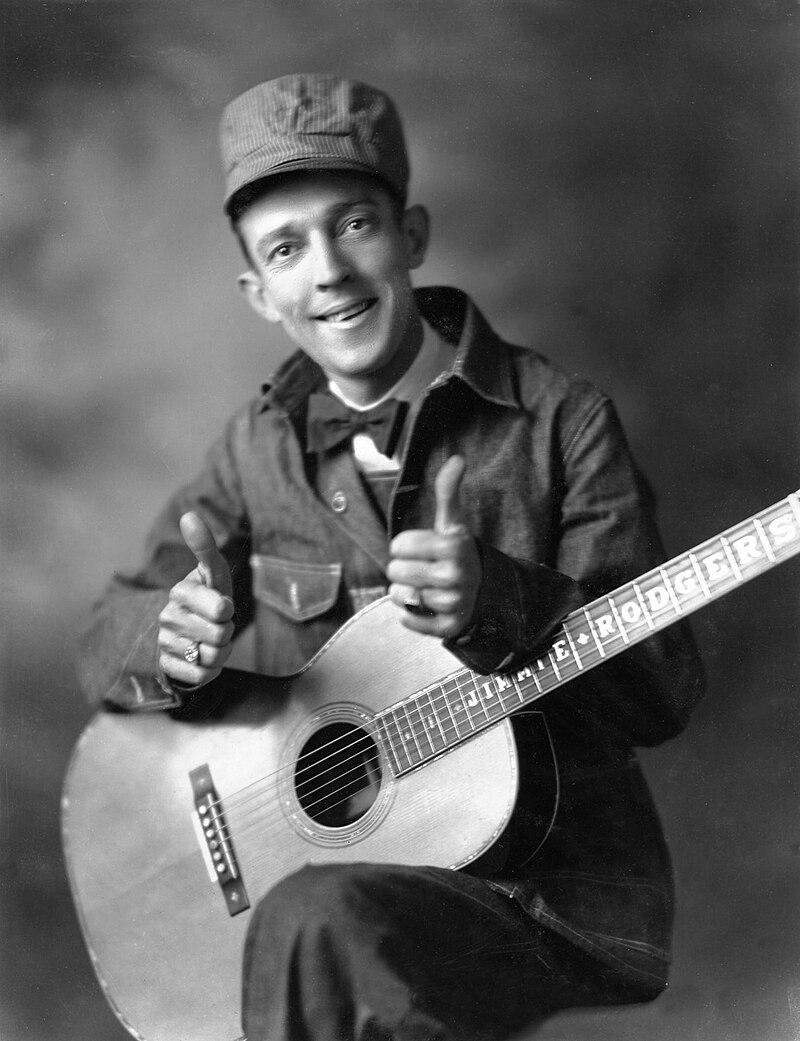
Where it went
Everywhere. The Telecaster-and-pedal-steel template is now the production language of stadium-scale pop (Taylor Swift's career began here; she still uses the harmonic vocabulary). The Outlaw Country revival is bigger now than during the Waylon-and-Willie era — Sturgill Simpson, Tyler Childers, Colter Wall, Margo Price, Sierra Ferrell, Zach Bryan. The country form has cracked open: Lil Nas X's "Old Town Road" (2019) sat at #1 on the Billboard Hot 100 for a record 19 weeks; Beyoncé's Cowboy Carter (2024) reclaimed the Black roots of the form and won Album of the Year. Country has not narrowed. It has split open.
"I always wanted to be the Hank Williams of my generation."
— Townes Van Zandt
Field Guide
- The geographic map
- Bristol → Nashville → Bakersfield → Austin → Muscle Shoals. Each city built its own dialect: Bristol (the origin), Nashville (the industrial center), Bakersfield (the Telecaster rebellion), Austin (Willie Nelson's Outlaw refuge), Muscle Shoals (the country-soul crossroad). Map any country subgenre against the route and the lineage snaps into place.
- The 32-bar verse-chorus
- Country songs are story machines. Verse sets up; chorus delivers the title hook. Most country songs run AABA, AA'BA', or the modern verse/chorus/verse/chorus/bridge/chorus — but the structural rule never varies: the title line is the chorus's first or last line, and the chorus contains the hook the listener carries out of the bar.
- The Black-and-white exchange
- Country has never been white-only music, however the marketing has positioned it. The banjo is West African. The blue yodel is Jimmie Rodgers borrowing from Black blues singers. DeFord Bailey was a Grand Ole Opry star in the 1920s. Charley Pride had 29 #1 country hits in the 1960s-70s. Linda Martell broke the Opry barrier in 1970. The story keeps being told as if it began with the Carters; it began earlier, and with more hands, than the marketing admits.
- The "real" country test
- Every generation of country musicians fights about what counts as "real" country. Bakersfield rejected Nashville. Outlaw rejected Countrypolitan. Alt-Country rejected Bro-Country. The argument is the genre. If country didn't periodically refuse its own polished version, it would have died in 1985.
Ten subgenres of country are mapped on this site, from 1923 (Old-Time Country) to 1995 (Contemporary Country). Tap any of them to follow the lineage from Bristol Sessions porch to streaming-era stadium.
The Jamaican Diaspora
The off-beat heard 'round the world

Almost everything that's happened to popular music since 1960 — the move from rhythm-as-foundation to rhythm-as-content, the rise of the DJ and the producer as artist, the studio as instrument, the bass as lead voice — was either pioneered in Jamaica or amplified by it. An island the size of Connecticut, with 2.8 million people, produces and exports more music per capita than anywhere else on Earth. Five things to listen for, then the short story of how that happened.
Listen-Fors
Things you can hear with your own ears. Once you can name them, you'll start catching them in places you weren't expecting.
- 1
The upstroke
The skank, the chop, the chuck
The single most identifiable Jamaican sonic marker. Western pop hits the downbeat (1 and 3); Jamaican music hits the upbeat (the "and" between each beat). Guitar and keyboard play a sharp percussive chop on the off-beats. Once you can hear the upstroke, you'll hear it in every Jamaican-derived style — from Mento (the source) through Ska (the explosion) through Reggae (the slow-down) through Two-Tone (the UK echo) through Reggaeton (the Latin extension).
beat : 1 2 3 4 Kick + bass : ✓ · ✓ · Skank chop : · ✓ · ✓ ← the upstroke and and (this is where Jamaican music lives)— Any Toots and the Maytals, Bob Marley, or Specials record
- 2
Bass as lead
The melodic instrument moved to the bottom
In American R&B, bass holds down the root. In Jamaican music starting with Rocksteady (1966), the bass becomes the lead melodic voice — it walks, sings, tells the story. The guitar drops to the skank; the horns recede; the bass moves to the front. This is the move that defines everything downstream from rocksteady, including reggae, dub, dancehall, reggaeton, and modern hip-hop bass-led production.
Sing this bass line out loud (it's from Bob Marley's "Stir It Up"): A----- E---- D----- A----- D------ A------- E-- D-- ↑ ↑ the bass IS the song; the vocal melody is the harmony on top.— Family Man Barrett (Bob Marley & The Wailers) · Aston Family Man Barrett bass lines are the genre's textbook
- 3
The one-drop
Kick and rim-shot on beat 3
The drum pattern that defines roots reggae. The kick drum doesn't hit on 1. The snare doesn't hit on 2 and 4. Instead, kick and side-stick rim-shot land together on beat 3 of every bar — and that single hit, falling where the listener least expects it, anchors the entire feel. Once you can hear the one-drop you'll wonder why every other drum pattern hits so often.
beat : 1 2 3 4 kick : · · ✓ · ← only on 3 rim-shot : · · ✓ · ← also only on 3 hi-hat : ✓ ✓ ✓ ✓ ← 8ths underneath ↑ everything else stays out of the way— Bob Marley · "One Love" — Carlton "Carly" Barrett invented this
- 4
The riddim
The instrumental track as compositional unit
In American pop, a song is the unit — lyric, melody, and chords inseparable. In Jamaican music, the *riddim* is the unit. A producer cuts a bass-and-drum track once; then 20 different artists record 20 different songs on top of the same track. The riddim is named ("Sleng Teng," "Real Rock," "Diwali"); it has its own discography; artists "voice on" it. This is how Jamaican music has produced an order of magnitude more songs per capita than anywhere else.
One riddim, many songs (the "Diwali" riddim, 2002):
   Sean Paul    →  "Get Busy"
   Wayne Wonder →  "No Letting Go"
   Bounty Killer →  "Sufferer"
   Lumidee       →  "Never Leave You"
   ...all riding the same instrumental track.
— Lloyd "King Jammy" James / Steely & Clevie / Sly & Robbie — the great riddim producers
- 5
The toaster
The DJ chanting on the mic — hip-hop before hip-hop
The Jamaican sound-system DJ chanting over an instrumental track in the late 1960s. The toaster's job was to talk up the dance, hype the crowd, shout out names, and freestyle over the riddim. U-Roy and Big Youth invented this in Kingston around 1969. DJ Kool Herc — born in Kingston, raised in the Bronx — brought sound-system culture to a New York block party in 1973 and the whole apparatus of hip-hop fell out of it: the DJ, the MC, the breakbeat, the loop. Rap is what happens when Jamaican toasting meets the American block party.
Listen to U-Roy · "Wake the Town" (1970) and then DJ Kool Herc at 1520 Sedgwick Ave (1973) and then any rap record from 1979 onward. Same vocal idea; same instrumental loop; different city.— U-Roy "Wake the Town" 1970 → DJ Kool Herc 1973 → hip-hop, all of it
Where it came from
Mento — rural acoustic Jamaican folk — was the source pool, but the explosion happened in Kingston between 1959 and 1962, around independence. Sound-system operators (Clement "Coxsone" Dodd, Duke Reid, Prince Buster) couldn't get enough new American R&B records to satisfy the dancehalls, so they started recording their own. Jazz-trained musicians from the Alpha Boys School — a Catholic school for at-risk boys that taught band — built Ska from those R&B charts plus Mento's upstroke. Independence came on August 6, 1962. The same year Millie Small's "My Boy Lollipop" became the first international Jamaican hit. The sound and the nation arrived together.

What shaped it
Three forces. The **sound system** — a mobile mini-stadium of speakers run by a selector (DJ) and a toaster (MC) — was Jamaica's parallel music industry, predating and outliving every record label. Sound systems competed at dances; rival systems needed exclusive dubs; that pressure forced producers to record more, faster, and cheaper than anywhere else. The **studio as instrument** — King Tubby and Lee "Scratch" Perry treating the mixing console as a compositional tool starting around 1972, deconstructing finished reggae into echo-and-bass dub versions, inventing remix culture half a decade before disco engineers would name it. And the **Rastafari movement** — by the mid-1970s, Roots Reggae was the public-facing voice of a Pan-African spiritual and political movement. The music carried the religion to three continents.
"Reggae music is the people's music. It's news. It's anything you want to call it; it's the riddim of the people."
— Bob Marley

Where it went
Everywhere downstream of 1975. UK Two-Tone (1979) and Punk's reggae crossover (The Clash, The Police). New York hip-hop (DJ Kool Herc, born in Kingston, runs the first hip-hop block party with Jamaican sound-system equipment). London's Lovers Rock and Jungle/Ragga scenes (1980s and 1990s). Puerto Rican Reggaeton (the Dembow riddim is literally Shabba Ranks's 1990 cut). Modern global pop production — Drake, Rihanna, Justin Bieber, Bad Bunny, Sia — works inside a vocabulary built in Kingston between 1962 and 1985. The Jamaican family on this map is small (eleven styles); the genres it seeded are most of what's on the radio in 2026.
"Without Jamaica there is no DJ Kool Herc and no DJ Kool Herc, no hip-hop. We are the source."
— Sly Dunbar, drummer (Sly & Robbie)
Field Guide
- The sound system
- A mobile institution: huge speaker stacks, a selector who picks records, a toaster who chants over them, and a crowd dancing in the street. Jamaican sound-system culture started in the late 1940s, predates the Jamaican recording industry, and runs in parallel with it to this day. Almost every major Jamaican artist (Marley, Tubby, U-Roy, Yellowman, Vybz Kartel) came up through sound systems first.
- The producer as auteur
- In American pop the artist is the brand. In Jamaican music the *producer* often is — Lee "Scratch" Perry, King Tubby, Clement "Coxsone" Dodd, Joe Gibbs, King Jammy, Bobby Digital, Steely & Clevie, Sly & Robbie. The producer commissions the riddim, voices the artists on it, mixes it, and owns the master. This is why the same artists appear on dozens of labels across decades.
- Patois as a musical instrument
- Jamaican Patois is a creole language with West African grammar and English vocabulary, optimized for rhythm. The flow of a deejay (Yellowman, Shabba, Vybz) sits inside the riddim differently than English would — the syllables land on different beats, the rhyming patterns curve around the upbeat. The lyrical content is often local-Kingston-specific. When the global pop world borrows Jamaican vocals (Sean Paul, Sia, Drake using patois inflection), the patois is doing musical work even when the listener can't parse it.
- Population physics
- 2.8 million people. The size of Iowa. And yet — Reggae, Dub, Dancehall, the riddim system, the producer-auteur model, the toaster vocal style, and the rhythmic chassis of half of global pop. Per capita, Jamaica is the most musically generative nation in history. Most of why is on this page.
Eleven subgenres are mapped on this site, from 1850 (Mento) to 1991 (Reggaeton). Tap any of them to follow the lineage from rural mento porch to Bad Bunny's streaming-era "perreo."
The Loop and the Voice
Hip-hop is the most-consumed music in America and the dominant pop language of the planet — and it is also the latest chapter of a rhythmic story that runs back through the Caribbean to West Africa. It began as a culture of four elements at Bronx block parties in 1973, built itself out of other records, and turned the loop into the basic unit of modern music. Five things to listen for, then the short story of where it came from.
Listen-Fors
Things you can hear with your own ears. Once you can name them, you'll start catching them in places you weren't expecting.
- 1
The break
The loop is the band
The 'break' is the few bars of a funk or soul record where everything drops out except the drums. DJ Kool Herc's discovery: that moment is what the dancers wait for — so play two copies of the record and switch between them, extending eight seconds into infinity. Every hip-hop beat since is some descendant of a looped break.
record A : |—— break ——| |—— break ——| record B : |—— break ——| ... ↑ the 'merry-go-round' — eight seconds, forever— James Brown · "Funky Drummer" · 1970 — the most-sampled break in history
- 2
Flow
Where the syllables land
An MC's flow is rhythm, not just rhyme — which syllables hit the beat, which dodge it, where the rhyme lands in the bar. Old-school MCs rhymed squarely on the downbeat; Rakim moved the rhymes inside the bar like a saxophonist; triplet flows ride three-against-two. Same beat, different flow, completely different record.
on-beat (1979): "I said a HIP hop, the HIP-pie the HIP-pie..." 1 2 3 inside the bar: syllables land between the beats, rhymes stack mid-line, not just at the end— Rakim · "I Ain't No Joke" · 1987 — the flow revolution in one verse
- 3
The 3+3+2 underneath
The tresillo, still working
Count many hip-hop bass and hi-hat patterns and you get 3+3+2 — the tresillo, the Afro-Cuban cell that traveled from West Africa through Havana and New Orleans into R&B, rock and roll, and the 808. When a trap 808 glides or a drill bass slides, it usually lands on these three points. Four centuries of rhythm in one bar.
count : 1 2 3 4 & (8 pulses) cell : X · · X · · X · |—3—|—3—|—2—| ← habanera bass · Bo Diddley · 808 pattern— The transatlantic cell — see the field guide below for the reading list
- 4
Sampling as quotation
Hearing the source inside the song
A sample isn't theft of a sound; it's a citation. The producer digs up a 1973 soul record, chops it, and the old voice sings inside the new song — the lineage is audible. Knowing the source changes the meaning: a track about Brooklyn ambition built on an early-80s funk hit is having a conversation with it.
1983 : Mtume · "Juicy Fruit" (the source) 1994 : The Notorious B.I.G. · "Juicy" (the quotation) — same bassline, new testimony on top— Crate-digging: the producer's archive practice
- 5
Call & response
The crowd is an instrument
The MC calls, the party answers — inherited from the Jamaican sound-system toaster and, behind that, the Black church and West African ensemble practice. The hype man exists to keep the response loud. When a stadium yells the punchline back at the rapper, that's the block party scaled up, not a new invention.
MC    :  "Throw your hands in the air —"
Crowd :  "— and wave 'em like you just don't care!"
MC    :  "Somebody say HO!"
Crowd :  "HOOO!"
— The party-rocking routine — unchanged since 1975
Where it came from
August 11, 1973: a back-to-school party in the rec room of 1520 Sedgwick Avenue, the Bronx. The DJ is an 18-year-old Jamaican immigrant, Clive Campbell — DJ Kool Herc — running his father's sound system the way Kingston selectors did, and stretching the drum breaks because that's when the dancers went off. Around the DJ grew a culture with four elements: DJing, MCing, breaking, and graffiti writing. Grandmaster Flash made the turntable a precision instrument; Afrika Bambaataa organized the culture and named it. For six years it was strictly live — the first records ("Rapper's Delight," 1979) shocked the originators, and "The Message" (1982) proved the form could carry reportage, not just party rhymes.
What shaped it
Two pressures, one inheritance. The pressure: the South Bronx of the 1970s was a postindustrial collapse zone — the Cross Bronx Expressway had gutted the neighborhoods, landlords burned their own buildings, the city cut everything. Hip-hop was built from that wreckage's leftovers: park jams powered from streetlight bases, records other people threw away. The inheritance: the deep rhythmic matrix of the Black Atlantic. The tresillo and clave cells that scholars like John Storm Roberts and Christopher Washburne trace from West Africa through Havana into New Orleans jazz, R&B, and rock and roll arrive in hip-hop twice — once through the funk breaks themselves, and once through the Caribbean: Herc's Jamaican sound system, and the Puerto Rican b-boys and DJs who, as Juan Flores documents, were co-founders of the culture, heirs of the mambo-to-boogaloo New York lineage.
"Rap is Black America's CNN."
— Chuck D, Public Enemy
Where it went
Outward in rings. The golden age (1986–94) made the MC an author and the producer an auteur. Gangsta rap made it the country's moral panic and its best-selling music at once. The center of gravity moved south — Atlanta has set the production agenda since the 2000s, and trap became the default grammar of global pop. The diaspora went global and came back: London grew UK rap and grime, then UK drill, whose sound recrossed the Atlantic to remake Brooklyn; Latin trap and reggaeton run on the dembow — a tresillo descendant, the Caribbean cell coming home. In 2017, hip-hop/R&B passed rock as the most-consumed music in the United States. The loop, the flow, and the 808 are now simply how pop music is made.
"Rap is something you do; hip-hop is something you live."
— KRS-One
Field Guide
- The four elements
- DJing, MCing, breaking, graffiti — and, as Bambaataa always insisted, a fifth: knowledge. The point of the framing is that hip-hop is a culture that contains a music, not a radio format. The dance and the visual art aren't accessories; the breakbeat exists because of the b-boys and b-girls it was extended for.
- The transatlantic matrix
- The rhythmic cells under hip-hop have a documented four-century itinerary: West African timelines → the Cuban contradanza, habanera, and clave → New Orleans's 'Spanish tinge' (Jelly Roll Morton's phrase) → R&B, rock and roll, and the Bo Diddley beat → the 808 era. The reading list: John Storm Roberts, The Latin Tinge; Christopher Washburne, 'The Clave of Jazz'; Ned Sublette, Cuba and Its Music; Juan Flores, From Bomba to Hip-Hop. The same 3+3+2 your students clap in a trap hi-hat pattern is the cell Gottschalk notated in 1859.
- The producer's family tree
- Boom-bap was the SP-1200 and MPC chopping dusty soul (Marley Marl → DJ Premier → Pete Rock). Dr. Dre replayed the samples with live musicians and invented G-funk's glide. The Neptunes and Timbaland stripped the loop to synthesized bounce. Atlanta's trap line (Zaytoven, Lex Luger, Metro Boomin) made the 808 the lead voice. Today the 'type beat' economy means a teenager anywhere on earth can sell a beat to anyone — production is hip-hop's most globalized craft.
- Regional dialects
- New York: boom-bap, lyricism as sport. Los Angeles: G-funk's low-rider glide. Atlanta: trap — the current lingua franca. Memphis and Houston: the slowed, dark undercurrent (Three 6 Mafia, DJ Screw) that the 2010s rediscovered. Chicago: drill's cold realism. London: UK rap, grime-adjacent, then UK drill — which Brooklyn borrowed back. The map is the genre: ask where a record is from and the drums usually answer first.
Eleven subgenres of hip-hop are mapped on this site, from the 1973 block parties (Old School Hip-Hop) to the 2010s street dialects (Drill, Mumble Rap). Tap any of them to follow the lineage from two copies of the same record to the default grammar of global pop.
Punk & Post-Punk
Year Zero
Punk is the clearest case on this whole map of music working as a mirror: you can read 1976–79 Britain — the dole queues, the Jubilee, the garbage strikes — straight off the records, and bankrupt New York off the records that came just before. It's also the great reset button: a deliberate demolition of rock's accumulated skill requirements — and in groove terms a precise act: strip the swing out of the backbeat, straighten it, accelerate it, until urgency replaces virtuosity as the rhythm section's whole job. Everything then had to be rebuilt — and the rebuilding (post-punk, new wave, synth-pop) changed more music than the demolition did. Five things to listen for, then the short story.
Listen-Fors
Things you can hear with your own ears. Once you can name them, you'll start catching them in places you weren't expecting.
- 1
The downstroke wall
Straight eighths, all down-picked
Punk's engine is a guitar playing barre-chord eighth notes, every one a downstroke, at speed — a physical discipline disguised as ignorance. The drums play the same eighths. The whole band is one rhythm instrument.
guitar : ↓ ↓ ↓ ↓ ↓ ↓ ↓ ↓ | ↓ ↓ ↓ ↓ ↓ ↓ ↓ ↓ hi-hat : x x x x x x x x | x x x x x x x x 1 & 2 & 3 & 4 & (no upstrokes, no exceptions)— Ramones · "Blitzkrieg Bop" · 1976 — Johnny Ramone's right hand
- 2
Three chords, two minutes
Economy as ideology
Punk audited the rock song and cut everything that didn't pay rent: solos, intros, third verses. The Ramones' debut fits fourteen songs into twenty-nine minutes. The brevity isn't a limitation — it's the argument: anyone can do this, so everyone should.
1976, the same year:
prog-rock track  :  one song  ≈ 20 minutes
Ramones album    :  14 songs ≈ 29 minutes
— Ramones (debut LP) · 1976 · recorded for $6,400
- 3
Sing your own accent
The voice as a postcode
Before punk, British singers mostly sang in borrowed American radio voice. Rotten sneered in London vowels about London problems, and the spell broke permanently — from then on, regional accent was an instrument. You can hear the same decision later in UK rap and grime.
"God save the queen / the fascist regime"
— delivered not sung, the vowels curled,
the accent doing half the political work
— Sex Pistols · "God Save the Queen" · 1977
- 4
The bass takes the melody
Post-punk's great inversion
After punk burned the old arrangement down, post-punk rebuilt it upside-down: the bass plays the hook, high and melodic, while the guitar scratches texture and the drums run patterns instead of backbeats. Once you hear the inversion, you can identify post-punk (and its many revivals) in two bars.
old contract :  guitar = melody · bass = roots · drums = backbeat
post-punk    :  BASS = melody · guitar = percussion · drums = pattern
— Joy Division · "Love Will Tear Us Apart" · 1980 — the hook lives in the bass and synth
- 5
The machine joins the band
DIY ends up electronic
Punk said anyone can form a band. The cheap monosynth (suddenly less than a guitar amp) finished the thought: you didn't even need a drummer. Synth-pop is punk's DIY ethic transposed to machines — two synth players and a sequencer as a complete pop group.
1976 band :  guitar · bass · drums · singer
1981 band :  synth · synth · drum machine · singer
(same DIY premise, new tools)
— The Human League · "Don't You Want Me" · 1981 — UK Christmas #1, no guitars
Where it came from
Two broke cities, one idea. New York, 1974–76: the city is functionally bankrupt, downtown rents are nothing, and a Bowery bar called CBGB lets unsigned bands play originals — Television, Patti Smith, Blondie, and the Ramones, who strip rock to its chassis. London, 1976: the Ramones play there on July 4th; within months the Sex Pistols' 'Anarchy in the U.K.' and a sweary teatime TV interview make punk a national emergency. The mirror is exact in both cities — cheap ruins made the scenes possible, and the scenes sounded like the ruins.
What shaped it
Read the British charts of June 1977 as a social document: Jubilee week, and a record the BBC refuses to play — 'God Save the Queen' — sits at #2. Stagflation, youth unemployment, and strike winters made 'no future' reportage rather than nihilism. The second pressure was infrastructural, and it outlived the music: punk built the independent economy — labels like Stiff, Rough Trade, and Factory, fanzines like Sniffin' Glue, and the era's defining image, a fanzine diagram of three guitar chords captioned with an instruction. Everything from indie distribution to Bandcamp descends from that diagram.
"This is a chord. This is another. This is a third. Now form a band."
— Sideburns fanzine, 1977
Where it went
Punk proper burned out almost immediately — the Pistols lasted twenty-six months, ending with Rotten's onstage exit line at Winterland in January 1978: 'Ever get the feeling you've been cheated?' What followed mattered more. The energy forked three ways: faster and purer (hardcore, mapped in its own family); stranger (post-punk — Joy Division, PiL, Gang of Four — which fed goth, industrial, and all of alternative rock); and popward (new wave and synth-pop, which conquered MTV and became the 1980s). The mirror kept working at every fork: Manchester's deindustrial gloom is audible in Joy Division's empty-warehouse drum sound, and the cheap Japanese synthesizer is audible in synth-pop's very existence. Every fifteen years or so, a new generation with something to be angry about revives one of the branches.
"The future is unwritten."
— Joe Strummer
Field Guide
- Music as a mirror
- This family is the cleanest demonstration on the map: NYC's fiscal collapse → CBGB's cheap stage → punk rock; Britain's stagflation and Jubilee → 'no future' at #2; Manchester's dead mills → post-punk's cavernous space; affordable Japanese synths → synth-pop's machine bands. In every case the economics arrive a step before the sound. Teach the history and the records become legible; teach the records and the history becomes audible.
- The DIY institution
- Punk's most durable product isn't a song — it's infrastructure. Independent labels, self-released singles, fanzines, all-ages venues, and the principle that the means of production belong in the band's hands. That institutional DNA runs unbroken from Rough Trade and Dischord to bedroom releases on Bandcamp and SoundCloud.
- The two cities
- Same years, different mirrors. New York punk was art-school and apolitical — boredom, irony, downtown glamour (Television, Blondie). London punk was class war — dole queues, the monarchy, the National Front. Listening for the difference (irony vs. fury) is the fastest way to place any punk record on the map.
- The 1978 fork
- When punk 'died,' it forked three ways, and the map shows all of them: harder and faster → the Hardcore Punk family; stranger and darker → post-punk, feeding Gothic Rock and the Alternative/Indie families; brighter and popward → new wave and synth-pop, feeding Pop and the entire MTV decade. One demolition, three reconstructions — arguably the most consequential fork on this site.
Eight subgenres are mapped on this site, from the Stooges' 1969 proto-punk to synth-pop's 1985 chart conquest. Tap any of them to follow the lineage from two chords in a Bowery bar to the machine-pop that ruled the radio.
R&B · Soul · Funk
The Backbeat Century
In 1949 Billboard renamed its 'race records' chart 'Rhythm & Blues,' and the name stuck to seventy years of Black American popular music — jump blues to doo wop to soul to funk to disco to the R&B of right now. This family is where the church met Saturday night, where the backbeat was standardized, and where a rhythmic inheritance that crossed the Atlantic twice — West Africa to Cuba to New Orleans — settled into the grooves the whole world now dances to. Five things to listen for, then the short story.
Listen-Fors
Things you can hear with your own ears. Once you can name them, you'll start catching them in places you weren't expecting.
- 1
The backbeat
Snare on 2 and 4
The family's signature and its gift to all popular music since: the snare cracking on beats two and four while the crowd claps with it. Gospel congregations clapped it first; R&B drummers made it law.
count : 1 2 3 4 clap : X X (clap on 2 and 4 — never 1 and 3, or every soul musician will wince)— The floor under everything from Ray Charles to Beyoncé
- 2
Melisma
The church in the voice
One syllable stretched across many notes — the gospel run carried into secular love songs. When Ray Charles turned 'My Jesus' phrasing into 'I Got a Woman' (1954), the gospel-soul merger became the family's engine and its founding scandal.
word : "I" sung : "I-ee-aye-ee-I" (five pitches, one breath, total conviction)— Ray Charles · "I Got a Woman" · 1954
- 3
The One
Funk's center of gravity
James Brown moved the music's weight to the first beat of the bar — everything syncopates wildly, then lands together, hard, on the One. Count along: the more chaotic the parts, the heavier that downbeat hits.
ONE - and-uh-two-and - three-uh - four-and
 ▲
 everything resolves here, every bar
— James Brown · "Cold Sweat" · 1967 — the rhythmic constitution of funk
- 4
Call & response
The horn section answers
The singer phrases; the horns stab back. Same conversation as the gospel choir and the field holler, now wearing a suit. Listen for the gap the singer leaves — it's always filled.
voice :  "I feel good!"        →
horns :                     BAH-BAH!
voice :  "I knew that I would" →
horns :                     BAH-BAH!
— James Brown · "I Got You (I Feel Good)" · 1965
- 5
Swung vs. straight
The great subdivision shift
Early R&B shuffles (long-short triplet feel); by the early sixties the family had largely shifted to straight, even eighth notes — a change pushed by the era's Afro-Cuban dance crazes (cha-cha-chá, mambo) and the clave-based grooves underneath hits like Bo Diddley's. Hear the difference and you can date a record within a decade.
shuffle : dum-da dum-da dum-da dum-da (1948 — Wynonie Harris) straight : dum dum dum dum dum dum dum dum (1963 — Motown) ← the tresillo/clave era pushed this shift— The 1950–61 transition — the transatlantic rhythmic matrix at work
Where it came from
The Great Migration carried the blues and the church north into electric cities, and after the war the result got loud: jump blues (Louis Jordan's small, swinging, joking combos), honking saxophones, and in 1949 a new chart name — Rhythm & Blues — for what white-owned trade papers had called race records. The fifties built the family's two wings in parallel: doo wop's street-corner harmony and the gospel-secular merger that Ray Charles detonated and Sam Cooke made beautiful. Underneath it all ran the older inheritance: the habanera and tresillo cells that came up from the Caribbean through New Orleans, audible in everything from Professor Longhair's piano to the Bo Diddley beat.
"If you can't manage to put tinges of Spanish in your tunes, you will never be able to get the right seasoning, I call it, for jazz."
— Jelly Roll Morton, Library of Congress recordings, 1938
What shaped it
Three mirrors, all sharp. The church: nearly every great voice in this family trained on Sunday morning, and the sacred-secular tension (Sam Cooke leaving the Soul Stirrers, Aretha returning to record Amazing Grace) is the music's emotional core. Black entrepreneurship under segregation: Motown was the largest Black-owned business in America, and its assembly-line craft — the Funk Brothers, quality control meetings, charm school — was Detroit's auto industry mirrored in song. And the civil-rights decade: 'A Change Is Gonna Come,' 'Respect,' and 'Say It Loud — I'm Black and I'm Proud' aren't songs about the movement; they're the movement, charting.
"Free your mind... and your ass will follow."
— George Clinton (Funkadelic, 1970)
Where it went
Everywhere, twice. Funk's One became hip-hop's sample library — James Brown is the most-sampled artist in history. Philly soul's strings became disco, disco became house and dance music wholesale, and the backlash against disco (1979's record-burning 'Disco Demolition') is its own ugly mirror of the era. New jack swing wired R&B to hip-hop's drum machines; hip-hop soul (Mary J. Blige) completed the merger; neo soul (D'Angelo, Erykah Badu) returned to the church-and-Fender-Rhodes source. Today's R&B — The Weeknd, SZA, Frank Ocean — is the family's vocabulary running the global pop charts, and the Caribbean cell underneath it all came home again in reggaeton's dembow.
Field Guide
- Music as a mirror
- Follow the chart names and you follow America: 'race records' until 1949, 'Rhythm & Blues' after, briefly 'Soul' in the 70s, back to R&B. Each renaming is the industry renegotiating with the culture that makes the music. The family's whole history — migration, the church, Black-owned business, civil rights, the disco backlash — reads off its biggest records in order.
- The transatlantic matrix
- This family is the middle chapter of the rhythmic story told on the Hip-Hop card: West African timelines → Cuban clave and habanera → New Orleans 'Spanish tinge' → the Bo Diddley beat and the straight-eighth shift of 1950–61 → funk's syncopation → the sample era. Readings: John Storm Roberts, The Latin Tinge; Ned Sublette, Cuba and Its Music; Christopher Washburne's clave scholarship.
- The producer's lineage
- This family invented the modern producer: Berry Gordy's assembly line, Gamble & Huff's Philly orchestra, Norman Whitfield's psychedelic soul, Quincy Jones's Thriller — through Teddy Riley, Babyface, Timbaland, and The-Dream. The R&B production chair is where pop's sound gets decided, decade after decade.
- Sunday morning / Saturday night
- The same musicians, the same techniques, two rooms. Gospel quartets became doo wop groups; church organists became soul-jazz B3 players; the tension between the rooms powered the music's greatest careers and crises. The blues family card calls it 'sacred music that decided to dance' — R&B is sacred music that decided to fall in love.
Thirteen subgenres are mapped on this site, from 1945 (Rhythm and Blues) to 1998 (R&B Pop). Tap any of them to follow the lineage from the jump-blues bandstand to the streaming-era charts it still runs.
The Big Bang
For about five years in the mid-1950s, a collision of jump blues, gospel R&B, country boogie, and western swing produced the loudest cultural explosion America had yet exported. Rock and roll invented the teenager as a market, integrated the radio dial years ahead of the lunch counter, and standardized the backbeat-and-backbeat-guitar grammar that every band since has either used or argued with. Five things to listen for, then the short story.
Listen-Fors
Things you can hear with your own ears. Once you can name them, you'll start catching them in places you weren't expecting.
- 1
The backbeat, loud
R&B's 2-and-4 at teenager volume
Rock and roll took R&B's snare backbeat and turned it into the whole point — louder, simpler, built for dancing in gymnasiums. If the snare hits 2 and 4 hard enough to clap to on first listen, you're in the family.
count : 1 2 3 4 snare : X X (the same gospel clap — now amplified)— "Rock Around the Clock" · Bill Haley · 1954 — the backbeat goes to #1
- 2
Twelve bars at teen tempo
The blues form, sped up and grinning
Most early rock and roll is the 12-bar blues with the grief swapped for gasoline — same three chords, same form, double the tempo, lyrics about cars, school, and Saturday night. Count the form on any Chuck Berry record; it lands every time.
| I  I  I  I | IV IV I  I | V  IV I  V |
  (the blues skeleton — see the Blues family card —
   now wearing blue suede shoes)
— Chuck Berry · "Johnny B. Goode" · 1958
- 3
The straight-eight shift
When the shuffle ironed out
Early rock and roll swung like jump blues; by the late fifties the eighth notes straightened — pushed by Little Richard's hammering piano and the era's Afro-Cuban dance grooves (the Bo Diddley beat is a clave). The straight eight became rock's default pulse forever after.
swung    :  dum-da dum-da dum-da   (1951)
straight :  dum dum dum dum dum dum (1957 — Lucille's piano)
clave    :  X · · X · · X · | · · X · X · · ·  (Bo Diddley, 1955)
— The same transatlantic shift described on the R&B family card
- 4
The intro lick
The song announces itself
Rock and roll perfected the recognizable-in-one-second opening: Berry's double-stop fanfare, the slapback-echo vocal hiccup, the count-in. Radio demanded it — a record had three seconds to stop the dial.
"Johnny B. Goode" — you know it from the first half-second
of guitar. That's engineered, not lucky: the intro is
the product.
— Chuck Berry's double-stop intros — the most copied four bars in guitar history
- 5
Slapback echo
The Sun Records shiver
One fast tape repeat on the voice — the singer doubled a split second behind themselves. It's the sound of Sun Studio in Memphis, and it makes one nervous kid sound like the future. Hear it once and you'll recognize 1954–56 instantly.
sung : "Well, that's all right, mama—" heard : "Well(ell), that's(ats) all(ll) right(ite)..." (the echo is the excitement)— Elvis Presley · "That's All Right" · Sun Records · 1954
Where it came from
Nothing about it was new except the collision. Jump blues supplied the beat and the honk; gospel R&B the voice; country boogie and western swing the twang and the train rhythm; the Caribbean-via-New Orleans cell the syncopation (listen to Fats Domino's left hand). DJ Alan Freed supplied the name — borrowed from R&B slang — and the radio supplied the integration: Black records reaching white teenagers at night on clear-channel stations their parents couldn't police. Memphis 1954 (Elvis at Sun), Chicago 1955 (Chuck Berry's 'Maybellene' at Chess), New Orleans throughout: the explosion had three capitals and one audience — the newly invented teenager.
"The blues had a baby and they named it rock and roll."
— Muddy Waters, "The Blues Had a Baby" (1977)
What shaped it
The mirror here is postwar adolescence and the segregated marketplace it disrupted. Teenagers had cars, allowances, and transistor radios — a private economy adults couldn't supervise — and rock and roll was its currency. The race politics were in the grooves: Little Richard's originals versus Pat Boone's sanitized covers is a whole civil-rights argument in two chart positions, and the music's white stars knew their debts (Elvis said so plainly; the industry mostly didn't pay them). The panic was immediate — pulpits, editorials, congressional payola hearings — and the panic was the point: the music was the sound of the racial and generational lines moving.
"I am the architect of rock and roll."
— Little Richard — and he had the receipts
Where it went
The first era ended fast and strangely — Elvis drafted, Little Richard in the seminary, Chuck Berry in legal trouble, Buddy Holly's plane down in February 1959 — and for a few years pop softened. But the records had already crossed the ocean: Liverpool and London teenagers learned them note for note and sold them back to America in 1964 as the British Invasion. From there this family's DNA is simply everywhere — surf rock's reverb, garage rock's snarl (and through it punk), and the entire Classic Rock family next door. The revival circuit (Sha Na Na at Woodstock, the Stray Cats, American Graffiti and Grease) made the era pop culture's permanent good-old-days — a nostalgia mirror reflecting a moment that was, at the time, a moral emergency.
Field Guide
- Music as a mirror
- Rock and roll is the sound of two American borders failing at once: the color line (Black records on white radios, integrated audiences dancing) and the generational line (the teenager as a sovereign market). Every adult panic of 1956 — the hips, the volume, the mixing — is a report on which border was moving that week.
- The cover-version ledger
- Teach the era through paired recordings: Big Mama Thornton's 'Hound Dog' (1953) against Elvis's (1956); Little Richard's 'Tutti Frutti' against Pat Boone's. Who wrote it, who charted, who got paid — the whole economics of American race and royalties in a two-song listening assignment.
- Three capitals
- Memphis (Sun: slapback, country-blues collision), Chicago (Chess: Berry's guitar and Diddley's clave), New Orleans (Fats Domino, Little Richard's sessions: the Caribbean left hand). Place any 50s record by its room sound and you've placed its lineage.
- The five-year fuse
- 1954–1959, start to stall — barely longer than punk's first run. Short genres with long shadows is a pattern on this map: the explosion matters less for its duration than for what walks out of the crater (here: the entire rock half of the map).
Five subgenres are mapped on this site, from 1954 (Rock and Roll, Rockabilly) to the 1969-onward Revival. Tap any of them to follow the lineage from the Sun Studio echo to everything the radio did next.
The Riff Becomes the Clock
What holds this family together isn't a decade — it's a groove decision. Between the British Invasion and punk's demolition (roughly 1965 to 1977), rock's timekeeping changed hands: the short repeated guitar riff took over as the band's clock — a load-bearing rhythmic figure everyone sets their watch to, doing for this music what the timeline cell does for Afro-Caribbean ensembles — laid over a backbeat gone heavy and straight in the John Bonham school. Everything else the family is famous for happened on top of that clock: bigger amplifiers, the single becoming the LP, the band becoming an institution, the FM dial, the stadium. It's also where the counterculture's mirror shows its strangest image: revolution as a mass-market product. Five things to listen for, then the short story.
Listen-Fors
Things you can hear with your own ears. Once you can name them, you'll start catching them in places you weren't expecting.
- 1
The riff
The song's load-bearing wall
A short, repeated guitar figure that IS the song — not an intro to it. 'Satisfaction,' 'Smoke on the Water,' 'Whole Lotta Love': hum the riff and you've named the record. The riff replaced Tin Pan Alley's melody as rock's basic unit of memory.
duh - duh - duh — duh-duh, duh-duh
(four notes, one fuzz pedal, immortality —
 'Satisfaction,' 1965)
— The Rolling Stones · 1965 — the fuzz riff as the whole product
- 2
The power chord
Two notes, no third
Root and fifth, no third — neither major nor minor, just mass. Distortion makes full chords muddy; the power chord stays clear at any volume, which is why it became loud rock's harmonic atom (and metal's, next door).
full E major :  E - G# - B   (sweet, muddies under fuzz)
power chord  :  E - B        (neither happy nor sad — just BIG)
— The harmonic atom of everything from the Kinks to the Metal family card
- 3
Album-side thinking
The LP as the unit of art
After Sgt. Pepper (1967), the band's statement was forty minutes, not three. Songs got long because the format allowed it and FM radio — album tracks, no jingles — rewarded it. Listen for records built as journeys: side one has an arc.
1964 : the single (2:30, A-side/B-side) 1973 : the album (Dark Side of the Moon — one continuous 43-minute construction)— Sgt. Pepper (1967) → the FM album decade
- 4
The drum sound as a room
When the kit got cinematic
Classic rock is when drums stopped being timekeeping and became architecture — Bonham's stairwell thunder on 'When the Levee Breaks' is a literal building, miked. Listen for the space around the kit: the bigger the room sound, the later in the decade you are.
1965 : drums = dry, small, back of the mix 1971 : drums = a three-story stairwell at Headley Grange (two mics, one Bonham)— Led Zeppelin · "When the Levee Breaks" · 1971
- 5
The blues, electrified and borrowed
The family's open debt
The riffs are blues licks at imperial wattage — Zeppelin from Willie Dixon, the Stones from Muddy Waters (they took their name from his song), Cream from Robert Johnson. Hearing the source inside the stadium version is the family's essential listening skill, and its essential ethics lesson.
Robert Johnson · "Crossroads" (1936, one man, one guitar) ↓ Cream · "Crossroads" (1968, Marshall stacks, Winterland) — same song, 32 years and 10,000 watts apart— The Blues family card is the prequel to this one
Where it came from
The British Invasion sold America's own music back to it: Liverpool and London art-school kids who had memorized Chess and Sun records returned them at higher volume, and the arms race was on. Psychedelia (1966–67) added the studio-as-instrument; the blues boom added the guitar hero; by 1969–71 the form's pillars were up — Hendrix at Woodstock, Zeppelin's first four albums, the Stones' imperial run. The infrastructure mattered as much as the music: the LP format, FM 'underground' radio, the rock press (Rolling Stone, 1967), and a touring circuit that scaled from clubs to festivals to stadiums inside five years.
What shaped it
The mirror is the counterculture's rise and its monetization. The music carried the decade's actual history — Vietnam ('Fortunate Son'), Kent State ('Ohio,' written, recorded, and on the radio within weeks of the shootings), the whole long hangover of the sixties — and at the same time became the largest entertainment business on earth, a tension the bands themselves wrote about. Technology was the second mirror: Marshall stacks, multitrack studios, and the gatefold LP each changed what a 'song' could be. By the mid-seventies the form's scale was its own subject — private jets, triple albums — which is precisely what the Punk family card is reacting to.
"Hey hey, my my — rock and roll can never die."
— Neil Young, "Hey Hey, My My" (1979) — written as punk arrived
Where it went
Three directions at once. Heavier: hard rock begat the entire Metal family next door. Bigger: arena rock perfected the stadium chorus, and its production grammar runs through every large-room act since. And backward, into the canon: 'classic rock' became a radio format in the 1980s, which froze this decade as rock's official golden age — a nostalgia mirror so durable that these records now outdraw most living acts. The family's living edge runs through every band still working its vocabulary, from Foo Fighters to Greta Van Fleet, and its riff-and-power-chord grammar remains the default meaning of the words 'rock band.'
"Rock and roll is music for the neck downwards."
— Keith Richards
Field Guide
- Music as a mirror
- Watch the venue and you watch the culture: coffeehouse (1963) → club (1965) → ballroom (1967) → festival (1969) → stadium (1973). Each room is a census of the counterculture's size and a measure of its commercialization. The music scaled its drama to fill each new space — that's why the decade ends in arena choruses.
- The debt ledger
- Pair every classic rock landmark with its blues source: Zeppelin/Dixon, Stones/Waters, Cream/Johnson. The borrowing built the genre; the missing credits (and lawsuits, some won) are part of its history. The map's edges from the Blues family into this one are the receipts.
- FM vs. AM
- AM radio = the 2:30 single, mono, jingles. FM 'underground' radio (1967 on) = album cuts, stereo, eight-minute songs. The format split is why this family's music got long and why 'deep cuts' exist as a concept. Radio economics composed half this decade.
- Reading the gatefold
- The LP sleeve was the era's visual medium — lyric sheets, concept art, Hipgnosis surrealism. Teaching tip: hand students the cover before the record; the package was designed as part of the argument.
Seven subgenres are mapped on this site, from 1965 (Folk Rock, Psychedelic Rock) to 1975 (Arena Rock). Tap any of them to follow the lineage from the British Invasion's borrowed blues to the stadium's last encore.
The Heaviness Engine
Metal was born in industrial Birmingham in 1970 — downtuned, dark, and proudly working-class — and grew into the largest dedicated subculture in music: its own dress code, festivals, economies, and a half-century arms race toward greater extremity. No family on this map mirrors its birthplace more literally (the factory is audible) or has generated more subgenres from a single source. Five things to listen for, then the short story.
Listen-Fors
Things you can hear with your own ears. Once you can name them, you'll start catching them in places you weren't expecting.
- 1
Distortion as harmony
The power chord at saturation
Metal's basic sound is the two-note power chord through high gain — distortion generates overtones that fill in the harmony, so two notes sound like a cathedral. This is why metal abandoned full chords: the amplifier is playing the third.
clean E5 : two notes, thin distorted E5 : two notes + the amp's overtone series = a wall (the 'brown sound' arms race)— The physics under every riff from Sabbath forward
- 2
The palm-muted chug
The guitar as a drum
The picking hand rests on the strings at the bridge, turning notes into percussive thuds — the chug. Locked one-to-one with the kick drum, it makes rhythm guitar a percussion instrument. The tightness of the chug-kick lock is how metal bands are judged.
guitar : chug-chug-chug-CHUG · chug-chug-CHUG kick : ● ● ● ● · ● ● ● (identical accents — one instrument, two players)— Thrash's foundation; see Metallica's right hands
- 3
The gallop
Eighth + two sixteenths
Da-da-dum, da-da-dum — the riding-rhythm cell that powers Iron Maiden and a thousand descendants. Played on the low string, doubled by the kick drum, it's metal's signature forward motion: aggression with a heroic gait.
count : 1 -uh-& 2 -uh-& 3 -uh-& 4 -uh-& cell : ● ··● ● ··● ● ··● ● ··● ('The Trooper' — hum it, you'll hear the horses)— Iron Maiden · "The Trooper" · 1983
- 4
Double kick
Two bass drums, sixteenth notes
Continuous sixteenth notes on two kick drums (or a double pedal) — the foundation texture of extreme metal. When the feet take over the subdivision, the hands are freed for accents, and the music's floor becomes a rumble.
feet : ●●●●●●●●●●●●●●●● (16ths, both kicks) snare : X X (the engine room of speed, thrash, and death metal)— Motörhead · "Overkill" · 1979 — the first sustained double-kick anthem
- 5
The vocal spectrum
From air-raid siren to growl
Metal stretched the voice in both directions: the operatic high register (Halford, Dickinson) and the pitchless growl and shriek of the extreme genres — the voice as pure texture. Where a singer sits on this spectrum places the subgenre almost by itself.
siren   :  Halford · Dickinson · King Diamond
clean   :  Hetfield's bark · Ozzy's wail
growl   :  death metal (pitch abandoned)
shriek  :  black metal (texture only)
— The fastest subgenre-identification tool in the family
Where it came from
Birmingham, England — a factory city — in 1970. Tony Iommi lost his fingertips in a sheet-metal accident on his last day of factory work, detuned and lightened his strings to keep playing, and accidentally invented the genre's signature heaviness. Black Sabbath's first two albums (both 1970) supplied the darkness, the tritone, and the working-class dread; Deep Purple and Judas Priest stripped out the blues swing and added precision. The name itself — heavy metal — is industrial vocabulary. No origin story on this map is more literal: the sound of the factory floor, made by its workers, about the world it built.
What shaped it
Class, panic, and the arms race. Metal stayed proudly working-class as rock gentrified, and its audience built a parallel culture — patches, festivals, tape-trading — that functioned as identity, not just taste. The moral panics shaped it from outside: the PMRC hearings of 1985, the Judas Priest subliminal-message trial, the Norwegian church burnings — each scandal a mirror of what its era feared, and each one strengthening the subculture's walls. Inside, the engine was the extremity arms race: every generation found the previous one too soft and pushed tempo, tuning, and vocal abrasion further — NWOBHM to thrash to death and black metal — a fifty-year experiment in how heavy heavy can get.
"We are Motörhead, and we play rock and roll."
— Lemmy Kilmister — every show, every night
Where it went
Outward and everywhere. Commercially: from the 80s mainstream peak through nu metal's chart era to today's festival economy, where Iron Maiden and Metallica outdraw nearly everyone alive. Geographically: metal is now most vital at its edges — Scandinavia's extreme scenes, Latin America's fanaticism, Botswana's cowboys, Indonesia's underground — a genuinely global working-class subculture. Musically, its children are this map's biggest single brood: thrash, death, black, doom, power, prog metal, metalcore — and its techniques (drop tunings, double kick, the growl) have leaked into pop punk, hip-hop, and film scoring. The factory closed; the engine never did.
Field Guide
- Music as a mirror
- Metal is deindustrialization's soundtrack, made by the deindustrialized. Birmingham 1970, the rust-belt American thrash scenes, Scandinavia's isolated extremity — the genre flourishes where heavy industry lived or died. The PMRC-to-church-burning panic timeline is its own mirror: each decade's metal scandal maps that decade's anxieties.
- The family tree discipline
- Metal's thirteen tiles are the map's clearest evolution exercise: every subgenre defines itself against a parent (NWOBHM speeds up Sabbath; thrash speeds up NWOBHM; death extremifies thrash; black metal rejects death metal's polish). Teach it as a cladogram — students can hear each branching decision.
- The subculture economy
- Patches, zines, tape-trading, festival pilgrimages (Wacken, Donington), the battle vest as résumé — metal built the most complete parallel music economy of any genre here. It's why the music survives chart invisibility: the infrastructure is the fandom.
- Virtuosity's two poles
- Metal simultaneously hosts rock's most technical players (the conservatory wing: prog metal, shred) and its most committed primitivists (early black metal's lo-fi orthodoxy). The tension is productive and permanent — the same family card holds Dream Theater and Darkthrone.
Thirteen subgenres are mapped on this site, from 1970 (Heavy Metal — Paranoid's year) to the metalcore mainstream of right now. Tap any of them to follow the lineage from a Birmingham sheet-metal accident to a global subculture's half-century engine.
The Chart Is the Mirror
Pop isn't a sound — it's a relationship: whatever the largest audience is buying, engineered on purpose. That makes this family the purest mirror on the map: every era's pop is a snapshot of its technology (sheet music, the 45, MTV, streaming), its industry structure (Tin Pan Alley, the Brill Building, the Swedish hit machine), and its teenagers. Every groove stream on the map passes through this family — the waltz and the oom-pah, the backbeat, the four-on-the-floor, the dembow — and the chart owns none of them: pop's rhythm section is whatever the era's biggest rooms are dancing to. Five things to listen for — they're craft constants that survive every era — then the short story.
Listen-Fors
Things you can hear with your own ears. Once you can name them, you'll start catching them in places you weren't expecting.
- 1
The hook economy
Chorus by 0:45
Pop's iron law: the most memorable idea arrives early and returns often. Time any era's #1 — the chorus lands within the first minute (and in the streaming era, often within the first fifteen seconds, because the skip button is the new radio dial).
1965 single   :  chorus at ~0:40
1999 single   :  chorus at ~0:45
2020 single   :  hook fragment at 0:05 (pre-skip insurance)
— The constant under every format change
- 2
Verse / pre-chorus / chorus
The engineered lift
Modern pop form is a ramp: the verse states, the pre-chorus tightens (rising line, drums building), the chorus releases. Once you can label the pre-chorus — the 'here it comes' section — you can diagram almost any hit since the 80s in one listen.
verse      :  ground level (story)
pre-chorus :  the stairs (tension rises — listen for the drums)
chorus     :  the view (title, hook, full arrangement)
— The structural skeleton of the modern hit
- 3
The four-chord loop
I–V–vi–IV and its rotations
A huge share of modern pop runs on one looping four-chord progression in some rotation — bright, never resolving, endlessly singable. It's the harmonic equivalent of the loop in hip-hop: a stable floor for the voice to dance on.
C  →  G  →  Am  →  F   (and repeat, forever)
(rotate it — Am F C G — and you've got a
 different decade's hits, same wheel)
— The wheel under thousands of hits — count them yourself
- 4
The key-change lift
The final-chorus elevator
The last chorus jumps up a half or whole step — pop's oldest trick for manufacturing one more wave of emotion. Its rise (50s–90s ballads) and near-disappearance (streaming-era pop barely uses it) is itself a datable style marker.
chorus 3 : same melody, one step higher — the singer 'reaches,' the room lifts (if you feel a sudden sunrise at 3:10, that's the modulation)— The Schlager and power-ballad signature, now nearly extinct
- 5
The production gloss
Hearing the era in the polish
Pop wears its decade's best studio technology as a finish: the wall of sound, gated 80s drums, Auto-Tune sheen, side-chain pump, the loudness war's brick walls. You can date a pop record within five years from the gloss alone — the surface IS the history.
1963 :  mono wall of sound
1984 :  gated reverb snare
2010 :  side-chained synths, maximal loudness
2023 :  close-mic whisper-pop, sparse low end
— Production as carbon dating
Where it came from
Tin Pan Alley — the Manhattan sheet-music district where songwriting became an industry around 1900. The product was the song itself, sold as paper, written to formula by professionals and performed by everyone. Every later pop machine is this model with new hardware: the Brill Building's cubicle songwriters, Motown's assembly line (filed under R&B but run on Alley logic), the Swedish studio system that has steered the Hot 100 from ABBA to Max Martin. The performers change; the craft guild persists.
"Irving Berlin has no place in American music — he is American music."
— Jerome Kern
What shaped it
Technology, each generation, decides what a pop song is. Sheet music made it 32 bars and singable at home; the 45 and AM radio made it 2:30 and hook-forward; the LP let it sprawl; MTV made it visual (and made the star's face part of the composition); the CD inflated it; streaming shrank it again and moved the hook to second five. The other constant shaper is the teenager — invented as a market in the 50s, re-courted every decade since (teen pop's waves: Sinatra's bobby-soxers, Beatlemania, NKOTB, Britney, K-pop's fandoms). Pop's audience is its co-author; the chart is the conversation's transcript.
Where it went
It absorbed everything — that's its job. Disco, new wave, R&B, hip-hop, EDM, Latin pop, Afrobeats: each spent its decade as 'pop,' because pop is the port where every other family on this map docks when it scales. The current era's mirror: global streaming made pop polyglot (Bad Bunny and BTS topping US charts untranslated), TikTok made the 15-second fragment the new unit of the hook, and the producer-songwriter guild — the Alley's direct descendants — still writes most of what charts. Wherever the largest audience goes next, this family is already setting up shop.
Field Guide
- Music as a mirror
- Pop is the mirror by definition — the chart is a weekly census of mass desire. Teach any decade through its #1s: the technology (what made this sound possible?), the economics (who profits?), and the audience (who is this for?) are all legible in a single Top 10. No primary source about a year is more honest than its biggest songs.
- The machine behind the voice
- Pop's authorship is industrial and always has been: Tin Pan Alley → Brill Building → the Swedish studios. A useful exercise: pick a streaming-era #1 and count the songwriter credits — then compare to a 1962 Brill Building single. The guild's fingerprints are the genre's continuity.
- The disposability paradox
- Pop is built to be temporary and is therefore the most durable time capsule we make — nothing reconstructs a year faster than its most 'disposable' hit. The family's critical rehabilitation (poptimism) was just musicology catching up to what the chart already knew.
- The absorption engine
- Trace this family's edges on the map: nearly every other family sends an arrow here eventually. Pop is where genres go when they win — which means the map's pop tiles are a history of every other family's biggest moments.
Twelve subgenres are mapped on this site, from Tin Pan Alley's 1900s (Early Pop) to 2008 (Electropop). Tap any of them to follow the lineage from sheet music to the streaming chart — the same mirror, re-silvered every decade.
Ambient & IDM
Music About Sound Itself
This family is electronic music's research wing: a century-long conversation about what music is for (Satie said furniture; Eno said airports; Warp Records said the armchair after the rave) and what counts as a musical sound (a train, a sine wave, a skipping CD). More than any other family, its history is a history of machines — every subgenre here is the biography of a piece of technology and the people who misused it beautifully. Five things to listen for, then the short story.
Listen-Fors
Things you can hear with your own ears. Once you can name them, you'll start catching them in places you weren't expecting.
- 1
The drone
One sustained tone as the whole floor
A pitch (or cluster) held so long it stops being a note and becomes a place. Everything else in the music happens against its stillness. The drone is this family's tonic, bass line, and architecture in one.
minute 0 : a low tone fades in minute 4 : it hasn't changed — but you have: you're now hearing overtones you'd never notice in moving music— From La Monte Young's rooms to dark ambient's 40 Hz dread
- 2
The loop that breathes
Repetition with slow drift
Loops of unequal lengths cycling against each other, realigning only after long intervals — Reich's phasing, Eno's airport tapes, the generative engine. The music repeats exactly and never sounds the same twice. Listen for the slow interference patterns: that's the composition.
loop A : ████████│████████│████████ loop B : ██████│██████│██████│██████ (different lengths — the overlaps drift, and the drift is the piece)— Music for Airports' tape loops · Reich's It's Gonna Rain
- 3
Texture over melody
The sound IS the subject
Ask not 'what's the tune?' but 'what is this sound and how is it changing?' A filter opening over sixty seconds is this family's equivalent of a chorus. Train the ear on timbre motion — brightness, grain, space — and the music opens up.
rock listening    :  melody → harmony → lyrics
ambient listening :  texture → space → change
(same ears, different questions)
— The listening skill the whole family teaches
- 4
The grid, embraced or broken
IDM's central drama
Electronic music runs on a quantized grid. This family's dance wing made the grid itself expressive — either by worshipping it (the sequencer pulse) or by shattering it (IDM's micro-edited breakbeats, glitch's stutters). Listen for where the beat should be: the gap is the art.
techno   :  ● · ● · ● · ● ·   (the grid, holy)
IDM      :  ● ·· ●● · ·● · ●·  (the grid, interrogated)
glitch   :  ●⌐·¬●' ··‚● ̷ ·    (the grid, malfunctioning on purpose)
— Autechre and Aphex Twin's drum programming as the hinge
- 5
Failure as material
The beautiful malfunction
This family keeps discovering music inside broken technology: tape hiss, vinyl crackle, the skipping CD, the digital click. What other genres edit out, this one composes with — the error is the instrument. Once you hear it, lo-fi playlists and glitch records reveal their shared ancestor.
1948 :  a locomotive becomes a rhythm (Schaeffer)
1994 :  a damaged CD becomes a lullaby (Oval)
2020 :  'vinyl crackle' is a plugin on every lo-fi beat
— Musique concrète → glitch → the lo-fi internet
Where it came from
Three founding gestures, decades apart. Satie (1917) proposes furniture music — music to be ignored. The post-war studios (Paris 1948, Cologne 1951) propose that any recorded or synthesized sound is musical material — Schaeffer's trains, Stockhausen's sine tones. And the minimalists (1964 onward) propose that process — a phase, a pulse, a gradual change — can be the entire composition. Eno bolts the three together in the 1970s, names the result ambient, and writes the manifesto on the back of an airport record.
"Ambient Music must be able to accommodate many levels of listening attention without enforcing one in particular; it must be as ignorable as it is interesting."
— Brian Eno, Music for Airports liner notes, 1978
What shaped it
Machines, and the spaces people listened in. Every subgenre here mirrors a technology's arrival: magnetic tape (concrète), the modular synth (the Berlin School's cathedrals of sequencer pulse), the affordable sampler and the rave's chill-out room (ambient house — a genre that exists because clubs built a literal room for it), the CD (glitch composes with its failure), the laptop (IDM's bedroom auteurs), and the streaming server (today's sleep-and-focus playlist economy — Satie's furniture music industrialized at last, for better and worse). The listening context is the other mirror: airport, chill-out room, headphones, hospital, bedroom at 3 a.m. This family designs for rooms the way other families design for dancefloors.
Where it went
Into everything's background and much of its foreground. Film and game scoring run on this family's textures (dark ambient under every thriller; generative systems inside every open-world game). The lo-fi hip-hop and sleep-playlist economies are its mass-market face — billions of streams of deliberately ignorable music. Its research keeps paying out: IDM's drum science reappears in deconstructed club and hyperpop; drone and minimalism in post-rock and modern classical; the generative idea in apps that compose endlessly (Eno's own late projects). The family's strange triumph: the least commercial music on this map became the most ubiquitous — playing right now, somewhere, to someone who isn't listening, exactly as designed.
Field Guide
- Music as a mirror
- This family mirrors technology itself — each subgenre is a machine's biography (tape, modular, sampler, CD, laptop) — and our changing relationship with attention. The arc from Satie's furniture music to the sleep-playlist economy is a century-long history of background listening: what we ask music to do when we're not watching it.
- The two listening postures
- The family splits by posture, not sound: the ambient wing designs for peripheral attention (the room), the IDM wing for total attention (the headphones). Same tools, opposite contracts with the listener. A useful classroom exercise: play one track both ways and inventory what each posture reveals.
- The misuse principle
- Nearly every breakthrough here is a technology used wrong on purpose: tape played backward, the CD skipping, the TB-303 (a failed bass-guitar substitute) squelching, quantization errors kept. Teach it as a design lesson: the manual tells you what the machine does; the genre tells you what it can do.
- The quiet bridge to everything
- Trace this family's map edges: into techno and trance (the sequencer pulse), into hip-hop's lo-fi wing (the crackle), into post-rock and modern classical (the drone and the process), into pop production (every pad and texture). It's the map's connective tissue — rarely the headline, always in the room.
Fourteen subgenres are mapped on this site, from the post-war studios (Musique Concrète, 1948 — with Satie's 1917 prophecy behind them) to the glitch and electronica of the laptop era and Chillwave's memory-as-texture haze. Tap any of them to follow the lineage from a recorded locomotive to the playlist you fall asleep to.
The Underground Goes Overground
For a decade after punk, 'alternative' was a literal description: a parallel rock world of college radio, indie labels, and vans, running alongside the mainstream without touching it. Then in September 1991 the parallel worlds collided, the underground's anxieties became the mainstream's biggest sound, and the word became a radio format. This family is that whole arc — and the mirror it holds up is Generation X's argument with commerce itself. What binds it as music is a groove stance: keep the rock backbeat but refuse its radio polish, and make dynamics the rhythmic rhetoric — the quiet verse detonating into the loud chorus, the tempo drained to a crawl in the quiet wing. Five things to listen for, then the short story.
Listen-Fors
Things you can hear with your own ears. Once you can name them, you'll start catching them in places you weren't expecting.
- 1
The quiet-loud flip
Two bands in one song
Hushed, restrained verse — then the full band detonates at the chorus. The Pixies built it, Nirvana took it to #1, and it became the 90s' default emotional grammar: interiority and eruption in one shape.
verse  :  murmur, clean guitar, bass melody
chorus :  EVERYTHING, fuzz, scream
verse  :  murmur again (as if nothing happened)
— Pixies · "Where Is My Mind?" · 1988 → Nirvana · 1991
- 2
Jangle vs. noise
The family's two guitar poles
Alternative guitar lives between two poles: the chiming, clean jangle (R.E.M., the indie-pop wing) and the detuned noise wall (Sonic Youth, the rock wing). Most bands in this family are some blend; placing the blend places the band.
jangle pole : clean, chiming, arpeggiated (Athens, GA) noise pole : detuned, feedback, wall (downtown NYC) ← every Alternative tile sits between these— Murmur (1983) vs. Daydream Nation (1988)
- 3
The buried voice
Mumble as meaning
Vocals mixed low, words half-legible, melody carried by feel — the deliberate opposite of pop's forward voice. From Michael Stipe's murmur to shoegaze's fog to slowcore's whisper, obscured singing is this family's signature stance: you have to lean in.
pop mix : VOICE over band alternative mix : voice inside band (the leaning-in is the relationship)— Murmur's title is also its production note
- 4
The regional scene sound
Place as producer
Pre-internet, scenes developed in isolation and sounded like it: Athens jangle, Minneapolis roar, Seattle sludge, the Midwest's emo twinkle next door. Hearing the city in the record is a core skill for this family — geography did half the A&R.
Athens     →  jangle and art school
Minneapolis → Hüsker Dü / Replacements roar
Seattle    →  Sabbath + punk = grunge
Louisville →  Slint's whispered geometry
— The van-tour map became the genre map
- 5
The crescendo
Where the family ends up
At this family's far edge, the song dissolves entirely: post-rock keeps the instruments and the build but drops the verse, the chorus, and the singer. The quiet-loud flip stretched to ten patient minutes — the underground's last formal invention before it became film-score language.
minute 0 : two clean guitars, interlocking minute 4 : bass, then drums minute 8 : everything, overwhelming (no chorus ever arrives; the build was the song)— Explosions in the Sky · "Your Hand in Mine" · 2003
Where it came from
Punk's DIY institutions, maturing. The labels (SST, Twin/Tone, Dischord, Sub Pop), the fanzines, college radio's chart, and the all-ages van circuit gave the 80s underground a complete parallel economy — and inside it, bands could develop for years without a hit. R.E.M.'s Murmur (1983) proved the circuit could build a major career; the Pixies, Sonic Youth, and the Replacements built the canon; and a generation of kids in nowhere towns learned the geography from the backs of records.
"Our band could be your life."
— Minutemen, "History Lesson – Part II" (1984)
What shaped it
The mirror is Generation X's relationship with commerce. The underground's whole identity was built against the mainstream — then Nevermind hit #1 in January 1992 and the identity became the mainstream, overnight. The gold rush that followed (every flannel band signed, 'alternative' as a marketing word, Lollapalooza as an industry) made authenticity the era's obsessive subject: 'selling out' was the decade's central accusation, and the music's anguish about its own success was audible in the records — nowhere more starkly than in Cobain's end. No other family on this map documents the underground/overground collision so completely.
"Here we are now, entertain us."
— Nirvana, "Smells Like Teen Spirit" (1991) — the era's shrug, at #6 on the Hot 100
Where it went
Three directions. Down the radio: post-grunge professionalized the sound into the format that ruled rock radio for fifteen years. Back underground: indie rock re-formed around the parts the gold rush couldn't use — slowcore's stillness, post-rock's patience, the C86 lineage's smallness — and built the 2000s blog-and-festival indie world. And into everything: the quiet-loud flip, the buried voice, the mid-fi honesty aesthetic, and the word 'indie' itself are now simply tools in pop's kit (Taylor Swift's folklore is this family's sensibility at maximum scale). The shoegaze revival's TikTok second life suggests the family's catalog is still compounding.
Field Guide
- Music as a mirror
- This family mirrors the 90s' defining economic anxiety: what happens to authenticity under commerce. Track the discourse — 'college rock' (place) → 'alternative' (stance) → 'alternative' (radio format) — and you track the absorption. The records' own ambivalence about success is the primary source; teach Nevermind and In Utero as a two-album argument about it.
- The infrastructure inheritance
- Punk built the DIY institutions; this family scaled them. College radio charts, indie distribution, the van circuit, the producer-engineer ethics (Albini's no-royalties stance) — this is the machinery that later powered indie rock, and its lineage runs straight to Bandcamp. The Punk family's 'now form a band' diagram, fully industrialized.
- September 1991
- Nevermind (Sept 24, 1991) is this map's sharpest before/after line outside 1976. Within 18 months: grunge gold rush, 'alternative' radio format, Lollapalooza's institutionalization, and every major label opening an 'alternative' department. One record moved an entire underground across the commerce line — study the collision, not just the album.
- The two-pole compass
- Navigate this family's nine tiles with two axes: jangle↔noise (the guitar pole) and loud↔slow (grunge and noise rock at one end; slowcore, dream pop, post-rock at the other). Every tile is a coordinate; the map's edges show the moves between them.
Twelve subgenres are mapped on this site, from 1980s college radio (Alternative Rock) through the quiet wing's confessional turn (Indie Folk, Sadcore, Emo Rock) to the patient instrumentals of Post-Rock. Tap any of them to follow the lineage from the indie van circuit to the week the underground took over the charts.
Faster, Purer, Ours
When punk became a fashion, its youngest believers doubled the tempo and built a republic: hardcore. This family is American suburbia's basement answer to the Reagan era — and, more durably, the most complete DIY institution in music history: all-ages shows, handshake labels, the van, the zine, the scene as family. It's also where rage learned to be other things: discipline (straight edge), art (post-hardcore), and finally feeling itself (emo, screamo). Five things to listen for, then the short story.
Listen-Fors
Things you can hear with your own ears. Once you can name them, you'll start catching them in places you weren't expecting.
- 1
The two-gear engine
Sprint, then stomp
Hardcore songs run in two gears: the flat-out fast part (D-beat, thrash time) and the half-time breakdown — and the drop between them is the music's payoff. Watch any pit: the gears choreograph the room.
fast part : ●●●●●●●● (200+ BPM, circulation) breakdown : ● · ● · (half-time, detonation) ↑ the drop — the whole genre in one gear change— The breakdown: invented here, industrialized by metalcore
- 2
The gang vocal
The crowd is in the band
The chorus shouted by everyone — bandmates, friends, the front row on the singer's mic. It's not a hook; it's a membership ritual. Hardcore is the only family on this map where the audience is structurally part of the arrangement.
singer : "Rise above!" everyone: "WE'RE GONNA RISE ABOVE!" (the pile-on at the mic is the point)— Black Flag · "Rise Above" · 1981
- 3
The 46-second argument
Brevity as integrity
Hardcore songs say one thing at maximum compression and stop — a minute is generous, and grindcore took it to 1.3 seconds. The brevity is ethics: no padding, no spectacle, nothing you don't mean.
'Straight Edge' (Minor Threat) :  0:46
'You Suffer' (Napalm Death)    :  0:01.3
(both complete; neither missing anything)
— Punk's two-minute audit, audited again
- 4
The scream's journey
From bark to break
Follow the voice across this family's tiles: hardcore's bark (communication), post-hardcore's full spectrum (speech to scream as drama), emo's crack (vulnerability), screamo's rupture (feeling past language). One instrument, one decade, the whole emotional range.
bark   →  spectrum  →  crack    →  rupture
(1981)    (1988)       (1994)      (1998)
Minor     Fugazi       Sunny Day   Saetia
Threat                 Real Estate
— The family's tiles in vocal order
- 5
The ethics in the sound
You can hear the door price
Hardcore's production values are its values: dry, live, unglossed — the sound of a $5 all-ages show because that's what it documents. When a record in this family sounds expensive, that's a statement too, and the scene will have opinions.
the recording aesthetic = the social contract:
live room, no gloss, everyone audible —
the opposite of a velvet rope, on tape
— Dischord's catalog as a 40-year proof
Where it came from
Punk's second generation, 1978–81, mostly American, mostly suburban, mostly teenaged — kids who found punk already commercialized and responded by stripping it further and doubling the speed. Black Flag in LA's beach suburbs, Bad Brains' jazz-trained velocity in DC, Minor Threat turning refusal (of drink, drugs, the music industry) into identity, Dead Kennedys' satire in San Francisco. The Brits had sung about the dole; the American kids sang about boredom, hypocrisy, and Reagan — suburbia's comfort mirrored as its own kind of emergency.
"I'm a person just like you / But I've got better things to do."
— Minor Threat, "Straight Edge" (1981) — 46 seconds that founded a movement
What shaped it
Exclusion, and the institution-building it forced. Clubs wouldn't book hardcore, so the scene built its own rooms — VFW halls, basements, all-ages by principle because the audience was under 21. Labels wouldn't sign it, so Dischord and SST ran on handshakes; press ignored it, so zines became the record of record; and Black Flag's relentless van tours drew the national map every scene after used. The mirror here is double: Reagan-era alienation in the lyrics, and in the infrastructure, a working demonstration that teenagers could run an economy on principle. The $5 door wasn't a price; it was a constitution.
Where it went
Inward and outward at once. Outward: crossover thrash welded hardcore to metal (the merger that eventually produced metalcore, mapped in the Metal family), and grindcore pushed compression to the physical limit. Inward: DC's own founders invented post-hardcore (Fugazi proving the ethics could scale) and emo (Revolution Summer turning the fury on the self), which became screamo at full rupture — and, two decades later, the mall-emo mainstream and emo-rap's confessional wave. Hardcore itself never stopped: the 2020s scene (Turnstile at the Grammys, Knocked Loose on festival main stages) is the biggest in decades, still all-ages, still policing its own door prices.
"PMA — positive mental attitude."
— Bad Brains' borrowed creed — hardcore's rage with its eyes up
Field Guide
- Music as a mirror
- Hardcore mirrors Reagan-era suburbia from inside: the comfortable place experienced as a pressure cooker. But the deeper mirror is institutional — excluded from every venue and label, the scene built parallel ones, and that infrastructure (all-ages, DIY, scene-as-family) outlived every musical trend it hosted. The genre is a 45-year civics lesson wearing a band shirt.
- The Revolution Summer fork
- 1985, Washington DC: the scene's own founders, exhausted by violence and machismo, turn hardcore inward — Rites of Spring play fury as grief, and 'emotional hardcore' is born. Everything on this family's right half (post-hardcore, emo, screamo) descends from that one summer's decision that the hardest thing to scream about is yourself.
- Straight edge
- A 46-second song became a lifelong identity: no alcohol, no drugs, an X on the hand (the all-ages club mark, adopted as a badge). Whatever one makes of its later orthodoxies, it's the clearest case in music of a genre generating an ethics — teach it alongside the temperance and mutual-aid movements it unknowingly echoed.
- The breakdown's long journey
- Trace one device across the map: the half-time mosh part, invented in hardcore pits, carried through crossover thrash into metalcore (where it became the structural center), then exported to EDM drops and pop builds. A crowd-choreography trick from 1981 VFW halls now organizes stadium music.
Six subgenres are mapped on this site, from 1978 (Hardcore Punk) to screamo's late-90s rupture. Tap any of them to follow the lineage from the $5 all-ages matinee to every scene that still runs on its rules.
The Headwaters
Every river on this map rises here. Three source traditions — the African musical systems carried across the Atlantic, the European classical tradition's harmonic engine, and Europe's folk ballads and dance meters — are the headwaters that every other family draws from. They aren't 'genres' in the popular-music sense; they're the watershed. Understand what each stream carries, and the whole map downstream becomes legible. Five things to listen for, then the short story.
Listen-Fors
Things you can hear with your own ears. Once you can name them, you'll start catching them in places you weren't expecting.
- 1
The timeline cell
3+3+2, the oldest pattern on the map
West African ensembles organize around an asymmetrical bell pattern — the timeline. Its simplest form, the 3+3+2 tresillo, crossed the Atlantic, became the Cuban clave and habanera, the New Orleans 'Spanish tinge,' the Bo Diddley beat, and the 808 patterns of trap. One cell, four centuries, still working.
count : 1 2 3 4 & (8 pulses) cell : X · · X · · X · |—3—|—3—|—2—| (traced across the R&B and Hip-Hop family cards)— The transatlantic rhythmic matrix — the map's longest thread
- 2
Call & response
Music as conversation
Leader calls, community answers — Africa's structural gift, carried into the field holler, the Black church, the blues, the horn section, the hype man, and the gang vocal. When you hear any music leave a gap for an answer, you're hearing this stream.
griot → field holler → gospel choir →
horn stabs → hip-hop crowd → hardcore pile-on
(one structure, every century)
— The single most traveled device on this map
- 3
The V–I engine
Tension and release, industrialized
European classical music engineered the dominant chord's pull home — the harmonic tension-release engine under nearly every cadence in popular music. Pop simplified it into progressions; jazz extended it into colors; but the engine is the same one Bach proved complete.
G7  →  C
(the pull)  (home)
— the two-chord motion under a million songs
— Functional harmony: the classical stream's core export
- 4
The strophic ballad
One tune, many verses, a story
Europe's folk stream contributed popular music's default architecture: a repeating melody whose development is the story itself. The murder ballads of the Child collection became Appalachian songs became country's three chords and the truth — and the verse-after-verse shape never left.
verse 1: the lovers meet
verse 2: the warning
verse 3: the knife
verse 4: the gallows
(same melody throughout — the story is the form)
— "Barbara Allen" (Child 84) — collected in hundreds of versions
- 5
The dance meter
Feet first
Jig, reel, waltz, polka — Europe's folk dances fixed meters into the popular bloodstream (the waltz's 3/4 survives in country and power ballads; the polka's oom-pah in Schlager and norteño). Meanwhile the African stream made groove itself — rhythm as the music's center — the value the whole map runs on.
European stream :  named meters (3/4, 6/8, 2/4)
African stream  :  groove as the point
— popular music is the confluence
— Check any family card's groove taxonomy for the inheritance
Where it came from
Three streams, three transports. The African stream crossed on slave ships — the most consequential forced migration in music history: instruments confiscated, drums banned across much of the American South, and the systems surviving anyway, in the body, the voice, the clap, and the ring shout. The European classical stream traveled by notation, conservatory, and the parlor piano. The European folk stream crossed in steerage with the emigrants, settling its ballads in the Appalachians. The American South is where the streams met under pressure — and nearly everything else on this map flows out of that confluence.
"In the Negro melodies of America I discover all that is needed for a great and noble school of music."
— Antonín Dvořák, 1893 — the classical stream recognizing the African one
What shaped it
Power, and survival under it. The African stream's history in America is survival through transformation — prohibited drums becoming body percussion, field hollers carrying what couldn't be said, the sorrow songs preserving a people's testimony. The folk stream's history is migration and memory — ballads as portable homeland. The classical stream's history is institutional power — courts, churches, and conservatories deciding what counted as music at all, a hierarchy the rest of this map spent a century dismantling. Every later genre's politics — race records, cover-version economics, who gets credited and paid — replays the relations between these three streams.
"The most beautiful expression of human experience born this side the seas."
— W.E.B. Du Bois on the sorrow songs, The Souls of Black Folk (1903)
Where it went
Everywhere — that's the definition of a headwater. The African stream feeds the blues, gospel, jazz, R&B, and through them nearly everything; via the Caribbean it feeds the Jamaican family and the clave matrix under hip-hop and reggaeton. The folk stream feeds country, the folk revivals, and the ballad shape of the popular song. The classical stream feeds harmony itself, the orchestra's craft, prog and metal's ambitions, and the scoring economy. The map's pending visualization will draw exactly this: rivers, tributaries, and confluences moving through the twentieth century — and these three tiles are where the water enters.
Field Guide
- Music as a mirror
- The headwaters mirror the largest histories on the map: the Atlantic slave trade, mass European emigration, and institutional power deciding what counts as art. Every downstream genre's social history — whose music gets credited, copied, paid — is a replay of how these three streams were treated. Start any deep teaching unit here.
- The confluence rule
- Nothing on this map comes from one stream. The blues is African systems on European instruments singing American conditions; country is British ballads with African-American banjo and blues inflection; even classical's American century runs on Dvořák's advice. When a genre claims a pure bloodline, check the water — it's always mixed.
- The banjo's testimony
- One instrument tells the whole story: the banjo descends from West African lutes (the akonting), became the defining sound of Black American music, was absorbed into minstrelsy's theft and mockery, then into white old-time and bluegrass until its origins were forgotten — and is now being publicly reclaimed (Rhiannon Giddens' scholarship, Beyoncé's Cowboy Carter). Teach the banjo and you've taught the map's hardest lesson.
- Reading the rivers
- When the interrelation visual ships, these three tiles are the springs: follow the African stream's groove-and-response water into every family with a backbeat; the classical stream's harmonic water into every cadence; the folk stream's ballad water into every story-song. The map is a watershed; this family is the rain.
Three source traditions are mapped on this site — African Folk, European Classical, and European Folk — the headwaters behind all 24 families. Tap any of them to start at the springs and follow the water down.
Indie & Art Rock
The Laboratory
This family is rock's research wing — the styles that treated the band as an experiment rather than a tradition. Its eleven tiles run from postwar Germany's machine pulse (krautrock) through the dark theatre of goth and industrial to the bedroom 4-track and the arranger's string section, and what unites them is a question asked in rhythm: what else can a rock band's CLOCK be? A motorik grid that refuses the backbeat? A drum machine playing a ritual? A time signature that won't resolve? Tape hiss keeping time? The mirror here is technology itself — every style in this family is the biography of a tool somebody used wrong on purpose. Five things to listen for, then the short story.
Listen-Fors
Things you can hear with your own ears. Once you can name them, you'll start catching them in places you weren't expecting.
- 1
The motorik pulse
The beat as a road
Krautrock's gift: straight eighth notes with the accents flattened — no backbeat punctuation, just forward motion. Once you can hear it, you'll find it under post-punk, Stereolab, and half of modern indie: the beat that drives instead of dances.
rock beat :  1  2  3  4   (snare answers kick — a conversation)
motorik   :  ········ ········  (no answer — a highway)
— Neu! · "Hallogallo" · 1972
- 2
The drone and the loop
Repetition as transformation
Space rock, krautrock, and noise-adjacent indie all run on the same wager: repeat one thing past boredom and it becomes hypnosis. The change you're waiting for never comes — instead, your hearing changes. Minimalism's lesson, smuggled into rock clubs.
minute 1 :  a two-chord riff (fine)
minute 4 :  the same riff (when does it change?)
minute 7 :  the same riff (oh — I've changed)
— Hawkwind's launch loops · Spacemen 3's drone gospel
- 3
The metric puzzle
Math rock's hook
A riff that doesn't divide evenly — 7s, 11s, shifting groupings — looped until your body learns its shape. The trick: the harmony stays sunny while the rhythm destabilizes. Count it once to prove it's odd; then stop counting and let it groove.
feels like :  da-da-da-DA da-da-DA (lopsided but right)
counts as  :  7/8 — and your foot finds it anyway
— Battles · "Atlas" · 2007
- 4
The cold machine
Goth, darkwave, industrial's shared engine
The dark wing of this family runs on machine time played without warmth: drum machines at funeral-disco tempo, sequencers as aggressors, reverb as the room's emotional size. The chill isn't a failure of feeling — it IS the feeling.
warm band  :  swing, push, human drag
cold machine:  grid, stiff hats, reverb doing the crying
(the timing is frozen so the atmosphere can weep)
— Boy Harsher · "Pain" — the funeral disco, modern edition
- 5
The hiss
Lo-fi's honesty seal
Tape hiss, warble, room bleed — the 4-track's fingerprints kept in the mix as proof a real person made this in a real room. Fidelity as rhetoric: the rougher the recording, the closer you feel. The bedroom-pop generation inherited this whole.
studio take :  clean, professional, somewhere else
4-track take:  hiss, click, breath — you're IN the room
— Daniel Johnston's cassettes → every bedroom artist since
Where it came from
Several laboratories at once. Postwar West Germany, where art students refusing both Anglo-American rock and their parents' culture built kosmische Musik from zero — the deepest 'year zero' reset on this map outside punk. Downtown New York, where Suicide proved two men and a drum machine could be a rock band. Post-punk Britain, where the goth wing turned atmosphere into architecture. And ten thousand bedrooms, where the 4-track cassette recorder — the most democratizing music technology between the electric guitar and the laptop — let anyone document themselves.
"The first Velvet Underground album only sold a few thousand copies, but everyone who bought one formed a band."
— Brian Eno, 1982 — this family's founding economics
What shaped it
Tools, and the permission to misuse them. The mirror in this family is technological at every turn: krautrock's commune studios and tape edits, the drum machine's arrival (Suicide treating it as a menace rather than a metronome), the synth's price collapse feeding darkwave's bedroom gloom, the Tascam Portastudio putting the means of production on a teenager's desk. The social mirror runs alongside: postwar German identity reconstruction, goth's total-subculture answer to Thatcher-era Britain, industrial's machine-age dread, and indie's blog-era economics — each style is a community deciding what its tools mean.
Where it went
Into everything that calls itself indie or art rock, and well beyond. Krautrock's pulse runs through post-punk, Stereolab, and the motorik revival; Kraftwerk's exit from that scene built electronic music wholesale. The goth-darkwave wing never disbanded — its 2010s–20s revival is bigger than its first era, and its palette colors today's dark pop. Industrial rock's auteur-producer model (one person, one studio) became the bedroom-maximalist default. Math rock built global scenes from Kyoto to Bristol. And lo-fi won totally: the hiss is a plugin, the bedroom is the default studio, and the 4-track's permission slip — document yourself, fidelity optional — is now simply how music begins.
Field Guide
- Music as a mirror
- This family mirrors its machines: each tile is a technology's biography — the tape machine (krautrock), the drum machine (electronic rock), the cheap synth (darkwave), the 4-track (lo-fi). Teach it as a design-history unit: the manual says what the machine does; the genre shows what it could do. The Ambient family card makes the same argument from the electronic side — these are sibling laboratories.
- The German reset
- Krautrock deserves its own lesson: a generation of postwar Germans refusing every inherited identity — including rock and roll itself — and building a national new music from repetition, texture, and the studio. It's the map's second-clearest 'year zero' (after punk), and unlike punk's, this one was answered with patience instead of fury.
- The dark continuum
- Goth → darkwave → industrial rock is one unbroken thread: post-punk's atmosphere progressively mechanized. Navigate by temperature and machinery — goth is cold rooms with warm bodies, darkwave is cold rooms with machines, industrial is the machines winning. All three feed today's dark pop; the eyeliner never dried.
- Two pulses, one family
- The family's secret unity: motorik and the funeral disco are the same discovery made twice — that a deliberately inexpressive pulse lets everything above it carry the feeling. The autobahn beat and the goth-club grid are cousins; play them back to back and the kinship is unmistakable.
Eleven subgenres are mapped on this site, from krautrock's 1968 year-zero to the bedroom 4-track's permanent aesthetic — and the arranger's wing (Chamber Pop, Baroque Pop) where the laboratory hires a string section. Tap any of them to follow the lineage from the commune studio to the laptop on every stage.
Machine Soul
Techno was invented by the children of Detroit's assembly lines as the plants were closing — Black teenagers programming funk into drum machines and aiming the result at the future. It crossed to Europe, built cathedrals in Berlin's post-Wall ruins, and became the heartbeat of global club culture. No family on this map argues more clearly that machines play soul if the right hands program them. Five things to listen for, then the short story.
Listen-Fors
Things you can hear with your own ears. Once you can name them, you'll start catching them in places you weren't expecting.
- 1
The four-on-the-floor
The kick as law
A kick drum on every beat — techno's constitution. Everything else is negotiable; the four is not. The genre's variety lives in what happens around, above, and against that unbroken pulse.
kick : ● ● ● ● (every beat, every bar, all night) 1 2 3 4 (the dancers' shared clock — remove it and the room scatters)— The floor's heartbeat from Detroit 1985 to tonight
- 2
The machine swing
Funk programmed into the grid
Detroit's founding act: drum machines programmed with funk's syncopation — ghost notes, offbeat hats, the strut quantization can't erase. Compare a Detroit pattern to a stiff copy and you'll hear it instantly: the swing is the soul.
stiff grid  :  ● · ● · ● · ● ·  (correct, dead)
machine soul:  ● ·• ● •· ●· •●  (same machine, Black Detroit hands)
— The 909 taught to strut — Atkins, May, Saunderson
- 3
The micro-change
Minimalism's lesson at club pressure
In a loop-based music, a single new hi-hat at minute four is an event. Techno trains you to hear small: filter openings, one added voice, a decay lengthening. The less that changes, the more each change means — the Ambient family's process patience, danced.
minute 1 :  kick + hat
minute 3 :  kick + hat + clap   ← the crowd ROARS
(context makes the clap enormous)
— Robert Hood's Minimal Nation — the discipline codified
- 4
The filter ride
One knob as the melody
A sequence stays fixed while a filter slowly opens or closes over it — brightness as the moving voice. The 303's squelch is the extreme case, but the move is everywhere: techno's expressiveness lives in timbre motion, not note choice.
notes : same loop, forever cutoff : closed → opening → OPEN → closing (that arc IS the song's story)— Acid's serpent · every breakdown's swell
- 5
The build and the blackout
Tension as architecture
Drums strip away, a riser climbs, one beat of silence — then the kick returns with the lights. The big-room arc is engineering, not accident: tension banked and spent on schedule. Once you see the structure, every festival set becomes legible.
strip → rise → SILENCE → detonation
(the silence is the loudest bar of the night)
— The peak-time grammar from rave to the 2020s hard wave
Where it came from
Detroit, 1983–88. Juan Atkins, Derrick May, and Kevin Saunderson — high-school friends from Belleville — grew up between P-Funk's mothership and Kraftwerk's autobahn, in a city whose auto plants were shedding the jobs their families came north for (the same Great Migration that powers half this map). They answered deindustrialization with Afrofuturism: machine music that claimed technology as Black cultural territory, named from Alvin Toffler's 'techno rebels.' Detroit radio mostly shrugged; the UK and then Berlin embraced it — the prophet-without-honor arc that shapes the genre's politics to this day.
"It's like George Clinton and Kraftwerk stuck in an elevator with only a sequencer to keep them company."
— Derrick May, defining techno
What shaped it
Empty buildings, twice. Detroit's post-industrial vacancy gave the music its first rooms and its emotional weather; then the Berlin Wall fell (1989) and a reunified city full of abandoned power plants and bank vaults needed a soundtrack for its sudden, lawless freedom — Tresor opened in a vault in 1991, and techno became reunification's de facto anthem. The map's rust-belt triangle (Detroit → Birmingham's industrial techno → Berlin) is the same mirror three times: heavy industry's ruins, re-inhabited by machine music. The third shaper is the instrument economy itself — the 909, the 303, and the secondhand-gear market put the means of production in teenage hands a decade before laptops.
Where it went
Everywhere the night goes. Berlin made it a civic institution (Berghain as cathedral, club culture as heritage); the UK wove it into the hardcore continuum; minimal made it a discipline, industrial made it a temperament, tech house made it the global club default, and the 2020s hard wave made it Gen Z's arena music — faster, harder, and TikTok-documented. Detroit's founders, once ignored at home, are now canonized worldwide. The kick drum that started as an assembly line's echo is currently the most-danced-to sound on earth — the machine-soul thesis, proven nightly.
Field Guide
- Music as a mirror
- Techno mirrors deindustrialization from inside the ruins — Detroit's plants, Birmingham's foundries, Berlin's vacated east. Where Metal (the same Birmingham) answered the factory with fury, techno answered with futurism: the machines reclaimed rather than raged at. Teach the two families together as the rust belt's two musical verdicts.
- The Atlantic round-trip
- Black American invention, European adoption, global return — the same circuit as jazz, blues, and rock and roll, run at fiber speed. Detroit's struggle for credit (and royalties) while Europe built industries on its blueprint is this family's version of the map's oldest economics lesson; Underground Resistance's masked militancy is the response made art.
- The room as genre
- More than any family here, techno's subgenres are rooms: Tresor's vault, Berghain's turbine hall, the free party's field, the festival main stage. The acoustics and door policies shaped the sounds. When the rivers visualization ships, this family's tributaries should arguably be drawn through buildings.
- The hard-fast cycle
- Techno's history breathes: harder-faster waves (rave, schranz, the 2020s wave) alternating with reductions (minimal, deep). Each generation rediscovers both poles and believes it invented them. Current position: peak hard-fast, reduction presumably incoming — check tonight's headliner's BPM against this card's prediction.
Eight subgenres are mapped on this site, from Detroit's 1985 founding signal to the hard wave filling festivals right now. Tap any of them to follow the lineage from a closing assembly line to the world's dancefloors.
The Cathedral of the Build
Trance is dance music's emotional-engineering wing: the genre that formalized the build, the breakdown, and the drop into a technology for synchronizing fifty thousand people's feelings to one resolution. Born in reunification-era Frankfurt and Berlin, scaled by the superclub empire, mocked, mourned, and then revived by a generation that found the old euphoria on their phones — its arc is itself a lesson in how sincerity goes in and out of fashion while the need for it never does. Five things to listen for, then the short story.
Listen-Fors
Things you can hear with your own ears. Once you can name them, you'll start catching them in places you weren't expecting.
- 1
The breakdown-build-drop
The emotional arc, engineered
Trance's defining structure: the drums vanish (breakdown), melody swells and a snare roll climbs (build), and everything returns at once (drop). It's a tension-and-release machine — the family perfected the form that EDM later industrialized.
breakdown :  drums gone, melody alone (vulnerability)
build     :  snare roll rising      (held breath)
drop      :  everything, together   (release — hands up)
— The grammar of every festival main stage since
- 2
The supersaw
The genre's voice
Stacked, detuned sawtooth waves — huge, shimmering, slightly tearful. One chord on a supersaw sounds like a choir of synthesizers crying with joy. Hear it once, identify trance forever (and notice its 2020s return across pop and hard techno).
one saw            :  thin, buzzy
seven saws, detuned:  a cathedral made of light
(the Roland JP-8000's gift to euphoria, 1997)
— The signature timbre of the superclub era
- 3
The 16th-note arpeggio
Hypnosis by subdivision
Rolling arpeggios filling every sixteenth note — the family's engine room, inherited from the Berlin School's sequencers (see the Ambient family's synth-ambient card) and run at club tempo. The trance state the name promises is mostly this: subdivision as mantra.
bass/arp :  ▪▪▪▪▪▪▪▪▪▪▪▪▪▪▪▪  (unbroken 16ths)
kick     :  ●   ●   ●   ●
(the weave between them is the hypnosis)
— Tangerine Dream's sequencer → the 138 BPM mantra
- 4
The minor-to-major lift
Sadness engineered into uplift
Trance melodies live in minor keys and resolve upward into soaring relative-major leads — melancholy converted to euphoria in real time. The 'crying on the dancefloor' effect is harmonic, and it's deliberate.
verse-arp :  A minor (ache)
drop-lead :  C major lift (the same notes, transfigured)
(the tears and the joy are one progression)
— The emotional chemistry of every uplifting anthem
- 5
The held-breath chord
The suspended pre-drop moment
Just before the drop, the harmony suspends — a chord that refuses to resolve while the snare roll peaks. That held breath is the form's most precise engineering: resolution withheld until the exact beat the lights return.
build peak :  sus-chord + roll + riser... (don't resolve)
drop       :  resolution + kick + light  (NOW)
(one chord placement controlling 50,000 heart rates)
— Listen for it at any festival — the silence before the sunrise
Where it came from
Frankfurt and Berlin, 1990–93 — reunification's honeymoon. The Wall down, the clubs full of a generation meeting itself, and producers wiring techno's grid to the Berlin School's old sequencer mysticism (the Tangerine Dream inheritance, one autobahn over). 'The Age of Love' and Jam & Spoon's 'Stella' set the blueprint: repetitive, ascending, explicitly aimed at altered states — the word 'trance' meant clinically. Where Detroit's techno was futurist reportage, Germany's trance was transcendence-on-demand: the same machines, pointed at the sky.
"Only love can set you free."
— N-Trance, "Set You Free" (1995) — the era's creed, chart edition
What shaped it
Scale, and the economy built to deliver it. The superclub (Gatecrasher, Cream, Amnesia) and the superstar DJ were trance's co-inventions — rooms and rituals engineered for mass synchronized emotion, the genre's explicit product. Ibiza gave it a holy island; the Love Parade gave it a public liturgy (a million people in Berlin's streets); Tiësto playing the 2004 Olympics opening ceremony made it briefly the official sound of global optimism. Then the backlash: 'cheese' became the verdict, the underground fled to minimal, and trance spent a decade as the genre it was uncool to love — sincerity's market crash, in real time.
Where it went
Underground, sideways, and back up. The neo-trance wing (Border Community) rescued the ache from the gloss and quietly authored today's melodic-techno arena wave; psytrance seceded into a self-sustaining festival civilization; eurotrance's despised pop singles became the internet's most durable nostalgic currency. And then the revival proper: a Gen-Z wave finding the old builds on TikTok, hard techno borrowing the supersaw, classic anthems re-edited for faster floors. The lesson the family teaches best: engineered euphoria ages into kitsch, then into heritage, then into need — about a fifteen-year cycle, currently at 'need.'
Field Guide
- Music as a mirror
- Trance mirrors reunification Europe's emotional weather — post-Wall euphoria literally engineered into a musical form, scaled by the 90s leisure economy (superclubs, budget flights, Ibiza), crashed with the era's optimism, and revived as nostalgia for a future people once believed in. Teach the build-drop arc alongside the decade that built it.
- The sincerity cycle
- No family on the map has swung harder between adoration and contempt. Trance's 'cheese' years are a case study in taste as social positioning: the music didn't change — its audience's need to be seen as serious did. The revival completes the loop. Pair with Emo Rock's sincerity-first contract (in the Alternative family) for the rock-side parallel.
- The Berlin School inheritance
- Trance's sequencer mantra is the 1970s kosmische pulse (Tangerine Dream — see the Ambient family) sped to 138 and given a kick drum. Play 'Phaedra' next to any uplifting build — same hypnosis, same arpeggio faith, fifty years apart. The map's clearest case of a 'listening' genre becoming a 'dancing' one.
- The liturgy reading
- Trance's structure maps onto religious service with uncomfortable precision: gathering (intro), sermon (breakdown), congregation rising (build), ecstasy (drop), benediction (outro). For the music-as-mirror unit: secular Europe building cathedrals out of PA systems the same decade its churches emptied.
Eight subgenres are mapped on this site, from the 1990 Frankfurt blueprint to psytrance's parallel civilization and the revival filling floors now. Tap any of them to follow the lineage from the Berlin School's sequencers to the held breath before the drop.
Disco's Revenge
House was built in Black gay Chicago from disco's ashes — the music the industry burned in 1979, rebuilt by hand on drum machines in clubs that functioned as sanctuaries. It kept disco's four-on-the-floor and its gospel lift, dropped the orchestra, and became the most globally adopted dance form ever made: every continent's club culture runs some dialect of it. Five things to listen for, then the short story.
Listen-Fors
Things you can hear with your own ears. Once you can name them, you'll start catching them in places you weren't expecting.
- 1
The open-hat offbeat
House's signature against techno's
Both families run a four-on-the-floor kick — house adds the open hi-hat on every offbeat, the 'and' between kicks. That exhale is the swing, the strut, the difference. Mute it and house stiffens into techno; hear it and you can sort the twin cities blindfolded.
kick : ● ● ● ● hat : ◦ ◦ ◦ ◦ ← the offbeat exhale (techno often omits it; house IS it)— The one-element family test
- 2
The piano stab
Gospel's chords at club pressure
Bright piano chords stabbed on the offs — the church's harmony carried into the warehouse. From Marshall Jefferson's anthem to the euro-house chart machine to every piano-house revival, the stab is house's hallelujah.
a gospel IV–I "amen," voiced as
stabbed piano over the four —
the sermon's lift, 124 BPM
— "Move Your Body" (1986) → "Ride on Time" → tonight
- 3
The diva testimony
The voice that lifts the room
House's lead voice is gospel's — full-throated, melismatic, testifying about freedom and survival. The lineage runs from Loleatta Holloway's sampled wail through Robin S to Beyoncé's Renaissance: the church's delivery, the dancefloor's text.
the message, consistently:
"you got the love" · "show me love" ·
"release your soul" — survival, sung upward
— Gospel's delivery system, secular destination
- 4
The filtered loop
Disco resurrected in real time
A disco sample looped under a low-pass filter that slowly opens — the past literally dawning into the present. French touch made it a national style, but the move is house's core ritual: the archive revived, track by track.
muffled loop (memory) → filter opens →
full disco bloom (resurrection)
— the genre's history, performed in eight bars
— The DJ as archivist; nu-disco's whole premise
- 5
The jack
The body's verb
House's founding dance instruction: the jack — the torso's wave against the four. The early records command it by name ('jack your body'); the groove is engineered for it. Watch any floor: where techno marches and trance ascends, house undulates.
"In the beginning there was Jack..." —
the creation myth recited on the records themselves
— Chuck Roberts' "My House" sermon (1987)
Where it came from
Chicago, after the bonfire. Disco Demolition Night (1979) — a white-riot record-burning at Comiskey Park — marked the industry's abandonment of disco, but the music's core audience, Black and Latino and largely gay, never left the floor. At the Warehouse, Frankie Knuckles re-edited the records, reinforced them with drum machines, and built something leaner; the kids called it 'house' after the club. Jesse Saunders pressed the first record in 1984, Trax industrialized the scene, and Britain's charts adopted it before American radio would touch it — the Atlantic round-trip, again.
"House is disco's revenge."
— Frankie Knuckles
What shaped it
Sanctuary, and its economics. The Warehouse and the Music Box were refuges — rooms where Black gay Chicago could exist safely at full volume — and the music's gospel DNA is that function made audible: testimony, release, congregation (Knuckles called the club 'church for people who have fallen from grace'). The second shaper was disposability inverted: house was built from disco's discards on cheap machines by DJs the industry ignored, and turned that abandonment into total creative control. The third: the UK's embrace — chart #1s, then the acid-house summer — which globalized the sound while complicating, forever, the question of who profits from Black American invention.
"In the beginning there was Jack, and Jack had a groove..."
— Chuck Roberts, "My House" (1987) — the genre's recited creation myth
Where it went
Everywhere, in dialects. Deep house made it interior; acid house gave Britain its 1988 awakening; euro-house industrialized it for the charts; speed garage fed it into the UK continuum; the French filtered it; EDM's electro-house decade ran on its chassis; and the 2010s made tech house the global club default. Then the homecoming: Beyoncé's Renaissance (2022) and pop's house wave re-centered the genre's Black queer origins at the top of the charts, credits attached — the sanctuary's music, fully canonized. The four-on-the-floor that started as refuge is now the planet's shared pulse; the family overview's only real claim is that it still remembers why.
Field Guide
- Music as a mirror
- House mirrors sanctuary economics: a community the industry burned (Demolition Night) and the city marginalized built rooms of its own and a music for them — then watched the world adopt it. Teach it with disco's R&B-family card as a two-act structure: the backlash, then the resurrection. The credit politics (Chicago's originators vs. the global industry built on them) is the same lesson as Detroit's, told one city over.
- The gospel transfer
- House is the clearest case of the church's full toolkit moving to a secular floor: the testimony vocal, the IV–I lift, the build to release, the congregation's response, even the sermon (Roberts' 'My House'). Pair with the Gospel family card — the same five listen-fors, two rooms. Saturday night and Sunday morning, finally the same service.
- The twin-cities test
- House (Chicago) and techno (Detroit) are siblings separated by 280 miles and one open hi-hat: house keeps disco's warmth and voice; techno strips to futurist machine. The offbeat-hat test sorts them; the families' constant trade (techno-house, tech house) shows the border was always social, not sonic.
- The four-on-the-floor's passport
- Follow this family's pulse across the map: to the UK (acid house → the entire UK Electronic continuum), to Europe's charts (euro-house → eurodance → EDM), to the Caribbean's tempo (moombahton's dembow merger), to pop's bloodstream (Vogue to Renaissance). House is the map's most-traveled rhythm — when the rivers visual ships, this family is the widest delta.
Twelve subgenres are mapped on this site, from the Warehouse's 1983 sanctuary to tropical house's streaming sunsets. Tap any of them to follow the lineage from disco's ashes to the world's shared four-on-the-floor.
The Hardcore Continuum
This family is one long conversation: the breakbeat lineage that runs from electro's programmed 808s through rave's pirate-radio explosion into garage, grime, and the open-ended 'UK bass' present. Critics call it the hardcore continuum — a single evolving culture, mutating every eighteen months but keeping its constitution: the chopped break, the soundsystem's sub-bass, the MC's voice, and the pirate aerial. Its mirror is multicultural urban Britain inventing itself out loud. Five things to listen for, then the short story.
Listen-Fors
Things you can hear with your own ears. Once you can name them, you'll start catching them in places you weren't expecting.
- 1
The chopped break
The UK's signature rhythm move
Where America looped the breakbeat, Britain cut it apart and rebuilt it — sliced, re-swung, accelerated. From rave through jungle (next family over) to garage's withheld kick, the re-engineered break is the continuum's rhythmic constitution.
US loop : the break, repeated (the foundation) UK chop : the break, diced and re-dealt — same drummer, new architecture every scene— The continuum's verb: not 'loop' but 'cut'
- 2
Soundsystem sub-bass
The Windrush inheritance
The continuum's low end comes from Jamaican soundsystem culture (see the Jamaican Diaspora family) — bass as physical pressure, engineered for chests, judged by weight. Every UK scene on this card mixes for the system first; the sub is the family's bloodline.
home speakers :  hears the tune
the system    :  FEELS the tune
(if the sub doesn't land, the dub gets cut again)
— Kingston → London, one generation, every genre since
- 3
The MC's voice
From toasting to spitting
The voice over the riddim — dancehall's toasting tradition anglicized into the rave MC, the garage host, and grime's bar-for-bar warfare. The accent question (see UK Hip-Hop) was answered here first: London vowels, local slang, the postcode audible.
toaster → rave MC → garage host → grime MC
(one job, four decades: ride the riddim,
 hold the crowd, rep the ends)
— The soundsystem's microphone, passed down
- 4
The pirate signal
The infrastructure you can hear
Tower-block aerials broadcasting illegally — pirate radio was the continuum's parliament, A&R, and archive at once. The music's urgency, its reload culture, and its eight-bar attention span are all radio-shaped. When a track sounds like it's interrupting something, that's the aerial talking.
studio polish : made for albums pirate energy : made for NOW — the rewind, the shout-out, the next dubplate— Rinse FM's ascent from tower block to institution
- 5
The eighteen-month mutation
The continuum's clock
The family's scenes turn over faster than any on the map: hardcore → jungle → garage → grime → dubstep → funky → bass, each hardening into a name and then dissolving into the next. Listen for the transitional records — garage with jungle's bass, grime with garage's swing — the continuum audibly molting.
1991 → 1994 → 1997 → 2002 → 2006 → 2009 → now
(each arrow ≈ one ratchet of tempo, mood, or kick pattern —
 the same culture, re-versioning itself like a riddim)
— Simon Reynolds' 'hardcore continuum' thesis, audible in real time
Where it came from
Two arrivals, one merger. The 808 arrived from America — electro's programmed breaks ('Planet Rock' and its school open this family's card) feeding the UK's breakdance and rare-groove scenes. The soundsystem arrived from Jamaica — the Windrush generation's mobile bass institutions (see the Jamaican Diaspora family) settling in London and Bristol with their engineering standards and MC traditions intact. Acid house's 1988 summer lit the fuse; by 1991 the rave's breakbeat wing had fused all of it — American breaks, Jamaican bass, British speed — into hardcore, and the continuum was running.
"It's a London thing."
— Scott Garcia, "It's a London Thing" (1997) — the continuum's self-description, charted
What shaped it
Multicultural Britain, broadcasting itself. The continuum is the sound of London and Bristol's Black, white, and Asian working-class youth building shared culture in real time — soundsystem law meeting football-terrace energy meeting bedroom software. Pirate radio was the shaping institution: illegal, local, and fast, it selected for urgency and community (the reload exists because the aerial's audience could phone in). The state shaped it too, by opposition: the Criminal Justice Act 1994 criminalized the rave's 'repetitive beats,' pushing the culture into clubs and studios — every scene since carries that siege memory. And class ran through all of it: this family is British council-estate modernism, composed on cracked software, broadcast from tower blocks, and eventually headlining Glastonbury.
Where it went
Around the world and into the charts, on its own terms. Jungle and drum & bass (the next family) became the continuum's first global export; garage's swing taught pop a new shuffle; grime became Britain's rap voice and put the pirate generation at Glastonbury's summit; dubstep's pressure (via the UK bass present) rewired American EDM; and UK funky's lilt reached #1 worldwide inside 'One Dance.' The continuum's present tense — the deliberately unnamed 'UK bass' — keeps the conversation open. The aerial moved to the internet, the dubplate to the DJ folder, but the constitution holds: the break, the sub, the voice, the now.
Field Guide
- Music as a mirror
- This family mirrors postwar Britain's multicultural settlement more directly than any institution managed to: Windrush soundsystems plus American machines plus local accents, fused by working-class youth and broadcast illegally until the mainstream surrendered. Teach the continuum as social history — each scene's mutation tracks a moment (rave's fields and the CJA, garage's champagne economy, grime's austerity council estates).
- The continuum method
- Reynolds' hardcore continuum is the map's best framework for hearing scenes as one organism: same infrastructure (pirates, dubplates, MCs), same bass constitution, serial mutation. Use this family plus Drum and Bass and the dubstep wing as a single teaching unit — the only place on the map where you can play a culture evolving year by year like a time-lapse.
- The transatlantic triangle
- Three vertices: American machines and breaks (electro, the 808), Jamaican bass and voice (the soundsystem, the toast), British speed and broadcast (the pirate, the rave). Every genre on this card is a different weighting of the same triangle — a useful exercise: have students assign the three percentages for any track.
- The pirate-to-parliament arc
- Rinse FM's journey — illegal tower-block aerial to licensed institution — is the family's whole story in one organization. The continuum's scenes keep repeating it: criminalized, then commercialized, then canonized. Grime's arc (banned from clubs by police risk-assessment forms; later headlining Glastonbury) is the case study.
Eleven subgenres are mapped on this site, from electro's 1982 machine breaks to the open-ended UK bass present. Tap any of them to follow the lineage from the 808 and the soundsystem to the pirate aerial's long victory.
Drum & Bass
Bass Science
Drum & bass is what happened when multicultural Britain took one American drum break, cut it into atoms, and built a thirty-year civilization on the pieces. Born as jungle — widely claimed as Black Britain's first wholly homegrown genre — it runs on a physics all its own: drums at 170, bass at 85, the body free to choose. Its dialects span carnival joy and cyberpunk dread, and its engineering culture set the production standards half this map now uses. Five things to listen for, then the short story.
Listen-Fors
Things you can hear with your own ears. Once you can name them, you'll start catching them in places you weren't expecting.
- 1
The chopped Amen
One 1969 break, infinitely re-dealt
Six seconds of drumming from The Winstons' 'Amen, Brother' — sliced into individual hits and recomposed at 160+. The Amen break is the family's DNA strand: learn its crash-and-stutter shape once and you'll hear it under three decades of music.
the original : duh-duh-DAH · duh-duh-DAH-dah (G.C. Coleman, 1969) the jungle : every hit separated, re-ordered, re-pitched — drumming BY sampler— Gregory Coleman's six seconds — the most sampled drums in history, originally uncredited
- 2
The tempo split
170 on top, 85 below
The family's founding physics: drums run double-time while bass and vocals move at half. Two timeframes in one track — skank to the bassline or footwork to the breaks, both correct. No other family splits the body's options this way.
drums :  ████████████████  (170 — the sprint)
bass  :  ████    ████      (85 — the stroll)
(the dancer picks a floor; the track holds both)
— Jungle's invention, every dnb style's inheritance
- 3
The Reese
The growl that became a genus
A detuned bass patch borrowed from a 1988 Kevin Saunderson record, then distorted, resampled, and mutated across decades — the Reese is dnb's dark voice and the ancestor of modern bass design entirely. When bass snarls anywhere on this map, check its passport: usually stamped here.
1988 :  two detuned saws (Detroit)
1995 :  the growl weaponized (techstep)
2010 :  morphing bass organisms (neurofunk → everything)
— From 'Just Want Another Chance' to every bass-design tutorial
- 4
The rewind
The crowd edits the set
When the drop lands hard enough, the DJ spins it back and plays it again — the rewind (wheel-up) is the soundsystem inheritance as live democracy. The MC calls it, the crowd votes with gun fingers, the track restarts. No rewind culture, no jungle.
drop → roar → "wheel it!" → silence →
the same drop, twice as loud the second time
— Kingston's dubplate law, naturalized in London
- 5
The mixdown arms race
Engineering as the genre's pride
Dnb mixes are the loudest, cleanest, most surgically engineered in dance music — at 170 BPM with sub-heavy bass, sloppy production simply collapses. The genre's status economy runs on mixdown craft; listen for the separation: every element audible at violence volume.
the test : full club volume, and you can still hear the hat's tail and the sub's pitch (that clarity is decades of competitive engineering)— The Virus/Metalheadz standard — the family's true instrument
Where it came from
The hardcore continuum's dark fork (see UK Electronic). As 1992's breakbeat hardcore accelerated, its darker half chopped the breaks finer, dropped ragga vocals on top, and let the bass lag at half-speed: jungle. The lineage was explicit — Jamaican soundsystem culture's second generation building on pirate radio and dubplate law — and the scene proudly multicultural and Black-led at its core. By 1994 'Incredible' was in the Top 10 and the tabloids had a new panic; by 1997 the refined form (drum & bass) had won the Mercury Prize. From field-rave shrapnel to art-music laurels in five years.
"Jungle is the only music that ever came out of England that Black people all over the world dance to."
— Rebel MC (Congo Natty) — the scene's own claim, worth teaching as one
What shaped it
The soundsystem's standards and the sampler's possibilities. Every dnb virtue — sub-bass discipline, dubplate exclusivity, the MC, the rewind — is Kingston's institution running at London speed; every dnb innovation — the chop, the time-stretch, the Reese spiral — is sampler abuse elevated to craft. The scene's social mirror is mid-90s multicultural Britain working out its identity on pirate FM: jungle's carnival and its darkside split (sweetness versus dread, the same fork punk and hardcore took) tracked the scene's own arguments about race, respectability, and who the music was for. And one uncredited Black American drummer — Gregory Coleman, who died homeless — underwrites the whole edifice: the map's sharpest single lesson in sampling's unpaid debts.
Where it went
Everywhere at 170, and well beyond. The dialects mapped here — techstep's cyberpunk turn, neurofunk's bass science, liquid's open heart, jump up's party engine — built a permanent global circuit with its own arenas, radio, and pilgrimages (Sun and Bass). The South London cousin (dubstep) slowed the family's physics to a prowl and conquered the world twice — once as Croydon meditation, once as American detonation (brostep), with the ghost wing (Burial, Blake) becoming pop's favorite ache. And the 2020s closed the loop: jungle's revival generation (Nia Archives, the 'Baddadan' moment) and PinkPantheress's bedroom-dnb hits put the chopped break back at pop's center, three decades young.
Field Guide
- Music as a mirror
- Dnb mirrors multicultural Britain claiming authorship: the Windrush inheritance plus the sampler equals the first UK genre with no American original to point at. Teach jungle's 1994 moment alongside the era's debates about Black British identity — the music was the argument, won. The Amen's credit story (Coleman's unpaid six seconds) is the same mirror's dark panel.
- The physics lesson
- The tempo split (170/85) makes dnb the map's best classroom for rhythmic perception: the same track is fast or slow depending on which layer the body elects. Pair with trap's half-time illusion (Hip-Hop family) — opposite tempos, identical trick. Students who internalize this stop hearing tempo as a number.
- The engineering academy
- Dnb's mixdown culture is UK production's graduate school — the loudness, sub control, and bass design that trained the engineers behind half of modern pop's low end. The neurofunk resampling workflow is the modern bass-music tutorial economy's origin point. Follow the Reese's family tree for the whole syllabus.
- The two-cousin export
- The family conquered the world twice at two tempos: dnb at 170 (the global circuit) and dubstep at 140 (the Croydon prowl, then brostep's American empire). Same soundsystem law, same sub priorities, opposite velocities — the continuum's physics proven portable in both directions.
Ten subgenres are mapped on this site, from jungle's 1992 detonation to post-dubstep's ghosts. Tap any of them to follow the lineage from six seconds of 1969 drumming to a thirty-year civilization at 170 BPM.
The Pressure Cooker
This family is dance music's arms race: the styles that asked how hard, how fast, and how much — from Belgium's slowed-down accident (new beat) through the UK rave's big bang to Rotterdam's distorted kick, the candy cathedral of happy hardcore, hardstyle's arenas, and terror's tempo cliff-edge. Its mirror is European working-class youth building identities out of intensity itself. Five things to listen for, then the short story.
Listen-Fors
Things you can hear with your own ears. Once you can name them, you'll start catching them in places you weren't expecting.
- 1
The distorted kick
Gabber's one-element constitution
A 909 kick overdriven until it's a square-wave wall carrying rhythm, pitch, and ideology at once. The family's most reductive invention and its most identifiable: one sound as an entire genre — and, tuned and refined, the engine hardstyle still runs on.
clean 909 :  boom (a drum)
distorted :  BZZZKT (a flag)
(the clipping point is the genre line)
— Rotterdam, 1992 — the kick as identity
- 2
The hoover
One preset, one era
The snarling, sawing stab from a Roland Alpha Juno patch — christened on 'Mentasm' (1991) and instantly the continent's voice. Trance, hardcore, gabber, and dubstep all kept it. The single most consequential preset on this map: learn its snarl and you can carbon-date half of rave history.
the sound : a synthetic horn section announcing a war everyone's thrilled about (if you've heard early-90s rave, you know it already)— "Mentasm" · Second Phase (Joey Beltram) · 1991
- 3
The BPM ratchet
The family's law of motion
This family's history is a tempo graph climbing: 95 (new beat) → 140 (hardcore) → 180 (gabber) → 220+ (terror) → 1000 (extratone, where the kick becomes a literal pitch). Each scene's children found it too slow. Listening across the family is watching an arms race in audio.
1988: 95 → 1992: 145 → 1995: 180 →
1997: 250 → the cliff: ~600+, where
rhythm physically becomes tone
— The acceleration as the family's autobiography
- 4
The sweet/violent fork
Same engine, opposite cargo
At every tempo, the family splits into menace and sugar: gabber and happy gabber, darkside and happy hardcore — identical kicks carrying horror samples or chipmunked love songs. The fork proves the engine is emotionally neutral; the cargo is the choice.
same 170 BPM four-beat:
cargo A :  horror stab + scream (the dark fork)
cargo B :  piano dawn + chipmunk diva (the sweet fork)
— The 1993 split that named two genres
- 5
The anthem ritual
Events with their own hymns
This family invented the event-anthem: festivals commissioning signature tracks, endshows as liturgy, spoken creeds before drops. Hard dance treats its gatherings as ceremonies with official music — the most explicitly ritualized scene economy on the map.
Thunderdome, Defqon.1, Mayday —
each edition: its own anthem, its own vow,
20,000 voices that learned it in advance
— Q-dance's endshow: hard dance's high mass
Where it came from
Three ignitions. Belgium, 1987: a Ghent DJ plays an EBM record too slow, the floor approves, and new beat's lurch begins the country's studio boom — whose stabs and hoovers arm everything after. Britain, 1990–92: acid house's children build breakbeat hardcore, the continuum's big bang (its forks — jungle, happy hardcore — populate two families). And Rotterdam, 1992: the port city answers Amsterdam's house chic with the distorted kick, gabber as working-class uniform and national phenomenon. Three accents, one conviction: harder.
"I'm bigger and bolder and rougher and tougher — in other words, sucker, there is no other."
— Human Resource, "Dominator" (1991) — the family's creed, hoover attached
What shaped it
Class pride and the pressure valve. Gabber was explicitly Rotterdam's working-class answer to elegant Amsterdam — the shaved head and tracksuit as anti-fashion, the kick as a flag (the same class mirror as Oi! punk or grime, at 180 BPM). The UK wing's shaping force was the state: the Criminal Justice Act 1994's literal criminalization of 'repetitive beats' pushed rave from fields to licensed halls and lent every kick an edge of defiance. And the family's deepest engine is the ratchet itself: intensity as identity, each generation proving itself by exceeding the last — until terror found the physical cliff where rhythm becomes tone and the race met physics.
Where it went
Into maturity, absurdity, and the chart. Hardstyle matured the kick into tuned, melodic arena-liturgy — hard dance's Vatican (Defqon.1) now a global pilgrimage economy. Happy hardcore's sugar survived as UK hardcore, nightcore, and ultimately hyperpop's candy violence (100 gecs raiding the jar openly). The hoover and the stabs became permanent rave vocabulary, quoted in every revival. And the 2020s hard wave (see Techno's hardtechno card) dragged the family's tempos back to fashion's center — the pressure cooker's lid lifting again, on schedule.
Field Guide
- Music as a mirror
- This family mirrors European class identity made audible: Rotterdam's port pride versus Amsterdam's gloss, the UK rave versus the Criminal Justice Act, hard dance's stadium rituals as working-class secular church. Teach gabber alongside Oi! and grime — three accents of the same class statement, at three tempos.
- The tempo terminus
- Terror's arms race accidentally proved a physics lesson: past ~600 BPM, a kick drum's repetitions fuse into a continuous pitch — rhythm and tone are the same phenomenon at different speeds. Extratone is the map's edge condition: the place where the family's law of motion (faster) dissolved its own medium. The best single demonstration that genre maps have physical borders.
- The Belgian armory
- Tiny Belgium armed the entire continent: new beat's studios, the hoover's homeland, the stab palette of every hardcore scene. Follow the Belgian thread (new beat → hoover → UK hardcore → gabber) for the map's best case of a small scene's outsized arsenal — the Jamaica-of-the-Low-Countries argument.
- The fork test
- Play students the same-tempo dark and sweet forks blind (a gabber track, then happy gabber; darkside, then happy hardcore) and have them inventory what actually changed. The answer — samples and harmony only, never the engine — is the family's standing seminar on how little 'genre' sometimes is, and how much cargo matters.
Nine subgenres are mapped on this site, from new beat's 1987 wrong-speed accident to terror's tempo cliff and hardstyle's arenas. Tap any of them to follow the lineage from a Ghent turntable's pitch fader to the loudest rooms in Europe.
Experimental & Industrial
The Permission Lab
This family is the map's research division and its dark mirror at once: the styles that treated rock and electronics as questions — Beefheart dismantling the blues, the Velvets importing the drone, Throbbing Gristle declaring music information warfare — plus the machine lineage their experiments armed: industrial, EBM, and the retrofuture children (synthwave, futurepop, coldwave). Nearly everything transgressive on this map cleared customs here first. Its groove identity is refusal made rhythmic: treating the backbeat as one option among many — droning past it, sequencing through it (the industrial-to-EBM 16th-note grid), or abandoning meter outright — because saying no to a groove is itself a rhythmic decision. Five things to listen for, then the short story.
Listen-Fors
Things you can hear with your own ears. Once you can name them, you'll start catching them in places you weren't expecting.
- 1
Transgression as material
The forbidden, used as a sound source
Industrial's founding move: content other music excludes — atrocity, the clinical, the obscene — treated as raw material. The point isn't shock alone; it's the question of what music is allowed to carry. Once asked (1976, on a label called Industrial Records), never unasked.
the test : is this in the song because it's beautiful, or because it's TRUE? (industrial's answer: those can be enemies)— Throbbing Gristle · "Hamburger Lady" · 1978
- 2
The drone import
One sustained tone, changing everything
La Monte Young's eternal tones entered rock through John Cale's viola, and the loan never stopped paying: the Velvets, avant-rock, noise, post-industrial ritual, and (two families over) drone metal and ambient all draw on it. When rock holds one note past comfort, this is the lab it learned that in.
minute 1 :  a held tone (a choice)
minute 4 :  the same tone (a position)
minute 9 :  the same tone (a world)
— Young → Cale → 'Venus in Furs' → everywhere
- 3
The body sequence
EBM's sixteenth-note law
One relentless sequenced bassline as a complete composition — minimalism's process logic conscripted into calisthenics. The EBM drill is this family's most exported rhythm: new beat slowed it, hardcore accelerated it, techno's dark present revived it verbatim.
bass :  ▪▪▪▪▪▪▪▪▪▪▪▪▪▪▪▪ (16ths, forever)
kick :  ●   ●   ●   ●
voice:  a command
(the whole genre; sweat supplies the rest)
— DAF · Front 242 — "the law" since 1981
- 4
The retrofuture loop
Nostalgia for tomorrows that never came
The family's young wing (synthwave, futurepop, coldwave's revival) runs on engineered memory: the 80s rebuilt as remembered, not as recorded; hope sung in black; the future as a vintage. Listen for production choices that quote a decade — the quotation is the content.
synthwave :  1984's imagined chrome (heroic)
coldwave  :  1982's unheated room (detached)
futurepop :  tomorrow's anthem (in eyeliner)
— Memory as a synthesizer — the lab's gentlest experiment
- 5
The wall and the threshold
Noise's recalibration service
Noise music organizes sound by density and arc instead of pitch and pulse — the threshold experiment proving musical form survives the removal of nearly everything. Its practical gift: after ten minutes of the wall, all other music re-enters your ears changed. The family runs the map's hearing-reset clinic.
before :  music = notes + beats
after  :  music = shaped attention
(the wall is the lesson, not the punishment)
— Merzbow's catalog — the clinic's standing appointment
Where it came from
Art schools and art-damaged record collections. The rock wing (Beefheart, the Velvets, Roxy's art-school coup) emerged in the late 60s and early 70s wherever players decided rock's rules were a syllabus to mark up — free jazz, the downtown drone, and dada supplying the red ink. The machine wing has a birthday: 1976, when the performance-art unit COUM Transmissions became Throbbing Gristle, founded Industrial Records, and scandalized Parliament with the ICA's 'Prostitution' show — music reconceived as a research program with gigs. The diaspora from that detonation (post-industrial's occult wing, EBM's drill, eventually the retrofuture children) populates half this card.
"These people are the wreckers of civilisation."
— Nicholas Fairbairn MP on Throbbing Gristle's ICA show, 1976 — the family's birth certificate, hostile witness edition
What shaped it
The license, and the cost of holding it. This family's social function is jurisprudence: it litigates what music may contain — noise, atrocity, duration, the forbidden — and the verdicts trickle down-map for decades (the 'edge' other genres borrow was won in these courtrooms). The shaping pressures were institutional (art-school funding and gallery circuits gave the experiments rooms), technological (each new machine misused first here or next door), and ethical: this family carries the map's hardest cases — industrial's atrocity exhibitions, neofolk's fascist-imagery flirtations, EBM's ironized authoritarianism — where the question 'critique or indulgence?' must be asked band by band. Teaching the family means teaching the asking.
Where it went
Down every dark corridor of the map, and into the daylight charts. Industrial's patent sublicensed everywhere: industrial rock's 90s (NIN at diamond scale), industrial techno's Berghain present, power noise, dark ambient. EBM's drill became new beat, then hardcore's stabs, then techno's revival uniform. The drone became post-rock, doom, and ambient's common property. And the lab's gentlest products conquered widest: synthwave's retrofuture scored the streaming decade, coldwave's frost went TikTok-viral from Minsk, futurepop's vow-choruses prefigured EDM's. The wreckers of civilisation, it turns out, were drafting its soundtrack.
Field Guide
- Music as a mirror
- This family mirrors the century's anxieties at their rawest: industrial's information-warfare dread (surveillance, atrocity, the clinical), EBM's ironized authoritarianism in cold-war Europe, the retrofuture wing's nostalgia for cancelled futures. It's the map's id — teach it as the place where the culture says what the charts can't yet.
- The ethics seminar
- No family demands more case-by-case judgment: Death in June's imagery, early industrial's provocations, EBM's fascist-aesthetic irony. The teaching rule this site uses: name the controversy plainly, distinguish critique from indulgence per artist, and never let the aesthetic question erase the ethical one. The family is the syllabus for that skill.
- The customs office
- Track any transgressive technique's paperwork and it clears customs here first: the drone (Velvets → everywhere), noise-as-texture (industrial → everyone's 'edge'), the body sequence (EBM → the dancefloor's dark half), persona-as-instrument (art rock → pop's reinvention economy). The family's chief export is permission, retroactively invisible.
- The lab's two doors
- Navigate the eleven tiles by exit: the rock door (experimental, art, avant-garde rock) feeds the map's guitar lineages; the machine door (industrial → EBM → the retrofuture children) feeds its electronic dark half. The Ambient family is this lab's gentler twin — same research program, opposite bedside manner. Assign both cards together.
Eleven subgenres are mapped on this site, from the Velvets' drone and Beefheart's dismantled blues to industrial's 1976 detonation and the retrofuture present. Tap any of them to follow the lineage from the permission lab to every border it moved.
Stream A · Timeline / Clave. The 3+3+2 tresillo and its relatives — clave, habanera, dembow — asymmetric cells that work as the ensemble's clock. West Africa → the Caribbean → New Orleans, then out through Jamaican soundsystem culture to dembow, reggaeton, and the trap/drill 808.
103 of 239 genres carry it · dominant groove in 11
Stream B · Backbeat / Swing. The clapped 2-and-4, the swung subdivision, call-and-response, and "The One" — the backbeat that dominates 20th-century groove. Developed inside the U.S. — ring shout and gospel clap, the Delta, the New Orleans march collision — feeding gospel, blues, R&B, rock, soul/funk, and boom-bap.
225 of 239 genres carry it · dominant groove in 141
Stream C · European meter. Waltz, polka, jig, the march, and the ballad's strophic speech-paced time — a parallel stream, not a tributary of A/B. Collected and carried from Europe (Child/Sharp) into country waltzes, Schlager's oom-pah, the 6/8 power ballad, and doo-wop's 12/8.
156 of 239 genres carry it · dominant groove in 34
Stream D · Machine grid. The deliberately unaccented, quantized pulse — motorik and the four-on-the-floor felt as grids, plus the sequenced 16th-note. Born twice: motorik in Düsseldorf (1971–72) as a refusal of Afro-American accent, AND the disco four in NYC/Philly (1973–74) — converging in 1980s machine music.
127 of 239 genres carry it · dominant groove in 73
The cell — in notation
Tresillo (3+3+2) · 4/4 · 95 BPM
The asymmetric clock under son, dembow, the Bo Diddley beat, and the trap/drill 808 — three, three, then two.
Backbeat (swung) · 4/4 · 90 BPM · swung
Snare cracks on 2 and 4 over a kick on 1 and 3 — swing the &s. The groove most of the map stands on.
Waltz / oom-pah-pah · 3/4 · 150 BPM
Bass on 1, chords on 2 and 3 — the dance-meter that never dissolved (country waltzes, the 6/8 ballad, Schlager).
Four-on-the-floor · 4/4 · 124 BPM
Kick on every beat, hat on every offbeat — the quantized machine grid (motorik and the disco four).
Sounds: authentic acoustic percussion via Wikimedia Commons — bass drum (ZappaMidiPF, CC BY-SA 4.0) · snare (Clngre, CC BY-SA 3.0) · hi-hat (ZappaMidiPF, CC BY-SA 4.0) · claves (Wikimedia Commons, Public domain) · woodblock (Krol111, CC BY-SA 4.0) . Trimmed & normalized; edits shared under the same terms.
The strong carriers, in words
The genres most built from each stream (≥ 40% of the mix), oldest first — the accessibility ground truth for the figure above.
Stream A · Timeline / Clave — 12 strong carriers
African Folk (1800, 50%), Mento (1850, 50%), New Orleans Jazz (1895, 40%), Rocksteady (1966, 40%), Reggae (1968, 45%), Dub (1970, 45%), Two-Tone Ska (1977, 40%), Dancehall (1979, 55%), Ragga (1985, 50%), Reggaeton (1991, 60%), Jungle Ragga (1991, 40%), Moombahton (2009, 50%)
Stream B · Backbeat / Swing — 157 strong carriers
African Folk (1800, 50%), Country Blues (1865, 60%), Delta Blues (1890, 70%), New Orleans Jazz (1895, 40%), Texas Blues (1920, 70%), Memphis Blues (1920, 65%), Chicago Jazz (1920, 45%), Swing (1925, 60%), Gospel Blues (1926, 75%), Traditional Gospel (1929, 90%), Western Swing (1930, 50%), Gypsy Jazz (1930, 40%), Electric Blues (1938, 80%), Jump Blues (1938, 75%), Chicago Blues (1940, 75%), Bebop (1940, 70%), Rhythm and Blues (1945, 70%), Bluegrass (1945, 40%), Doo Wop (1946, 60%), Bakersfield Sound (1949, 60%), Cool Jazz (1949, 60%), Swamp Blues (1950, 70%), Hard Bop (1951, 75%), Modal Jazz (1953, 60%), Soul Gospel (1954, 90%), Soul (1954, 85%), Rockabilly (1954, 50%), Rock and Roll (1954, 50%), Soul Jazz (1957, 80%), British Blues (1958, 80%), Countrypolitan (1958, 40%), Motown (1959, 70%), Free Jazz (1959, 60%), Ska (1959, 50%), Soul Blues (1960, 85%), Surf Rock (1961, 55%), Blues Rock (1963, 75%), Garage Rock (1963, 60%), Funk (1965, 80%), Classic Rock (1965, 60%), Psychedelic Rock (1965, 55%), Avant-Garde Rock (1965, 50%), Baroque Pop (1965, 50%), Folk Rock (1965, 40%), Experimental Rock (1966, 50%), Rocksteady (1966, 45%), Sunshine Pop (1966, 40%), Philly Soul (1968, 75%), Hard Rock (1968, 70%), Jazz Funk (1968, 70%), Jazz Fusion (1968, 65%), Country Rock (1968, 50%), Soft Rock (1968, 50%), Reggae (1968, 45%), Progressive Rock (1968, 40%), Heavy Metal (1969, 75%), Proto-Punk (1969, 70%), Southern Rock (1969, 65%), Space Rock (1969, 55%), Rock and Roll Revival (1969, 55%), Contemporary Christian (1969, 50%), Power Pop (1970, 65%), Dub (1970, 45%), Glam Rock (1971, 60%), Outlaw Country (1971, 55%), Art Rock (1971, 55%), Disco (1972, 50%), Old School Hip-Hop (1973, 70%), Punk Rock (1974, 75%), Arena Rock (1975, 65%), Smooth Jazz (1975, 60%), Lovers Rock (1975, 55%), Electronic Rock (1975, 50%), Noise Music (1975, 40%), UK Punk (1976, 75%), Go-Go (1976, 70%), No Wave (1977, 60%), New Wave (1977, 55%), Two-Tone Ska (1977, 40%), Hardcore Punk (1978, 80%), Post-Punk (1978, 55%), Speed Metal (1979, 80%), NWOBHM (1979, 75%), Gothic Rock (1979, 60%), Gospel R&B (1980, 80%), Modern Blues (1980, 75%), Indie Pop (1980, 55%), Synth-Funk (1980, 50%), Darkwave (1980, 40%), Alternative Rock (1981, 70%), Dance-Pop (1981, 40%), Doom Metal (1982, 70%), Noise Rock (1982, 65%), Black Metal (1982, 65%), Lo-Fi (1982, 60%), Crossover Thrash (1983, 80%), Thrash Metal (1983, 80%), Dream Pop (1983, 50%), Chicago House (1983, 45%), Hip-Hop Electro (1983, 40%), Post-Hardcore (1984, 70%), Emo (1984, 70%), Grindcore (1985, 80%), Death Metal (1985, 80%), Gangsta Rap (1985, 65%), Acid Jazz (1985, 60%), Contemporary R&B (1985, 55%), Progressive Metal (1985, 50%), Alt-Country (1985, 45%), Adult Contemporary (1985, 45%), Grunge (1986, 75%), Indie Rock (1986, 65%), East Coast Hip-Hop (1986, 65%), West Coast Hip-Hop (1986, 60%), New Jack Swing (1986, 60%), UK Hip-Hop (1986, 55%), Deep House (1986, 50%), Pop Rap (1986, 45%), Jazz Rap (1988, 75%), Alternative Metal (1988, 70%), Shoegaze (1988, 60%), Sadcore (1988, 55%), Industrial Rock (1988, 55%), Math Rock (1988, 45%), Country Metal (1990, 70%), Slowcore (1990, 60%), Breakbeat Hardcore (1990, 45%), Screamo (1991, 75%), Gothic Metal (1991, 55%), Trip-Hop (1991, 50%), Southern Rap (1991, 50%), Hip-Hop Soul (1991, 50%), Post-Rock (1991, 40%), Britpop (1992, 60%), Jungle (1992, 45%), Metalcore (1993, 75%), Dark DnB (1993, 40%), Post-Grunge (1994, 75%), Nu Metal (1994, 55%), Chamber Pop (1994, 45%), Indie Folk (1994, 40%), Tech House (1994, 40%), Neo Soul (1995, 80%), Post-Metal (1995, 60%), Big Beat (1995, 55%), Contemporary Country (1995, 55%), Jump Up (1995, 45%), Drum and Bass (1995, 40%), Teen Pop (1995, 40%), Emo Rock (1996, 70%), Breakbeat (1996, 50%), UK Garage (1997, 40%), R&B Pop (1998, 50%), Nu Jazz (1998, 40%), Liquid Funk (2000, 50%), Nu-Disco (2000, 40%), Electro Swing (2004, 45%)
Stream C · European meter — 50 strong carriers
European Classical (1600, 100%), European Folk (1700, 100%), Country Blues (1865, 40%), Early Pop (1900, 80%), Schlager (1910, 90%), Ambient (1917, 60%), Old-Time Country (1923, 70%), Gypsy Jazz (1930, 60%), Western Swing (1930, 40%), Bluegrass (1945, 60%), Electronic Avant-Garde (1948, 80%), Musique Concrete (1948, 80%), Bakersfield Sound (1949, 40%), Cool Jazz (1949, 40%), Countrypolitan (1958, 60%), Minimalism (1960, 60%), Folk Rock (1965, 50%), Avant-Garde Rock (1965, 50%), Baroque Pop (1965, 50%), Sunshine Pop (1966, 60%), Experimental Rock (1966, 50%), Electronic Classical (1968, 80%), Progressive Rock (1968, 60%), Country Rock (1968, 50%), Soft Rock (1968, 50%), Contemporary Christian (1969, 50%), Outlaw Country (1971, 45%), Art Rock (1971, 45%), Synth Ambient (1972, 40%), New Age (1975, 60%), Noise Music (1975, 60%), Indie Pop (1980, 45%), Post-Industrial (1981, 50%), Lo-Fi (1982, 40%), Neofolk (1983, 80%), Dark Ambient (1984, 50%), Alt-Country (1985, 55%), Progressive Metal (1985, 50%), Adult Contemporary (1985, 45%), Math Rock (1988, 55%), Sadcore (1988, 45%), Shoegaze (1988, 40%), Ambient Electronic (1988, 40%), Slowcore (1990, 40%), Gothic Metal (1991, 45%), Post-Rock (1991, 40%), Britpop (1992, 40%), Indie Folk (1994, 60%), Chamber Pop (1994, 55%), Post-Metal (1995, 40%)
Stream D · Machine grid — 79 strong carriers
Ambient (1917, 40%), Minimalism (1960, 40%), Krautrock (1968, 50%), Synth Ambient (1972, 60%), Euro Pop (1974, 40%), Industrial (1975, 50%), New Age (1975, 40%), Synth-Pop (1977, 50%), Coldwave (1980, 50%), Synth-Funk (1980, 40%), Darkwave (1980, 40%), EBM (1981, 70%), Dance-Pop (1981, 45%), Electro (1982, 50%), Detroit Techno (1983, 60%), Electronic Pop (1983, 50%), Hip-Hop Electro (1983, 45%), Chicago House (1983, 45%), Dark Ambient (1984, 50%), Industrial Dance (1985, 70%), Acid House (1985, 55%), Deep House (1986, 40%), New Beat (1987, 75%), Acid Techno (1988, 65%), Ambient Electronic (1988, 60%), Euro House (1988, 60%), Rave Music (1988, 55%), Techno House (1988, 55%), Rave (1990, 75%), Club Techno (1990, 70%), Trance (1990, 70%), Goa Trance (1990, 70%), Progressive House (1990, 60%), Hardcore Rave (1990, 55%), IDM (1991, 70%), Eurodance (1991, 60%), Gabber (1992, 85%), Electronica (1992, 80%), Industrial Techno (1992, 70%), Progressive Trance (1992, 70%), Terrorcore (1993, 90%), Glitch (1993, 80%), Minimal Techno (1993, 80%), Hard Trance (1993, 80%), Happy Hardcore (1993, 75%), Dark DnB (1993, 40%), Power Noise (1994, 80%), Tech House (1994, 60%), Dream Trance (1995, 70%), Techstep (1995, 50%), Teen Pop (1995, 40%), Psytrance (1996, 75%), Minimal House (1996, 70%), Speed Garage (1996, 40%), Hardtechno (1997, 85%), Neurofunk (1997, 55%), Futurepop (1998, 75%), Electroclash (1998, 75%), Eurotrance (1998, 75%), Nu Jazz (1998, 50%), Nu-Disco (2000, 50%), Hardstyle (2002, 80%), Electro House (2002, 75%), Grime (2002, 50%), Dubstep (2002, 50%), Neo-Trance (2003, 80%), Trap (2003, 40%), Electro Swing (2004, 45%), Synthwave (2005, 70%), Post-Dubstep (2007, 60%), Electropop (2008, 70%), UK Bass (2008, 50%), Brostep (2009, 70%), Chillwave (2009, 60%), Moombahton (2009, 40%), Drill (2011, 45%), Future House (2013, 70%), Tropical House (2013, 50%), Mumble Rap (2014, 45%)